

WeDoctor Empowers National Healthcare Reform with Standardized Digital Health Community Solutions
With the promotion of Fujian Sanming’s healthcare reform experience as the entry point, healthcare reforms across China are being advanced in greater depth. On November 19, the National Health Commission held a training session in Sanming, Fujian, to promote the Sanming healthcare reform model. Lei Haichao, Party Secretary and Director of the National Health Commission, emphasized that all provinces should take prefecture-level cities as basic units and earnestly promote the Sanming healthcare reform experience through concrete actions, advancing reforms in a multi-dimensional and dynamic manner to achieve tangible results. Since the launch of Sanming Healthcare Reform 3.0, which initiated the upgrade from “Medical Consortia” to “Health Consortia,” the national government has further reinforced the direction of healthcare reform.
The in-depth implementation of Sanming’s Healthcare Reform 3.0, with the “AI-based Co-management of Six Chronic Diseases” service model as its core lever, has achieved the “transfer” of cutting-edge diagnostic and treatment technologies to primary care settings through the deep application of digital intelligence technologies. By establishing a four-tier digital intelligent co-management system for six chronic diseases spanning “city-county-township-village,” this model has effectively promoted the upgrade of “Medical Consortia” into integrated “Health Consortia,” delivering tangible health benefits to the grassroots population.
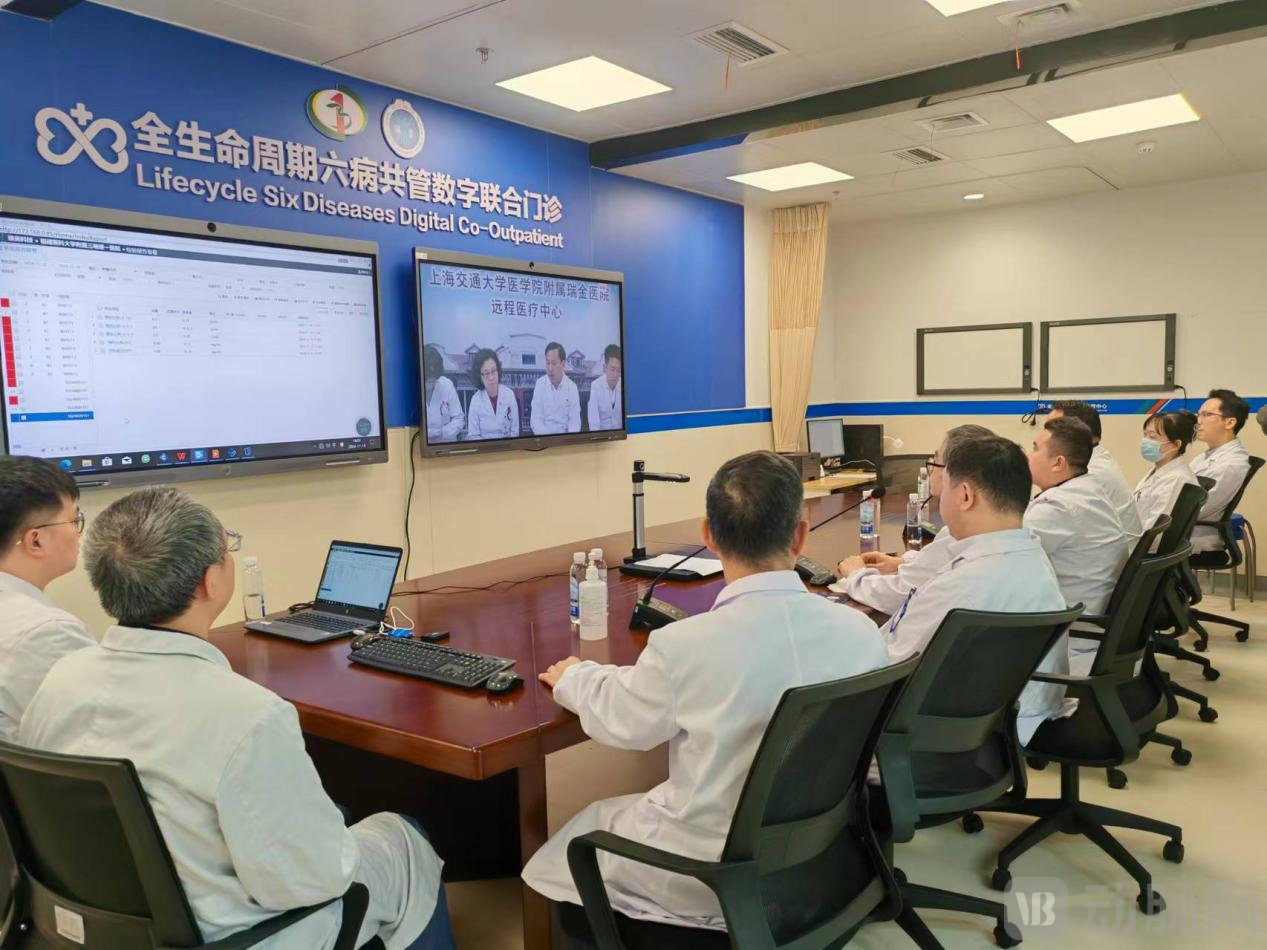 Figure | Multidisciplinary experts from Sanming First Hospital and Shanghai Ruijin Hospital conduct a joint digital outpatient consultation
At the Ecological New City Campus of Sanming First Hospital, Ms. Zhang has become a direct beneficiary of this model. Six months ago, she was diagnosed with small cell carcinoma in the right lower lobe of the lung and had previously undergone multiple courses of chemotherapy and immunotherapy at an outside hospital. Now, she can not only engage in face-to-face consultations with top experts from Shanghai Ruijin Hospital via telemedicine but also receive local multidisciplinary co-management services covering the entire lifecycle of tumor care.
Via remote video consultation, experts from the First Hospital of Sanming and Shanghai Ruijin Hospital—spanning medical oncology, surgical oncology, pulmonology, traditional Chinese medicine, pathology, radiology, laboratory medicine, and radiation oncology—formed a multidisciplinary team (MDT) to conduct a thorough consultation for Ms. Zhang. Ultimately, they developed a comprehensive, full-cycle treatment plan encompassing prevention, screening, diagnosis, treatment, management, and rehabilitation. Ms. Zhang expressed her enthusiasm, stating, “This healthcare experience was excellent. I was able to consult with renowned specialists from Shanghai without leaving Sanming, avoiding the hassle of shuttling between different departments. All my concerns were addressed in a single visit, truly making me feel that accessing medical care is ‘not difficult’!”
This is precisely the tangible benefit to the public resulting from a key innovation in Phase 3.0 of the Sanming Healthcare Reform—the implementation of the “Six-Disease Co-Management” service model across the full life cycle. Under the collaborative framework of “Ruijin Medicine + Sanming Demonstration + WeDoctor AI,” Ruijin Hospital’s mature standards and technologies for “Six-Disease Co-Management” have been seamlessly replicated without deviation through digital and intelligent technological means, successfully transferring to Sanming.
At the core of this model is the establishment of a multidisciplinary diagnosis and treatment system and a full-lifecycle management framework encompassing “prevention, screening, diagnosis, treatment, management, and rehabilitation.” This approach not only enables precise diagnosis and treatment of diseases but, more importantly, strengthens disease prevention, health management, and rehabilitation. It constructs a full-lifecycle health management framework centered on patient health and focused on six major disease categories, thereby facilitating a shift from “disease-centered care” to “patient-centered care.”
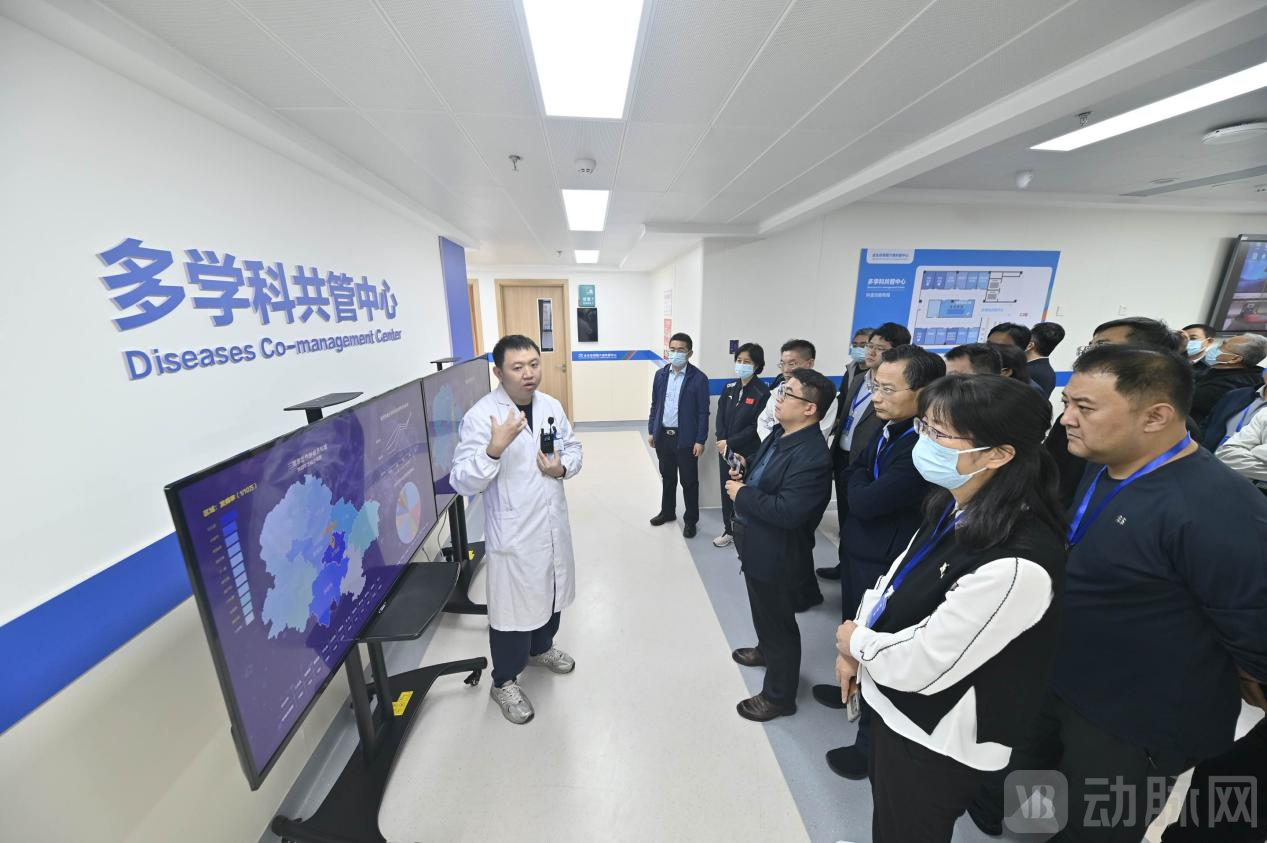 Figure | Sanming Healthcare Reform Experience Training Program Organizes Local Health Commissions to Visit the "Six-Disease Joint Management" Center
“Through multidisciplinary collaboration and co-management, we have broken down information barriers among physicians from different departments, fully leveraged the strengths of various disciplines, and pooled collective expertise to clarify diagnoses and optimize treatment plans, thereby delivering greater benefits to patients.” Introduced Sun Yingming, Dean of the Shengtai New City Branch of Sanming First Hospital. The center has now launched routine digital joint outpatient clinics for oncology and metabolic diseases.
It is reported that the first phase of Sanming’s “Integrated Management of Six Major Diseases” model has completed the construction of service systems for the integrated management of oncology and metabolic diseases. Subsequently, integrated management service systems for cardiovascular and cerebrovascular diseases, respiratory diseases, reproductive medicine, and geriatrics will be rolled out in stages. Meanwhile, the Sanming Centralized Procurement Center for the Integrated Management of Six Major Diseases is being established to promote disease-specific centralized procurement. The first batch of centralized drug procurement under this model, focusing primarily on oncology and respiratory diseases, has already been launched. This initiative aims to provide patients with more cost-effective diagnosis, treatment, and medication plans, thereby maximizing the efficiency of medical insurance fund utilization.
As a benchmark for China’s healthcare system reform, Sanming’s innovative practices are leading the direction of nationwide deepening of healthcare reforms. In recent years, the National Health Commission has held multiple press conferences to promote the “Sanming Model” of healthcare reform, clearly setting a goal to achieve nationwide coverage of this model within five years. In the 3.0 phase of Sanming’s healthcare reform, key priorities for deepening reforms include upgrading “Medical Consortia” into “Health Consortia” and establishing a “Six-Disease Co-Management” system.
On September 20 this year, the Sanming Municipal Committee of the Communist Party of China and the Sanming Municipal People’s Government released the *Action Plan for Deepening the Healthcare System Reform in Sanming City*. The plan explicitly calls for prioritizing the development of integrated healthcare communities, establishing a “collaborative management system for six major diseases,” and further advancing the integration of medical care and disease prevention. Building on county-level medical consortia and urban medical alliances, and using health insurance payment mechanisms as a linking instrument, the plan seeks to explore and establish a working mechanism for healthcare communities that is government-led, departmentally coordinated, and socially engaged, thereby providing the public with integrated health services spanning prevention, treatment, rehabilitation, and health management. This action plan charts the course for Sanming’s Healthcare Reform 3.0 and offers valuable reference for other provinces and municipalities across China in deepening their own healthcare system reforms.
Currently, WeDoctor is collaborating in depth with Shanghai Ruijin Hospital to conduct research on a digital integrated prevention and control system for “six major diseases,” establish a co-management framework, and develop medication guidelines for co-managed care. In parallel, in partnership with Tencent, the Zhejiang Provincial Key Laboratory of Medical Imaging Artificial Intelligence, and other collaborators, WeDoctor is leveraging key digital technologies such as cloud computing, large language models, and digital humans to jointly upgrade and build the “Six-Disease Co-Management Platform.” This initiative aims to deliver a standardized suite of intelligent, disease-specific products, providing standardized, replicable, comprehensive solutions for the implementation and upgrading of close-knit county-level medical consortia across China.
The Sanming healthcare reform is leading a profound health revolution, with the “Healthcare Community” and the “Six-Disease Co-Management” model becoming key drivers for nationwide healthcare reforms learning from Sanming. Currently, driven by digital intelligence technologies and leveraging the “Six-Disease Co-Management” approach, the pathway to building a “health-centered” Healthcare Community is becoming increasingly clear. As innovative models such as the “Six-Disease Co-Management” are rapidly implemented at the grassroots level across China, they will truly realize health management for the entire population throughout the full life cycle, laying a solid foundation for implementing the Healthy China strategy.