

CoreTech Med's DuoCor™: World’s First Integrated Fully Magnetically Levitated Biventricular Assist System Enters NMPA Innovation Green Channel
Recently, the Center for Medical Device Evaluation of the National Medical Products Administration published on its official website the “Public Notice of Review Results for Special Review Applications for Innovative Medical Devices (No. 10, 2024),”Shenzhen Core Medical Technology Co., Ltd. (hereinafter referred to as “Core Medical”) has its DuoCor™ implantable ventricular assist system included in the list.
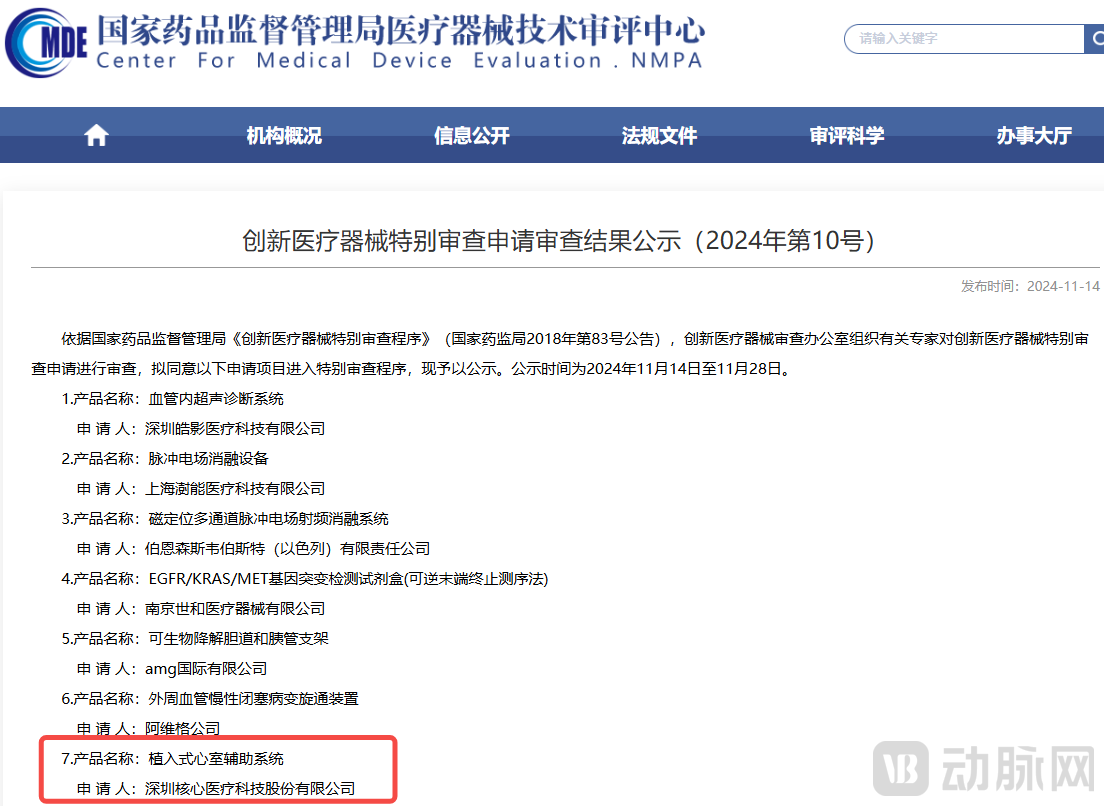
This system achieves significant innovative breakthroughs by addressing the current lack of dedicated products in the field of biventricular assist devices, as well as the numerous challenges associated with using two left ventricular assist devices as an alternative solution—such as the absence of right ventricular-specific design, difficulties in coordinating dual systems, high risk of complications, and operational inconvenience.
Core Medical was established in August 2016, strategically positioning itself in both long-term implantable and short-to-medium term interventional ventricular assist device fields, while achieving numerous pioneering innovations.Focusing on multiple disciplines including cardiac surgery, cardiology, critical care, and emergency medicine, it is dedicated to providing comprehensive solutions for mechanical circulatory support to heart failure patients worldwide. The inclusion of its implantable ventricular assist system in the “Green Channel for Innovative Medical Devices” marks Core Medical’s latest milestone in the field of long-term implantable artificial hearts, following its implantable left ventricular assist device(LVAD) Breakthrough in Miniaturization with Fully Magnetically Levitated TechnologyThis represents another major innovative achievement, which will drive a new revolution in the field of global mechanical circulatory support.
1Total Heart Assist: Next-Generation Solutions for Long-Term Circulatory Support
Heart failure is known as the “final battlefield” of cardiovascular disease and is one of the most challenging conditions to overcome among cardiovascular diseases.
According to epidemiological surveys, there are 64 million heart failure patients worldwide, with over 13 million in China, including nearly one million in end-stage heart failure. Due to issues such as donor shortage for heart transplantation, the number of patients who can receive heart transplants is extremely limited. Currently, Left Ventricular Assist Devices (LVADs) have become the primary treatment option for patients with end-stage heart failure.
However, LVAD is not the ultimate or most comprehensive solution for end-stage heart failure. Due to its provision of single-ventricle support only, LVAD has certain limitations. On one hand, it is ineffective for nearly one-third of patients with biventricular or right-sided heart failure; on the other hand, international data indicate that the incidence of right heart failure following isolated LVAD implantation is as high as 30%, significantly reducing long-term survival rates among LVAD patients. Based on clinical practice, there is an actual annual clinical demand for biventricular assist devices in China alone, amounting to hundreds of thousands of cases.
Current Treatment Options for Patients with Pan-Heart Failure Mainly IncludeTotal Artificial Heart (TAH) and Biventricular Assist Device (BiVAD), but all have numerous shortcomings.
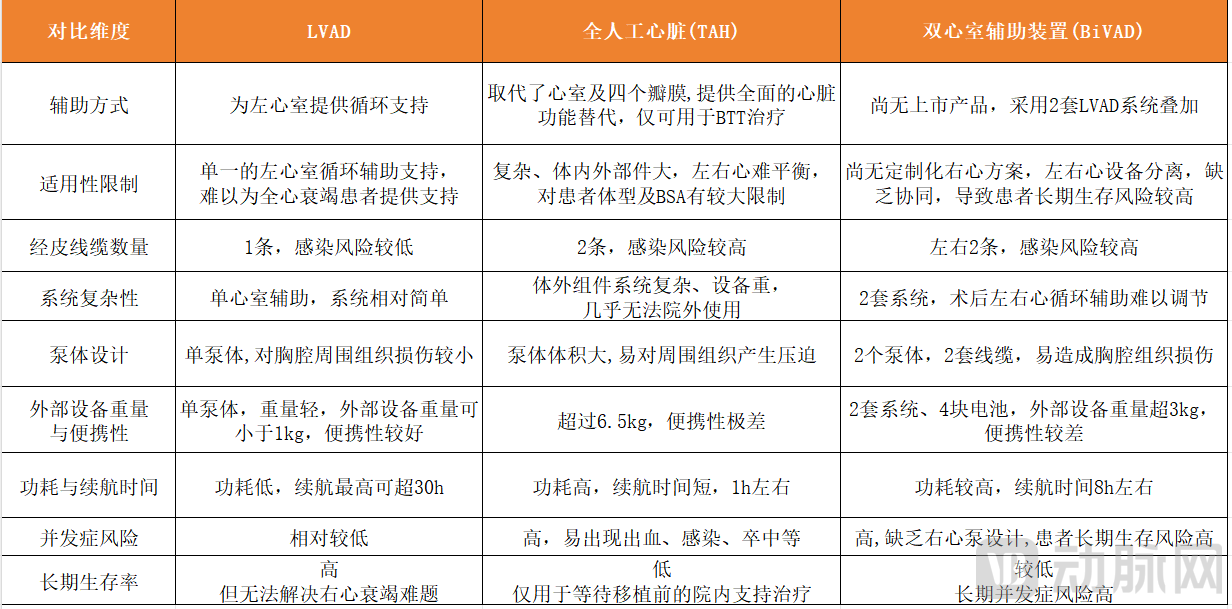 LVADs, total artificial hearts, and currently available biventricular assist devices on the market are unable to effectively address the challenge of biventricular failure.
Specifically, total artificial hearts (TAHs) have numerous drawbacks.Particularly during total artificial heart implantation, the patient’s native heart is removed; therefore, in the event of device failure or loss of power supply, the patient will immediately lose all circulatory function. Currently, total artificial hearts are used exclusively as an in-hospital bridge-to-transplant support therapy for patients awaiting heart transplantation.
In addition, to date,No long-term implantable biventricular assist device (BiVAD) has yet been approved for market launch., currently used biventricular assist devices are all superpositions of two LVAD systems, which brings many drawbacks:
● Due to the lack of a dedicated optimized design for slow right-sided blood flow and its propensity for thrombus formation, patients face a higher risk to long-term survival;
● Two control systems, making it difficult to regulate the balance between left and right heart circulation postoperatively;
● The pump body (especially the right pump) is relatively large in size, which can easily cause injury and bleeding to the tissues surrounding the thoracic cavity;
● High power consumption and two sets of external devices, including four batteries, with a total weight exceeding 3 kg, resulting in poor quality of life for patients using the pump.
In this context, there is an urgent need for a versatile ventricular assist device characterized by compact extracorporeal and intracorporeal components, capable of providing integrated biventricular support as well as isolated left or right ventricular support, particularly for end-stage heart failure, especially biventricular failure.
2Corheart®6. Miniaturization Technology Paves the Way for Biventricular Assist, with DuoCor™ Achieving Several Leading Innovations
Constrained by the capability bottlenecks of low power consumption and miniaturization, currently, total artificial hearts and various biventricular circulatory support solutions cannot simultaneously meet the requirements of miniaturization, lightweight external components, long battery life, and good blood compatibility.
Because the essence of an "artificial heart" is a blood pump driven by an external power system, and given that battery technology has yet to achieve significant breakthroughs, simultaneously driving two pumps requires achieving lower power consumption while ensuring sufficient flow. The difficulty involved is self-evident.
Currently, Core Medical has overcome this technical bottleneck. Its marketed Corheart®6 is the only “artificial heart” in which a single set of stator coils simultaneously performs both rotor levitation and drive functions.The device utilizes an axial magnetic levitation motor and integrated control technology to achieve dynamic, time-division and zone-based control. Furthermore, Corheart®6. Power consumption is only about 3W; supported by the 800g external components including the battery, it can operate continuously for 33 hours on a single charge. Two Corheart®6. Integrated control, powered by a single set of external components, with over 15 hours of continuous operation on a single charge.
Currently, the biventricular assist strategy urgently requires optimization of pump performanceFurther Optimization of Miniaturization and Low Power Consumption. Furthermore, due to the slower blood flow velocity in the right heart, blood is more prone to stasis. In the context of long-term implantation and use of biventricular assist devices, it is essential that they be optimized for the circulatory characteristics of the right heart and possess excellent right-left ventricular synchrony.It is worth noting that the biventricular assist device DuoCor™ is not simply two Corheart units.®simple, integrated overlay of 6. To address the aforementioned key issues, DuoCor™ features critical innovations in the following areas:
● Further miniaturized right ventricular fully magnetically levitated ventricular assist pump, with its overall volume and weight further reduced, and power consumption further lowered;
● Dynamic magnetic levitation control technology,Enhance right heart washout to reduce the risk of thrombosis;
● Optimized Design of Blood Flow Channels, thereby further enhancing overall hemocompatibility;
● Left-Right Heart Synergistic Control System, to avoid volume imbalance between the left and right heart.

DuoCor™ Implantable Ventricular Assist System
By inheriting Corheart®technical advantages of 6, and further innovation,DuoCor™ provides comprehensive circulatory support for the left ventricle, right ventricle, or both ventricles., its modular design enables broader population coverage. Specifically, the product features the following characteristics:
I.Featuring a “world’s first” fully magnetically levitated right ventricular assist device design, it further reduces weight and volume while better adapting to right heart hemodynamics and physiological anatomy.. The system employs dynamic magnetic levitation rotor control to enhance flushing, while the optimized design of the flow channel and impeller ensures low shear stress and high hydraulic efficiency, further improving blood compatibility;
II.DuoCor™ employs a single-system design to achieve integrated coordinated control and left-right heart balance.. The system can alert users to abnormal conditions such as pump suction, insufficient left ventricular unloading, and excessive right ventricular output, thereby prompting patients to communicate with their physicians in a timely manner and effectively reducing the risk of adverse events such as pump suction and pulmonary edema;
III.Adopts an integrated design with lightweight portable devices to improve patients' quality of life.DuoCor™ utilizes only a single percutaneous cable, reducing the incidence of infection; furthermore, the device employs only one control system, significantly reducing the weight of external equipment, with the total weight of extracorporeal components being merely 0.8 kg; in addition, compared with Corheart®6. Inheriting the same lineage, DuoCor™ also adopts an axial magnetic levitation motor and an integrated design, resulting in lower power consumption and extended battery life; with two batteries, the operating time can exceed 15 hours.
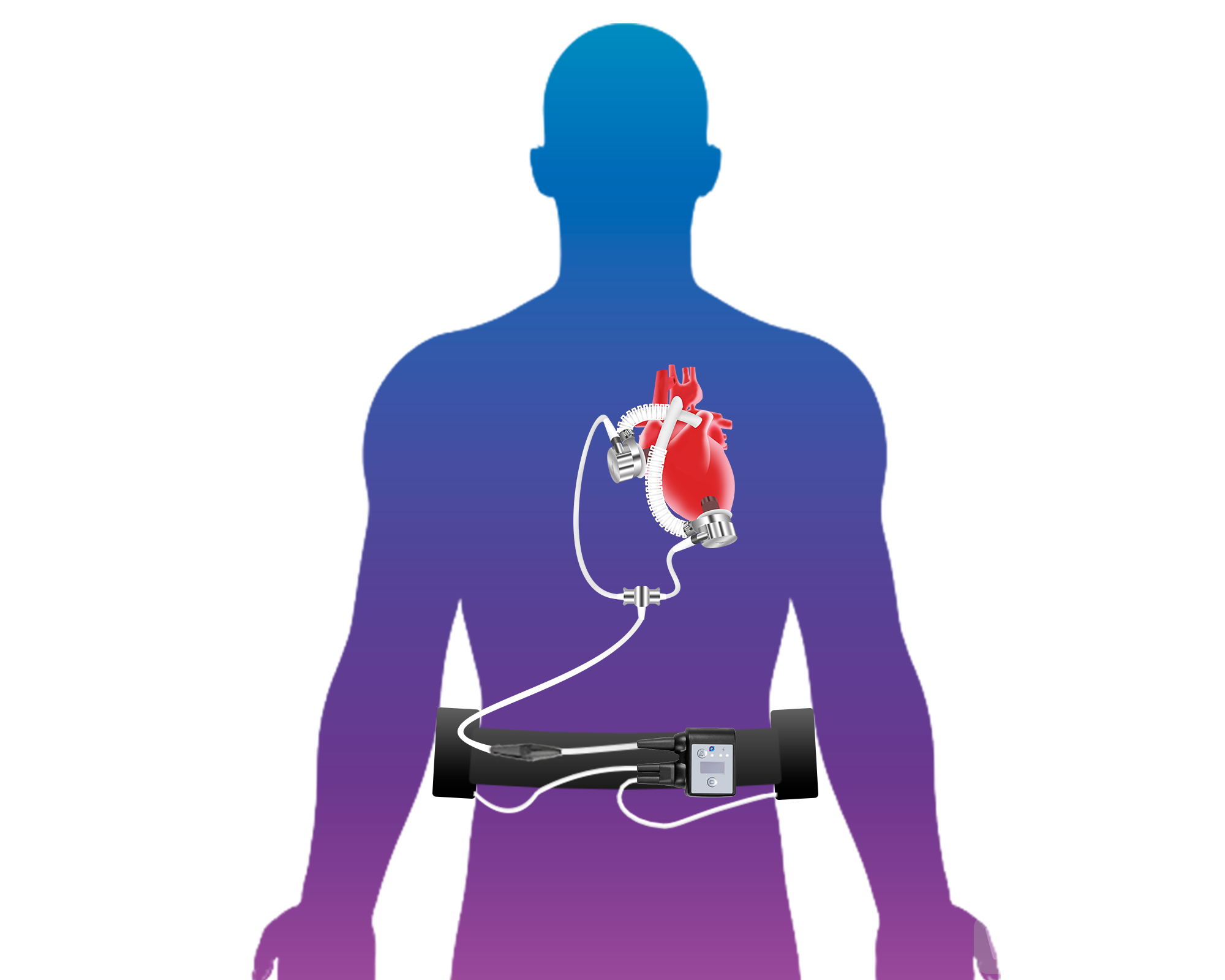
Implantable Ventricular Assist System DuoCor™
Leveraging these advantages, DuoCor™ will provide a more innovative and comprehensive solution for patients with end-stage heart failure, filling the market gap for biventricular assist devices in the field of long-term mechanical circulatory support.
Nowadays, the development trend of heart failure remains severe, being the only disease in the field of cardiovascular diseases that shows a growing trend. According to Sullivan's "2024 China Heart Failure Device White Paper," in China, the number of heart failure patients increased from 9.83 million in 2017 to 11.581 million in 2021, with a total compound annual growth rate (CAGR) of 4.2% during this period. It is expected to further increase to 16.331 million by 2030.
Currently, there is a significant unmet clinical need in the field of end-stage heart failure, particularly in cases of biventricular failure. Although the patient population is substantial, only a very small proportion have the capability and conditions necessary to utilize artificial hearts. DuoCor™ addresses the limitation of left ventricular assist devices (LVADs), which provide only single-ventricle circulatory support, thereby expanding the applicability of artificial hearts. It offers a clinical solution for heart failure patients that delivers superior efficacy, lower risk, and long-term benefits. Against the backdrop of rising heart failure incidence, DuoCor™ is poised for broader development prospects.
3About Core Medical:
Shenzhen Core Medical Technology Co., Ltd. was established in August 2016 and is headquartered in Shenzhen. The company specializes in the research, development, and production of high-end innovative medical devices, such as mechanical circulatory support devices (commonly known as “artificial hearts”).Achieved comprehensive layout in the fields of implanted and interventional artificial hearts, committed to creating comprehensive solutions for the vast global population of heart failure patients.
In the miniaturization of artificial hearts, Core Medical has independently developed an ultra-compact, fully magnetically levitated artificial heart—Corheart®The key performance indicators of 6 have reached the same level as similar international products, significantly enhancing the competitiveness of Chinese-made artificial hearts in the global market. In product lines such as the interventional artificial heart CorVad, Core Medical has also pursued R&D innovation, achieving high flow rates within a small interventional profile. Its independently designed miniature motor and control technology further reduce the risk of hemolysis, improving product stability and long-term operational reliability.
Core Medical with Corheart®6. Centered on its three flagship products—DuoCor™, CorVad, and CorHeart—the company provides comprehensive solutions for end-stage heart failure, offering full-spectrum circulatory support ranging from long-term to short- and medium-term applications. It has established a dual-ventricular product portfolio covering both single-ventricle and biventricular support, a achievement underpinned by Core Medical’s profound technological expertise. Beijing Fuwai Hospital CorHeart®6. Single-center data show a 1-year survival rate of 96% and a 2-year survival rate of 94%. Furthermore, Fuwai Hospital released national cumulative LVAD implantation data, indicating that as of August 2024, Corheart, a marketed product by Core Medical,®6. Clinical implantation in 385 cases,Market share exceeds 40%。
Currently, Core Medical has achieved numerous innovative breakthroughs in the fields of micro-motor technology and fully magnetically levitated motor technology, establishing a strong technological barrier in the field of artificial hearts. Meanwhile, the company possesses outstanding capabilities in rapid R&D and accelerating product commercialization, along with a comprehensive and robust patent portfolio. Bolstered by leading-edge technology, strategic patent layout, and strong R&D commercialization capabilities,Core Medical has become the only medical device company globally to simultaneously deploy both mature implantable and interventional artificial heart products.
Related Links:
1.Core Medical Official Website Link:https://www.coretechmed.com/
2.“Peking Union Medical College Hospital Experts Develop Integrated Biventricular Assist Device: A World First, Bringing ‘New’ Hope to Heart Failure Patients”:https://cjrb.cjn.cn/html/2024-07/12/content_151730_1036026.htm
3."Shanghai Tenth People's Hospital Successfully Implants World's Smallest 'Artificial Heart' in 158kg Patient with End-Stage Heart Failure":https://mp.weixin.qq.com/s/aE8P_kydkxi6G9yVQ7ES8A
4.Good News | Corheart®6. First European Clinical Case: Patient Shows Good Recovery Three Months Post-Implantation》:https://mp.weixin.qq.com/s/oIDD_vOOYUhXKWtzdV3H1w
5.《China’s First! Professor Dou Kefei of Fuwai Hospital Leads Completion of Interventional Ventricular Assist System — Core Medical CorVad》®Large-Scale Registry Study》:
https://mp.weixin.qq.com/s/19MzIsDIkEF3_WoFUSq8UQ