

Cochlear Implant National Procurement Lowers Price Barrier, Unlocks Market Potential
The Niche Market for Cochlear Implants Is Heating Up
On November 29, the National Healthcare Security Administration released the “Announcement on the Centralized Volume-Based Procurement of Medical Consumables Including Cochlear Implants and Peripheral Vascular Stents Organized at the National Level (No. 2).” Compared with Announcement No. 1, Announcement No. 2 clarified key information such as the procurement volume requirements for each product category, selection rules, and the maximum valid bid price. The bid opening was held on December 19.
On December 1, “cochlear implantation surgery” and “cochlear implants” were officially included in the scope of reimbursement under Hunan Province’s medical insurance and work-related injury insurance funds. This makes Hunan the 14th province in China to include cochlear implants in its local medical insurance reimbursement coverage.
Price is no longer the biggest barrier to cochlear implantation.
Compared to previously centrally procured categories such as coronary stents, orthopedic joints, spinal implants, intraocular lenses, and sports medicine products—and even relative to the closely related “hearing aid” sector—cochlear implants remain a relatively niche field.
In fact, the development potential of the cochlear implant sector is substantial. China has approximately 7.4 million patients suitable for cochlear implantation, yet only 110,000 procedures have been performed to date, resulting in a demand fulfillment rate of just 14.9%. According to a research report by Shanghai Securities, the market penetration rate of cochlear implants in China is only about 10%, significantly lower than the 50% observed in developed countries. Although imported brands dominate the market, domestic companies are continuously capturing greater industry share through technological breakthroughs.
Why Did the Fifth National Centralized Procurement Target the Niche Field of Cochlear Implants? With Centralized Procurement Introduced as a New Variable, What Changes Will Occur in the Market Size and Competitive Landscape for Cochlear Implants? VCBeat Spoke with Leading Industry Companies to Provide Insights for the Sector.
Cochlear Implantation Is Just the First Step
According to the World Report on Hearing (2021) released by the World Health Organization, hearing loss is the third leading cause of disability worldwide, with approximately one in five people globally affected by varying degrees of hearing impairment.
Based on the degree of hearing loss, there are three types of hearing assistance devices: fitted hearing aids, middle ear implants, and cochlear implants. Due to differences in patient population size and product technical complexity, fitted hearing aids for patients with mild to moderate hearing loss are more favored by the market. Cochlear implants are suitable for patients with severe to profound deafness and those with limited speech recognition under conventional hearing aid conditions.
According to a research report by Shanghai Securities, the penetration rate of the domestic cochlear implant market in China is only about 10%, far lower than that in developed countries. The main reasons for this are analyzed as follows.
The equipment is expensive, and the ongoing postoperative costs, amounting to hundreds of thousands, significantly increase the financial burden on patients.Cochlear (Australia), MED-EL (Austria), and Advanced Bionics (US) hold a 70% market share in China, with prices ranging from approximately RMB 100,000 to 300,000. In 2011, two domestic manufacturers, ListenTalk and Nurotron, successively launched their independently developed cochlear implant products, breaking the foreign technological monopoly. Following the market entry of domestically produced cochlear implants, market prices dropped rapidly, currently ranging from RMB 50,000 to 150,000.
Wang Sheng, Marketing Director at Nurotron, stated that the high cost of cochlear implants is primarily due to significant technological barriers. The technology involves more than ten disciplines, including microelectronics, precision mechanics, and otology, and encompasses various technologies and processes such as signal processing, microelectronic chips, and integrated circuits, resulting in extremely high R&D barriers. Additionally, market awareness of cochlear implants remains low, making marketing efforts complex and challenging.
Mengmeng, who has six years of experience using a cochlear implant, stated: “Cochlear implantation is only the beginning; there are many necessary ongoing costs associated with its long-term use.”“In addition to the cost of the device, patients also need to cover expenses such as surgical fees, postoperative device programming, postoperative speech rehabilitation training, cochlear implant device upgrades, and equipment maintenance and servicing,”“In addition to the equipment itself, my other expenses have also exceeded 100,000 yuan.”
Upgrading the external processor of a cochlear implant is a mandatory expense. Taking a child who received a cochlear implant at age one as an example, and assuming an upgrade frequency for the external processor every five years alongside China’s average life expectancy of 78.6 years, the user would need to upgrade the device 15 times. Currently, the cost for upgrading an imported external processor is RMB 75,000 per side, while domestically produced models cost RMB 30,000 per side. From a long-term usage perspective, this expenditure is substantial.
Furthermore, after cochlear implantation, users require auditory-verbal rehabilitation, including training in detection, discrimination, identification, and comprehension. “Hearing rehabilitation courses in Beijing range from 200 to 500 yuan per hour.” Mengmeng previously consulted a professional institution in Beijing, where the overall cost of her customized rehabilitation program amounted to nearly 100,000 yuan.
There is a severe shortage of specialized otologic surgeons, screening audiologists, and speech rehabilitation therapists.Cochlear implantation surgery demands exceptionally high levels of professional expertise from surgeons. However, currently only about 150 physicians are proficient in performing this procedure (source: “Current Status and Development Trends of China’s Cochlear Implant Market in 2021”). Faced with millions of patients requiring implants, the shortage of qualified surgeons has also hindered the broader adoption of cochlear implants.
Furthermore, cochlear implantation requires preoperative screening and postoperative rehabilitation. Consequently, an insufficient number or inadequate competency of audiologists conducting cochlear implant evaluations may cause some patients to miss the optimal window for implantation. Postoperative rehabilitation is critically important for cochlear implant users, especially children; however, challenges such as uneven distribution of rehabilitation facilities and a shortage of qualified professionals persist.
Furthermore, discomfort associated with cochlear implant use and misconceptions stemming from a lack of public education have also hindered the widespread adoption of cochlear implants.. For instance, cochlear implantation is a minimally invasive subcutaneous otolaryngological procedure that does not require craniotomy; many elderly individuals perceive hearing loss as a natural consequence of aging and thus do not prioritize it, while also lacking access to medical care, thereby missing the optimal intervention window for hearing rehabilitation.
The Chinese government attaches great importance to the development of the cochlear implant sector and has issued numerous favorable policies, primarily covering five key areas: medical insurance policies, rehabilitation assistance policies, development policies, regulatory policies, and centralized procurement policies.
First, the national centralized procurement policies are favorable.The National Healthcare Security Administration (NHSA) has emphasized in official documents that the national centralized procurement of high-value medical consumables focuses on products with inflated prices, representative significance, and strong public concern. Currently, cochlear implants in China are relatively expensive and have a substantial market demand, meeting the relevant criteria set by the NHSA for inclusion in national centralized procurement.
Previously, due to variations in medical insurance reimbursement policies across regions, many patients traveled to other locations for surgery by filing for “out-of-area medical care registration.” With the inclusion of these procedures in the centralized volume-based procurement program, patient access to treatment will be significantly enhanced.
According to Document No. 2, the annual procurement demand for implants within the category of cochlear implant medical consumables is 11,239 units. The highest valid quoted price for devices compatible with 3.0T MRI is RMB 60,000 per unit, resulting in a maximum total procurement amount of approximately RMB 674 million. The annual procurement demand for speech processors is 10,943 units. Based on the highest valid declared price of RMB 15,000 per unit for integrated speech processors (including an adjustment fee of RMB 300 per session and after-sales service fee of RMB 300 per session), the maximum total procurement amount is approximately RMB 164 million.
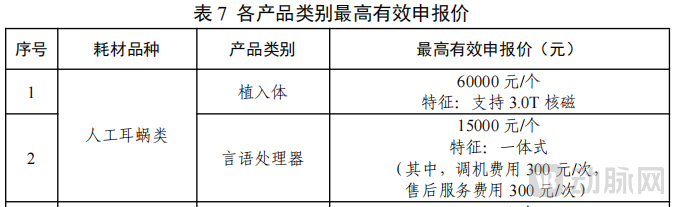
Based on the highest procurement price estimates, this national centralized volume-based procurement (VBP) of cochlear implant consumables will involve a market share of approximately RMB 838 million. In terms of demand, the current market for all categories of cochlear implants is predominantly dominated by foreign brands. This not only highlights the urgent need for domestic brands to enhance their competitiveness but also signals that this VBP presents significant market opportunities for Chinese-made brands.
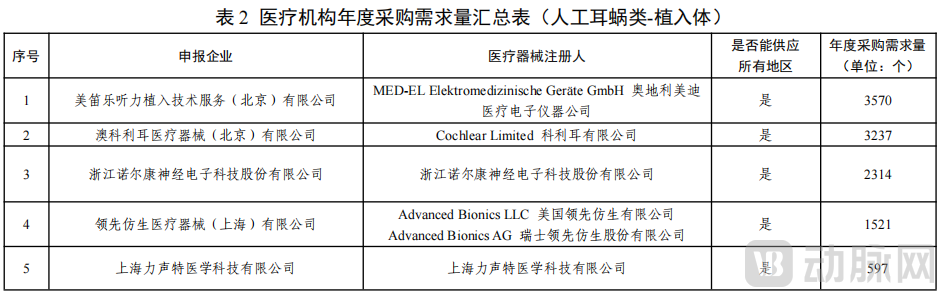
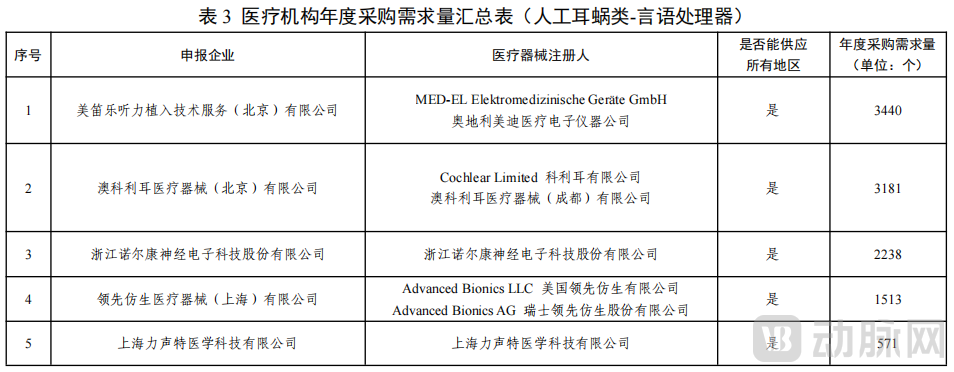
Unlike previous national centralized procurement rounds, this bidding process allows for two rounds of price submission. After the public disclosure of declaration information on the morning of the 19th, companies that did not qualify as selected suppliers under Rule 1 may submit revised bids in accordance with Rules 2 and 3; those meeting the corresponding criteria will be designated as selected suppliers. This significantly increases companies’ chances of being selected.
Nurotron stated:“Imported brands got an early start and rapidly established their market presence. We also hope to leverage volume-based procurement to ‘exchange volume for price,’ thereby enabling more patients to accept and use cochlear implants, thus benefiting a broader population.”
In terms of medical insurance policiesAlthough the basic medical insurance system has not yet included cochlear implants in the national reimbursement scope, more than ten provinces and municipalities across China have incorporated them into Class A or Class B medical insurance categories to alleviate patients’ financial burden. For instance, Hainan Province sets a maximum reimbursement limit of up to RMB 450,000, while Shanghai imposes no cap on reimbursement amounts.
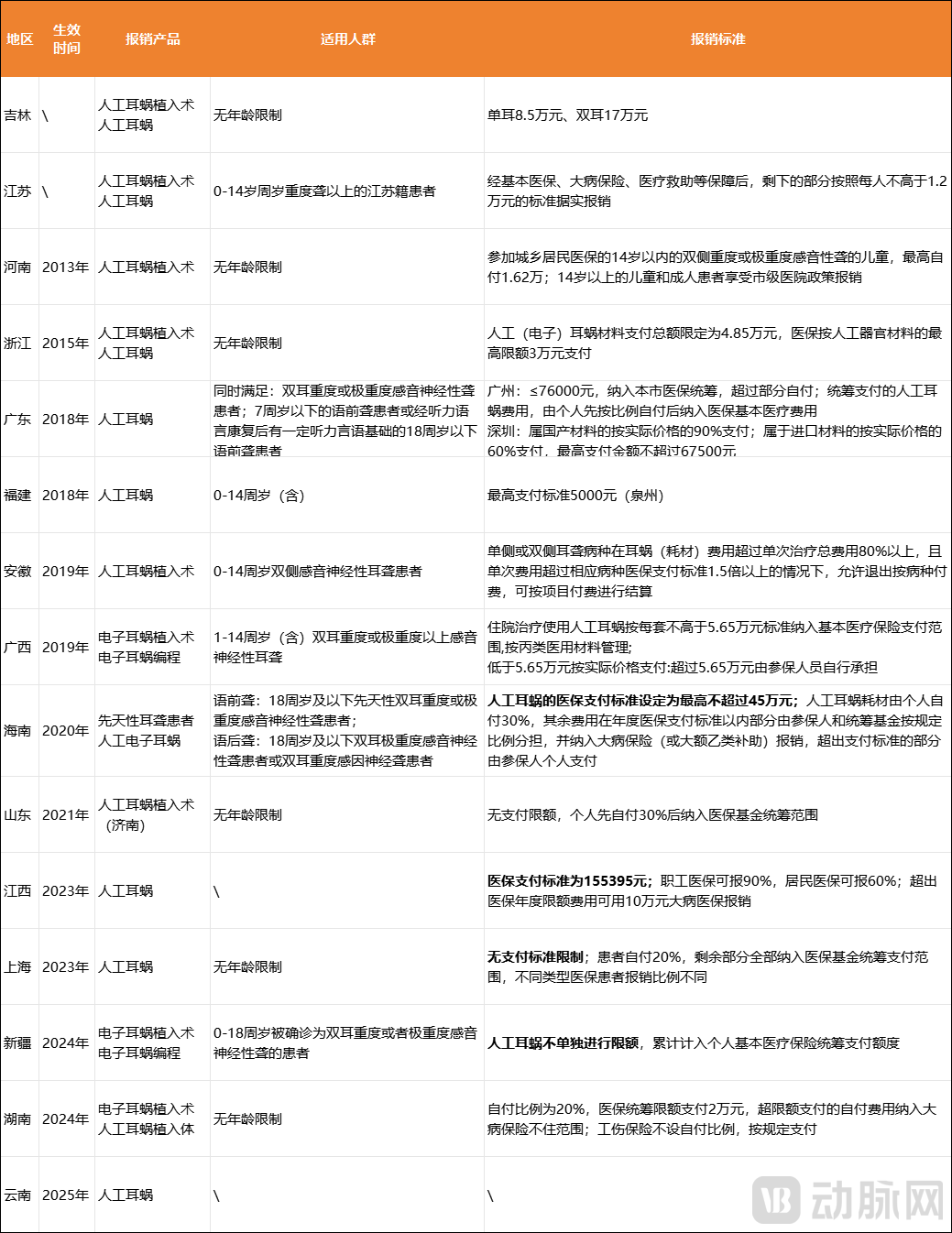
It should be noted that,Some regions restrict medical insurance reimbursement to individuals under the age of 18.. The high cost of cochlear implants is the primary obstacle to their inclusion in medical insurance coverage. If centralized procurement can significantly reduce prices, the likelihood of their inclusion in medical insurance schemes across China will increase, allowing more hearing-impaired patients to benefit from both substantial price reductions and insurance reimbursement.
Before being included in the national medical insurance coverage,The state is also alleviating the financial burden on patients receiving cochlear implants through policies such as special assistance programs.Previously, procurement through the national centralized bidding system of the China Disabled Persons’ Federation resulted in lengthy approval processes for cochlear implant assistance programs, low assistance efficiency, and prolonged waiting times for patients. Moreover, unified procurement led to high costs and limited coverage of assistance. Since the beginning of the 13th Five-Year Plan period, the management of cochlear implant rehabilitation assistance programs has shifted from national coordination to provincial-level implementation, with subsidies and financial aid provided for cochlear implantation surgery, assistive devices, and rehabilitation training.
For example, Jiangxi Province has specified since 2018 that the subsidy standard for each child with hearing disability receiving a unilateral cochlear implant is RMB 60,000, and the subsidy standard for cochlear implant surgery for children with severe or profound hearing disability is RMB 12,000 per person.
InDevelopment PolicyAt the national and local government levels, relevant policies have been introduced to encourage the development of high-end implantable medical devices such as cochlear implants; inStandardized PoliciesAt the national level, China successively issued the “Guiding Principles for Clinical Trials of Cochlear Implant Systems” and the “Technical Review Guidelines for Registration of Cochlear Implant Systems” in 2017, to standardize the registration applications, technical reviews, and clinical trials of implantable cochlear implant systems.
Based on comprehensive data, the market size of cochlear implants in China is projected to reach RMB 9.5 billion by 2025, with adult cochlear implants dominating the market, accounting for approximately 81%. Nurotron has also stated that the future market potential for adult cochlear implants will be even greater, driven by an aging population, declining birth rates, and advancements in genetic hearing screening technologies.
From the perspective of market structure, the Chinese cochlear implant market is highly concentrated.Cochlear (Australia), MED-EL (Austria), and Advanced Bionics (US)Accounting for 70% of the domestic market share, multinational corporations are also accelerating their localization strategies. In July, Cochlear’s first overseas production and R&D base, established in Chengdu, officially commenced operations, with a designed annual capacity of approximately 20,000 cochlear implant systems and sound processors.
In recent years, domestically produced cochlear implant products have also been gradually developing, mainly includingNurotron, ListenTonebrands, among which Nurotron, as the first company in China to achieve large-scale commercial sales of cochlear implants, has captured approximately 20% of the domestic market share.On November 29, the official website of the China Securities Regulatory Commission (CSRC) showed that Nurotron had completed the filing for tutoring registration with the Zhejiang Bureau of the CSRC, planning to conduct an initial public offering (IPO) and list on the stock exchange.
Medical device companies are also positioning themselves in the cochlear implant market. On November 14,Minimally Invasive Medical DevicesSuccessfully developed China’s first fully implantable cochlear implant prototype in collaboration with Shanghai Ninth People’s Hospital, achieving a groundbreaking milestone. The greatest advantage of the fully implantable cochlear implant lies in its complete integration of the traditional external components into the internal implant, rendering the wearer indistinguishable in appearance from individuals without hearing loss, thereby significantly enhancing patient acceptance of cochlear implant products.
Additionally,Tencent Tianlai LaboratoryIt has also applied AI technology to the research and development of cochlear implants, achieving an industry-first breakthrough in real-time processing of dynamic noise. This innovation has improved speech clarity and intelligibility by 40%. To support this, Tencent has secured over ten patents for cochlear implants globally, covering areas such as AI-based voice noise reduction, audio AI algorithms, and intelligent fitting.
The core objective in the development of cochlear implant technology is to achieve a more accurate, comfortable, and safe user experience. As the technology continues to mature, new trends in cochlear implant research and development are gradually emerging.
First, achieving technological innovation to enhance the accuracy and safety of auditory perception for patients, such as drug-eluting electrodes, 3.0T MRI compatibility, and AI-based noise reduction.
Intracochlear trauma caused by electrode insertion during cochlear implantation, along with the long-term formation of fibrous tissue, can compromise the efficacy of cochlear implants. Drug-eluting electrode technology not only treats intracochlear inflammation but also mitigates its adverse impact on auditory performance. By controlling the onset or progression of otitis media through sustained drug release, this approach achieves the dual functions of therapeutic intervention and hearing restoration.
Currently, multiple domestic and international brands are conducting clinical studies on drug delivery via cochlear implant electrodes. In China, the National Clinical Research Center for Otolaryngologic Diseases at the Chinese PLA General Hospital is collaborating with numerous hospitals, universities, and enterprises to carry out a key national research and development project titled “Research on Technology for Repeated Intracochlear Drug Delivery Electrodes and Prototype Development.”
Due to material properties, traditional cochlear implants may generate thermal effects or displacement in strong magnetic fields. If the magnet is not removed, head artifacts can occur, compromising the safety and accuracy of MRI examinations. MRI compatibility means that cochlear implant users can undergo magnetic resonance imaging directly without secondary surgery, with stable magnet positioning post-examination, ensuring no impact on subsequent device use. Currently, mainstream domestic and international cochlear implants on the market are all compatible with 1.5T MRI.
As 3.0T MRI systems are gradually adopted in the market, cochlear implant technology is also undergoing upgrades. Among domestic brands, Nurotron announced on September 6 the successful completion of the first clinical surgery involving a 3.0T MRI-compatible implant. Additionally, the aforementioned prototype of China’s first fully implantable cochlear implant, developed based on a minimally invasive platform, also features compatibility with 3.0T MRI scanning.
Furthermore, auditory brainstem implant (ABI) technology has been developed for patients who are unable to receive cochlear implants due to cochlear or auditory nerve developmental anomalies or pathologies. Meanwhile, AI-based noise reduction technologies in cochlear implants and AI-driven three-tier fitting service systems are expanding the range of available solutions for individuals with hearing impairment.
Second is functional innovation, which enhances the patient user experience. This includes features derived from smartphone connectivity, such as direct Bluetooth connection, real-time translation, and remote debugging.. More diverse cochlear implant functionalities will enable users to integrate more deeply into the mobile internet era and gain greater freedom in their daily lives.
Overall, with the implementation and subsequent rollout of China’s national centralized procurement for cochlear implant consumables, the Chinese cochlear implant market is poised for a new wave of changes, ultimately benefiting a larger number of individuals with hearing impairments.