Xijian Tech Launches World's First Portable Quantitative Soft Tissue Mechanical Imaging Device, Driving Commercialization of Tsinghua University’s Original Innovation
Soft Tissue: Soft tissue plays a complex and intricate role in the human body. It is a general term for bodily tissues distinct from bone, specifically including muscles, connective tissue, adipose tissue, nerves, and blood vessels. The mechanical properties of soft tissue are crucial for understanding its structure, function, and post-injury repair mechanisms.
Research on the mechanical properties of soft tissues is advancing continuously with the development of various in vivo and ex vivo detection technologies. Furthermore, as basic research deepens, these detection technologies are evolving toward in vivo application, real-time monitoring, and enhanced precision.
Against this backdrop, Beijing Xijian Technology Co., Ltd. (hereinafter referred to as “Xijian Technology”), leveraging over a decade of research on the mechanical characterization of human soft tissues conducted by the Laboratory for Biomechanics and Soft Matter Mechanics at Tsinghua University, has developed the world’s first portable integrated imaging system for skeletal muscle structure and mechanical properties (hereinafter referred to as the “Quantitative Soft Tissue Mechanical Tester”). This device enables non-invasive, in vivo quantitative mechanical measurement and assessment of soft tissues such as muscles and tendons, providing more precise guidance for quantitative treatment in departments including orthopedics, rehabilitation medicine, and professional sports medicine.
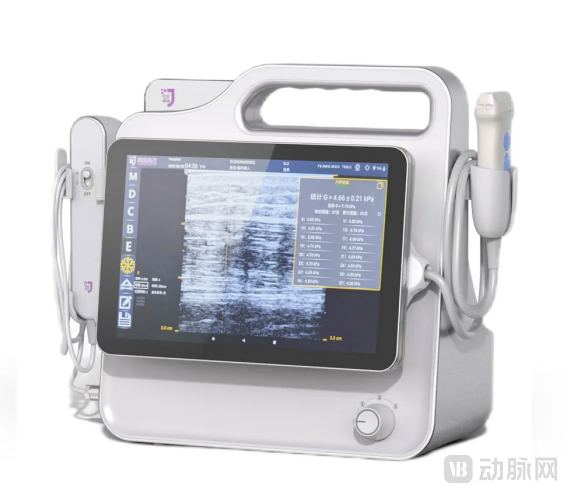
Quantitative Soft Tissue Mechanics Detector (Jin Xie Zhu Zhun 20242070267)
When it comes to the original intention of starting a business,Zhang Pengfei, CEO of Xijian TechnologySpeaking to VCBeat, he said, “In early 2021, while I was working at the Global Health Industry Innovation Center (GHIC), I had the privilege of meeting Professor Cao Yanping from Tsinghua University. After discussing the commercialization pathway and market potential of platform technology for quantitative mechanical testing of soft tissues, we found our visions highly aligned and decided to join forces to establish Xijian Technology.”
In October 2021, Zhang Pengfei joined Beijing Xijian Technology Co., Ltd. on a full-time basis, bringing with him three years of experience in R&D management for robotics and three years of experience in the investment and commercialization of early-stage projects at the intersection of medicine and engineering. He officially commenced work on advancing the translation of scientific research achievements into clinical products.and rapidly completed the iteration of the quantitative soft tissue mechanics detector from a proof-of-concept prototype to an engineering prototype, and finally to a product prototype within two years.
On September 30, 2024, the Quantitative Soft Tissue Mechanics Detector successfully passed the comprehensive review by the Tianjin Medical Products Administration and officially obtained the Medical Device Registration Certificate. Within just over a month of its market launch, the product rapidly gained favor among dozens of leading clinical clients and professional sports customers.
Specifically, the Quantitative Soft Tissue Mechanics Analyzer is an innovative product designed for in vivo, non-invasive quantitative mechanical assessment of soft tissues. It enables multi-dimensional mechanical evaluation of muscles and tendons across “structure,” “properties,” and “function.” This device is widely applicable for quantitative mechanical assessments of muscles throughout the human body, including quantitative evaluation of muscle strength and tone, diagnosis of shoulder and neck pain and tenosynovitis, assessment of muscle fatigue, as well as evaluation and screening for sarcopenia.
Muscle is one of the most important soft tissues in the human body, responsible for generating force, controlling movement, and maintaining posture. Its mechanical properties are closely related to an individual’s physiological and health status. However, in fields such as orthopedics, rehabilitation, and professional sports, there is currently a lack of specialized tools for precise mechanical assessment of muscles and tendons. Clinical practice mainly relies on manual muscle testing based on physicians’ experience or subjective rating scales.These assessment methods are all limited by low efficiency, high error rates, and single measurement indicators, which makes it difficult to achieve precise evaluation and quantitative treatment of related diseases.
In this regard, Zhang Pengfei stated, “Currently, some domestic and international academic institutions are also engaged in the development of quantitative testing equipment for soft tissue mechanics. However, these solutions share a common limitation: they lack sufficient attention to complex, objective constitutive mechanical models of human soft tissues, focusing instead on hardware iterations, which presents significant limitations.”
In contrast,The Laboratory for Biomechanics of Biomaterials and Soft Materials at Tsinghua University has established mechanical characterization and imaging methods that account for the constitutive properties of individual tissues and organs, achieving a globally leading position., which can better characterize the static and dynamic responses of soft tissues. By integrating various measurement techniques, such as ultrasound, optical coherence tomography (OCT), force sensors, and displacement sensors, it enables targeted quantitative measurement of in vivo mechanical property parameters of diverse soft tissues and organs, thereby serving a wider range of clinical scenarios.
In terms of clinical application scenarios, the quantitative soft tissue mechanics detector can be widely used inDepartment of Rehabilitation Medicine(Sports Rehabilitation, Orthopedic Rehabilitation, Neurological Rehabilitation, Geriatric Rehabilitation, Pain Management, etc.),Traditional Chinese Medicine System, Professional Sports, Orthopedics(Joints, Sports Medicine, Spine, Trauma, Microsurgery, etc.),Health checkups, and even aerospace and military applicationsand other specialized fields. Currently, this product has already beenKnee Osteoarthritis, Adolescent Scoliosis, Lymphedema, Sarcopenia, Muscle Fatigue, Traditional Chinese Medicine Pain ManagementSignificant achievements have been made in multiple clinical studies.
Knee osteoarthritis is the most common type of osteoarthritis, with approximately 120 million people in China suffering from knee pain. Muscle imbalance is a common cause of knee pain. While physicians typically use CT and MRI to examine structural issues in the knee joint, these methods have their respective limitations: CT can only visualize bone structures, whereas MRI can only assess soft tissues in a non-weight-bearing state, failing to fully capture soft tissue conditions under weight-bearing loads. This increases the risk of missed diagnoses.
Zhang Pengfei further explained, “Most patients with knee pain suffer from insufficient strength in the medial muscles and excessive tension in the lateral muscles. The soft tissue biomechanics quantitative detector can precisely measure this muscle imbalance quantitatively. Moreover, the device is easy to operate; simply place the measurement probe on the target tissue, and the measurement can be completed within 10 to 15 seconds to obtain results. It clearly displays the patient’s muscle balance status and assists therapists in developing personalized, quantitative treatment plans for patients.”
Furthermore, for patients with lymphedema in the field of oncology rehabilitation, the quantitative soft tissue mechanics detector can provide quantitative evaluation and tiered diagnosis and treatment; for patients with sarcopenia in the field of geriatric rehabilitation, the device can determine through quantitative detection whether patients are at high risk or have been diagnosed, and provide corresponding treatment plans accordingly, covering outcome follow-up throughout the entire life cycle.
More importantly, as an innovative medical device with a “global first launch,” the indications and related standards and guidelines for the Soft Tissue Mechanical Quantitative Detector are continuously expanding.As a promoter of the translation of innovative scientific research achievements, Xijian Technology is also preparing to release a white paper on clinical cases developed jointly with authoritative experts.
“This white paper will be officially released in 2025. Its content is primarily based on the exploration of indications conducted by Tier-3 hospital clients during the first phase, tailored to their respective institutional specialties, and will cover dozens of indications across multiple major clinical systems, including rehabilitation medicine.”In the future, we will build upon this white paper to expand our services to secondary hospitals and community healthcare institutions, enabling patients at the primary care level to equally access high-quality rehabilitation services provided by leading hospitals.“Zhang Pengfei introduced.
“In the future, within the formal healthcare system, the team at Xijian Technology will”Orthopedics and NeurologyTo expand its reach, the company has established in-depth collaboration with the National Clinical Research Center for Orthopedics and Sports Rehabilitation, while also initiating clinical cooperation with Tiantan Hospital in the field of neurology. Meanwhile, on the consumer (C-end) side,Endocrinology, Diabetic Foot, and Aesthetic Dermatology“will also become the explosive growth point for Xijian Technology’s future business,” said Zhang Pengfei.
In addition to hospital clients, Xijian Technology also collaborates with out-of-hospitalTCM Chains, Veterinary Hospitals, Chain Gyms, Chain Health and Wellness Groupshave all established cooperative relationships. Looking to the future, Zhang Pengfei stated, “Whether it is sports health, aesthetic dermatology, or the diagnosis and treatment of major diseases, these are universal challenges facing all of humanity. Therefore, after completing original technological innovation and business model validation in China,”We expect to launch our overseas expansion plan in 2025., we will introduce our commercially validated business model and iteratively optimized products to the global market, targeting the vast blue-ocean markets with essential unmet needs worldwide.”
Xijian Technology is seeking agency channel partnerships in the fields of orthopedics, rehabilitation, and professional sports.If partners are interested in Xijian Technology and its products and solutions, please scan the QR code below to contact us.