

Yinuo Pharma Files for Hong Kong IPO with First-in-China Human-Origin, Ultra-Long-Acting GLP-1 Drug Efsubaglutide Alfa

Innogen
Biologic Drug Developer for Diabetes and Metabolic Diseases
On December 3, the Hong Kong Stock Exchange (HKEX) website disclosed that Guangzhou Innogen Pharmaceutical Group Co., Ltd.-B (hereinafter referred to as “Innogen”) has submitted a listing application to the Main Board of the HKEX, with CITIC Securities and China International Capital Corporation serving as joint sponsors.
Innogen was established in 2014 as a controlling subsidiary of Kunming Pharmaceutical Corporation. It was not until 2020 that Innogen embarked on an independent path of market-oriented development, subsequently attracting significant attention from investors. From the end of 2020 to the present, over a four-year period, Innogen has completed four rounds of financing, raising a total of more than RMB 1.5 billion. The investing institutions include KIP Capital, Cowin Capital, Boyuan Capital, Hongtai Fund, Lanting Investment, Youshan Capital, Huachuang Capital, CICC Qide Fund under China International Capital Corporation Limited (CICC), Starvest Capital, Longma Peak Venture Capital, Deyi Capital, China Everbright Limited, Xiaochi Capital, Guoke Jiahe, and Pudong Investment Holdings, among others.
Its latest round of financing was the Series B+ round completed on January 10, 2024. Innogen entered into a capital increase agreement with Guangzhou Industrial Investment Holdings Group Co., Ltd. (Guangzhou Chantou), whereby Guangzhou Chantou agreed to subscribe for 22,594,783 newly issued shares at a consideration of RMB 250 million. Upon completion of this financing round, Innogen’s valuation reached RMB 4.65 billion.
Metabolic diseases are chronic conditions characterized by high prevalence, life-threatening symptoms, and a sustained economic burden. Driven by rising health awareness and healthcare expenditure, an aging population, growing clinical needs, and advancements in disease diagnosis, the global market for metabolic disease therapeutics is on an upward trajectory. According to Frost & Sullivan, the global and Chinese markets for metabolic disease drugs reached USD 134.6 billion and USD 15.4 billion, respectively, in 2023, and are projected to grow to USD 194.7 billion and USD 26.8 billion, respectively, by 2028, representing compound annual growth rates (CAGRs) of 7.7% and 11.8%.
Despite the vast market, metabolic diseases remain one of the most prominent medical challenges worldwide. This is because these disorders disrupt critical biochemical reactions within cells, particularly those involving the processing or transport of proteins, carbohydrates, and lipids, thereby leading to conditions such as diabetes, obesity, overweight, and metabolic dysfunction-associated steatohepatitis (MASH). Furthermore, by impairing key processes including lipid metabolism, glucose metabolism, and mitochondrial function, these diseases contribute to neurodegeneration, significantly increasing the risk of neurodegenerative disorders, including Alzheimer’s disease (AD).
Furthermore, metabolic diseases typically involve multiple complications and interconnected pathogenic mechanisms, whereas many existing treatments aim to target individual metabolic disorders rather than addressing the broader health issues faced by patients. Consequently, most metabolic diseases remain incurable, with current therapeutic approaches primarily focused on controlling and alleviating symptoms. However, long-term medication use can lead to severe side effects, further complicating the management of metabolic diseases.For example, sibutramine, once widely used for weight management in China, was discontinued in 2010 due to its significant cardiovascular risks. Similarly, phentermine and amphetamine were withdrawn from the Chinese market due to adverse neurological side effects.
Persistent challenges in the treatment and prevention of diabetes and other metabolic diseases have created substantial unmet clinical needs, generating significant market opportunities for innovative therapies and solutions. Among these, innovative treatments represented by GLP-1 (glucagon-like peptide-1) demonstrate considerable promise and are poised to reshape the therapeutic landscape for metabolic disorders.
GLP-1 exerts its biological functions by activating the GLP-1 receptor, which is expressed in various organs and tissues throughout the body, including adipose tissue, the liver, the cardiovascular system, and the central nervous system. In the pancreatic islets, GLP-1 stimulates insulin secretion, inhibits glucagon release, and promotes β-cell regeneration. Furthermore, GLP-1 therapy suppresses appetite, delays gastric emptying, regulates lipid metabolism, and reduces fat deposition, thereby providing beneficial therapeutic effects beyond glycemic control. Consequently, GLP-1 therapy is increasingly being utilized to treat other serious health conditions, including overweight and obesity, as well as metabolic dysfunction-associated steatohepatitis (MASH).
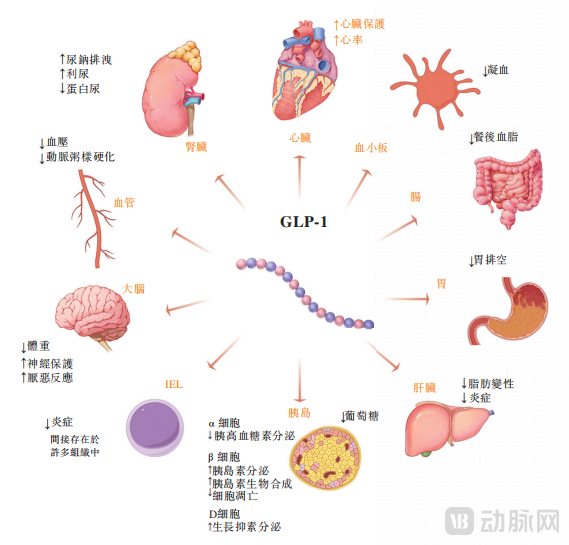
Comprehensive Clinical Benefits of GLP-1 Therapy, Source: Prospectus
However, the half-life of native GLP-1 is very short (<2 minutes). For decades, scientists have made tremendous efforts to develop humanized, long-acting, and more effective GLP-1 receptor agonists. According to Frost & Sullivan data, two humanized long-acting GLP-1 receptor agonists, semaglutide and dulaglutide, have driven the GLP-1 drug market to grow from $9.3 billion in 2018 to $38.9 billion in 2023, with a compound annual growth rate (CAGR) of 33.2%, unleashing significant growth potential globally.
Innogen is the third company globally to advance an innovative, long-acting, human-derived GLP-1 receptor agonist into the regulatory approval stage. Its core product, eparuglutide alfa (formerly known as suparutide; brand name: Yinuoqing), has submitted a Biologics License Application (BLA) to China’s National Medical Products Administration (NMPA) and is currently in the pre-commercialization phase.
Compared with natural GLP-1 peptides, efsupaglutide alfa features a GLP-1 dimeric structure, along with a unique natural hinge linker and an IgG2 Fc fragment design. This confers higher affinity for the GLP-1 receptor and slower degradation by hydrolytic enzymes and renal filtration in vivo. Consequently, it demonstrates potent efficacy, prolonged duration of action, and good tolerability. Furthermore, efsupaglutide alfa is produced in a highly humanized mammalian cell line, resulting in high potency and low immunogenicity.
The inventor of this product is Dr. Wang Qinghua, Founder, Chairman, and General Manager of Innogen. Additionally, Dr. Wang is the inventor of multiple innovative drugs for diabetes and metabolic disorders.In the field of metabolic diseases, Dr. Wang Qinghua possesses over 25 years of specialized expertise. In 2002, he was the first to publish findings on the in vitro molecular and cellular mechanisms as well as the in vivo regulatory mechanisms of GLP-1 in the treatment of type 2 diabetes. Subsequently, in 2007, he pioneered the publication of a strategy for producing long-acting GLP-1 using recombinant fusion protein engineering technology to treat type 2 diabetes. Currently, Dr. Wang Qinghua effectively controls 35.1456% of the voting rights of Innogen, serving as its actual controller.
According to the prospectus, Innogen is the first company in Asia and the third globally to advance an original, human-derived, long-acting GLP-1 receptor agonist into the regulatory approval stage.
As early as September 2023, the New Drug Application (NDA) for Efsubaglutide Alfa, the first pipeline drug of Innogen, was accepted by the Center for Drug Evaluation (CDE). It is indicated for the treatment of type 2 diabetes mellitus with inadequate glycemic control after diet and exercise intervention as monotherapy, and for the treatment of type 2 diabetes mellitus with inadequate glycemic control despite metformin therapy as combination therapy.
Yisupaglutide alfa is expected to be approved for market launch in the first half of 2025, positioning it as China’s first human-derived, long-acting GLP-1 receptor agonist with independent intellectual property rights. According to public information, Supaglutide is projected to become a blockbuster product with an industrial output and sales value ranging from RMB 1 billion to RMB 3 billion upon commercialization, potentially reshaping the landscape of China’s biopharmaceutical industry. The industry’s optimistic outlook on Yisupaglutide alfa is also a key factor behind Innogen’s successful completion of RMB 1.5 billion in financing over four years.
Currently, there are 67 innovative GLP-1 receptor agonist candidates for the treatment of type 2 diabetes worldwide undergoing clinical evaluation, including isupaglutide alfa.Among these 67 candidate drugs, 16 are nearing commercialization (4 have submitted NDAs/BLAs, and 12 are undergoing Phase III clinical trials). Of these 16 products, 8 are human-derived long-acting GLP-1 receptor agonists, while the others are animal-derived or short-acting GLP-1 receptor agonists.
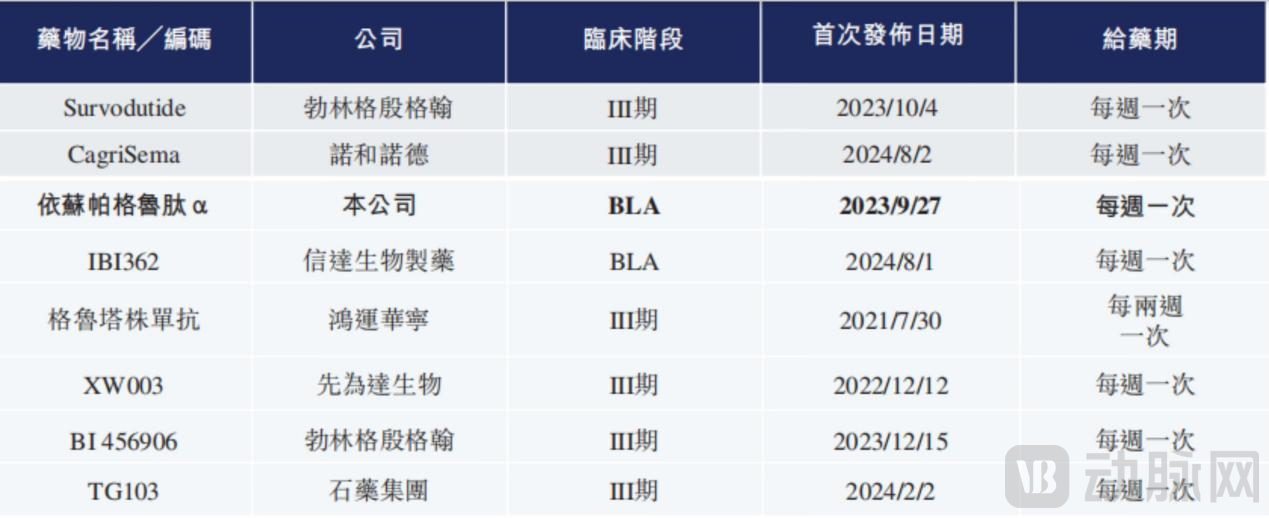
Human-derived long-acting GLP-1 receptor agonists in the NDA/BLA/Phase III clinical stage, image source: prospectus
From a commercial perspective, there are currently ten innovative GLP-1 receptor agonist drugs approved globally for the treatment of type 2 diabetes,Among them, three are human-derived long-acting GLP-1 receptor agonists, while the other seven approved products are animal-derived or short-acting GLP-1 receptor agonists. In 2023, these three human-derived long-acting GLP-1 receptor agonists (namely dulaglutide, semaglutide, and tirzepatide) accounted for 86.4% of the global market share of GLP-1 diabetes medications.
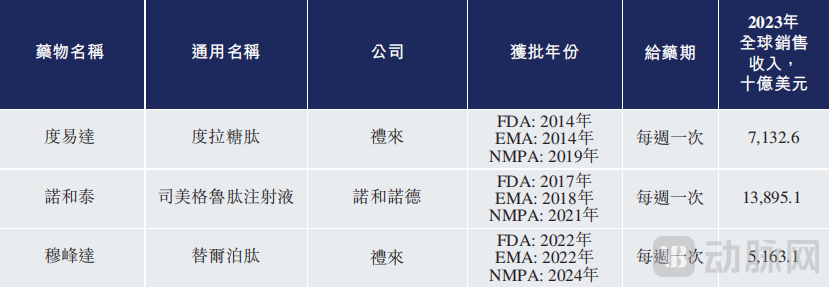
Overview of Three Approved Innovative, Human-derived Long-acting GLP-1 Receptor Agonists (Image Source: Prospectus)
In terms of efficacy, esupraglutide alfa is not inferior to marketed products in lowering blood glucose.According to published clinical data, monotherapy with semaglutide (1.0 mg), dulaglutide (1.5 mg), and tirzepatide (15.0 mg) reduced HbA1c levels by 1.6%, 0.8%, and 1.7%, respectively. In Phase III clinical trials, after the first 4 weeks of treatment, patients with type 2 diabetes (T2D) receiving efsupaglutide alfa monotherapy (3.0 mg) achieved a 1.1% reduction in hemoglobin A1c (HbA1c) levels. In a randomized, double-blind, placebo-controlled Phase III clinical trial, monotherapy with efsupaglutide alfa at doses of 1.0 mg and 3.0 mg resulted in statistically and clinically significant reductions in HbA1c from baseline by 1.7% and 2.2%, respectively, at Week 24.
Furthermore, efsupaglutide α also exhibited a significantly longer mean half-life of 204 hours.According to the drug labels, the mean half-lives of semaglutide, dulaglutide, and tirzepatide are 168, 112, and 120 hours, respectively. The long-acting profile of efsupraglutide alfa may allow for a reduced dosing frequency—specifically, once every two weeks—thereby improving patient adherence to long-term disease management.
Yisupaglutide α also exhibits a favorable safety profile.In clinical trials of efsuglutide alfa, no drug-related cases of grade 2 or higher hypoglycemia were observed. The incidence of nausea and vomiting (common adverse events) reported with efsuglutide alfa treatment in clinical trials was lower than that of other marketed long-acting human GLP-1 receptor agonists. Efsuglutide alfa also demonstrated dual effects on glycemic control and weight management. Compared with placebo, efsuglutide alfa significantly improved cardiometabolic risk markers, including substantial reductions in waist circumference and body mass index (BMI), as well as improvements in various lipid parameters.
In addition to type 2 diabetes, Innogen is also developing indications for esupaglutide alfa in the fields of weight loss and non-alcoholic fatty liver disease.In the treatment of obesity and overweight, Innogen is conducting Phase IIa clinical trials in China and expects to obtain primary endpoint results by the end of 2024; in the treatment of MASH, Innogen has obtained FDA IND approval to initiate Phase IIa trials and will launch a multicenter clinical trial for MASH in both the United States and China.
It is worth noting that in the highly popular field of GLP-1-based weight loss, efsupaglutide alfa may not hold a significant advantage in terms of development progress. As of the end of November 2024, four GLP-1R or GLP-1R/GIPR products had been approved in China, originating from Huadong Medicine, Renhui Biopharma, Novo Nordisk, and Eli Lilly. In the clinical pipeline, there are even more domestic GLP-1-based weight-loss products. According to publicly available data, over 56 GLP-1 products are currently being studied for weight-loss indications in China, with 55% of them having advanced to Phase II or III clinical trials, submitted for marketing approval, or already approved for market launch. This indicates that competition in the domestic GLP-1 weight-loss sector will intensify further over the next two to three years.
Furthermore, as various products gradually enter the market, there is substantial demand for production capacity in the GLP-1 class. Since the beginning of this year, both Novo Nordisk and Eli Lilly have invested in building manufacturing facilities in China to expand their production capabilities. It is foreseeable that once the competition in technology and products reaches a certain stage, the GLP-1 weight-loss sector will soon shift towards a contest over production capacity and pricing. While accelerating its development progress, Iseguraglutide alfa must also demonstrate robust efficacy in weight loss and be offered at an accessible price point.
In addition to isugraglutide alpha, which has advanced more rapidly, Innogen also has five candidate drugs—YN014, YN401, YN209, YN203, and YN202—currently in the preclinical stage or pending IND initiation. These agents are being developed for the treatment of metabolic disorders, including Alzheimer’s disease, obesity, overweight, MASH, type 1 diabetes, and type 2 diabetes.
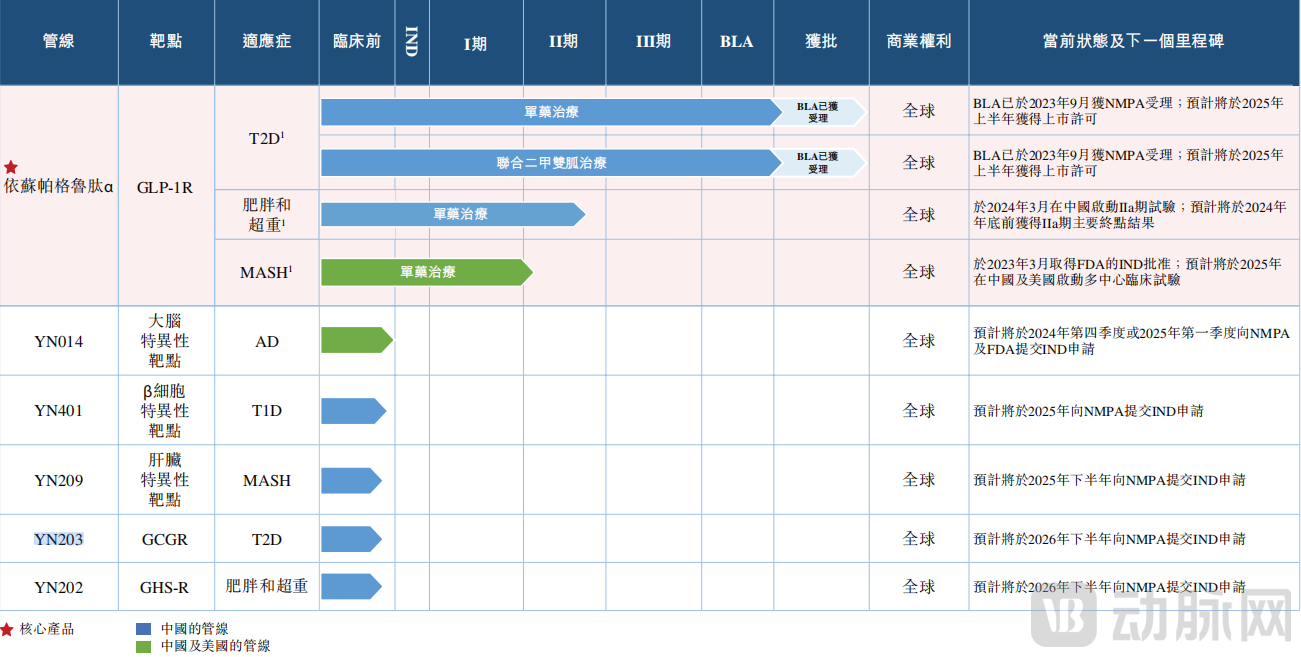
Innogen’s Current R&D Pipeline, Source: Prospectus
① YN014 for the treatment of Alzheimer’s disease (AD):A candidate drug for the treatment of Alzheimer’s disease (AD). This candidate employs a novel therapeutic regimen that protects neuronal cells while reducing the production and release of beta-amyloid (Aβ), phosphorylated tau protein, and other proteins associated with AD pathogenesis, and inhibits the activity of microglia responsible for neuroinflammation. YN014 is currently in the pre-IND stage, and Innogen plans to submit Investigational New Drug (IND) applications to the National Medical Products Administration (NMPA) and the U.S. Food and Drug Administration (FDA) in the fourth quarter of 2024 or the first quarter of 2025.
② YN401 for the treatment of type 1 diabetes (T1D):An innovative drug candidate targeting a β-cell-specific target with dual effects of protecting β-cells, promoting proliferation, and suppressing autoimmunity for the treatment of type 1 diabetes. YN401 is currently in the IND-enabling stage, and Innogen plans to submit an IND application to the NMPA in 2025.
③ YN209 for the Treatment of MASH:A Candidate Drug Targeting Liver-Specific Pathways for the Treatment of MASH. YN209 specifically targets hepatocytes and exerts its hepatic effects by inhibiting free fatty acid synthesis (lipogenesis), enhancing lipolysis, and promoting β-oxidation of free fatty acids, thereby improving mitochondrial function through autophagy and facilitating the clearance of damaged cells. YN209 is currently in the IND-enabling stage, with Innogen planning to submit an Investigational New Drug (IND) application to the NMPA in the second half of 2025.
④ YN203 for the treatment of type 2 diabetes (T2D):A recombinant fusion protein targeting the glucagon receptor (GCGR) signaling pathway for the treatment of type 2 diabetes. YN203 features a dual-targeting mechanism acting on the liver and pancreas. In the liver, YN203 inhibits GCGR-mediated signaling pathways, thereby reducing hepatic gluconeogenesis. In the pancreas, YN203 promotes cell growth and inhibits apoptosis, leading to pancreatic β-cell proliferation and increased insulin synthesis and secretion. YN203 is currently in the IND-enabling stage, with Innogen planning to submit an Investigational New Drug (IND) application to the National Medical Products Administration (NMPA) in the second half of 2026.
⑤ YN202 for the treatment of obesity and overweight:A recombinant fusion protein targeting the binding domain of the growth hormone secretagogue receptor (GHS-R), developed for the treatment of obesity and overweight. Ghrelin is a hormone that stimulates appetite and promotes fat storage. YN202 competes with ghrelin for binding to the GHS-R, modulating the levels of ghrelin and obesity-related hormones in peripheral circulation, thereby inducing satiety and reducing food intake to achieve weight loss. YN202 is currently in the IND-enabling stage, and Innogen plans to submit an Investigational New Drug (IND) application to the National Medical Products Administration (NMPA) for this candidate drug in 2026.
Multiple pipeline programs are being advanced in parallel, which inevitably requires substantial financial support. According to the prospectus, Innogen incurred losses of RMB 301 million, RMB 733 million, and RMB 75 million in 2022, 2023, and the six months ended June 30, 2024, respectively. Among these, R&D investment was significant, with R&D expenses amounting to RMB 267 million, RMB 492 million, and RMB 52 million in 2022, 2023, and the six months ended June 30, 2024, respectively.
Fortunately, Innogen is not short of cash. As of December 31, 2022, December 31, 2023, and June 30, 2024, the company’s cash and cash equivalents amounted to RMB 127 million, RMB 158 million, and RMB 463 million, respectively.
This IPO round will also bring another wave of capital to Innogen. According to the prospectus, the funds raised will be primarily used for further clinical studies on the expansion of indications for its core products (obesity and overweight, MASH); the commercial launch and production of esupraglutide alfa; replenishing working capital; and other general corporate purposes.
We look forward to Innogen joining the GLP-1 commercialization race at an early date, becoming China’s first domestically produced humanized long-acting GLP-1 drug, and entering the blue ocean of next-generation diabetes medications with a sales scale reaching tens of billions.