

Nansu Tech Secures Tens of Millions in Series A+ Funding to Advance Closed-Loop Digital Therapeutics for Pediatric Brain Disorders

Nans Tech
Developer of Digital Therapeutics for Generalized Brain Dysfunction
VCBeat has learned at the earliest opportunity that, focusing on digital diagnosis and treatment of brain dysfunction,Hangzhou Nansu Technology Co., Ltd.(hereinafter referred to as: Nansu Technology), announced the completion of a financing round led byZhongxi FundLead InvestorTens of Millions in Series A+ Funding, with co-investors beingFangtian EducationandZhenghexiang. This round of financing will be primarily used for the research and development, regulatory approval, and market promotion of new products.
The core founding team of Hangzhou Nansu Technology Co., Ltd. comprises PhDs in cognitive brain science, clinical medicine experts, specialists in artificial intelligence and embedded system development, and digital therapeutics experts. The company focuses on the research and development of digital therapeutics for brain dysfunction and neuromodulation technologies. Its products are primarily designed for the rehabilitative treatment of patients with language disorders, cognitive impairments, autism spectrum disorder, attention-deficit/hyperactivity disorder (ADHD), and learning difficulties.
Currently, Nansu Technology has successfully established“Xiaonan Hears,” “Xiaonan Knows and Acts”a series of digital therapeutics brands and products. In November 2022, Nansu Technology obtained China’s first registration certificate for standalone software addressing speech disorders, and its products have since been deployed in more than 300 medical rehabilitation institutions, with an average of one hospital adoption per day in 2024. Looking ahead, Nansu Technology will roll out digital therapeutics and neuromodulation products for patients with Alzheimer’s disease, depression, tinnitus, and other conditions, building a comprehensive digital diagnosis and treatment product portfolio under the “Xiao Nan Ting Shuo” brand.
A Nearly RMB 100 Billion Blue Ocean: Digital Solutions Reshape Neurological Function
Neurodevelopmental Disorders in Children
In real life, brain dysfunction in children is not uncommon. Taking language disorders as an example, a Lancet subsidiary journal published in 2023 the first internationally recognized data on the prevalence of language disorders among Mandarin-speaking children in mainland China, showing that in the 5-6-year-old age groupThe incidence of language disorders is 8.5%.. Meanwhile, the prevalence of autism among children in China has also reached 1%.
The vast patient population has also created substantial clinical demand. However, even today, with growing societal attention, 90% of patients with brain function disorders still do not receive adequate rehabilitation services. Contributing factors include a shortage of specialized clinical professionals, high treatment costs, and a heavy burden on families.There is an urgent clinical need for a safe, effective, and cost-effective treatment regimen to meet market demand.
Hangzhou Nansu Technology Co., Ltd. leverages the brain’s neuroplasticity to achieve clinical outcomes in neural functional remodeling through digital sensory stimulation, and has developed multiple digital-native innovative rehabilitation therapies, offering a novel treatment experience for patients with brain dysfunction.
Two Major Technology Platforms Iterated to Develop “Digital-Electricity Combined” Therapy
Currently, Nansu Technology has developed its first-generation artificial intelligence-based digital therapeutics platform, with six products launched on the market, achieving full-process coverage of screening, assessment, digital prescription, and rehabilitation therapy for pediatric brain function.
The first-generation platform is mainly targeted atVarious Language Disorders, Autism, Cognitive Impairment, Attention Deficit Hyperactivity Disorderpatients, thereby meeting the needs of two major scenarios: in-hospital and home-based care. First, with the assistance of professional medical staff within the hospital, Hangzhou Nansu Technology’s system can create patient profiles, conduct assessments, and generate corresponding digital prescriptions. Physicians can adjust these prescriptions based on the patient’s actual condition. Once the digital prescription is confirmed, patients may choose to undergo daily rehabilitation training either in the hospital or at home via the platform, along with regular assessments. At the end of each treatment course, the product provides feedback on therapeutic outcomes, helping physicians further refine the digital prescription to ensure personalized and effective treatment.
In terms of training models, Hangzhou Nansu Technology Co., Ltd. places significant emphasis on intelligent product experiences. By collecting and analyzing multi-dimensional data—including speech, eye movements, and behavior—the company has developed over 2,000 evidence-based rehabilitation modules. Furthermore, its proprietary rehabilitation engine generates personalized digital prescription recommendations for each patient.
Currently, Nansu Technology's first-generation diagnosis and treatment platform has accumulated over one million assessment and rehabilitation data points, with its autonomously generated digital prescriptions achieving a level of professionalism equivalent to that of rehabilitation therapists with more than five years of clinical experience. The product has entered300+hospitals and rehabilitation institutions, servingOver 20,000patients, therapists registered in the system haveOver 3,000 people。
Xiao Nan, the first-generation product, has reportedly gained recognition from numerous experts and patients for its digital diagnosis and treatment series. Currently, Nansu Technology is developing the second-generation "Digital-Electric Combined" therapeutic technology platform.
“Shu” refers to digital therapeutics, while “Dian” denotes transcranial electrical stimulation. Hangzhou Nansu Technology Co., Ltd. attempts to achieve efficient neuromodulation and therapeutic effects through synergistic stimulation using sound, light, and electricity. This technical approach is supported by a solid theoretical foundation. For instance, in 2022, a research team from Peking University published an article stating that neural entrainment of internal neural activity by external rhythmic stimulation can optimize the brain’s processing of speech stimuli, thereby improving language processing.
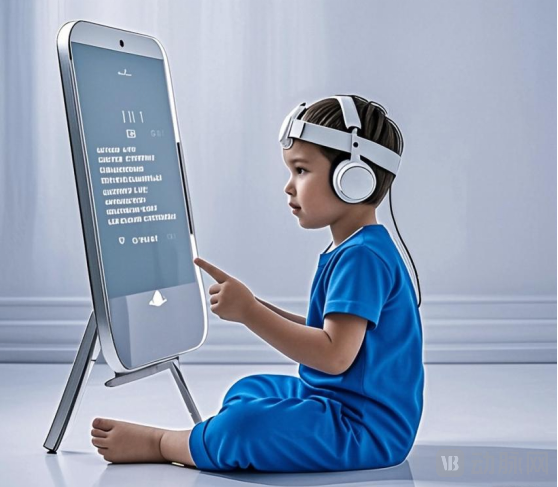
Schematic Diagram of Nansu Technology’s Second-Generation Digital Electricity Joint Platform (Image source: Provided by the interviewee)
Simply put, digital therapeutics primarily influence neural network activity through auditory and visual stimulation. However, the addition of electrical stimulation can further modulate the frequency of cerebral neural oscillations, thereby improving patients' language processing capabilities. Moreover, if parameters such as the envelope of the electrical stimulation remain correlated with speech signals during this process, the therapeutic effects will be more pronounced. Currently,Hangzhou Nansu Technology Co., Ltd. has completed the development of the prototype for its digital-electrical combination therapy system., and clinical efficacy validation is currently underway. This technology can also be applied to rehabilitative treatments in areas such as cognition, depression, tinnitus, and sleep.
In 2025, Hangzhou Nansu Technology Co., Ltd. is expected to launch a corresponding product portfolio based on its second-generation platform, serving more hospitals and patients.
Internet Hospital License to Be Approved Soon, Bringing Rehabilitation Services Down to the Community Level
Since the Xiaonan Ting Shuo series entered the medical market in 2023, it has been widely acclaimed by clinicians. With continuous product refinement and iteration, clinical acceptance has steadily increased. Recently, Nansu Technology has developed a comprehensive digital rehabilitation solution for children, transforming its relationship with hospitals from that of a mere provider of digital diagnostic and therapeutic products to a supplier of integrated solutions.
Following this round of financing, the team will continue to advance the adoption of its products in hospitals, aiming to reach 1,000 hospitals and serve 100,000 patients within the next year. In addition, Nansu Technology is actively applying for an Internet Hospital license, with the goal of effectively connecting in-hospital rehabilitation with home-based rehabilitation. To date, Nansu Technology has provided home rehabilitation services to more than 2,000 children. Through these initiatives, the company hopes to promote greater convenience and home-centricity in rehabilitation therapy, ultimately bringing rehabilitation services back to communities and families and making rehabilitation more integrated into patients’ daily lives.
For this round of financing,Dr. Wang Ningyuan, Founder and CEO of Nansu TechnologyIndicates: We sincerely appreciate the investors in this round for their confidence in the future development of Nansu Technology and its "Xiao Nan Ting Shuo" product line, as well as for providing financial support during this critical period of accelerated growth. Currently, the "Xiao Nan Ting Shuo" series launched by the company has gained favorable market acceptance and achieved rapid revenue growth in the field of pediatric rehabilitation. Therefore, the company will subsequently focus its primary efforts on marketing existing products, as well as on the research and development and industrial commercialization of digital-electrical combination therapy technologies, aiming to launch its first product in this category by 2025. Meanwhile, the company is about to obtain an Internet Hospital license, which will enable it to bridge the "last mile" between in-hospital care and home-based rehabilitation. By leveraging technologies such as artificial intelligence and neuromodulation, the company strives to maximally improve the rehabilitation outcomes for children and elderly patients suffering from brain function disorders.
Zhongxi Fund stated:Zhongxi Fund focuses on early-stage investments in the healthcare and wellness sector, selecting investment targets with an industry-oriented mindset. Hangzhou Nansu Technology Co., Ltd. has earned high market acclaim for its pioneering achievements in digital therapeutics for pediatric neurological disorders. Recognizing the commercial capabilities of Nansu Technology’s team and the social value of this field, Zhongxi Fund will partner with Nansu Technology to address the significant unmet clinical needs in pediatric neurological disorders. Together, they will expand a series of innovative, safe, and cost-effective pediatric rehabilitation solutions, aiming to bring hope to more patients and families while driving progress across the entire industry.