

Million-Dollar CAR-T Therapies Fail to Enter China's National Reimbursement Drug List for the Fourth Consecutive Year
However, this is only one side of the story. In contrast, the approval rates for expert reviews of drugs not included in the catalog were approximately 70% and 60%, respectively, in the previous two years.This year, the expert review approval rate for the “National Reimbursement Drug List Negotiations” was only 41.3%., which means that a large number of drugs have been excluded from the National Reimbursement Drug List (NRDL). Among them, the CAR-T sector has been hit the hardest: all four submitted products—axicabtagene ciloleucel, relma-cel, naqi-cel, and zevor-cel—failed to be included in the NRDL. In fact, they were all eliminated during the formal review stage, never even making it to the negotiation table.
This is not even the most awkward part; it is reported that,This Year Marks the Fourth Consecutive Failure of CAR-T Therapy to Be Included in the National Reimbursement Drug ListTaking Fosun Kite’s axicabtagene ciloleucel injection as an example, as China’s first approved CAR-T therapy, it has failed to pass expert review for four consecutive years since its initial application in 2021. This situation is likely to persist; according to multiple industry experts, it will take at least another 3–5 years, if not longer, for CAR-T therapies to be included in the National Reimbursement Drug List (NRDL).
Thus, two critical questions have grown increasingly prominent within the industry:First, why are CAR-T therapies fiercely competing for inclusion in the national medical insurance reimbursement list? Second, why have they consistently been excluded, without even the opportunity for negotiation?The answer often lies in the subtle details.
“On the Bench” for Four Years
In fact, the industry had already predicted the failure of the four CAR-T products the moment they submitted their applications for inclusion in the national medical insurance list this year. This is because“Won’t discuss anything under 500,000; won’t enter for less than 300,000”Beneath the implicit barriers of China’s National Reimbursement Drug List (NRDL) negotiations, CAR-T therapies, with their price tags often reaching millions of yuan, are clearly far from meeting the “standard.”
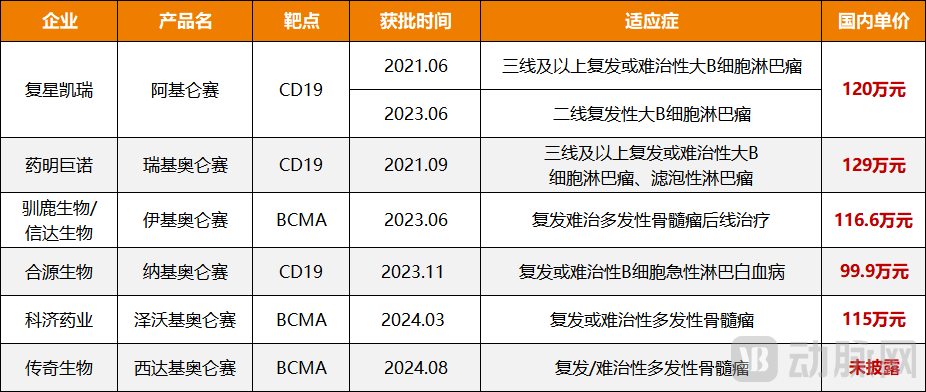 Figure 1. Overview and Pricing of the Six CAR-T Products Approved in China
According to VCBeat, among the six CAR-T therapies currently approved in China, the most affordable is HeYuan Bio’s naqiocel injection at RMB 999,000 per dose, while the most expensive is JW Therapeutics’ riqicel injection at RMB 1.29 million per dose. Legend Biotech’s ciltacabtagene autoleucel injection was approved this August; although its price has not yet been announced, based on its U.S. pricing of USD 465,000 per dose, its domestic price is estimated to be no lower than RMB 1.2 million per dose, far exceeding the reimbursement threshold of the national medical insurance system.
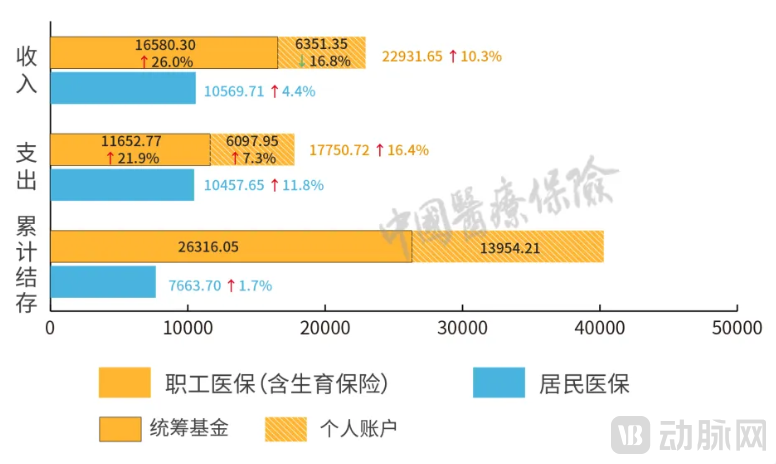 Figure 2. Income and Expenditure of the National Basic Medical Insurance Fund in 2023 (Unit: RMB 100 million; Source: China Healthcare Security)
Furthermore, given the significant financial pressure on the current basic medical insurance fund, such “astronomically priced drugs” are naturally excluded. According to the 2023 Statistical Bulletin on the Development of Medical Security released by the National Healthcare Security Administration,In 2023, the total revenue and expenditure of China's medical insurance fund increased by 7.9% and 14.4%, respectively, with the growth rate of expenditure far exceeding that of revenue.. This means that the medical insurance fund will face significant challenges in the future, and current resources must be allocated with maximum precision (“using good steel on the blade’s edge”), necessitating that high-cost therapies such as CAR-T cell therapy take a back seat for now.
However, “money” is not the only reason.The Difficulty of Including CAR-T in Medical Insurance Is Also Reflected in Its Clinical Limitations. It is reported that CAR-T therapies currently approved in China are primarily indicated for patients with relapsed or refractory hematologic malignancies. According to publicly available data, hematologic malignancies account for only 10% of the global cancer incidence. Furthermore, not all patients within this 10% are eligible for CAR-T therapy, resulting in extremely limited market demand.
This has also been validated in real-world clinical settings. Taking axicabtagene ciloleucel as an example, as the first CAR-T therapy approved for marketing in China, it covered only more than 700 patients in the four years since its launch, even with comprehensive inclusion of commercial health insurance. Relma-cel, launched three months later, had even lower uptake: as of 2023, its total sales amounted to RMB 351 million, which, at a price of RMB 1.29 million per dose, translates to fewer than 300 patients treated. This is clearly inconsistent with the fundamental nature of basic medical insurance, which is designed to provide essential coverage.
So, why is CAR-T so expensive, and why is its market penetration so low? It all comes down to its “personalized” nature.
It is reported that all CAR-T therapies currently approved for market launch are autologous CAR-T products. Autologous CAR-T therapy requires the collection of T cells from each individual patient; therefore, a dedicated production line is required for each patient, and the final product is strictly limited to use by the patient themselves. Once the patient’s T cells arrive at the manufacturing facility, the production process involves more than 600 procedural steps and the expertise of over 20 specialized manufacturing engineers. Furthermore, the product must undergo rigorous quality control and quality assurance testing. This complex manufacturing process also relies on costly imported materials, such as viral vectors, resulting in exceptionally high production costs. According to foreign studies,The material cost of producing each dose of CAR-T is approximately $43,000 (about RMB 310,000).。
In response, a senior industry expert remarked, “Due to the unique nature of CAR-T cell therapies, current clinical manufacturing processes cannot deviate from a “personalized” approach, and the production costs of the product itself cannot be amortized by treating more patients. Furthermore, as the domestic environment in China is not yet sufficient to support segmented manufacturing, preparation costs inevitably remain high.“Therefore, at the current stage, it is still difficult for enterprises to bear such significant price reductions as seen with other drugs, which has caused them to lose their initial advantage in national reimbursement drug list negotiations.”
Four “Solutions”: Commercial Insurance, Domestic Products, Overseas Expansion, and Universal CAR-T
Although inclusion of CAR-T therapy in the national medical insurance scheme currently faces considerable challenges, the scheme remains the primary payer for pharmaceuticals in China and has long been regarded as a critical pillar of support for the adoption of CAR-T therapies.
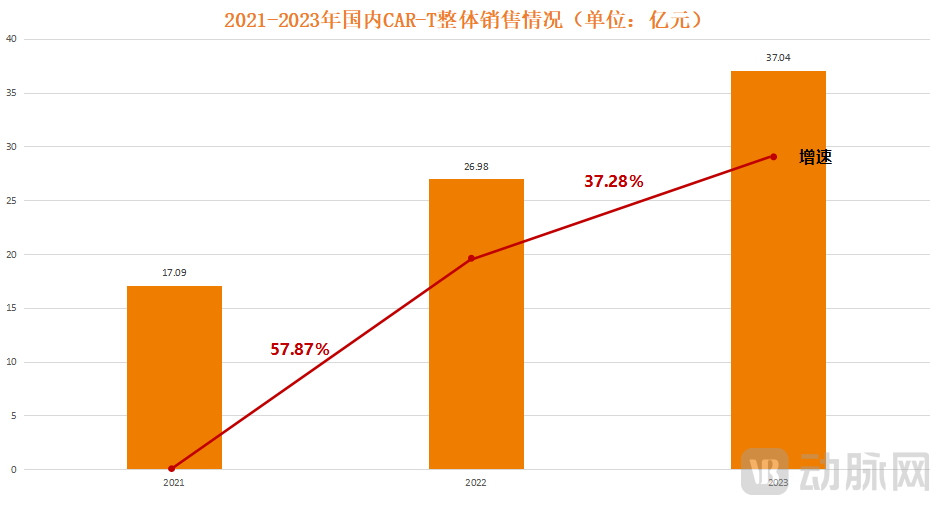 Figure 3. Overall Sales and Growth Rate of CAR-T in China, 2021–2023 (Data source: YAOZHI Data)
This should be viewed from two perspectives,On one hand, revenue pressure needs to be alleviated through medical insurance.. Taking WuXi Juno Therapeutics as an example, the company currently has only one marketed product, relma-cel injection. Its revenues from 2021 to the first half of 2024 were RMB 30.797 million, RMB 146 million, RMB 174 million, and RMB 86.815 million, respectively, indicating a significant slowdown in revenue growth.On the other hand, inclusion in the national medical insurance scheme not only resolves payment issues but also addresses challenges related to hospital access, market education, and product promotion., which can significantly reduce costs for enterprises, thereby creating room for price reductions in CAR-T therapies—a true win-win situation.
However, as reimbursement channels tighten, the prospects mentioned above are difficult to realize in the current stage. So, are there any other ways to break through the deadlock?
Through meta-analysis, VCBeat has summarized four viable pathways,The first measure is to explore diversified payment mechanisms.. It is reported that, prior to the announcement of the results of the new round of national medical insurance negotiations, the National Healthcare Security Administration (NHSA) conveyed a key message to the public through official documents and press conferences, namely that the medical insurance system will take measures to promote the development of commercial health insurance companies and improve the “1+3+N” multi-tiered healthcare security system. According to the NHSA, these supportive measures for commercial health insurance include empowering commercial insurers with medical insurance data and implementing synchronized settlement between the basic medical insurance fund and commercial health insurance.This means that, from the perspective of top-level design, efforts are already underway to facilitate the implementation of commercial health insurance.。
In fact, against the backdrop that medical insurance cannot “cover” CAR-T therapy,Aggressively penetrating the commercial health insurance market has long become an industry consensusAccording to incomplete statistics, axicabtagene ciloleucel has been included in the urban supplementary medical insurance programs (Huiminbao) of 100 provinces and cities, with 150 treatment centers registered; nacabtagene autoleucel has been covered by Hebei Province’s Huiminbao, achieving an 80% reimbursement rate; relmacabtagene autoleucel has been listed in the supplementary medical insurance plans of 75 local governments; while inaxicabtagene autoleucel, the only one that did not submit an application for national medical insurance coverage during this period, was simultaneously included in the 2025 “Jiangsu Yihuibao No. 1” plan.
On this basis,To further expand market coverage, CAR-T therapies are also exploring payment models based on outcomes and installment-based payments.Earlier this year, Fosun Kite became the first to launch a pay-for-performance model for CAR-T therapy. Under the plan, eligible patients who fail to achieve complete remission (CR) after treatment with axicabtagene ciloleucel will receive a refund of up to RMB 600,000 on the original price of RMB 1.2 million per dose. The impact was immediate: in the nearly nine months since its launch, the number of patients receiving the treatment has increased significantly compared to last year, with close to 200 patients enrolled in the program.
The second path is to promote full-chain localization.This March, an article in Nature revealed that ImmunoACT, an Indian company, leveraged the cost advantages of localized production to significantly reduce expenses across three key areas—CAR-T raw materials, equipment, and labor—ultimately bringing the cost of a single CAR-T treatment down to just RMB 200,000–300,000.
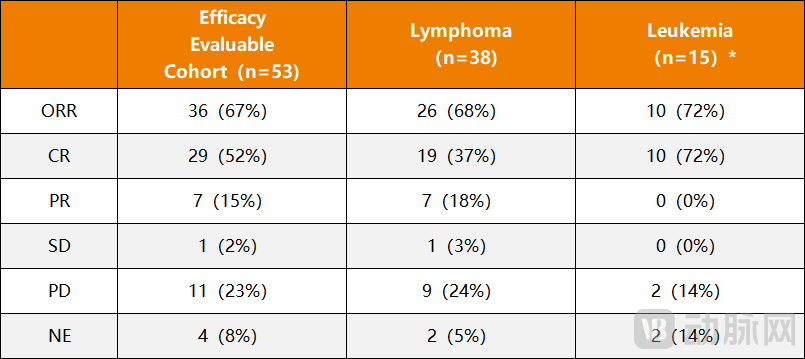 Figure 4. Efficacy data of NexCAR19 in India (Source: ImmunoACT official website)
This undoubtedly provides a strategic direction for domestically produced CAR-T therapies. According to industry insiders, the manufacturing processes for CAR-T products are gradually being localized in China; among the six approved CAR-T products, more than half are domestically produced. As this trend continues, the production costs of future CAR-T products are expected to decline. However, he emphasized that any changes in either the manufacturing process or raw materials for CAR-T products require rigorous regulatory approval. Therefore, localization will not yield immediate results but is instead a prolonged process. Only by achieving full supply chain localization can production costs be significantly reduced, thereby creating room for lower pricing.
The Third Path Is Going GlobalIn December 2023, AstraZeneca acquired Gracell Biotechnologies for $1.2 billion, marking the first time a Chinese pharmaceutical company was fully acquired by a multinational corporation (MNC). Gracell Biotechnologies is no small player; its flagship product, GC012F, a CD19/BCMA dual-target CAR-T therapy, has extended CAR-T technology into the field of autoimmune diseases and achieved impressive clinical efficacy. However, due to delays in commercialization, its stock performance on the U.S. market remained sluggish, with its market capitalization plunging by as much as 91%. Under these circumstances, being acquired was undoubtedly a favorable option. Leveraging AstraZeneca’s overseas channels and resources, Gracell’s products may soon reach the market, enabling the company to turn losses into profits.
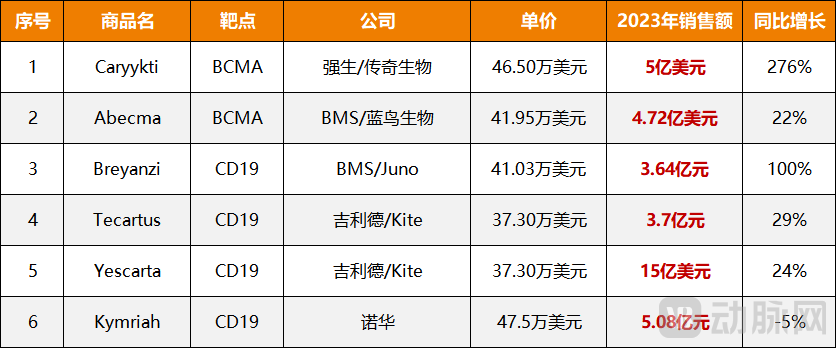 Figure 5. Revenue and Growth Rates of the Six FDA-Approved CAR-T Therapies in 2023 (Source: Zhitong Finance)
Also in the CAR-T space, Legend Biotech has recently been rumored to have received a sky-high acquisition offer from a multinational corporation (MNC). Its blockbuster product, ciltacabtagene autoleucel, serves as a prime example of successful international expansion. In late 2017, Legend Biotech partnered with Johnson & Johnson to co-develop and market ciltacabtagene autoleucel injection. The product was approved for launch in the U.S. in 2022, generating $133 million in sales during its first year on the market. Sales surged to $500 million in 2023, representing a year-on-year increase of 276%. Notably, the overseas sales rights are split equally between the two parties, meaning Legend Biotech stands to reap substantial revenue. Amid the current wave of global expansion, more CAR-T companies may join this trend, leveraging it to unlock monetization channels.
The final approach involves technological iteration, namely focusing on universal CAR-T therapies.As previously mentioned, all CAR-T products currently marketed worldwide are autologous CAR-T therapies. Due to their highly "personalized" nature, production costs are extremely high. Furthermore, their application has long been confined to hematologic malignancies, resulting in very limited market accessibility.
Universal CAR-T therapy has the potential to change this landscape, as its greatest advantage lies in being available “off-the-shelf.” A single production batch can treat more than 100 patients, which will significantly reduce manufacturing costs. According to third-party data, leveraging the advantages of scaled-up production, universal CAR-T is expected to lower total consumable costs from $60,000 to $2,000 and quality control (QC) expenses from $30,000 to $1,000, thereby reducing the overall production cost from nearly $100,000 for customized autologous CAR-T therapy to $4,460.
However, universal CAR-T currently faces varying degrees of R&D challenges, such as graft-versus-host disease (GVHD), host-versus-graft reaction (HVGR), and the durability of therapeutic efficacy. Even so, for CAR-T therapies currently mired in commercialization difficulties, this represents a highly viable option, and many companies are already directing significant efforts toward its development.
In fact, each of the four aforementioned pathways has its own advantages and disadvantages. Determining how to select among them to maximize benefits requires a comprehensive assessment based on one’s specific product profile and industry dynamics. Nevertheless, one thing is certain: with reimbursement channels facing obstacles and amid the current capital winter, the commercialization of CAR-T therapies has become imminent.
Same “Path,” Different Fates
This year marks the seventh round of national medical insurance negotiations. Over the past seven years, a cumulative total of 835 drugs have been added to the national medical insurance catalog, reducing the financial burden on patients by more than RMB 880 billion. Throughout this process,Support for innovative drugs under China’s basic medical insurance has continued to strengthen. Over the past four years, expenditures on innovative drugs from the medical insurance fund have increased approximately 15-fold, with their share of total spending also rising significantly.。
In fact, innovative drugs currently facing widespread survival pressure are also heavily reliant on national medical insurance coverage. In this regard, a senior industry expert told VCBeat, “To some extent, whether a drug can be included in the national medical insurance list may determine the survival of a domestic innovative pharmaceutical company.”This is because successful market entry typically leads to a significant increase in sales volume and facilitates smooth commercialization, generating revenue that can better feed back into R&D. Conversely, failure to gain access usually means losing the opportunity to enter hospitals, making any discussion of sales growth or commercialization moot.”
However, it is also important to recognize that it is currently not easy for innovative drugs to be included in the National Reimbursement Drug List (NRDL). This is because the NRDL has historically been designed primarily to cover generic drugs. Although the access criteria have gradually been relaxed in recent years with the rise of innovative drugs, leading to the inclusion of many such products, the core principle remains “ensuring basic coverage.” Furthermore, given the current financial strain on the national medical insurance fund, it is becoming increasingly challenging to provide substantial support for innovative drugs.
Thus, high-priced innovative drugs such as CAR-T therapy, while representing cutting-edge technology in their respective fields and having demonstrated clinical efficacy, still cannot avoid being excluded from national medical insurance coverage. However, there are exceptions. It is reported thatOver the past seven years of medical insurance reforms, nearly 30 types of “exorbitantly priced drugs” have been successfully included in the National Reimbursement Drug List.。
Among these, the most impressive case is nusinersen injection, which was included in the national medical insurance reimbursement list in 2021, when its market price exceeded RMB 700,000 per dose. In the same year, Replagal (agalsidase alfa), a specific drug for Fabry disease, was also successfully included in the national medical insurance reimbursement list; treatment for this condition previously cost nearly RMB 1.5 million annually. This year has also seen typical cases, such as larotrectinib, the world’s first tumor-agnostic targeted therapy used for initial treatment regardless of tumor origin, priced at USD 32,800 per month in the United States, resulting in an annual cost exceeding RMB 2.6 million. Additionally, repotrectinib, a new-generation anticancer drug, carries a monthly cost as high as RMB 260,000.
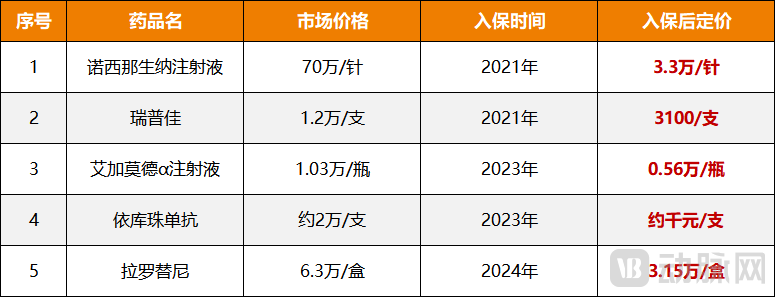 Figure 6. Price reductions of certain “exorbitantly priced drugs” after their inclusion in the national medical insurance scheme (Data source: public information)
In fact, a key factor enabling its inclusion in the National Reimbursement Drug List (NRDL) was its proactive price reduction strategy. Taking larotrectinib as an example, the winning bid prices after NRDL inclusion were RMB 31,500 for the capsule formulation and RMB 5,625 to RMB 11,250 for the oral solution, representing a price reduction of over 70%. Therefore,For CAR-T therapy, the primary strategy to break through the barrier of medical insurance coverage is always to achieve price reductions through technological iteration and upgrades in production methods.。
Of course, this is destined to be an ongoing technical challenge.
1. “Four Times Shut Out of the Negotiating Table: Why Is It So Difficult to Include ‘Sky-High Priced Anti-Cancer Drugs’ in the National Reimbursement Drug List?” – Yicai;
2. “Is National Health Insurance the ‘Life-Saving Drug’ for Domestic Innovation?” – Huxiu;
3. “CAR-T, a Breakthrough Cancer Drug, Once Again Excluded from National Reimbursement List” – Sina Medicine.