

VISEN Pharmaceuticals, a Reverse NewCo Leveraging Ascendis' TransCon Platform, Targets Endocrine Market Blue Ocean with Best-in-Class Pipeline
VISEN
Endocrine-related Disease Treatment Drug Developer
Since 2024, NewCo transactions have become one of the most significant activities in China’s biotech capital market. In essence, a NewCo represents a more complex model for licensing innovative drug assets.Integrates asset transactions and equity transactions, i.e., BD + financing.Such transactions, which combine the attributes of business development (BD) and financing, have made biotech companies holding early-stage innovative drug assets eager to engage.
The origins of NewCo can be traced back to 2014. Vivek Ramaswamy, a former Wall Street hedge fund manager and a 2024 U.S. presidential candidate, founded Roivant Sciences with the mission of “rescuing forgotten drugs in the pharmaceutical industry.” Roivant’s business model involves identifying promising but undervalued pipelines from multinational corporations (MNCs), spinning them off into new companies to advance their development, and ultimately generating returns by facilitating the acquisition of these new entities by major pharmaceutical companies.
It is worth noting that, unlike conventional asset licensing, recent NewCo transactions involving Chinese biopharmaceutical companies exhibit strong overseas characteristics, with their primary operational activities focused on international markets. Taking Hengrui Medicine as an example, although its core assets consist of licensed innovative drug pipelines developed in China, its overseas subsidiary, Hercules, is a purely American company. Conversely, when high-potential overseas pipelines are introduced into China, they are typically supported by domestic management teams and complete financing or go public in the local market.
Recently, as a reverse NewCo,VISEN: The Only Biotech in the Hong Kong Stock Market Focused on Endocrinology and Developing Long-Acting Growth Hormone(VISEN Pharmaceuticals) has updated its prospectus and is poised for an initial public offering (IPO). VISEN is a late-stage biopharmaceutical company with products nearing commercialization, specializing in the field of endocrinology. It is committed to providing first-in-class or best-in-class products and treatment solutions for endocrine disorders.
In 2018, the Danish pharmaceutical company Ascendis Pharma A/S (NASDAQ: ASND, hereinafter referred to as “Ascendis”), together with Vivo Capital and Sofinnova Ventures, jointly established VISEN Pharmaceuticals in Shanghai. Ascendis contributed its products as equity, while Vivo Capital and Sofinnova Ventures provided financial support. Pursuant to an exclusive licensing agreement between VISEN Pharmaceuticals and Ascendis, the company is authorized to develop, manufacture, and commercialize endocrine therapeutic candidates, including lonapegsomatropin, navepegritide, and palopegteriparatide, in the designated territories.
Certainty: Confidence in the value of capital, licensors, and management teams’ products
As NewCos gradually enter the public spotlight in China and gain widespread recognition, their market certainty is increasingly acknowledged. The funds that typically establish and invest in NewCos are seasoned players with deep familiarity with the target markets. Investors have long been optimistic about the assets’ prospects in these target markets when forming NewCos, having largely determined the IPO fundraising amount and even clarified future exit pathways. Following the listing, as clinical data are disclosed and products achieve successful commercialization, stock prices are likely to surge multiplicatively. Furthermore, backed by experienced management and operational teams, the likelihood and success rate of product launches are effectively ensured, thereby sustaining recognition in the capital markets.
As VISEN, which adopted the reverse NewCo model, took over the preclinical studies completed by Ascendis (including results from animal experiments and Phase I clinical trials), it rapidly advanced Phase II and Phase III clinical trials in China, thereby reducing R&D risks and accelerating the product’s market launch. During this process, VISEN secured $150 million in Series B financing. With relatively limited capital, the company focused on advancing the development of three licensed pipelines in China over just six years, achieving outstanding clinical outcomes.
The NewCo model and its investment approach are now widely recognized and understood. As early as 2018, VISEN, established through a reverse NewCo structure, secured product in-licensing rights from Ascendis by issuing a certain number of shares to the latter. This collaboration model enabled VISEN to maximize the retention of its profits and capital, thereby benefiting the company’s operations and future development.
All of this stems from the confidence that capital investors, licensors, and the management team have in the product and its market potential.
The success or failure of commercializing innovative drugs is largely determined at the product selection stage. Ideal candidates should exhibit substantial market potential, strong pricing power, and outstanding product competitiveness (both clinical and commercial). While products possessing all these attributes are rare, successful commercialization requires that selected products have no significant weaknesses.
VISEN’s three products, leveraging the TransCon technology platform, address technical challenges related to patient compliance and drug developability in endocrinology at multiple levels, establishing a high technological barrier.. Clinical trial data demonstrate that the differentiated therapeutic areas targeted by these three pipeline candidates are characterized by substantial unmet clinical needs.
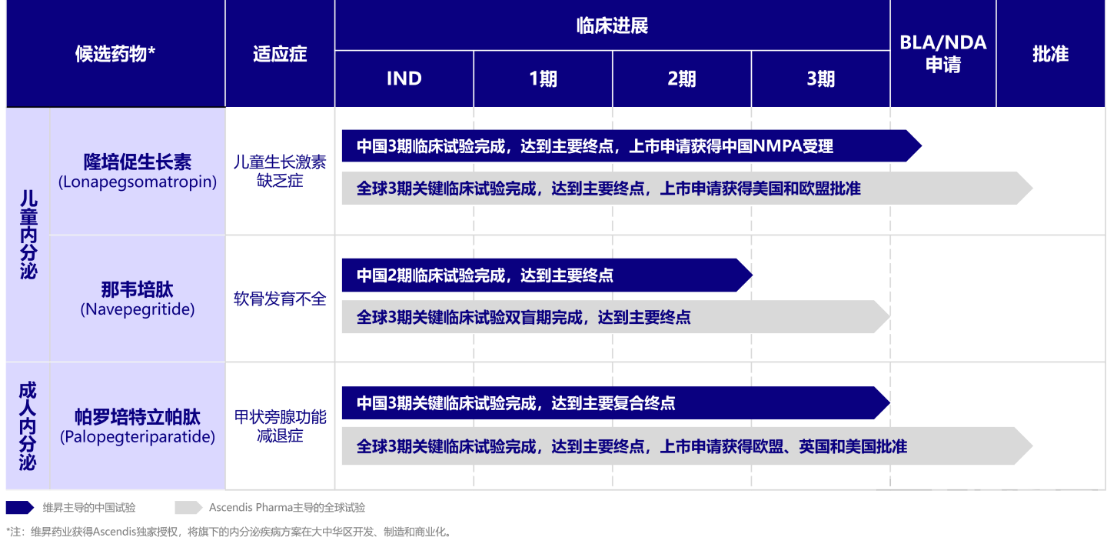
Image source: VISEN
Ascendis recently announced that it has granted Novo Nordisk an exclusive global license to the TransCon technology platform for the development, manufacturing, and commercialization of Novo Nordisk’s proprietary once-monthly GLP-1 receptor agonist for metabolic diseases, including obesity and type 2 diabetes, as well as an exclusive license for its cardiovascular disease products. Under the agreement, Ascendis is eligible to receive upfront payments and development and regulatory milestone payments totaling up to $285 million (over RMB 2 billion).
The conclusion of this licensing deal also affirms that TransCon technology stands out among the diverse long-acting technologies, establishing itself as a leading global long-acting technology platform. VISEN has already secured three innovative drugs powered by TransCon technology.
Novo Nordisk’s TransCon Long-Acting Platform, Backed by Over $2 Billion
The endocrine therapy sector in which VISEN operates encompasses more than 170 diseases that can affect individuals across all age groups, from neonates to the elderly. However, for the field of endocrine diseases as a whole, at least nearly half of these conditions still lack effective treatments—either due to the absence of available medications or inadequacies in existing therapies (such as limited efficacy and significant side effects). Consequently, there remains a strong and widespread unmet clinical need.
Compared with overseas markets, there is still significant room for improvement in innovative drugs for endocrine diseases in China. Introducing validated endocrine innovative drugs with proven clinical benefits will help further promote the development of China’s endocrine drug market. According to Frost & Sullivan data, the market size of non-diabetes endocrine drugs in China is expected to reach US$6.8 billion by 2026, representing a compound annual growth rate (CAGR) of 23.7% from 2022; it is projected to grow to US$11.5 billion by 2030, with a CAGR of 13.9% from 2026. Meanwhile, the Chinese government has implemented a science and technology innovation strategy and introduced a series of favorable policies to encourage pharmaceutical innovation. Deepening healthcare reforms and accelerating the review and approval process for innovative drugs have created an unprecedentedly favorable environment for their development.
In terms of product offerings, taking VISEN’s long-acting growth hormone—a key asset in its core pipeline—as an example, traditional short-acting growth hormone requires patients to receive daily injections, totaling 365 injections per year. This imposes significant inconvenience on patients, making it difficult to ensure long-term adherence and consequently compromising therapeutic outcomes. These challenges are further exacerbated in the pediatric patient population. Therefore, converting short-acting growth hormone into a long-acting formulation has long been a shared goal among physicians, patients, and pharmaceutical companies. However, due to the high technical barriers associated with long-acting formulations, there have been few successful precedents to date.
The key technical barrier lies in the fact that, for protein and peptide-based therapeutics, options for achieving long-acting effects are extremely limited. Due to the complex mechanisms underlying tissue distribution, receptor binding, and metabolic clearance of peptide hormones in vivo, it is difficult to attain prolonged efficacy without compromising therapeutic effectiveness and safety.
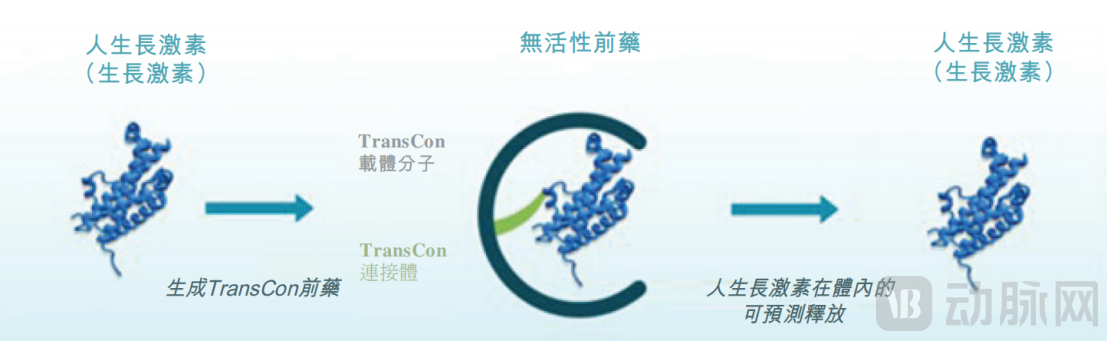
The TransCon (Transient Conjugation) platform is specifically designed to overcome this barrier. A TransCon molecule comprises three components:Unmodified parent drug, inert carrier molecules that protect the parent drug, and linkers that temporarily connect the two. Upon conjugation of the three components, a prodrug is formed, in which the carrier molecule renders the parent drug inactive and protects it from clearance by the body. When the prodrug is administered via injection into the human body, the active, unmodified parent drug is released in a controlled manner under physiological pH and temperature conditions, thereby achieving a breakthrough from short-acting to long-acting efficacy and reducing the burden of disease treatment. As the parent drug remains unmodified, its original tissue distribution and physiological effects are preserved.
The TransCon platform temporarily links carrier molecules to biologically active parent drugs through a unique linker structure. Depending on the carrier used, TransCon prodrugs can be designed for systemic (throughout the body) or local (e.g., within tumors) action to achieve specific therapeutic goals. Based on its innovative long-acting technology principle, the TransCon platform is broadly applicable to the development of protein, peptide, or small-molecule drugs across various therapeutic areas.
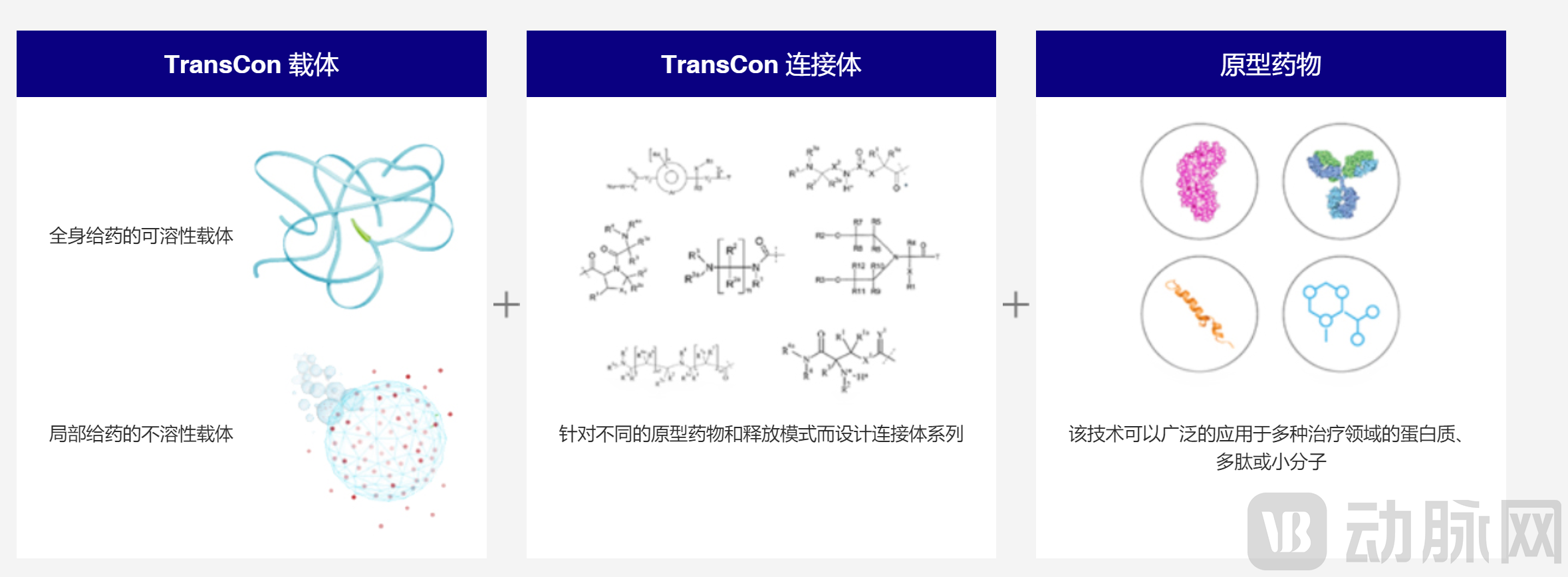
Image source: VISEN
Notably, the TransCon platform not only provides an innovative solution for the long-acting formulation of growth hormone but also enables the drug development of other hormonal therapies. For instance, certain hormones that are rapidly metabolized in vivo, such as parathyroid hormone (PTH), were previously undruggable because they failed to maintain stable hormone levels after injection, thereby precluding their use in treating related hormonal deficiency disorders (hypoparathyroidism). However, with the TransCon long-acting technology platform, the drugability challenges associated with such hormonal agents have been resolved.
Simultaneously Advance Clinical Development and the Industrial Chain to Accelerate Commercialization
Lu Anbang, CEO of VISEN, joined the company in 2018 as its first employee and has been with the organization for over six years. Prior to joining VISEN, he held positions at several multinational pharmaceutical companies. He spent 16 years at Servier in France, where he was responsible for the global marketing of multiple products at the French headquarters before being assigned back to China in 2006 to serve as General Manager of the China region. He later joined Takeda Pharmaceutical Company, serving successively as President of the China Region and then the Greater China Region. During his seven-year tenure leading the team, he spearheaded Takeda’s key growth phase in the Chinese market, achieving more than a tenfold increase in sales revenue.
At VISEN, Lu Anbang believes that startups need to assess the external environment, including clinical needs in the chosen therapeutic area, product value, and the economic landscape. Meanwhile, as entrepreneurs, they must also re-evaluate their own capabilities and the specific sector they operate in, encompassing individual intrinsic abilities, the team’s transferable and non-transferable skills, and the competitiveness of their pipeline products.
Once product selection is finalized, the subsequent success of innovative drug commercialization hinges on “execution.”And commercialization “efforts” are not simply a matter of “brute force yielding miracles,” but ratherRequires a series of sound business decisions and strong execution capabilities.Such commercial promotional efforts must be appropriately managed, including establishing reasonable short-term and medium-to-long-term sales forecasts and business objectives, formulating product-specific promotional strategies and approaches, and allocating promotional resources rationally.
Leveraging Ascendis’s licensed technology platform and three candidate drugs, VISEN has brought its products to near-commercialization stages in China in less than six years, while focusing on the treatment of endocrine-related diseases.
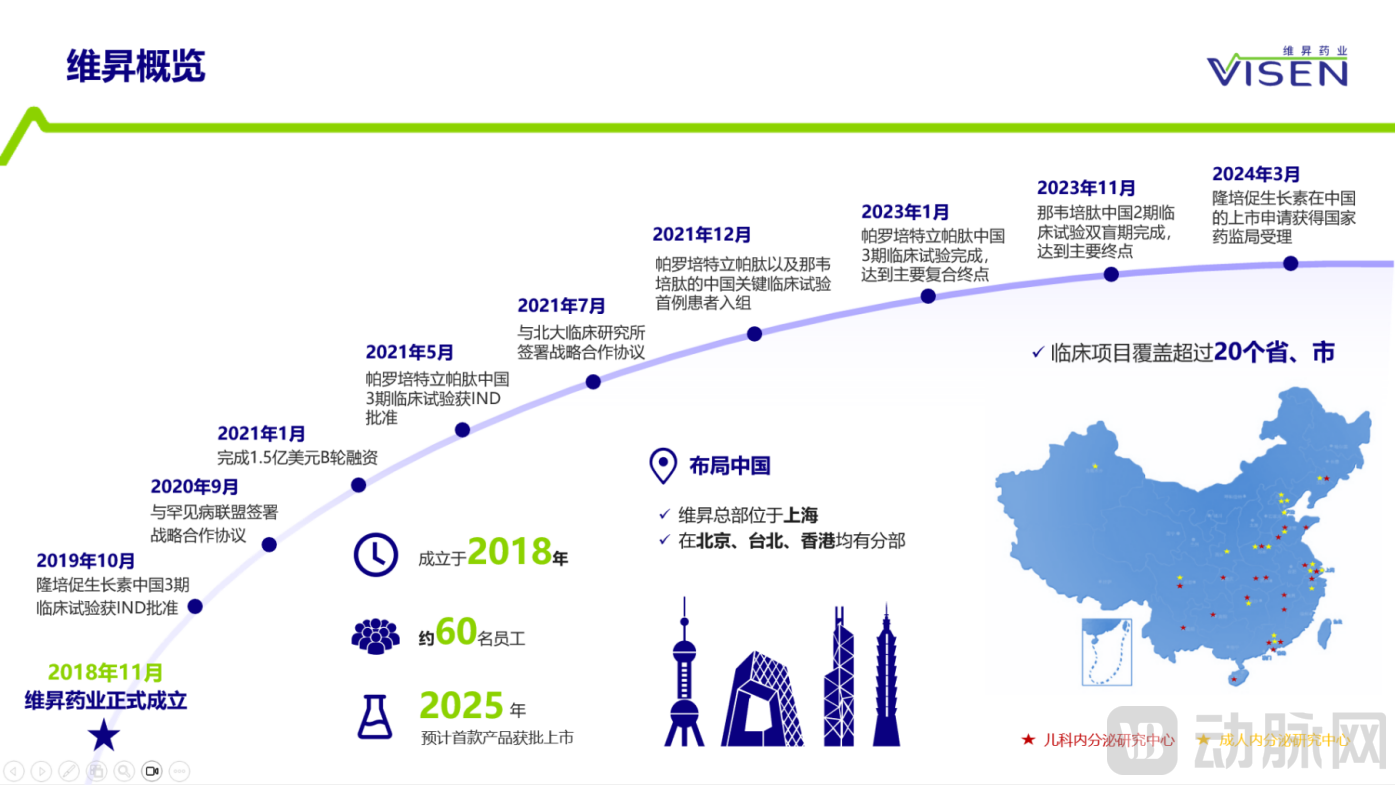
Image source: VISEN
On one hand, for innovative drugs from overseas NewCos to be launched in the local market, they must still follow the established procedures of clinical development, registration, and commercialization in a step-by-step manner. To comply with regulatory requirements and ensure rapid market entry, it has become imperative to advance clinical trials through multiple parallel pathways.
It is worth noting that despite the numerous challenges faced during the COVID-19 pandemic, all three of VISEN’s clinical trials achieved their predefined milestone targets and yielded positive results.
On the other hand, VISEN has built its own core commercialization team, starting with its flagship product, lonapegsomatropin.Focus on Enhancing the Accessibility of VISEN Products Through Innovative ModelsBy connecting expert academic networks, clinicians, and patient communities, VISEN has established initiatives including disease science popularization, patient education, and disease management. These efforts strengthen its end-to-end industrial layout for innovative endocrine therapies—spanning basic research, clinical development, manufacturing, and commercialization—thereby ensuring the sustainability of domestic drug supply.
Recently, VISEN and Shanghai Pharmaceuticals Holdings Co., Ltd. (hereinafter referred to as “Shanghai Pharmaceuticals”) have launched a collaboration on full-lifecycle services for innovative drugs, centered on VISEN’s commercialized products. This partnership confirms Shanghai Pharmaceuticals’ status as the exclusive import distributor and further accelerates the commercialization of VISEN’s products.
Focusing on Unmet Clinical Needs: Three First-in-Class/Best-in-Class Pipelines Poised for Launch
The most advanced candidate in VISEN’s R&D pipeline is lonapegsomatropin: Phase III clinical trials have been completed in China, and its Biologics License Application (BLA) was formally accepted by the National Medical Products Administration (NMPA) in 2024 for the treatment of pediatric growth hormone deficiency. Meanwhile, lonapegsomatropin has already been approved for marketing in the United States and Europe, becoming the first long-acting growth hormone approved by regulatory authorities in these regions for the treatment of pediatric growth hormone deficiency. Marketed abroad under the brand name Skytrofa, it is manufactured and distributed by Ascendis Pharma of Denmark. In the fourth quarter of 2023, this product became the best-selling growth hormone product in the United States.
Lonapegsomatropin isThe only long-acting growth hormone currently available that provides sustained in vivo release of unmodified growth hormone molecules, offering a “natural action” profile, the molecular structure of this unmodified growth hormone is identical to that of endogenous growth hormone secreted by the human body, exhibiting consistent tissue distribution and physiological effects with endogenous growth hormone: it exerts direct effects by reaching and entering target tissues via blood circulation and binding to growth hormone receptors in these tissues; it exerts indirect effects by binding to growth hormone receptors in the liver, thereby promoting the secretion of insulin-like growth factor-1 (IGF-1).
In contrast, other long-acting growth hormones developed using protein modification technologies typically achieve prolonged action by substantially increasing the size of their active molecules. However, such alterations to the molecular size and structure of growth hormone can change its affinity for the growth hormone receptor and reduce its ability to penetrate target tissues. Their mechanism of action differs from that of endogenous growth hormone, which may potentially affect the efficacy or safety of these long-acting growth hormone products.
The unique mechanism of “natural action” associated with lonapegsomatropin is further reflected in its clinical trial results: Phase 3 clinical trials conducted globally and in China have both confirmed that its efficacy in promoting growth in children is significantly superior to that of daily growth hormone formulations, while maintaining a comparable safety profile. Lonapegsomatropin is currently the only long-acting growth hormone worldwide demonstrated to be superior to daily formulations. Furthermore, in the known global Phase 3 long-term open-label study, the enliGHten trial, lonapegsomatropin also demonstrated sustained efficacy and long-term safety over a period of up to five years.
China is currently the world’s largest market for growth hormone, characterized by low penetration and rapid growth. According to Frost & Sullivan, the number of pediatric patients with growth hormone deficiency in China reached 3.3746 million in 2022. Parents play a crucial role in this landscape, exerting significant influence over treatment decisions. Therefore, to reduce the caregiving burden on parents, in addition to offering long-acting formulations that substantially decrease dosing frequency, the ease of administration and convenience of storage and portability are also key factors influencing their choice of treatment regimen.
VISEN’s long-acting growth hormone, Lonapegsomatropin, also demonstrates unique advantages in this regard. Unlike other growth hormone products that require refrigerated storage at 2–8°C, Lonapegsomatropin can be stored at room temperature for up to six months without refrigeration, significantly enhancing convenience for patients in terms of portability and administration. Furthermore, the product is equipped with an auto-injector pen that has received three prestigious industry awards, including the Red Dot Design Award. Featuring automatic injection and a hidden needle, the device further improves the medication experience for pediatric patients.
Currently, four long-acting growth hormone products have been approved for marketing worldwide. In addition to Jinsai Zeng (by GenSci, a subsidiary of Changchun High-Tech), which is marketed exclusively in China, and Lonapegsomatropin—the first long-acting growth hormone approved for pediatric use in Europe and the United States, for which VISEN Pharmaceuticals has submitted a Biologics License Application (BLA) in China—Novo Nordisk’s Sogroya and Pfizer’s Ngenla were also approved in major markets, including the United States and the European Union, in 2023. Among these, Lonapegsomatropin, leveraging the innovative TransCon long-acting technology, offers the unique advantage of “natural action.” It requires only once-weekly administration while maintaining the natural structure of the active growth hormone component. Furthermore, it demonstrates superior efficacy in promoting height gain compared to daily injectable short-acting growth hormone formulations, providing greater therapeutic benefits for pediatric patients and their parents. As such, it represents a highly competitive long-acting growth hormone product.
TransCon CNP (TransCon C-type Natriuretic Peptide) is an investigational innovative therapy developed by VISEN for the treatment of achondroplasia (ACH) in children. Achondroplasia is a chromosomal genetic disorder characterized by short stature and various skeletal complications, and it has been included in China’s “Second Batch of Rare Diseases Catalogue.”Navpeptide is the first and only therapy in China currently undergoing clinical development for market approval that targets the root cause of achondroplasia., aiming to continuously suppress the overactivated FGFR3 receptor pathway in children with achondroplasia (ACH) through safe and convenient once-weekly dosing, restore normal chondrocyte differentiation and proliferation as well as systemic skeletal growth and development, while simultaneously improving and preventing complications associated with achondroplasia.
Globally, the first C-type natriuretic peptide analog for pediatric achondroplasia, vosoritide, was approved by the FDA in 2021; however, no clinical trials related to market approval have been conducted in China. In contrast, navepegritide received orphan drug designation from the U.S. Food and Drug Administration (FDA) in February 2019 and from the European Commission (EC) in August 2020 for the treatment of achondroplasia. In November 2023, the double-blind phase of the Phase 2 clinical trial of navepegritide in China was completed, meeting its primary endpoint. In September 2024, the global pivotal Phase 3 clinical trial of navepegritide achieved its primary study objective, demonstrating statistically significant superiority over placebo in annualized growth velocity.
Hypoparathyroidism (HP) is currently the only endocrine disorder that cannot be cured with hormone replacement therapy. Palopegteriparatide, an innovative drug under development by VISEN, is designed for hormone replacement therapy in hypoparathyroidism. It aims to restore physiological parathyroid hormone levels over a 24-hour period, thereby fundamentally addressing various aspects of the condition, including normalizing blood calcium, urinary calcium, and blood phosphorus levels, and reducing the risk of long-term complications.
Palopegteriparatide was approved by the European Commission (EC) in November 2023, the UK Medicines and Healthcare products Regulatory Agency (MHRA) in June 2024, and the U.S. Food and Drug Administration (FDA) in August 2024 for hormone replacement therapy in adults with chronic hypoparathyroidism. Its development and successful market launch have ended the era of lacking hormone replacement therapy for hypoparathyroidism, making it the first and only drug currently available worldwide for hormone replacement therapy in hypoparathyroidism.
As an innovative therapy for hypoparathyroidism, palopegteriparatide will also help Chinese patients overcome the challenges associated with conventional treatments. In January 2023, the double-blind phase of the pivotal Phase 3 clinical trial of palopegteriparatide in China was completed, meeting the primary composite endpoint. Subsequently, VISEN announced the data from its Phase 3 clinical trial of palopegteriparatide for the treatment of chronic hypoparathyroidism in adults in China, a 26-week, randomized, double-blind, placebo-controlled study. Compared with the placebo group, a significantly higher proportion of patients in the palopegteriparatide group achieved the primary composite endpoint. Specifically, 77.6% (45/58) of patients in the palopegteriparatide group reached the primary composite endpoint, versus 0.0% (0/22) in the placebo group (p<0.0001). Moreover, 89.7% of patients treated with palopegteriparatide were able to discontinue conventional therapy. These results are consistent with the global Phase 3 clinical trial findings for palopegteriparatide published by Ascendis.
Final Thoughts
“The Double-Ten Law” dictates that even after a new drug has navigated the myriad challenges of preclinical development, Phase I, II, and III clinical trials, and successfully secured regulatory approval, it is not guaranteed to deliver the anticipated commercial returns. This is because the entire value chain—from R&D efficiency and differentiated technology development to precise product selection and the steady advancement of commercialization—is highly interconnected, leaving minimal room for error.
VISEN has established its presence in China through a reverse NewCo structure. From delivering satisfactory clinical data for its core products to the successful acceptance of its marketing authorization application, and now with its Hong Kong IPO imminent, the company is on a steady and solid path forward.At a time when domestic substitution has become the prevailing trend, the journey of such a reverse NewCo has instead charted a course for Chinese innovative drugs to go global.。
“Embarking on the journey to retrieve the scriptures is more important than reaching the Spirit Mountain.” VISEN is now facing the test of commercialization in practice. We believe that “with a sincere heart, the Spirit Mountain lies beneath our feet.” The road ahead is long and the burden heavy.