

Hospital Science and Technology Innovation and Management Enhancement Training Successfully Held with Over 200 Hospital Executives from More Than 100 Hospitals

On December 7, 2024, the Training Course on Enhancing Scientific and Technological Innovation Capabilities and Management in Hospitals was successfully held in Nanjing. Organized by the Hospital Management Institute of the National Health Commission and hosted by Nanjing Drum Tower Hospital, the Affiliated Hospital of Medical School, Nanjing University, the training course focused on strengthening the scientific and technological innovation capabilities of public hospitals and promoting the translation of scientific and technological achievements. Through theoretical lectures, practical exercises, and roundtable forums, participants shared valuable experiences in research innovation and project application.
The event brought together experts, scholars, and hospital administrators from across China’s medical research sector to jointly discuss policy interpretation and innovative research practices, offering new perspectives on the high-quality development of public hospitals.
Conference Highlights
The capacity for scientific and technological innovation in hygiene and health is a key indicator of a nation’s overall level of scientific and technological advancement. Since the implementation of the 13th Five-Year Plan, China has continuously increased its investment in the field of hygiene and health technology, achieving significant progress in basic medical research, disease prevention and control, and the research and development of pharmaceuticals and medical devices.
As the cornerstone of the healthcare system, public hospitals play an indispensable role in disease prevention and control, as well as in the research and development of medical devices and pharmaceuticals. Against the backdrop of high-quality development in public hospitals, technological innovation capability has become a key indicator for measuring hospital competitiveness.
Therefore, enhancing hospitals’ clinical research capabilities, strengthening the development of clinical specialties, and advancing medical technological innovation have become focal points for hospital administrators. These measures are of great significance for promoting the translation of research findings into practice and bolstering hospitals’ capacity for innovative development.
In the high-quality development of the healthcare system, innovation and the translation of scientific and technological achievements serve as key drivers.
The translation of clinical achievements in hospitals is influenced by multiple factors. Under the macro-control of policies, the cultivation of medical talents is crucial, and hospital discipline construction plays an important role in attracting talents. These factors interact with each other and are jointly guided and regulated by hospital research management and strategies.
At the policy level, Xiao Gexin from the Hospital Management Institute of the National Health Commission provided an in-depth interpretation of the 14th Five-Year Plan for National Health and Technological Innovation. He elaborated on the plan’s significant implications for healthcare system development and economic growth from multiple perspectives. Through detailed analysis, Xiao Gexin highlighted the strategic value of the plan in promoting medical technological innovation, enhancing the quality of healthcare services, and driving the development of the health industry.
Zhao Kaili, former Director of the Project Management Division at the Medical and Health Science and Technology Development Center of the National Health Commission, provided an in-depth analysis of “The Current Status and Future Trends of the Translation of Medical Scientific and Technological Achievements.” The translation of medical scientific and technological achievements is gradually becoming a spontaneous initiative among hospitals and local governments, with doctors and medical institutions playing an increasingly important role. Nevertheless, the entire translation process still faces challenges due to insufficient systemic support. He emphasized that multiple aspects need to be improved and strengthened to promote the effective translation of medical scientific and technological achievements.
Wang Zheng, Director of the Department of Science and Technology and Human Resources at West China Hospital of Sichuan University, emphasized the pivotal role of medical talent in driving healthcare technology innovation and advancing hospital discipline construction. He noted that the hospital has adopted a strategy of “external recruitment and internal development,” effectively combining outside hiring with in-house training to accumulate a substantial pool of medical professionals, thereby laying a solid foundation for the growth and enhancement of its academic disciplines.
Li Ka, Deputy Director of the Scientific Research Department at Zhongshan Hospital, Fudan University, provided a detailed introduction on how clinical research empowers the development of hospital disciplines. He emphasized that clinical research occupies a core position in the field of medical research, as it translates scientific achievements from the laboratory to the patient’s bedside, thereby realizing the clinical application of scientific discoveries. He pointed out that this translational capacity not only signifies the level of disciplinary development within a hospital but also serves as a key factor in enhancing the institution’s overall technical proficiency.
Cui Wenguo, Director of the Department of Science and Technology Development at Ruijin Hospital, Shanghai Jiao Tong University School of Medicine, provided an interpretation of “Hospital Research Management and Strategies.” He emphasized the central role of research management in the high-quality development of hospitals and regarded scientific research as a core element in discipline construction and competitiveness enhancement. In light of strategies for translating research achievements, he highlighted the necessity of establishing a collaborative model involving industry, academia, research institutions, and medical practice, stressing the importance of closely integrating research outcomes with clinical practice.
The level of scientific research capability and the development of its substantive content are crucial to discipline construction; the Director of the Scientific Research Management Department emphasized that discipline construction is the cornerstone of hospital development.
Focusing on the enhancement of clinical research capabilities in hospitals, multiple experts provided detailed insights into several key areas, including the establishment of biobanks, the role of national funds in promoting discipline development, auxiliary tools for clinical research, incentive mechanisms for clinical studies, and the translation of scientific achievements under new circumstances.
Pu Jiali, Deputy Director of the Research Department at The Second Affiliated Hospital, Zhejiang University School of Medicine, provided an in-depth analysis of the pivotal role played by National Natural Science Foundation grants in advancing discipline development. She stated that building research-oriented hospitals with support from national funds requires establishing a solid foundation for research and highlighting innovation. This approach aims to cultivate a cohort of outstanding clinicians and clinical scientists, thereby leveraging talent to strengthen disciplines and using disciplinary advancement to drive overall development.
Alisha, Deputy Director of the Teaching and Research Department at Shenzhen University General Hospital, elaborated on the exploration of pathways for translating medical achievements under new circumstances from the perspective of how scientific translation feeds back into discipline construction. She noted that while the volume of patent transfers in China’s tertiary A hospitals has shown steady growth over the past decade, the rate of successful commercialization remains insufficient. The translation of medical innovations is a key pathway for implementing the innovation-driven development strategy and serves as a direct means to realize the economic value of medical research outcomes and transform them into tangible productive forces.
Zhu Liang, Secretary-General of the Beijing Wu Zuzer Technology Development Foundation, proposed data-driven scientific research innovation, emphasized the importance of integrating software and hardware, and introduced an intelligent whole-process quality management system. He advocated for enhancing the efficiency and effectiveness of quality management in clinical laboratories through an intelligent “Man, Machine, Material, Method, and Environment” (4M1E) whole-process quality management system.
Chen Dong, Deputy Director of the Translation Office at the Hospital of Integrated Traditional Chinese and Western Medicine Affiliated to Southern Medical University, elaborated on the construction and implementation of incentive mechanisms for clinical research, engaging in an in-depth discussion on the topic. He emphasized that a team’s success relies not only on professional expertise but also on intrinsic motivation. Chen Dong pointed out that material and spiritual incentives are key to enhancing a team’s innovative capacity.
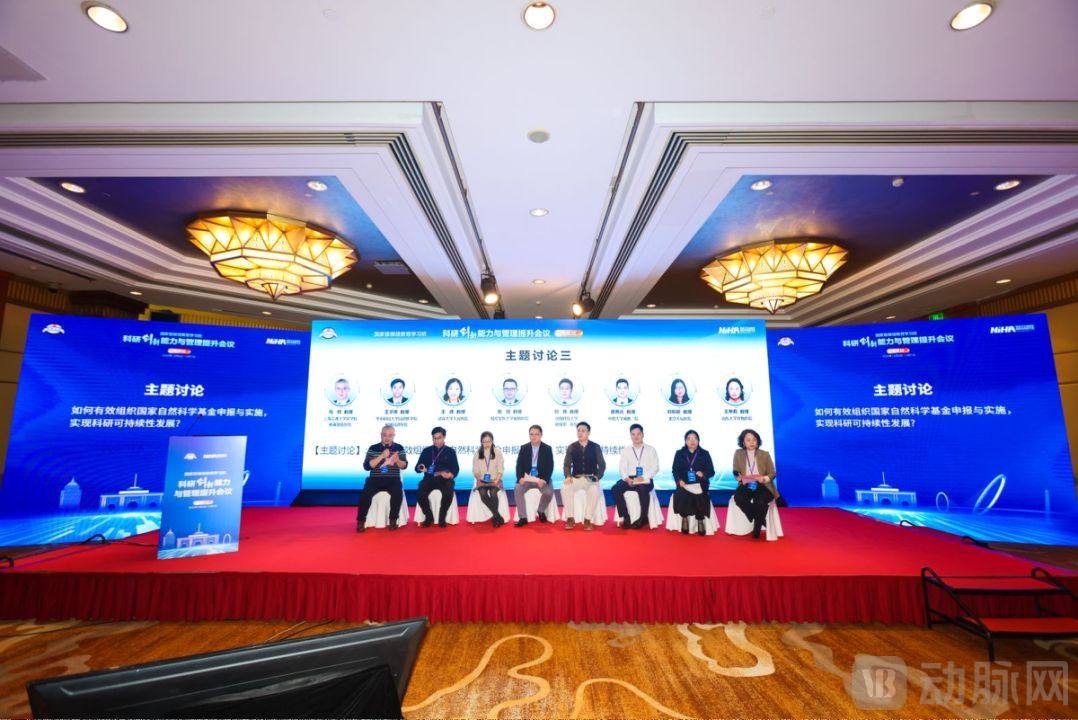
Furthermore, the conference held thematic discussions on the establishment of research integrity mechanisms and the enhancement of incentive systems for cultivating scientific research talent. Hospital administrators from across China shared their management experiences and incentive measures aimed at boosting hospitals’ technological innovation capabilities. They unanimously agreed that fostering an innovative culture, building innovation platforms, establishing innovation funds, and formulating incentive policies are crucial for promoting technological innovation and the translation of scientific achievements in hospitals. These exchanges and discussions not only deepened administrators’ understanding of the importance of translating scientific and technological achievements but also provided new ideas and strategies for future technological innovation and discipline development in hospitals, thereby clarifying the direction for high-quality development in the new era.