

Sodium Hyaluronate Eye Drops Face Market Erosion Amid Rising Competition from Cyclosporine and Novel Dry Eye Therapies
Sodium hyaluronate eye drops, which once effortlessly commanded a patient base of over 100 million, are now seeing their performance falter.Data shows that since 2020, the in-hospital sales of sodium hyaluronate eye drops have continued to decline, especially after being included in the medical insurance, the sales of sodium hyaluronate eye drops plummeted.
Nowadays, sodium hyaluronate eye drops are facing challenges both internally and externally. On one hand, cyclosporine eye drops, after sweeping the overseas dry eye disease market, have begun to make inroads into the domestic market. On the other hand, major pharmaceutical companies are frequently investing in this area, making dry eye disease a highly contested battlefield, with new mechanism-based therapeutic drugs continuously achieving breakthroughs in clinical trials.
A Legendary Drug
Among all medications for dry eye disease, sodium hyaluronate eye drops are the most familiar category to the public.
Research data indicate that sodium hyaluronate ophthalmic preparations are the best-selling eye drops for dry eye disease in China’s hospital market, accounting for over 25% of the market share.。As early as 2018, terminal sales of sodium hyaluronate eye drops in China exceeded RMB 1 billion, reaching a peak of RMB 1.2 billion in 2019. The domestic market for sodium hyaluronate eye drops has long been dominated by foreign pharmaceutical companies such as Germany’s Ursapharm and Japan’s Santen Pharmaceutical, which collectively hold over 80% of the market share. In addition, sodium hyaluronate eye drops developed by Chinese pharmaceutical companies, including Zhuhai United Laboratories, Qilu Pharmaceutical, and Jiangxi Zhenshiming Pharmaceutical, also occupy a certain portion of the market.
Since 2020, although the sales revenue of sodium hyaluronate eye drops has remained above RMB 1 billion, it has shown a clear downward trend. In May 2021, sodium hyaluronate eye drops were included in the fourth batch of drugs subject to centralized volume-based procurement. By the first half of 2022, the terminal sales of sodium hyaluronate eye drops had decreased by more than 30% year-on-year.
The fact that sodium hyaluronate eye drops once dominated the dry eye disease medication market underscores that standardization in the diagnosis and treatment of dry eye disease still requires improvement in clinical practice.
# What Is Dry Eye Disease?Dry eye disease refers to a condition in which the ocular surface loses the protection of the tear film and is directly exposed to external irritants, often resulting in symptoms such as dryness, burning sensation, foreign body sensation, stinging, itching, photophobia, redness, blurred vision, and fluctuating visual acuity. A tear film covers the surface of the eyeball; with each blink, a new tear film forms and uniformly coats the ocular surface. However, abnormalities in the quality, quantity, or fluid dynamics of the tear film can lead to various ocular discomforts and even visual dysfunction.
As a chronic ocular surface disease, dry eye disease has multiple etiologies. Overall, meibomian gland dysfunction (MGD), which leads to a reduction in the lipid layer and accelerated tear film evaporation, is the most direct contributing factor to dry eye disease. For instance, prolonged screen time or exposure to environments with strong winds or excessively low humidity can predispose individuals to dry eye disease.
Among all ophthalmic diseases, dry eye disease has the second-highest incidence rate. The highest incidence is seen in myopia, for which treatment primarily relies on medical devices.Data show that patients with dry eye disease account for more than 60% of ophthalmology clinic visits, yet clinicians report that the consultation rate for dry eye disease is very low, at only 5.38%.
Clinically, the administration of artificial tears is the preferred route for treating dry eye disease. The human eye is a complex homeostatic organ; due to the presence of the blood-aqueous barrier, it is difficult for drugs to reach ocular surface tissues via systemic administration. Consequently, at present, 90% of ophthalmic formulations on the market are topical agents that act directly on the eye. As an ocular surface disorder, dry eye disease often requires long-term treatment to restore and maintain homeostasis of the ocular surface system.
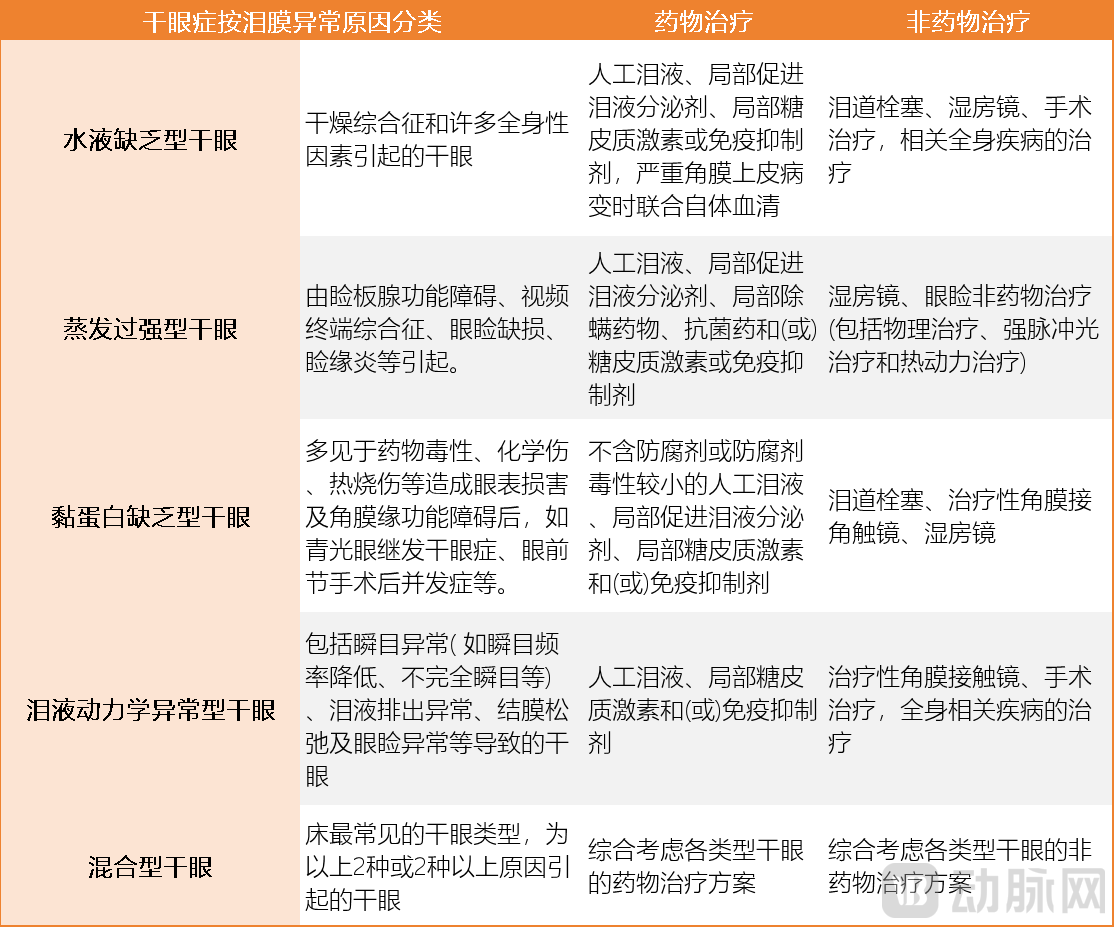
Classification and Treatment of Dry Eye Disease | Data Source: Compiled by VCBeat from Public Information
Although clinical guidelines provide clear, differentiated treatment regimens for dry eye disease (DED) of varying types and stages, in clinical practice in China, artificial tears—originally indicated for patients with mild DED—are used across virtually all stages of the condition. Among these, sodium hyaluronate eye drops are the most commonly used artificial tear formulation.
Typically, artificial tears are formulated as isotonic or hypotonic eye drops to lubricate the eyeballs, increase ocular surface hydration, dilute inflammatory factors, and reduce tear film osmolarity. However, the therapeutic efficacy of artificial tears, including sodium hyaluronate eye drops, is quite limited, patient compliance with medication is low, and their impact on controlling the prevalence of dry eye disease is not significant.
Intruders Sweep In
In recent years, the market position of sodium hyaluronate eye drops has become increasingly precarious. The greatest threat comes from cyclosporine eye drops.
Unlike sodium hyaluronate eye drops, which primarily alleviate dry eye symptoms by lubricating the ocular surface, cyclosporine eye drops work by promoting tear production.Specifically, cyclosporine eye drops are a calcineurin inhibitor immunosuppressant that selectively and reversibly inhibits the function of T lymphocytes, suppresses the production and release of lymphokines including interleukin-2, and inhibits the cytotoxic activity of natural killer (NK) cells. As a topical immunomodulator, it is indicated for ocular inflammation associated with keratoconjunctivitis sicca in patients with suppressed tear secretion, thereby promoting tear production. The therapeutic concentration of cyclosporine eye drops for dry eye disease ranges from 0.05% to 1.00%, with a typical dosing frequency of twice daily. Internationally, cyclosporine is the most commonly prescribed medication for dry eye disease.
In 2002, the world’s first cyclosporine eye drops were approved for market launch. Restasis, a cyclosporine eye drop developed by Allergan (U.S.), was approved by the FDA for the treatment of moderate-to-severe dry eye disease. For more than a decade after Restasis entered the market, no new drugs for dry eye disease were approved. Sales of Restasis continued to climb steadily; in 2019, its U.S. sales reached $1.188 billion, with peak annual sales subsequently nearing $1.5 billion, making it a phenomenal product in the ophthalmic pharmaceutical sector.
The blockbuster success of Restasis has propelled the development of cyclosporine eye drops to a climax.
In 2015, Santen’s Ikervis® (cyclosporine eye drops (III)) was launched in Europe. In May 2022, this drug received formal approval from the National Medical Products Administration (NMPA) of China and was launched in the Chinese market for the treatment of severe vernal keratoconjunctivitis in children and adolescents aged 4 years and older. In 2018, Cequa, a cyclosporine formulation developed by Sun Pharma of India, was approved for marketing in the United States, becoming the first micellar eye drop approved by the FDA. On June 8, 2023, Novaliq announced that the FDA had approved 0.1% VEVYE™ (CyclASol) for the treatment of signs and symptoms of dry eye disease. VEVYE™ is the first and only cyclosporine solution indicated for the treatment of signs and symptoms of dry eye disease.
In the generics sector, competition for cyclosporine development is also intense. In February 2022, the FDA approved the first generic version of Restasis, namely Mylan’s Cyclosporine Ophthalmic Emulsion 0.05%. Additionally, nine pharmaceutical companies, including Teva Pharmaceuticals, Pfizer, and Akorn, are advancing their respective generic versions of Restasis toward market launch.
In China, new dry eye disease drugs, including cyclosporine, have begun to encircle and suppress sodium hyaluronate eye drops.
At present, there are only two cyclosporine eye drop products approved for marketing in China.In addition to Santen’s Ikervis® mentioned earlier, in June 2020, Xingqi Eye Medicine’s dry eye treatment drug, 0.05% Cyclosporine Eye Drops (II) (Zirun®), was approved for marketing by the National Medical Products Administration. It is indicated for reduced tear production caused by ocular inflammation associated with keratoconjunctivitis sicca, becoming the first domestically approved ophthalmic formulation for dry eye disease in China.
Furthermore, more domestic pharmaceutical companies are aggressively introducing best-selling overseas new drugs for dry eye disease through licensing collaborations.
In June 2019, Sun Pharma licensed the development and commercialization rights of Cequa® in the Greater China region to CMS Pharmaceutical. However, in May 2021, Sun Pharma voluntarily recalled a batch of 0.09% cyclosporine eye drops in the United States. Based on this, CMS Pharmaceutical decided to voluntarily suspend the Phase III bridging trial in China and will resume the bridging trial only after receiving new batches of investigational products that meet the company’s quality requirements.
In November 2019, Hengrui Medicine obtained the exclusive license for CyclASol in China from Novaliq, with the code name SHR8028. Phase III studies were conducted in China in March 2021. On March 20, 2024, Hengrui Medicine announced that its New Drug Application (NDA) for SHR8028 had been accepted by the National Medical Products Administration (NMPA). The indication sought for approval is the treatment of signs and symptoms of dry eye disease, with the hope of early market launch in China.
In the domestic market, Zhaoko Ophthalmology’s cyclosporine A ophthalmic gel is a Class 2.2 improved new drug independently developed by the company. The New Drug Application (NDA) was accepted by the Center for Drug Evaluation (CDE) of the National Medical Products Administration (NMPA) on June 8, 2022. In January 2023, the drug successfully passed the NMPA’s drug registration and clinical trial site inspections, as well as the Good Manufacturing Practice (GMP) compliance inspection conducted by the Guangdong Provincial Medical Products Administration, marking significant progress toward final registration and commercialization. If launched, this product will become a strong competitor to Xingqi Eye Medicine.
Amid the encirclement by cyclosporine eye drops, the market position of sodium hyaluronate eye drops has become increasingly precarious. Can cyclosporine eye drops, then, firmly dominate the landscape of dry eye disease therapeutics?
Awaiting the New Hegemon
In fact, no single drug has yet managed to maintain a long-term leading position in the treatment of dry eye disease.This is also a key reason why an increasing number of multinational corporations (MNCs) and biotech companies are choosing to invest in this sector.
As previously mentioned, there is a large global population of patients with dry eye disease. With the widespread adoption of electronic devices in daily life, the incidence of dry eye disease continues to rise. This condition, once considered an age-related disorder affecting the elderly, has now begun to surge among young and middle-aged adults.
Epidemiological surveys on dry eye disease indicate that there are 344 million patients worldwide, accounting for 30% of ophthalmology outpatient visits, with an annual growth rate of 10%. In China, according to the "Chinese Expert Consensus on Dry Eye (2020)," the prevalence of dry eye disease is as high as 21%–30%. The prevalence is high across all age groups; specifically, the incidence rate is 22.5% among individuals aged 21 to 50 years and 33.75% among those aged 65 years and older.
Meanwhile, there is still no long-term effective drug for the treatment of dry eye disease.Medically, the pathogenesis of dry eye disease is well understood; however, the therapeutic efficacy of available pharmacological treatments, such as sodium hyaluronate eye drops and cyclosporine eye drops, is often unsatisfactory.
The underlying reason lies in the fact that the unique structure of the eye imposes higher requirements on drug formulation technologies.First, physiological mechanisms such as the blink reflex and nasolacrimal drainage result in short ocular surface residence time and low drug delivery to target tissues. Second, specialized structures like the tear film and cornea reduce drug permeation. Third, limitations arise from ophthalmic solution formulations; for instance, viscosity-enhancing agents often cause blurred vision, preservatives may exacerbate patient symptoms, poor tolerance to certain excipients increases the incidence of local adverse reactions.
At present, in light of the characteristics of medications for dry eye disease, various drug delivery systems are being progressively developed. These systems typically offer prolonged ocular retention, enhanced bioavailability, and improved long-term safety.
In 2016, Xiidra eye drops, an LFA-1 antagonist developed by Takeda Pharmaceutical, received FDA approval for the treatment of dry eye disease. In May 2019, Novartis acquired global rights to Xiidra from Takeda. In 2022, Xiidra achieved sales of $487 million, directly contributing to a decline in sales of its main competitor, Restasis. In China, Ji Xing Pharmaceutical’s varenicline tartrate nasal spray was approved for market launch in late November, becoming the first approved nasal therapy for dry eye disease in the country and poised to disrupt the traditional domestic market for dry eye medications.
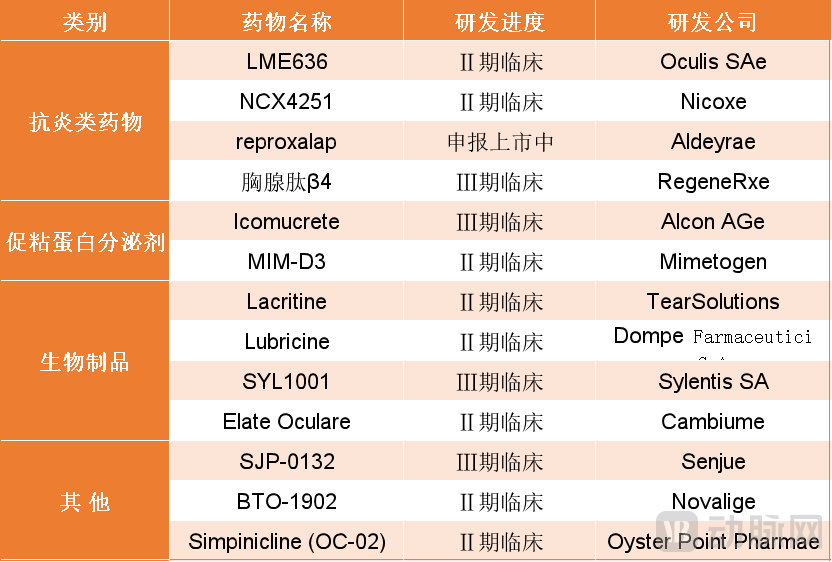
Some Fast-Advancing New Drugs for Dry Eye Disease Data Source: Compiled by VCBeat from Public Channels
Certainly, and more importantly, an increasing number of novel dry eye disease drugs with diverse mechanisms of action are intensively entering the mid-to-late stages of clinical development. For instance, thymosin β4, an anti-inflammatory dry eye drug developed by RegeneRx; Icomucrete, a mucin secretagogue developed by Alcon AG; SYL1001, a biologic new drug developed by Sylentis SA; and SJP-0132, developed by Senju Pharmaceutical, have all entered Phase III clinical trials. Among these, the most significant novel dry eye drug currently is Reproxalap, developed by Aldeyra Therapeutics.
In November, the FDA officially accepted Aldeyra’s application for review of its new drug Reproxalap for the treatment of dry eye disease, designating April 2, 2025, as the prescription drug user fee act (PDUFA) date. As the licensee for this drug in the U.S. market, AbbVie saw its stock price rise for six consecutive trading days following the announcement.
Reproxalap is a potential first-in-class investigational small-molecule inhibitor of reactive aldehyde species (RASP) that reduces RASP levels, thereby suppressing inflammation and alleviating symptoms. Reported studies involving more than 2,000 patients have not identified any significant clinical safety concerns, with mild and transient infusion-site irritation being the most common adverse events in clinical trials. Previous clinical trials demonstrated that, compared with vehicle control, Reproxalap reduced ocular redness and improved tear production, confirming its favorable tolerability and safety profile.
As more new drugs for dry eye disease enter the market, cyclosporine eye drops, as a disruptive entrant, may soon face intense competitive pressure. However, what we are more eager to see is that the growing global population of dry eye disease patients will have access to better treatment options throughout this process.