

TopGene Bio Advances as a Pioneer in Non-Human Primate Breeding and CRO Services for Preclinical Drug Evaluation
In recent years, to meet the continuous demand for new drug development, global laboratory animal platforms and CRO services have been constantly evolving, gradually forming a complete industrial cluster. Furthermore, with the gradual improvement of regulatory frameworks, the previously fragmented landscape of animal testing services is being replaced by large-scale, standardized service providers. Coupled with the fact that an increasing number of innovative medical devices are entering critical phases of product compliance, laboratory animal platforms are demonstrating unprecedented commercial value.
As a critical foundational resource for preclinical trials of new drugs, non-human primates are required in over 70% of preclinical studies for large-molecule drugs and in 10%–20% of such studies for small-molecule drugs.It is worth emphasizing that approximately ten years ago, the price of laboratory monkeys in China was only RMB 10,000 per animal; currently, the unit price has increased nearly tenfold compared to a decade ago. Furthermore, as the pharmaceutical industry gradually recovers, demand for laboratory animals and related CRO services continues to rise. Although the industry experienced a certain downturn after a period of frenzied, unregulated expansion, its overall development trend has become more rational and sustainable.
What stage has the laboratory animal and animal experimentation industry currently reached? What pain points persist, and what new trends have emerged? Behind the industry chain, Hubei Topgene Biotechnology Co., Ltd. (“Topgene Biotech”), a “low-profile pioneer” established 15 years ago in China, may offer some valuable insights. As one of the earliest enterprises in China to engage in the breeding of non-human primates, Topgene Biotech has witnessed the industry’s transition from unchecked expansion to rational consolidation, thereby providing VCBeat with a fresh perspective on observing China’s innovative pharmaceutical industry.
“The Three Fives Project” Has Spanned Over Thirty Years
Veteran Industry Professionals Choose to Join Topgene Biotechnology
In 2009, Hubei Topgene Biotechnology Co., Ltd. was officially established by building a collaborative R&D platform with technical support from Wuhan University, Huazhong Agricultural University, Hubei Provincial Wildlife Conservation Research Institute, and China Pharmaceutical University. Since its inception, Topgene Biotechnology has completed multiple rounds of financing, with investors including more than twenty institutions/companies such as Yifeng Capital, CMB International, Hillhouse Ventures, Shenzhen Capital Group, Industrial Bank Guoxin Asset Management, Qianhai Houpu Fund, Jiutong Investment, and Huafang Capital.
Hubei Topgene Biotechnology Co., Ltd. has appointed Professor Lu Guocai as President. Professor Lu brings over 30 years of experience in R&D and industry.In the academic realm, Professor Lu has published over 130 articles, including 70 original research papers (32 of which were published in SCI-indexed journals). He has served as editor-in-chief or deputy editor-in-chief for six monographs, presided over or co-led several national and provincial/ministerial-level research grants, holds 16 authorized patents, and has supervised more than 20 graduate students. In the industrial sector, Professor Lu has led or overseen teams in completing preclinical safety evaluations for over 400 new drug candidates. More than 120 of these drugs have passed the review by the National Medical Products Administration (NMPA) and obtained clinical trial approvals/permits or new drug certificates, while over 10 have received FDA clearance for clinical trials.
Reflecting on a fruitful past, Professor Lu summarized his career in a single sentence: “In fact, over the past thirty-plus years, I have focused on just one thing: preclinical safety evaluation of new drugs.” In the perception of many, the safety evaluation phase of new drug development involves limited innovation, as researchers can largely follow established guidelines. However, from its origins, new drug development is a systematic and integrated engineering endeavor, where every stage entails significant innovation, accompanied by corresponding challenges and barriers. From the perspective of safety evaluation alone, numerous aspects require innovative approaches, including the selection of experimental animals, the establishment of analytical methods, the definition of targeted testing indicators, and the utilization of computerized information management systems to reduce costs and enhance efficiency. Only through collaborative innovation across all these stages can we ensure the development of new drugs that are safe, effective, and of controllable quality.
Professor Lu’s connection with Topgene Biotechnology also stemmed from a project on “safety evaluation.”Between 2020 and 2021, a preclinical new drug project under Professor Lu’s management encountered a bottleneck due to a shortage of experimental monkeys for pharmacological and toxicological studies. Given that Hubei Topgene Biotechnology Co., Ltd. (Tianqin Bio) ranked among the top in China for its inventory of experimental monkeys and enjoyed an excellent reputation, Professor Lu led his team to contact Chairman Ren of Tianqin Bio, ultimately securing a collaborative partnership for the supply of experimental monkeys.
Professor Lu recalled, “We referred to this collaboration as the ‘Three Fives Project.’ The first ‘five’ denotes that the price for purchasing each experimental monkey at the time was RMB 15,000; the second ‘five’ indicates that Topgene Biotechnology provided 500 experimental monkeys; and the third ‘five’ signifies that our team coordinated five CRO projects in collaboration with Topgene Biotechnology.”
Thanks to these collaborations, Professor Lu gained a deeper understanding of Topgene Biotechnology. In 2023, he officially joined the company. “Topgene Biotechnology enjoys unique advantages within the industry, and I strongly align with the core values of both the company and its team. In my view, joining Topgene Biotechnology was a decision made at the right time, in the right place, and with the right people.”
In addition to the highly experienced Professor Lu, Topgene Biotechnology’s core team comprises multiple new drug review experts and senior GLP technical specialists. All core members possess over 20 years of project research experience and are responsible for rigorously ensuring the scientific validity and regulatory compliance of technical proposals and reports. Key technical personnel have more than 10 years of experience in pharmacokinetics, pharmacology, and toxicology, thereby guaranteeing the quality of project research.
Research on laboratory animal resources has long been a key focus in developed countries overseas. In the United States, the government has invested substantial funds to establish national-level laboratory animal resource and technical service institutions for species such as rodents, non-human primates, aquatic animals, and invertebrates. These efforts have led to the development of tens of thousands of distinct strains of laboratory animals, meeting diverse scientific experimental needs and accelerating innovation and progress in U.S. life sciences. China is a major consumer of laboratory animals, with production volume second only to that of the United States. It regularly utilizes genetic engineering models and disease animal models encompassing 30 species—including mice, rats, guinea pigs, monkeys, rabbits, and dogs—and 2,000 strains.
In China, the laboratory animal industry is currently transitioning from a previously extensive, self-produced and self-sold model to a standardized market-oriented and high-tech industrialized model. Since the 12th Five-Year Plan period, China has established eight national laboratory animal resource repositories, preserving 810 breeds and strains of laboratory animals and over 32,000 sets of biological characteristic data across 14 animal categories. However, overall, there is still a lack of long-term mechanisms in China for the preservation, sharing, and research and development of laboratory animal resources, with overseas companies capturing more than 30% of the conventional laboratory animal market.
As one of the earliest enterprises in China to engage in the breeding of non-human primates, Tianqin Biology ranks among the top in both the quantity and quality of its laboratory monkeys. The company has established laboratory animal breeding and research centers in Hubei, Guangdong, and Guangxi, dedicated to the specialized husbandry and breeding of non-human primates for experimental use, including rhesus macaques, cynomolgus macaques, marmosets, and pig-tailed macaques. The laboratory animals have clear genetic backgrounds, comprehensive and complete pedigree records, and undergo regular quarantine inspections. With their superior quality, these animals have received widespread acclaim from customers both domestically and internationally.

Types of Experimental Monkeys Available from Topgene Biotechnology, Image Source: Topgene Biotechnology
It is worth mentioning that,Both Wuhan Branch of Topgene Biotechnology and its subsidiary, Tianqin Xinsheng Biotechnology Co., Ltd. (Tianqin Xinsheng), are enterprises that have received full accreditation from AAALAC International (the Association for Assessment and Accreditation of Laboratory Animal Care International).While ensuring the quality of laboratory animals, Topgene Biotechnology also strives to maintain high standards of animal welfare. According to reports, at Topgene Biotechnology, animal welfare entails not only a clean and safe environment and adequate nutrition, but also the implementation of appropriate procedures to mitigate stress during animal husbandry and use, thereby safeguarding animal health.
Over the past fifteen years, Topgene Biotechnology has evolved from its origins in laboratory animal science into a high-tech contract research organization (CRO) specializing in large animal studies and focused on new drug research and evaluation. The company operates several subsidiaries and divisions, including Topgene Biotechnology Wuhan Branch and Topgene Xinsheng (both dedicated to drug safety assessment), the Topgene Research Institute (focused on the development of human disease models in non-human primates and rodents, as well as pharmacodynamic studies), and a Non-Human Primate Breeding Center.
Its services span multiple fields, including drug toxicity research and safety evaluation, construction of animal models of human diseases and pharmacological efficacy assessment, primate reproductive and developmental toxicity studies, pharmacokinetic evaluation, molecular imaging detection and analysis, bioanalysis, medical device testing, and breeding of non-human primate laboratory animals.
Distinctive Exploration and Practice:
Reproductive and Developmental Toxicity Studies in Macaques and Non-Human Primate Animal Models
Unlike most CRO companies, the Wuhan branch of Hubei Topgene Biotechnology Co., Ltd. offers a range of distinctive products and services developed based on laboratory animals.
Reproductive and developmental toxicity studies in cynomolgus monkeys represent one of our specialized service offerings. Under the leadership of Professor Zhou Li, the team at Topgene Biotechnology’s Wuhan Branch spearheaded the establishment of a domestically leading platform for reproductive and developmental toxicity studies in cynomolgus monkeys, as part of the National Science and Technology Major Project on “Major New Drug Development” during the 13th Five-Year Plan period. This platform is also recognized as one of the demonstration platforms for drug safety evaluation under the National Science and Technology Major Project on “Major New Drug Development.”
Based on this, the Wuhan Branch of Hubei Topgene Biotechnology Co., Ltd. has completed the establishment and validation of its cynomolgus monkey reproductive and developmental toxicity platform. The company has conducted multiple fertility assessment studies integrated with repeat-dose toxicity trials in sexually mature cynomolgus monkeys, as well as evaluations of the blood-testis barrier, placental barrier, and blood-milk barrier within embryofetal development (EFD) studies, alongside enhanced pre- and postnatal development (ePPND) toxicity trials in cynomolgus monkeys.Currently, Topgene Biotechnology’s Wuhan Branch is customizing and conducting registration-oriented enhanced pre- and post-natal development (ePPND) studies in cynomolgus monkeys for three clients.
Non-human primate experimental animal models are also one of the featured service segments of Topgene Biotechnology. Topgene Biotechnology can provide customers with animal models for disease areas such as nervous system diseases, metabolic diseases, cardiovascular and cerebrovascular diseases, urinary system diseases, motor system diseases, and malignant tumors. The models are scientific, stable, and effective, enabling related pharmacodynamic/pharmacokinetic studies, and possess high preclinical application value.
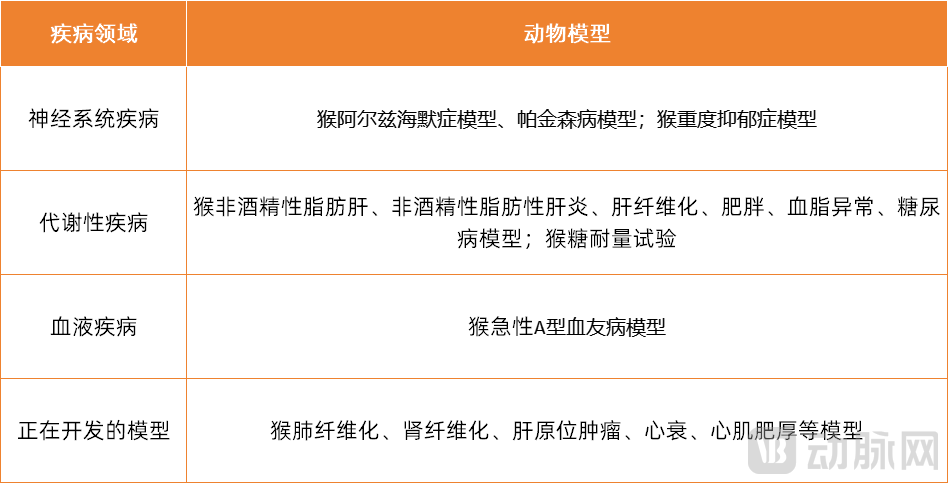
Non-Human Primate Animal Models Available from Topgene Biotechnology, Source: Topgene Biotechnology
In this regard, Professor Lu stated, “Currently, competition in China’s CRO sector is quite intense, with most companies in the industry engaging in price wars at this stage. Leveraging years of experience in breeding and researching laboratory animals, Hubei Topgene Biotechnology Co., Ltd. (Topgene) has established multiple specialized platforms with added value. These value-added services help Topgene build differentiated barriers amidst fierce competition and enhance its risk resilience. On the other hand, when pharmaceutical companies select CXO partners, in addition to cost-effectiveness as a key consideration, the research quality and service efficiency of the CXO provider are also critical factors. If certain drug risks are not fully identified during preclinical safety evaluations, these risks may emerge at later stages, significantly increasing subsequent R&D costs; that is, pharmaceutical companies would need to spend more money and time resolving these issues during clinical trials.”
To date, Topgene Biotechnology has developed robust project undertaking capabilities. In terms of soft power, since 2017, its Wuhan branch has established a research evaluation system in accordance with Good Laboratory Practice (GLP) guidelines for non-clinical safety studies of pharmaceuticals. The Wuhan branch is the first private GLP research institution in Hubei Province and possesses the most comprehensive GLP accreditation qualifications in Central China, simultaneously complying with GLP standards in China, the U.S. FDA, the EU OECD, and Australia’s TGA. In terms of hard power, Topgene Biotechnology currently operates approximately 30,000 square meters of GLP-compliant laboratory space, with over 80,000 square meters of experimental facilities under construction. These facilities enable preclinical safety evaluations, pharmacodynamic studies, pharmacokinetic studies, and other research using experimental animals such as monkeys, dogs, rabbits, rats, mice, and guinea pigs.
Backed by both soft and hard capabilities, and driven by the dedicated efforts of its entire team, Topgene Biotechnology has conducted over 1,000 specialized studies and supported more than 200 new drug applications. Among these, over 80 domestic and international Investigational New Drug (IND) candidates have received approval from China’s CFDA/NMPA, the U.S. FDA, and Australia’s TGA to enter clinical trials. More than 100 companies, including Hengrui Medicine, Chia Tai Tianqing, Mindray Group, Hybio Pharmaceutical, Innovent Biologics, Gan & Lee Pharmaceuticals, Tasly, Genoscience, Zhixiang Jintai, Bio-Thera Solutions, Antibody Therapeutics, Baosheng Biopharmaceuticals, YZY Biopharma, Humanwell Healthcare, RayJian Pharma, and Hamilton Biopharma, have successfully filed their projects with the support of Topgene Biotechnology.
Topgene Biotechnology has three strategies for customer acquisition.Professor Lu explained, “The first strategy is to target leading domestic key accounts. These clients possess strong risk resilience. Currently, Topgene Biotechnology has established cooperation and engagement with approximately 70% of China’s top pharmaceutical companies, which constitute a significant portion of the company’s client base. The second strategy focuses on the Wuhan vicinity. Headquartered in Optics Valley Bio-city within the Wuhan East Lake High-Tech Development Zone, Topgene Biotechnology leverages its geographic advantage to maximize coverage of customers in Wuhan and surrounding areas. The third strategy involves leveraging co-investors. Topgene Biotechnology taps into other industrial chain resources invested by its shareholders to uncover collaboration opportunities.” Furthermore, Topgene Biotechnology is actively expanding into overseas markets.
We look forward to Hubei Topgene Biotechnology Co., Ltd. leveraging its expertise in non-human primate studies to rapidly grow into a leading domestic and internationally renowned integrated CRO service provider for new drug research and evaluation.