

Big Health Files for IPO Following Full FDA Approval of Its Digital Therapeutics SleepioRx and DaylightRx

Big Health
Digital Therapeutics Service Provider
Sleep difficulties and insomnia affect nearly one-third of adults in the United States, according to a 2021 report from the U.S. National Library of Medicine (NIH).₁,Since the onset of the COVID-19 pandemic, the global prevalence of sleep disorders has been approximately 40.49%.
Sleep is crucial for physical health, well-being, and mental health, and it is equally important for employees’ job performance. Insomnia among employees leads to increased absenteeism, thereby impairing productivity. According to a study from the 2011 American Insomnia Survey (AIS)₂, approximately 25% of adults in the United States suffer from insomnia, resulting in an estimated annual loss of $62.3 billion to U.S. industry.
Cognitive Behavioral Therapy (CBT) is recommended by the American College of Physicians as a first-line treatment for insomnia and anxiety; however, traditional face-to-face CBT is difficult to scale widely due to a shortage of trained therapists.
Amidst the backdrop of an imbalance between supply and demand in healthcare, Big Health was born.
Peter Hames, Founder and Executive Chairman of Big Health, resolved his own sleep issues by reading Dr. Colin Espie’s books on CBT while studying Experimental Psychology at the University of Oxford, realizing that this approach could benefit millions of people.
In February 2012, Peter Hames and Colin Espie co-founded Big Health, headquartered in London, UK, with a focus on helping millions of people restore good mental health. Since its establishment in 2010, Big Health has secured over $130 million in funding, including investment from SoftBank in 2022 (SoftBank Vision Fund)Led the $75 million Series C financing round.
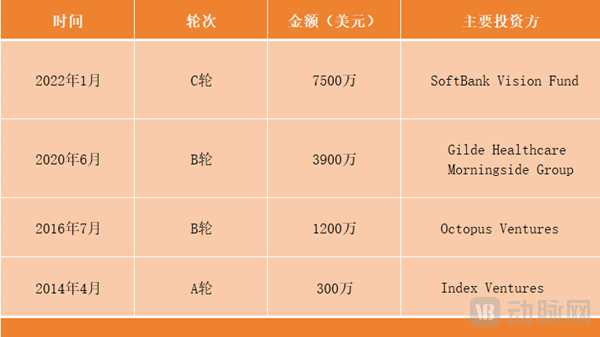
Financing History | Source: VCBeat
The company’s two flagship products, Sleepio and Daylight, target the treatment of insomnia and anxiety, respectively. As digital therapeutics based on Cognitive Behavioral Therapy (CBT), Sleepio and Daylight have been proven to effectively improve users’ sleep quality and alleviate anxiety symptoms. Notably, 76% of patients achieved healthy sleep, and 71% experienced relief from anxiety.
In recent years, Big Health has experienced rapid growth. In November 2021, the Scottish Government announced that all adults residing in Scotland would have access to Daylight and Sleepio as part of NHS services. On May 19, 2022, Big Health became the first digital therapeutics company to receive guidance from the National Institute for Health and Care Excellence (NICE). On August 8 and September 4, 2024, Big Health’s SleepioRx and DaylightRx respectively received approval from the U.S. Food and Drug Administration (FDA).
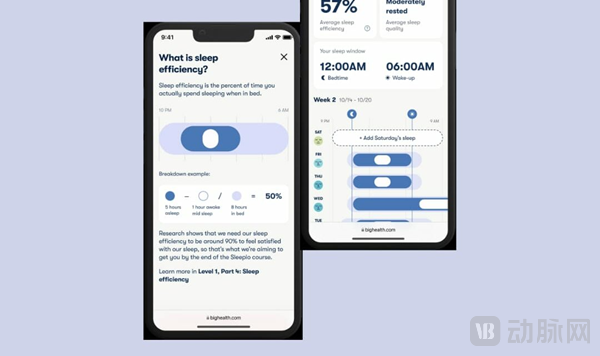
SleepioRx User Interface. Image source: Big Health official website
70% of Patients Resolve Insomnia and Anxiety Issues
Big Health’s SleepioRx is a flagship digital therapeutic product developed based on Sleepio. It employs Cognitive Behavioral Therapy for Insomnia (CBT-I) to treat chronic insomnia, a therapy that has received FDA approval.
According to the official website, SleepioRx is a 90-day digital therapeutic program designed to treat chronic insomnia/insomnia disorder by teaching patients cognitive behavioral therapy (CBT)-based techniques. SleepioRx features a personalized patient experience, with treatment plans tailored to individual symptoms and daily sleep tracking, and includes immediate therapeutic content to help users fall asleep.
In more than 25 clinical trials,SleepioRx enables up to 76% of patients to achieve healthy sleep. Participants using SleepioRx experienced a 54% reduction in sleep onset latency, a 62% reduction in wake time after sleep onset, and a 45% improvement in next-day functioning.。
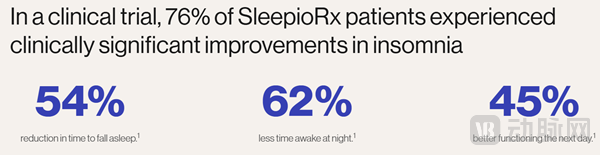
Big Health Clinical Trial Data Source: Big Health Official Website
Subsequent experimental data indicate that the benefits of SleepioRx are durable, with participants experiencing sustained improvements in sleep quality for up to three years after using SleepioRx. Through a longitudinal study conducted in collaboration with Henry Ford Health System, a non-profit healthcare organization in the United States, SleepioRx has demonstrated efficacy in a racially and socioeconomically diverse sample.
Similarly, DaylightRx isI.A prescription digital therapeutic for the treatment of generalized anxiety disorder (GAD) that teaches patients cognitive behavioral therapy (CBT)-based techniques; this therapy has received FDA approval.BecomeThe First FDA-Approved Digital Therapeutic for the Treatment of Generalized Anxiety Disorder.
According to the official website, DaylightRx is a 90-day treatment program designed to help patients aged 22 and older with generalized anxiety disorder (GAD) improve their symptoms through evidence-based techniques, serving as an adjunct to conventional therapy.
DaylightRxIncluding interactive courses such as applied relaxation, stimulus control, cognitive restructuring, and exposure therapy, designed to help patients integrate these techniques into their daily lives.UsageDaylightRxofThe patient stated that the therapyAlleviate Stress Through Simple ExercisesHelp them find relief when feeling anxious and unable to concentrate.。
Additionally, DayligtRxEnhanced provider care plans make CBT techniques readily accessible, enabling patients to learn these skills in 10 minutes or less to help calm anxious thoughts, manage worries, and overcome anxiety.。
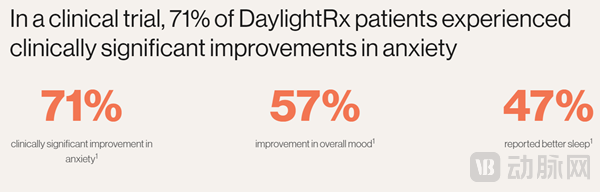
Big Health Clinical Trial Data. Source: Big Health Official Website
DaylightRX’s approval was based on a randomized controlled trial comparing Daylight with an active control in moderate to severeDegreeEfficacy in patients with GAD, and in the United StatesAnxiety and Depression Association (Official Journal of the ADAA)published in Depression and Anxiety.
The trial involved 256 adult patients, who were randomly assigned to either the Daylight treatment group or the control group. The treatment group received cognitive behavioral therapy (CBT) via a smartphone application. The primary outcome measure was improvement in generalized anxiety disorder (GAD) symptoms as assessed by the GAD-7 scale.
The results show that,DaylightRxIn the treatment group, anxiety symptoms were significantly reduced by Week 6, and 71% of patients achieved remission of GAD symptoms by Week 10, compared with 33% in the control group. These improvements persisted through Week 26, with significant enhancements also observed in anxiety, depression, sleep, and quality of life.
Innovative Revenue Models Focused on the B2B Market
Sleep has varying effects on employee job performance,Insomnia increases employee absenteeism and impairs productivity.According to an estimate from the 2011 American Insomnia Survey (AIS),Approximately 25% of adults in the United States suffer from insomnia, resulting in an annual economic loss of about $62.3 billion to U.S. industry. New research published in 2024 at the International Society for Pharmacoeconomics and Outcomes Research (ISPOR 24) indicates that,Patients with undiagnosed generalized anxiety disorder (GAD) are more likely to make emergency department visits (1.64 times) and be hospitalized (1.95 times) than those with diagnosed GAD, indicating significantly higher healthcare resource utilization among patients with undiagnosed GAD.
Based on this, Big Health targets the B2B market, with its core customer profile focused on large corporations, achieving a customer satisfaction score of 9.8/10. For instance, CVS Health offers Big Health to its employees and Pharmacy Benefit Management (PBM) members.
Big Health sells Sleepio to employers for use by their employees. For a monthly fee of $10 (or a one-time payment of $20 for the full six-week course), users can access the app on their computers or mobile devices. Using the computer version unlocks additional features, such as the ability to replay specific sleep lessons.
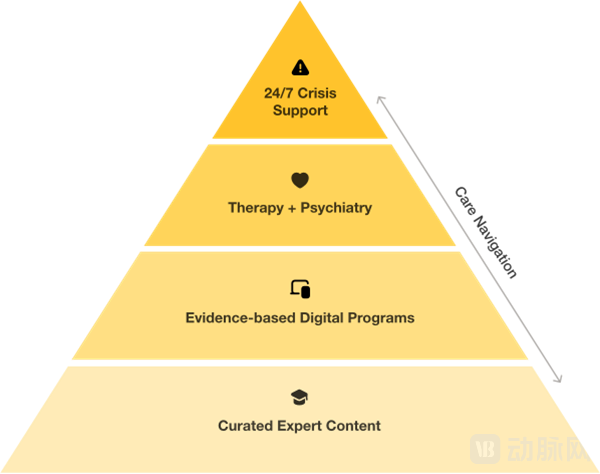
Scope of Services | Source: Big Health Official Website
Furthermore, Big Health distinguishes itself with comprehensive care and no PEPM (Per Employee Per Month) fees. It provides enterprises with customized, holistic employee mental health services. Real-time navigation support ensures that teams receive appropriate care, reduces workplace anxiety, and offers employees a one-stop solution to help them cope with various life challenges, such as family disputes and work-related stress. Data indicates that after implementing Big Health’s digital therapeutics for mental health, enterprises experienced a 40% reduction in emergency department visits, a 35% decrease in hospitalizations, a 20% decline in outpatient visits, and a 37% reduction in prescription drug claim costs.
According to Big Health, Sleepio and Daylight are currently used by more than 300,000 patients across over 60 countries and regions. To facilitate payments for payers and patients, Big Health has pioneered billing through pharmacy benefit managers (PBMs), enabling employers and health plans to include Big Health’s offerings in their formularies and cover usage costs through pharmacy claims. This payment method, which mirrors the reimbursement process for prescription drugs, represents the industry-leading reimbursement model for digital therapeutics.
In a study conducted jointly by Big Health, CVS, and Professor Michael Dutton of Johns Hopkins University, Professor Dutton was responsible for the study design, data analysis, and provision of results. The study analyzed medical claims data from more than 8,000 employees over a two-year period, specifically comparing the differences in medical claims costs between employees who used the Sleepio service and similar employees who did not.
Research has found that employees who used Sleepio experienced a 19.6% reduction in overall medical claim costs compared to those who did not use the platform. Furthermore, healthcare savings among Sleepio users demonstrated an accelerating trend over time. Notably, employees with more severe sleep difficulties and insomnia symptoms achieved further reductions in healthcare expenditures after using Sleepio. A longitudinal study conducted in collaboration with IBM Watson Health (a cloud-based healthcare service platform) also revealed that Sleepio users saved an average of $1,600 in incremental costs. These findings indicate that improving sleep quality not only enhances individual well-being but also effectively reduces the costs associated with downstream medical issues.
By combining leading clinical insights with best-in-class design and technology, Big Health offers a scalable approach accessible to all, including communities underserved by traditional mental health care, thereby charting the future of digital therapeutics. With its products validated through industry-leading peer-reviewed research and randomized controlled trials, Big Health has also secured reimbursement approval from numerous employers, pharmacy benefit managers (PBMs), and payers.
Two Major Competitors in the United States
In the field of digital therapeutics for sleep disorders, Big Health’s main competitors in the United States include Calming Comfort and Headspace.
Calming Comfort focuses on providing sleep improvement services, including tools such as meditation and relaxation music to aid sleep, helping users fall asleep more easily. The user interface is friendly and primarily centered on sleep assistance, lacking broader mental health support. Its user base is limited, mainly targeting individuals with sleep disorders, and it is not suitable for those requiring more comprehensive mental health services.
Headspace offers a range of mental health services, including meditation and sleep aids, to meet the diverse needs of users. As a leading player in the meditation app market, Headspace boasts strong brand influence and a substantial user base. The company enhances user stickiness through gamification, thereby boosting engagement and motivation for continued use. However, the presence of numerous similar meditation and relaxation apps in the market has led to homogeneous competition in content.
Big Health demonstrates strong expertise in the field of Cognitive Behavioral Therapy (CBT). Its products, Sleepio and Daylight, are both based on CBT principles and have clinically validated efficacy, proving effective in improving sleep quality and alleviating anxiety. Furthermore, Big Health offers comprehensive mental health solutions, partnering with governments and large enterprises to serve a broad market. Its offerings extend beyond sleep assistance to include anxiety treatment and other services.
According to the 2022 report by the Chinese Sleep Research Society, the prevalence of insomnia in China is as high as 15%, affecting approximately 210 million people. Traditional treatment primarily relies on pharmacotherapy; however, hypnotic medications such as benzodiazepines are prone to causing drug resistance and addiction, making them unsuitable for long-term use. Furthermore, the majority of patients do not receive effective guidance or treatment. Therefore, there is an urgent clinical need to research safe and practical therapies for insomnia.
Digital therapeutics for insomnia are based on cognitive behavioral therapy for insomnia (CBT-I) and do not carry the side effects associated with pharmacological treatments. CBT-I is recommended as a first-line treatment for chronic insomnia by the Chinese Guidelines for the Diagnosis and Treatment of Insomnia in Adults, the Chinese Guidelines for the Diagnosis and Treatment of Insomnia Disorder, the American Clinical Practice Guideline for the Management of Chronic Insomnia Disorder in Adults, and the European Guideline for the Diagnosis and Treatment of Insomnia.
References:
1 .National Library of Medicine,Sleep disturbances during the COVID-19 pandemic: A systematic review, meta-analysis, and meta-regression,2021.
2. Nocturnal Insomnia Symptoms and Perceived Health in the Athens Insomnia Scale (AIS). Sleep. 2011.