

Unilateral Exoskeleton Robot Demonstrates Neuroplasticity in Post-Stroke Rehabilitation, Validated by Springer Nature Subjournal Study
Recently, the clinical application research findings of Professor Li Zengyong’s team at the National Research Center for Rehabilitation Technical Aids, titled “Effectiveness of unilateral lower-limb exoskeleton robot on balance and gait recovery and neuroplasticity in patients with subacute stroke: a randomized controlled trial,” were published in the latest issue of the SCI-indexed international journal Journal of NeuroEngineering and Rehabilitation, a subsidiary of Springer Nature, in the field of neural engineering and rehabilitation.
Screenshot of SCI Paper Publication
This study conducted a randomized, single-blind, controlled trial on patients with subacute stroke using AngelRay’s self-developed LiteStepper® single-lower-limb hemiplegia rehabilitation robot.It has been confirmed that overground gait training using a single-leg rehabilitation robot can improve balance and walking function in stroke patients, promote better gait patterns, and enhance gait stability.
More encouragingly, this study reveals that single-leg hemiplegia rehabilitation robots help promote functional reorganization of the neural networks in the affected hemisphere under balance and gait control, thereby facilitating neuroplasticity.
This study not only provides a scientific basis for the use of unilateral lower-limb exoskeleton robots in post-stroke rehabilitation but also pioneers a new approach to highly efficient treatment for hemiplegic rehabilitation.
Stroke, commonly known as "apoplexy," is a cerebrovascular disease characterized by extremely high incidence, mortality, disability, and recurrence rates.
In recent years, the incidence of stroke in China has been on the rise. It has become the leading cause of hospitalization among patients in secondary and tertiary hospitals, as well as one of the top three causes of death among Chinese residents, with an annual disability count reaching 2.2 million.[1]
Nowadays, stroke is no longer just a "disease of the elderly." The lifetime risk of stroke for individuals aged 25 and older worldwide is 24.9%, while in China, this figure approaches 40%, meaning that four out of ten people may experience a stroke starting from age 25.[1]
Hemiplegia is a common sequela of stroke, affecting approximately 80% of patients.[2]Hemiplegia manifests as motor, sensory, and autonomic dysfunction on one side of the body. Patients with mild hemiplegia retain some voluntary movement; however, due to flexion of the upper limbs and spasticity of the lower limbs, they exhibit a circumductive gait pattern in the affected leg during walking, known as a "hemiplegic gait." Patients with moderate to severe hemiplegia are unable to move freely and require long-term nursing care and assistance.
Hemiplegia not only causes significant inconvenience to patients' daily lives but also imposes a heavy psychological and economic burden on both patients and their families.
In the early stages of stroke, gait training is crucial for restoring lower limb function. However, traditional physical therapy has limitations in delivering high-efficiency, high-quality gait training. With technological advancements, the application of lower limb rehabilitation robots in medical institutions is becoming increasingly widespread.
Currently, the rehabilitation robot products approved on the market are predominantly dual-lower-limb rehabilitation robots. These devices are suitable for patients with motor impairments in both lower limbs, such as those with paraplegia or bilateral lower-limb paralysis caused by severe bilateral cerebrovascular diseases or spinal cord injuries. For patients with unilateral lower-limb impairment, particularly those with hemiplegia, using dual-lower-limb rehabilitation robots may be excessive. Moreover, the need for unnecessary fixation and coordinated manipulation of the unaffected lower limb can cause discomfort to patients and may even compromise the maintenance of muscle strength and joint flexibility in the unaffected limb.
From the perspective of rehabilitation outcomes, dual-lower-limb rehabilitation robots focus more on the restoration of synchronized movement in both lower limbs as a whole, emphasizing the motion coherence and coordination of the bilateral lower limbs. However, they are less refined than single-lower-limb rehabilitation robots in addressing the detailed functional recovery of individual joints in a single limb. In contrast,, single-limb rehabilitation robots can more precisely conduct training focused on specific motor functions such as flexion, extension, and rotation of the knee, hip, ankle, and other joints of the affected lower limb. By collecting and analyzing movement data from the patient’s unaffected lower limb, the system synchronizes and drives the affected limb to perform coordinated bilateral training. This approach provides targeted strengthening of local motor functions in the affected limb, thereby improving the patient’s balance and gait capabilities.
From the perspective of neurorehabilitation, single-limb lower extremity rehabilitation robots, compared to common bilateral lower extremity rehabilitation devices, can maximize the patient’s use of their intact-side brain to actively control the unaffected limb. This active engagement, assisted by the robot, stimulates mirror neurons in the affected-side brain, thereby promoting plasticity-based rehabilitation.
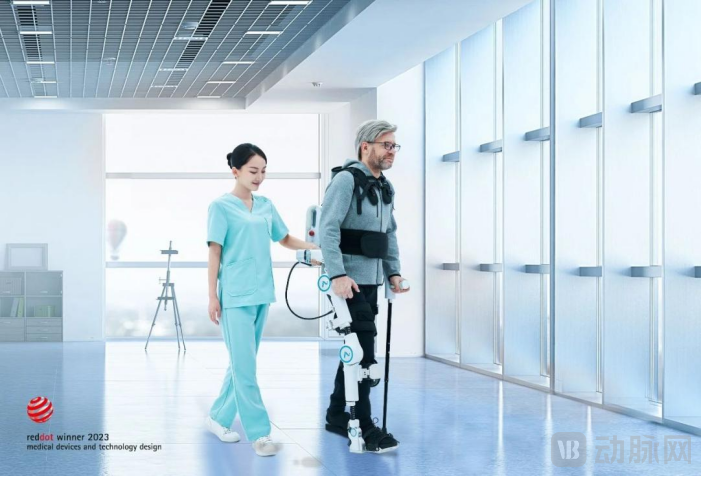
Anjielai's LiteStepper, Designed and Developed for Hemiplegia Patients®Unilateral Lower-Limb Hemiplegia Rehabilitation RobotBy collecting gait data from the patient’s unaffected side during active movement, this robot interprets the patient’s motor intent, analyzes and learns the gait characteristics of the unaffected limb, and facilitates bilateral coordinated training. This process promotes neuroplasticity in motor control functions, helping patients gradually restore their normal walking gait. The product received market approval in 2022 (Henan Medical Device Registration No. 20222190353) and has been deployed in multiple hospitals and rehabilitation institutions.
Returning to the paper, this study aims to evaluate the effectiveness of walking rehabilitation training assisted by a single-limb rehabilitation robot compared with conventional therapy, and to explore the relationship between neuroplasticity and motor function recovery in patients with subacute stroke.
This study employed a randomized, single-blind, controlled design. A total of 50 eligible stroke patients were assessed, and 40 patients in the subacute phase of stroke were ultimately enrolled. All participants were aged between 18 and 75 years.
Patients were randomly assigned to either the experimental group receiving robot-assisted training (RT) or the control group receiving conventional training (CT). Motor function was assessed before and after 4 weeks of training using wearable gait analysis combined with clinical assessment scales, including the Berg Balance Scale (BBS), the Fugl-Meyer Assessment for Lower Extremity (FMA-LE), the Functional Ambulation Category (FAC) scale, and the modified Barthel Index (mBI). Additionally, functional near-infrared spectroscopy (fNIRS) was employed to monitor cortical activation responses during robot-assisted training.
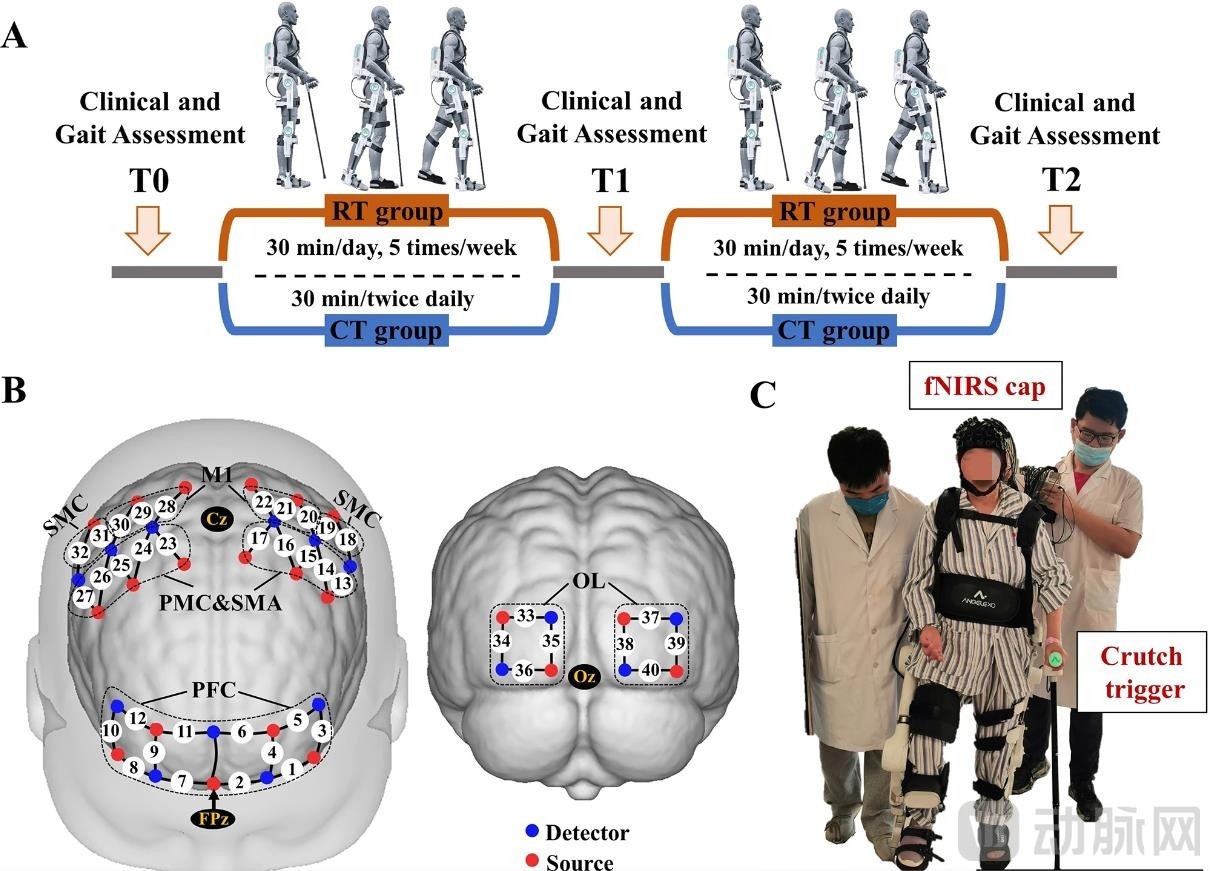
Schematic diagram of the experimental design. (A) Experimental design. (B) fNIRS optode configuration. The fNIRS system consists of 21 light sources (shown in red) and 15 detectors (shown in blue), comprising a total of 40 channels distributed over the prefrontal, motor, and occipital regions according to the international 10–20 system. (C) fNIRS measurements during robot-assisted center-of-pressure shift training.
The study results showed that after 4 weeks of training, there were significant differences between the RT group and the CT group. The scores of BBS, FMA-LE, mBI, and FAC in the RT group increased significantly (P < 0.001). Gait analysis results indicated that cadence and gait speed were significantly improved in the RT group (P < 0.001), demonstrating highly significant statistical significance. Meanwhile, patients in the RT group showed significant improvements in stride length on the affected side, stance phase, toe-off angle, and heel-strike angle before and after rehabilitation, which were markedly superior to those in the conventional rehabilitation group. After rehabilitation, subacute stroke patients exhibited cortical activation patterns from T1 to T2, with enhanced responses in the ipsilateral SMC, M1, and PMC & SMA, accompanied by improvements in motor function.
These results indicate that applying a single-leg rehabilitation robot for standing balance and gait training is a more effective approach to promoting neuroplasticity and clinical improvement in patients with subacute stroke.
Furthermore, current clinical practices, whether involving suspension training or dual-lower-limb rehabilitation robots, mostly follow a similar paradigm: a treadmill is installed at a fixed location, often accompanied by video-guided tasks, resulting in a relatively static scenario and movement pattern. In contrast, single-lower-limb exoskeleton rehabilitation robots are wearable devices that, once donned by the patient, are not constrained to a fixed location, allowing for autonomous ambulation. This provides greater flexibility and freedom, thereby enabling more personalized and precise rehabilitation training.
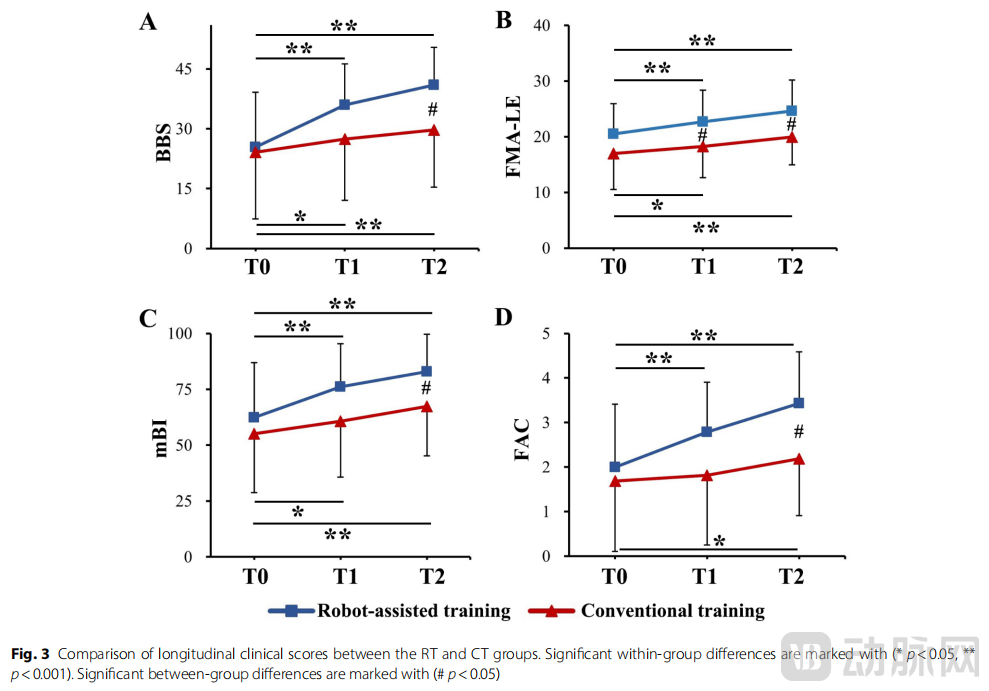
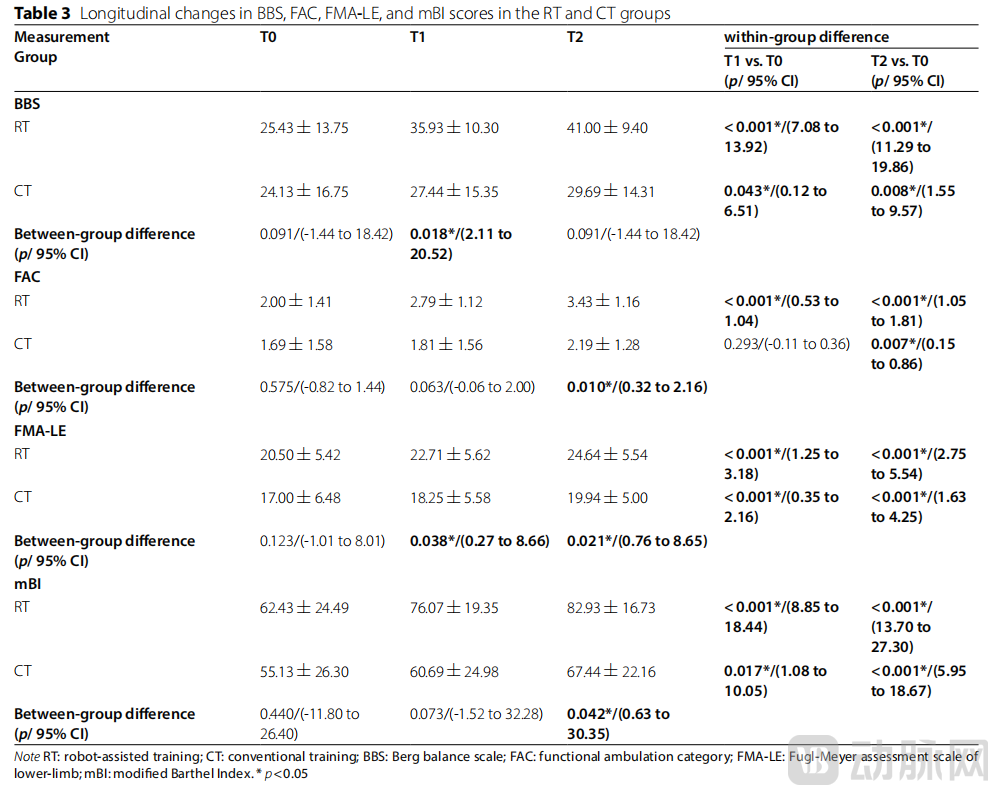
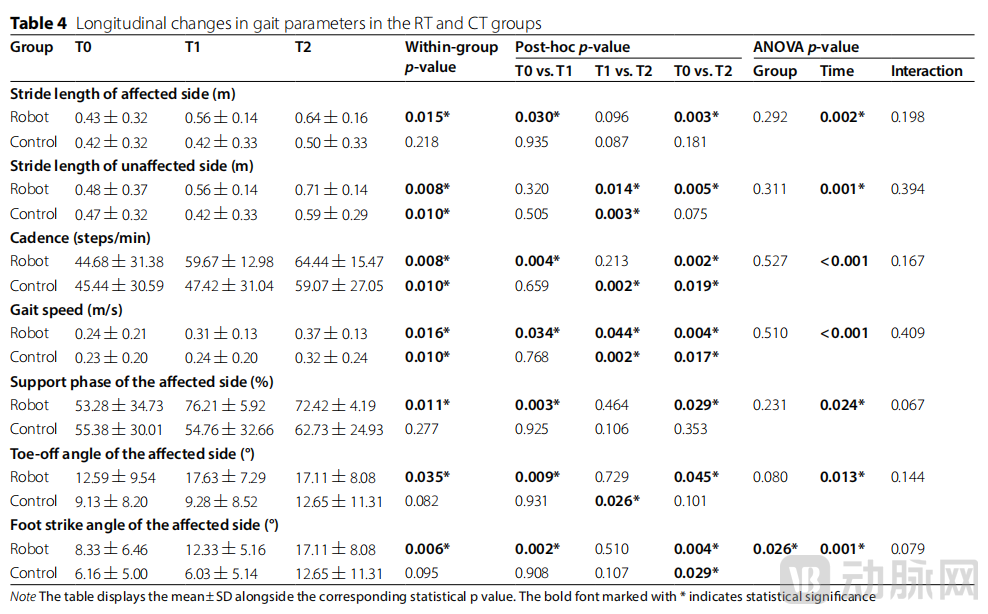
Overview of Trial Data
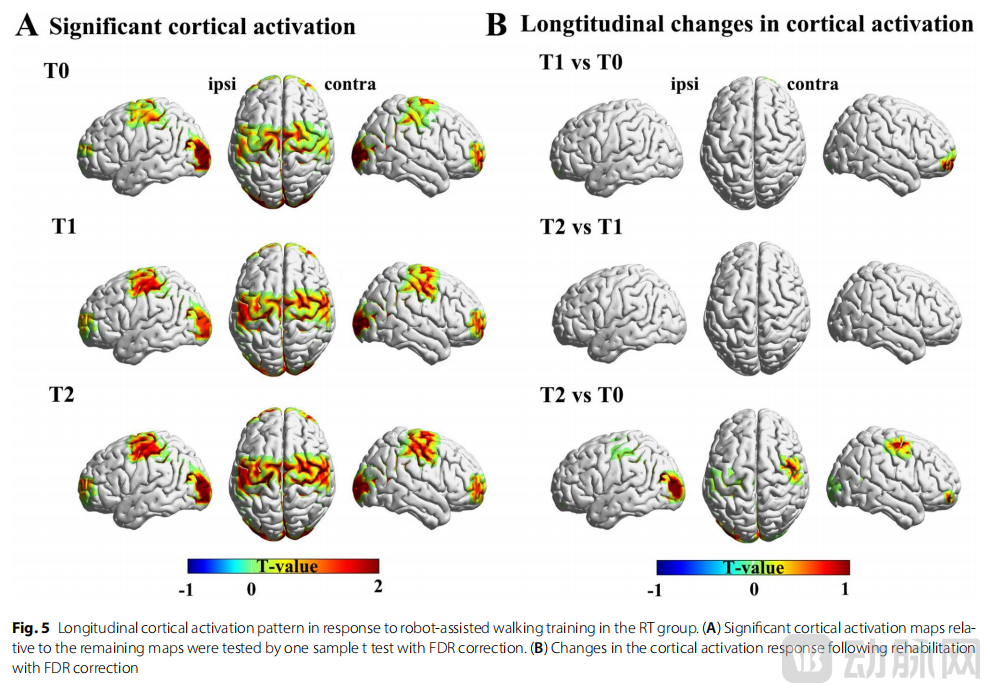
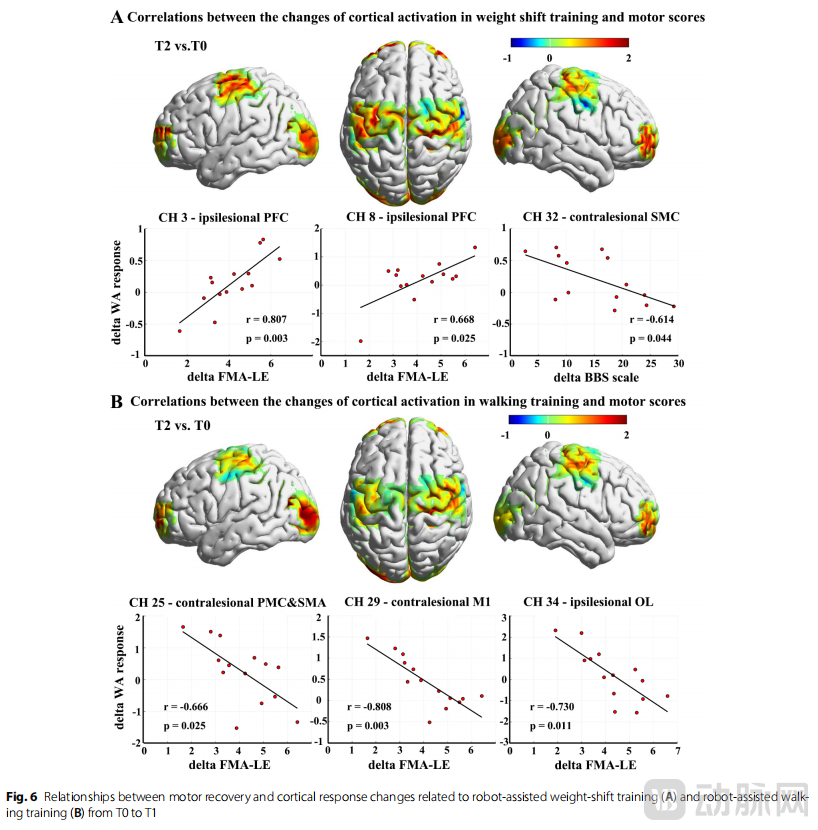
fNIRS Imaging Analysis
Furthermore, longitudinal fNIRS measurements revealed that patients in the RT group exhibited significantly increased cortical activation in the bilateral prefrontal cortex (PFC), occipital lobe (OL), and motor-related areas while wearing the rehabilitation robot for center-of-pressure shift training. Further analysis indicated that the increased PFC activation in the affected hemisphere during center-of-pressure shifts was positively correlated with improvements in lower limb motor function.Specifically, the single-lower-limb hemiplegia rehabilitation robot facilitates functional reorganization of the neural networks in the affected cerebral hemisphere under gait and balance control, thereby promoting neuroplasticity.
Of particular note, this study features three major highlights—
First, a multimodal assessment approach was adopted, integrating clinical functional assessment scales, objective spatiotemporal gait parameters, and dynamic brain function assessment techniques to achieve a comprehensive evaluation of the patient’s peripheral and central nervous systems.The study results indicated that both groups of patients showed improvements in gait and balance, as well as enhanced walking ability, following rehabilitation therapy. Notably, the unilateral lower-limb rehabilitation robot training group demonstrated superior outcomes in improving patients’ walking ability and activities of daily living (ADL) compared to the conventional training group, suggesting that intervention with a unilateral lower-limb rehabilitation robot can significantly enhance the efficiency of lower-limb rehabilitation in stroke patients.
Second, in terms of objective gait parameters, this study demonstrated that unilateral lower-limb rehabilitation robot training was superior to conventional rehabilitation methods in improving affected-side gait, stance phase, and toe-related angular metrics.It not only improves balance and walking ability in stroke patients, but also effectively addresses abnormal gait patterns such as hip flexion, circumduction gait, foot drop, and inversion, thereby facilitating the restoration of a normal gait.
Third, research using near-infrared brain function imaging technology has found that single lower limb rehabilitation robot training can better induce activation responses in the motor cortex of the affected hemisphere in subacute stroke patients, promoting balance between hemispheres and achieving neural control functional remodeling., which is conducive to the recovery of motor function, and for the first time confirms the clinical value of single-lower-limb rehabilitation robots in promoting neuroplasticity.
Based on the aforementioned research, it is evident that for patients with hemiplegia, a single-limb lower extremity rehabilitation robot serves as an active, personalized, and precise intelligent rehabilitation device. By capturing motion data from the patient’s unaffected lower limb and transmitting this information via algorithms to an exoskeleton worn on the affected side, the device facilitates movement training that mirrors the healthy side, thereby placing greater emphasis on the patient’s active participation.
During this process, the patient’s unaffected side guides the affected side through correct and repetitive motor relearning rehabilitation exercises, facilitating active engagement of the central nervous system and peripheral control, thereby establishing a “central–peripheral–central” closed-loop active rehabilitation process. This aligns with the key principles long emphasized in neurological rehabilitation: closed-loop feedback and active participation.
In addition to the paper released this time, in September of this year, the Anjielai LiteStepper, led by the team of Xiong Bing and Xu Xin from the Second Affiliated Hospital of Zhejiang University School of Medicine®The academic research findings on the clinical application of a unilateral lower-limb hemiplegia rehabilitation robot, titled “Efficacy and safety of using a unilateral lower limb exoskeleton combined with conventional treatment in post-stroke rehabilitation: a randomized controlled trial,” have also been published in the international journal Frontiers in Bioengineering and Biotechnology.
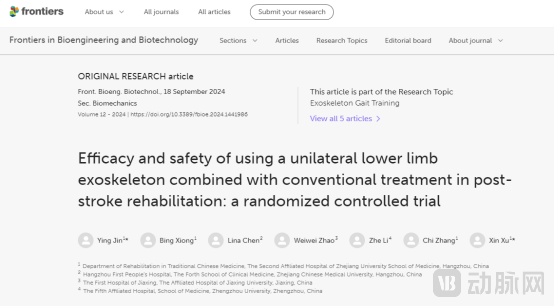
Screenshot of Paper Publication
Since its approval and market launch in 2022, Anjielai LiteStepper®The single-lower-limb hemiplegia rehabilitation robot has been adopted by the Rehabilitation Hospital of the National Research Center for Rehabilitation Technical Aids, the Second Affiliated Hospital of Zhejiang University, Hangzhou First People’s Hospital, Jiaxing Hospital, Shanghai Sunshine Rehabilitation Center, Jiangsu Province People’s Hospital, Hunan Provincial People’s Hospital, Zhejiang Provincial People’s Hospital, the Fifth Affiliated Hospital of Zhengzhou University, West China Hospital of Sichuan University, the Third Affiliated Hospital of Sun Yat-sen University, Shengjing Hospital of China Medical University, and others.Validated by over 200 hospitals and rehabilitation institutions across China, the product’s rehabilitative therapy has benefited more than 20,000 patients.。
Leveraging applications in brain science, Angelae has initiated the research and development of more than ten intelligent rehabilitation products. These products meet the rehabilitation training needs for joints including the shoulder, elbow, wrist, hip, knee, ankle, and hand, forming an intelligent solution centered on neurological rehabilitation, characterized by musculoskeletal rehabilitation, and extended to early bedside rehabilitation and geriatric rehabilitation.
Except LiteStepper®In addition to the unilateral lower-limb hemiplegia rehabilitation robot, AngelRay has launched six approved products, including an ankle rehabilitation training robot, a pediatric ankle rehabilitation training robot, and a unilateral upper-limb rehabilitation robot. The company is also actively developing next-generation rehabilitation technologies, such as brain-computer interfaces and AI large model-assisted walking.
Amidst fierce competition, the determined prevail. Angelai has successfully obtained ISO 13485 international quality management system certification and completed its initial market layout in the United States, Japan, Europe, and other regions. Meanwhile, the company is continuously deepening its penetration into the domestic rehabilitation market, forging partnerships with rehabilitation departments of Grade A tertiary hospitals, specialized rehabilitation hospitals, community rehabilitation centers, and rehabilitation institutions under the civil affairs and disabled persons’ federations systems.
The exam questions of the era have been laid out, and Angelae’s answers are being written...
References:
[1] “2.2 Million People in China Disabled Annually by This Disease! These 3 Groups Are at High Risk,” CCTV News
[2] “Clinical Efficacy Observation of Acupuncture in the Treatment of Spastic Hemiplegia after Stroke,” Yang Fan, Liu Dan. Chinese Medicine, 2024, 13(12): 3286-3289.