

Scleral Lenses Emerge as a Breakthrough Ophthalmic Product: 'Extra-Large Contact Lenses' Gain Rapid Traction in China
Over the past year, scleral lenses have emerged as a key new product heavily promoted by leading public hospitals and ophthalmology chain clinics.
Since the approval of the first imported scleral lens and the first domestically produced scleral lens in 2023, a total of five scleral lens products have been approved for market launch by the National Medical Products Administration (NMPA) in China to date. Alongside these frequent approvals, scleral lenses have rapidly entered medical institutions: leading public healthcare providers in the field of ophthalmology have actively introduced them, with some even establishing specialized scleral lens clinics to meet patient demand; Aier Eye Hospital, He’s Eye Hospital,Huaxia Eye Hospital,Aier Eye Hospital and others are also vigorously promoting scleral lens fitting as a new technology.
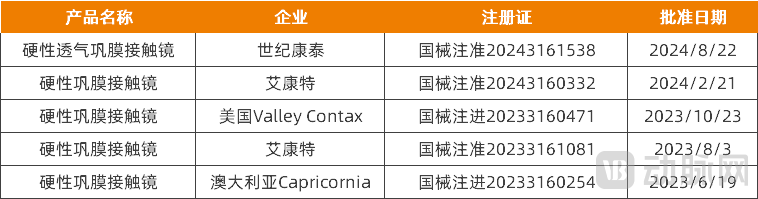
Five Scleral Lens Products Approved in China, Source: National Medical Products Administration
As a type of large-diameter rigid gas permeable contact lens, scleral lenses differ significantly from conventional contact lenses: they do not directly touch the cornea but instead vault over the cornea and land on the conjunctival tissue overlying the sclera. A fluid layer of appropriate thickness is formed between the lens and the cornea, creating a regular optical imaging interface to achieve vision correction, thereby providing a comfortable and effective solution for irregular astigmatism. Typically, scleral lenses have diameters ranging from approximately 14.5 mm to 18 mm (based on products approved in China), which are larger than even the largest diameter colored soft contact lenses, with some exceeding 20 mm, classifying them as "extra-large contact lenses."
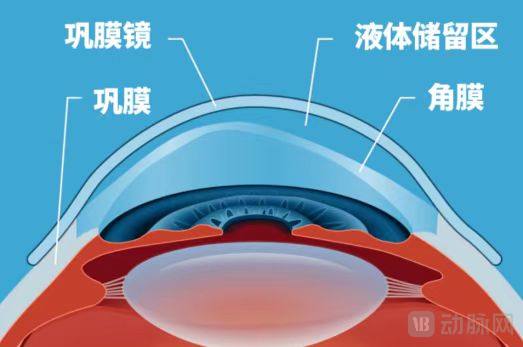
Schematic Diagram of Scleral Lenses. Image source: Official WeChat Account of the School of Ophthalmology and Optometry, Wenzhou Medical University
Although scleral lenses have been used clinically for decades abroad, they remain a nascent field in China. Over the past year, scleral lenses have rapidly gained prominence due to their significant value in correcting irregular astigmatism, emerging as another new product category in ophthalmology.
Scleral lenses are primarily used for refractive correction in patients with irregular corneal astigmatism caused by various conditions, including aphakia, keratoconus, globus cornea, pellucid marginal degeneration, post-corneal refractive surgery, post-keratoplasty, corneal scarring, and corneal dystrophies.
Historically, the correction of irregular corneal astigmatism has remained a clinical challenge. Spectacles are ineffective in correcting irregular corneal astigmatism and fail to provide satisfactory corrected visual acuity. While rigid gas permeable (RGP) contact lenses can be employed, their corrective efficacy remains suboptimal for patients with moderate to severe irregular astigmatism. Furthermore, some patients exhibit RGP intolerance and struggle to adapt to the foreign body sensation associated with RGP lens wear.
Kuang Yi, Deputy Director of Chongqing Eye & Vision Hospital, told VCBeat that, by comparison, scleral lenses can significantly improve visual acuity and visual quality in patients with irregular corneal astigmatism. In addition to correcting high astigmatism caused by corneal pathologies, they effectively correct ultra-high myopia, high hyperopia, and significant anisometropia, thereby minimizing the impact of optical aberrations on visual acuity and visual quality.
“Clinical studies have found that scleral lenses can also be used for other corneal and ocular surface diseases, such as trauma, corneal epithelial defects, persistent non-healing of the corneal epithelium due to nerve damage, trichiasis, and severe long-term dry eye. In particular, for some patients with severe dry eye who have not responded to other treatments, intervention using the fluid reservoir formed by scleral lenses over the cornea can yield favorable therapeutic outcomes,” said Kuang Yi.
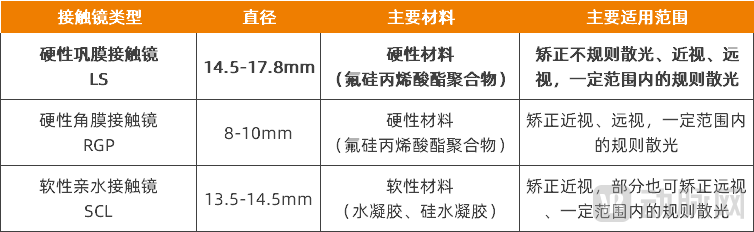
Comparison of Features Between Scleral Lenses and Other Contact Lens Products; Source: Public Reports and Interviews
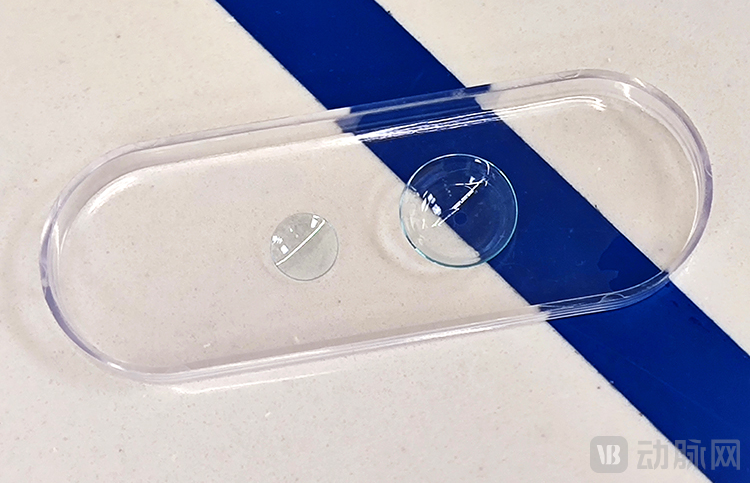
Scleral Lens (Right) vs. RGP Size Comparison
Furthermore, although both scleral lenses and rigid gas permeable (RGP) lenses are made from rigid gas-permeable materials, scleral lenses offer superior comfort compared to RGP lenses because they do not directly contact the cornea and maintain a stable fitting position.
In 1994, Capricornia in Australia developed the world’s first scleral lens. To date, companies such as ABB Optical Group, Bausch+Lomb, Visionary Optics, Art Optical, CooperVision, BostonSight, AccuLens, TruForm Optics, SynergEyes, and Valley Contax have launched scleral lens products globally, with North America being the primary market for scleral lenses.
In response to the urgent demand among a large number of patients in China for corrective treatment of irregular astigmatism, since 2019, Boao Lecheng has successively introduced Menicon’s TimeXL from Japan, Capricornia’s iPure from Australia, and Valley Contax’s CS scleral lenses from the United States. These devices, approved as specially permitted medical devices, are being fitted at Boao Super Hospital.
During this period, real-world data from clinical applications provided crucial support for the domestic registration and market launch of imported scleral lenses. The two imported products already on the market (namely, EyePrintPRO and CS) were both pilot varieties in Hainan’s real-world data application program. When EyePrintPRO received approval from the National Medical Products Administration (NMPA) for market launch in June 2023, it had already been used by more than 300 patients in China.
The retail price of a single scleral lens ranges from approximately 9,000 to 14,000 yuan, positioning it as the “ceiling”-tier product in the optometry market in terms of pricing.
However, unlike other optometric products that are strongly driven by consumer demand, scleral lenses possess a more essential medical attribute. Patients with common refractive errors typically have multiple corrective options available, all of which can achieve similar visual outcomes; in contrast, for patients with irregular astigmatism and related conditions, scleral lenses are the only option capable of delivering ideal correction or therapeutic intervention, thereby making them a medical necessity.。
Currently, four brands of scleral lenses in China have entered the commercialization stage.
Among them, iProko was introduced to the Chinese market by Ruitai Biotech and is the first scleral lens product approved in China. Public information indicates that iProko has achieved over 50,000 successful fittings globally, with a first-time fitting success rate of up to 71%. The CS scleral lens was introduced by Shen Hao Eye Care, a subsidiary of Haohai Biological Technology. This product received FDA clearance in 2017, and scleral lenses from its parent company, Valley Contax, have been used by more than 200,000 patients.
As the first domestically produced scleral lens brand to receive market approval, Aikangfei rigid scleral contact lenses, developed by VisIcon, were launched in August 2023. In August 2024, Century Kangtai’s self-developed second-generation aspheric scleral lenses, Meishiji, were launched.
At the product level, major brands meet patient needs through varying diameter specifications, optical design features, and other parameters.
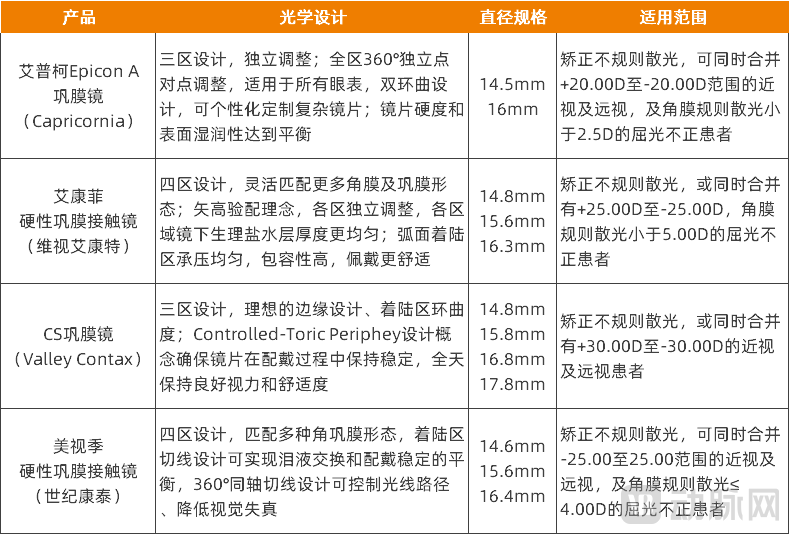 Scleral Lens Products Already Marketed in China, Source: Corporate Public Information, National Medical Products Administration
Scleral lenses have unique characteristics in the fitting process, and compared with RGP lenses, they present a longer learning curve and greater difficulty for clinicians.
Kuang Yi explained that, in addition to the ophthalmic examinations required for rigid gas permeable (RGP) lenses, scleral lens fitting also necessitates measuring corneal sagittal height using optical coherence tomography (OCT). During trial lens fitting, prolonged observation of lens settling is required to assess the clearance between the lens and the central and peripheral cornea before and after settling, as well as to evaluate the fit of the lens landing zone. Ultimately, the parameters for the custom-made lens are determined by integrating factors such as lens fit, best-corrected visual acuity, and the patient’s subjective comfort. “Typically, the entire fitting process takes approximately four hours. Fitting scleral lenses places high demands on the clinician’s expertise and experience in rigid contact lens practice.”
Therefore,Leading institutions have played a significant role in promoting scleral lenses and fitting techniques.
Since 2023, leading ophthalmic hospitals and large general hospitals—including the Zhongshan Ophthalmic Center of Sun Yat-sen University, Beijing Tongren Hospital affiliated with Capital Medical University, Eye & ENT Hospital of Fudan University, The Second Affiliated Hospital of Zhejiang University School of Medicine, and Eye Hospital of Wenzhou Medical University—as well as private chains such as Aier Eye Hospital, He’s Eye Hospital, Huaxia Eye Hospital, and Purui Eye Hospital, have all initiated scleral lens fitting services. With the frequent conduct of academic exchanges and technical application seminars, scleral lenses are gradually expanding their penetration and entering prefecture-level hospitals across various regions.
Currently, scleral lenses are primarily introduced into the ophthalmology departments, cornea specialties, or optometry centers of general hospitals and specialized eye hospitals, where fitting services are conducted within existing specialized outpatient clinics.
Lu Jing, head of the medical division at Vision Icon, stated that since its market launch, the Aiconfi scleral lens has been adopted by public ophthalmic hospitals, private chain ophthalmic hospital groups, optometry clinics, and vision care centers.
Public information indicates that, since its launch four months ago, the Meishiji scleral lens has been fitted at institutions including the Department of Ophthalmology, Peking University People’s Hospital, and the Shangqiu Optometry and Ophthalmology Hospital in Henan Province.
However,Scleral lenses are not merely optical devices but also therapeutic tools for a variety of ophthalmic conditions, which underscores the unique nature of their clinical management model. Leveraging the dual value of scleral lenses in disease treatment and refractive correction, healthcare institutions are innovating specialized outpatient clinic models to promote their application.
At the Eye, Ear, Nose, and Throat Hospital of Fudan University, the Dry Eye Center and the Contact Lens Center have jointly established a “Specialized Joint Clinic for Complex Corneal Diseases with Scleral Lenses.” Staffed by corneal and dry eye specialists alongside optometric contact lens experts, the clinic provides patients with comprehensive, end-to-end services ranging from treatment to visual correction.
Xiamen Eye Center of Xiamen University has established a "Specialized Clinic for Complex Corneal Diseases and Scleral Lenses" and introduced two types of scleral lenses to provide more personalized diagnosis and treatment services for patients with corneal diseases.
In 2024, Aier Eye Hospital launched a scleral lens diagnostic and therapeutic clinic, offering new treatment options for patients with complex conditions such as high myopia, high astigmatism, moderate to severe keratoconus, post-refractive surgery irregular corneal astigmatism, post-ocular trauma irregular corneal astigmatism, post-corneal transplantation, and moderate to severe dry eye.
Domestic R&D of scleral lenses is ongoing. In 2024, the ultra-high oxygen permeability scleral lens developed by Autek China was submitted for registration and accepted; the high oxygen permeability scleral lens developed by Haohai Biological Technology also entered clinical trials in July 2024.
Furthermore, although scleral lenses are a new product that has been on the Chinese market for only one year, multinational companies have already scheduled the transition from imported to domestically produced goods. It is reported that Capricornia (Australia) and Ruitai Biologics have established a joint venture in Chengdu, with local production and large-scale manufacturing of Capricornia scleral lenses expected to be realized by 2025.
The launch of subsequent products will provide doctors and patients with more options.
Lu Jing believes that domestic scleral lenses are currently in the market introduction phase for new products, with considerable room for growth and potential in the future. However, several major challenges facing the industry must be taken seriously.
First, patient awareness of scleral lenses remains low, necessitating extensive market education.Activities such as free trial fittings and public welfare assistance have directly contributed to enhancing awareness among patients who have already sought medical care. However, an inherent information asymmetry exists with new technologies, leaving many patients unaware that existing products can address their medical conditions. It remains essential to continue collaborating with healthcare institutions and medical professionals to further strengthen public and patient education through various channels.
Second, it is necessary to reduce the learning curve and difficulty of scleral lens fitting techniques, thereby improving fitting efficiency.
Lu Jing noted that, given the lengthy learning curve and complexity involved in scleral lens fitting, it is particularly important for companies to provide technical and personnel support to healthcare institutions in need. “For instance, in addition to its sales team, Visioneering Technologies has established a professional affairs team equipped with clinical application specialists who visit healthcare institutions to provide on-site fitting support and services. Beyond the competitiveness of the product itself, the ability of a company to deliver rapid support services is also a competitive advantage. However, at this stage, the reliance on corporate technical staff for scleral lens fitting constrains the coverage and promotion of this technology. We are also exploring new approaches and methods to improve fitting efficiency and enhance the accessibility of this emerging technology.”
Third, pricing limits the accessibility of scleral lenses, and the market price system needs to be reshaped.
As previously mentioned, the price of a single scleral lens ranges from approximately RMB 9,000 to RMB 14,000, which is several thousand yuan higher than that of rigid gas permeable (RGP) lenses. Like other contact lenses, scleral lenses require regular replacement; for marketed products, the replacement cycle recommended in the registration certificate is one year or one and a half years. Additionally, the use of consumables such as care solutions and physiological saline contributes to high overall usage costs.
It is also understood that in 2024, the Bethune Public Welfare Foundation launched the “Bright New Life—Scleral Lens Fitting Assistance Program,” providing free assistance to eligible patients, with a total of 3,000 lenses distributed. While such initiatives have addressed the issue of timely access to new products for some patients, they do not constitute a standardized payment mechanism.
It is evident that the major challenges facing the scleral lens market are closely interconnected: inefficient fitting processes have led to higher costs, which in turn affect product pricing and patient accessibility. Enhancing fitting efficiency represents a key breakthrough point.
“After navigating the initial phase of high-investment promotion and resolving the challenges associated with fitting efficiency, manufacturers may adjust their prices in the future to make new technologies more accessible to a broader patient population,” said Lu Jing.
A review of the ophthalmic market reveals that not only scleral lens manufacturers and medical institutions are striving to address challenges in fitting efficiency, but ophthalmic equipment companies are also actively participating.For example, leveraging the technical capabilities of the Ruyi Whole-Eye OCT, Intalight (Saiwei) has launched a faster scleral lens fitting solution; Weiren Medical’s A.I.S. Contact Lens Intelligent Fitting System for OCT includes a scleral lens fitting module. In addition, Visutech (Weishi Aikangte) also launched an OCT product in 2023 to support more efficient scleral lens fitting.
It is foreseeable that, driven by multiple factors including patients’ rigid demand, innovative service models adopted by medical institutions, and technological breakthroughs by device manufacturers, the domestic scleral lens market in China will enter a fast-growth phase.
Acknowledgements to Visant and Chongqing Eye & Optometry Hospital for their support in the research and filming of this article.