

Hongchuang Capital Files Prospectus: Focused on Commercialization-Stage Early Investments in Healthcare, Seeking 'Non-Consensus Alpha'
Hongchuang Capital, founded by former Sequoia Healthcare partner Lu Xiaobo, has recently completed the first closing of its inaugural RMB-denominated fund.This fund is currently the most on the marketThe only specialized healthcare fund focused on investing in the early commercialization growth stage.
5 Listed Healthcare Companies(including Tailong Investment of the “Tigermed” group, the Tiankai Jiuan Haihe Haitang Science and Technology Innovation Fund of Funds co-initiated by “Andon Health,” as well as relevant entities of listed companies such as “Innovita Biological” and “Cofoe Medical”)Multiple Medical GPs(Relevant entities or individuals) andState-owned Funds in Tianjin and Shanghai(Tianjin Haihe Industry Fund, Shanghai Songjiang State-owned Assets System Fund), etc., have all become limited partners (LPs) of this first-time fund.
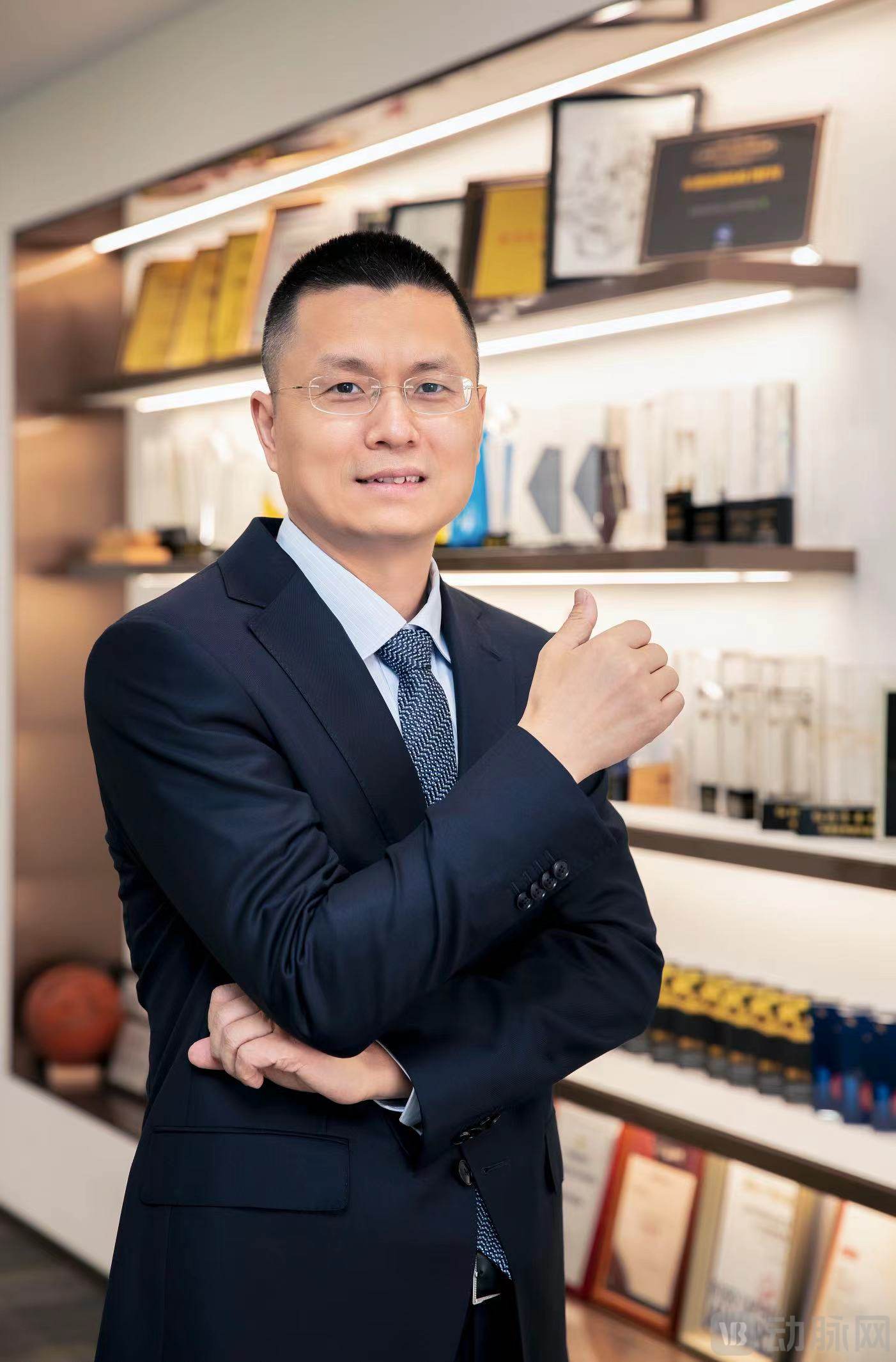
Lu Xiaobo, Founder of Hongchuang Capital
Looking at Lu Xiaobo’s career to date, his trajectory can be described as “majestic, extraordinary, profound, and enigmatic”—
As one of the first generation of sales professionals in China, Lu Xiaobo initially distinguished himself at Sanjiu Pharmaceutical. Leveraging his outstanding sales performance, he was promoted to Provincial Sales Manager and then to Regional Sales Manager within just three years, leading a sales team of over 100 members. In 1999, he was honored as Sanjiu Group’s Annual Sales Champion, having achieved annual sales revenue exceeding RMB 100 million.
Later, he transitioned into the investment sector. During his seven-year tenure at Cowin Capital, he led investments in star projects such as BGI Genomics, Beta Pharma, Innovent Biologics, Chipscreen Biosciences, and Tinavi Medical Technologies, thereby rising to the rank of healthcare partner. He also built a professional healthcare investment team with a strong focus on medical industry expertise from the ground up, facilitating over 10 healthcare IPOs.
After joining Sequoia Capital, he served as a healthcare partner and, over the course of more than five years, led the healthcare investment team in investing in over 200 healthcare projects and completing 45 initial public offerings (IPOs).
Looking back on his 14-year investment career, Lu Xiaobo has almostSecuring 13 A-share IPOs at a pace of one per year. The average time from investment to IPO is just four years, with an average cash-on-cash return (DPI) of nearly 5x and an internal rate of return (IRR) of approximately 35% annually.
Based on the data, Lu Xiaobo is likely the healthcare investor in the investment community with the highest number of portfolio companies achieving initial public offerings (IPOs) on China’s A-share market.
The counterparties of pitchers are all mirrors of the pitchers themselves. Standing at the new starting point of the professional “new season,” how will Lu Xiaobo rise to the challenge?
The following is a dialogue between VCBeat and Lu Xiaobo(Edited):
Core Viewpoints of This Article:
1. The healthcare industry remains the most certain high-growth sector over the next decade, and early-stage investment in commercialization represents the optimal strategy under the new market conditions.
2. Funds need to return to their essence—creating strong returns for investors. The prerequisite for generating such returns is investing in high-quality companies at sufficiently low valuations, thereby creating the opportunity to achieve excess returns.
3. A-share IPOs present cyclical opportunities every 3–5 years. China’s capital market will undoubtedly see new listing windows in the future, and the present moment represents the optimal time for strategic positioning.
4. Deliver strong DPI to investors, rather than merely superficial IRR, as genuine DPI returns are the key to navigating market cycles.
VCBeat:In the challenging fundraising environment, why did you choose to leave Sequoia Capital and establish Hongchuang Capital?
Lu Xiaobo:Investment is a flat, personalized decision-making process. I still hope to build a distinctive fund that leverages my years of experience and strengths in healthcare commercialization—keeping it simple and pure.
Funds must return to their core purpose: generating strong returns for investors. The prerequisite for achieving such returns is investing in high-quality companies at sufficiently attractive valuations, which creates the opportunity to capture excess returns. The healthcare sector is currently undergoing a rare period of adjustment. Although fundraising remains challenging in the current market, from an investment perspective, project valuations are more reasonable, competition is less intense, and investable targets are clearer. This presents a favorable opportunity for new funds.
VCBeat:Please introduce Hongchuang Capital.
Lu Xiaobo:Hongchuang Capital is the only specialized healthcare fund in the market focused on investing in the early commercialization stage. It continuously seeks mid-to-early-stage projects with commercial potential that offer “non-consensus dividends,” making investment decisions based on long-term value.
VCBeat:Hongchuang Capital is a “professional healthcare fund focused on investing in the early commercialization growth stage.” How should “early commercialization growth” be understood or defined? Why has this positioning been adopted?
Lu Xiaobo:“Early Commercialization Stage” refers to the phase where a company has obtained or is about to obtain regulatory approval and needs to commence commercialization. Of course, some upstream players in the industry chain do not require regulatory approval but have already generated revenue in their early development stages.
Companies at this stage have already mitigated technical risks, eliminating concerns about R&D uncertainties and regulatory approval timelines, and are poised to generate revenue and profits shortly. From an exit perspective, these enterprises are expected to achieve rapid growth in revenue and profitability over the next three to five years, offering both upside potential and downside protection. Should an initial public offering (IPO) prove challenging, acquisition by a listed company remains a viable alternative. Furthermore, valuations for these companies are relatively reasonable in the current market environment.
Many early-stage investments have successively obtained regulatory approvals in recent years, making commercialization the greatest challenge for technology-focused founders. This is particularly critical given that only profitable companies are currently eligible to submit applications for listing on China’s A-share market. With over 10 years of marketing experience, I differ from investors with technical backgrounds who specialize in taking ventures from zero to one; instead, I excel at driving commercial growth from stage 1 to 100 after product approval.
VCBeat:Can Hongchuang Capital replicate its past stellar performance on this new platform? What is the foundation of its confidence?
Lu Xiaobo:Investment is a positive feedback loop, with historical investment performance serving as the most fundamental safeguard. Over the 14 years since I transitioned into an investor, I have led investments in 15 companies that have gone public, 13 of which are listed on China’s A-share market.
Most healthcare investors come from technical or investment banking backgrounds, while those with marketing expertise are scarce. Investors with a marketing background are better equipped to assess the rationality of sales team structure and to forecast the commercial value of products as well as their sales performance over the next three to five years.
From a corporate perspective, many founders come from technical backgrounds. General Partners (GPs) need to provide value-added services across multiple dimensions—including building sales teams, formulating sales strategies, managing sales systems, positioning and pricing products, and developing marketing strategies—to help companies avoid unnecessary detours.
Furthermore, the current difficulty in fundraising precisely marks a golden period for investment. High-quality projects are available at attractive valuations, making it easier to invest in assets with superior cost-performance ratios. This environment is reminiscent of 2015–2017, which was a favorable cycle for investment, while 2019–2021 served as a golden period for exits. I believe that the healthcare sector remains the most certain and promising track for the next decade, and early-stage investment in commercialization growth represents the optimal strategy under the new dynamics of the capital market.
VCBeat:Having worked at 999 Pharmaceuticals, All-Stars Capital, and Sequoia Capital, you are among the very few investors with over a decade of experience in healthcare commercialization. How have these experiences shaped your investment preferences or evaluation criteria?
Lu Xiaobo:First, having experienced the full market cycle, I can more objectively assess the opportunities and risks of projects, leverage my strengths, and truly assist high-potential companies. We adhere to a boutique strategy, avoiding blind pursuit of fund size, meticulously refining each investment to deliver returns to our investors. The current moment may well be the optimal entry point for healthcare investments over the next decade; we embrace greed when others are fearful.
On the other hand, given the highly specialized nature of the healthcare industry and the critical importance of R&D, many general partners (GPs) come from medical or scientific backgrounds. I am among the very few investors in the healthcare sector with over a decade of commercialization experience, which affords me a distinct perspective in investment decision-making. For instance, I invested in Betta Pharmaceuticals shortly after it obtained regulatory approval for its product. Similarly, I invested in Innovent Biologics right after it secured approval for its PD-1 inhibitor. I also invested in Nanomicro Technology during the early stages of its commercial growth. My portfolio includes many such projects invested in at similar early-commercialization stages. The success of these past investments has demonstrated my differentiated advantage in identifying opportunities during the early phase of commercial scaling, an advantage I intend to continue leveraging.
Furthermore, investment is characterized by information asymmetry, or what is known as non-consensus. Many of my investments were not widely regarded as correct at the time of deployment. It is difficult to fully persuade others on a platform to endorse your viewpoint, which is precisely why we established a fund.
VCBeat:Hongchuang Capital has always maintained a low profile. Why choose to speak out at this particular juncture?
Lu Xiaobo:First, we are fully prepared on both the fundraising and investment fronts. Having transitioned from the industry side to investing nearly 15 years ago, I have achieved certain milestones and accumulated valuable insights. Since my departure from Sequoia Capital, many entrepreneurs, peers, partners, and investors have expressed keen interest in our journey. I hope to take this opportunity to share our evolution and outline our future investment strategy, fostering greater collaboration and exchange going forward.
VCBeat:What are the primary channels through which Hongchuang returns value to its limited partners (LPs)?
Lu Xiaobo:A-share IPOs offer cyclical opportunities every 3–5 years. I am confident that China’s capital market will see new listing windows in the future, and now is the optimal time for strategic positioning.
Projects in the early stages of commercialization can quickly reach break-even, with low downside risk and reasonable valuations. These projects have the potential for rapid performance surges, enabling strong revenue and profit growth over the next three to five years. We remain committed to pursuing an IPO where feasible; if an IPO is not viable, we will consider mergers and acquisitions. Given the companies’ profitability, even in the most conservative scenario, they retain the capacity for share buybacks.
However, the most fundamental priority is to create value for Limited Partners (LPs), and we must ensure the security of their capital. From this perspective, I believe that investing in the early commercialization stage offers the optimal balance between risk and return.
VCBeat:What do you think fund managers need to achieve in order to navigate through market cycles?
Lu Xiaobo:Deliver Strong DPI to Investors(Ratio of Distributed Profits to Investment Cost), rather than merely the superficial IRR(Internal Rate of Return), because ultimately, real DPI returns are the key to navigating market cycles. If returns are poor, no narrative can persuade investors.
To achieve this goal, it is essential to carefully select investment projects and diligently seek out non-consensus investment opportunities. This requires that the projects themselves be of high quality, characterized by high technological barriers, innovation, strong market prospects, and commercialization potential. At the same time, valuations must be reasonable, and founding teams must demonstrate strong capabilities and high execution efficiency. In short, the strategy is to select the best among the best, thereby increasing the success rate of investments.
Moreover, fund size should be moderately controlled, as finding an appropriate scale is crucial. The healthcare sector comprises numerous sub-segments at varying stages of development, making it impossible for any single fund to comprehensively cover the entire landscape. Furthermore, healthcare investment demands a high degree of specialization, requiring not only that the GP(General Partner)Candidates must possess a strong professional background, deep industry expertise, and extensive investment experience, with real-world DPI exit cases to validate their investment thesis.
VCBeat:Which Projects Did Hongchuang Capital Invest in During 2024? Has It Completed Its Investment Targets?
Lu Xiaobo:We adhere to a boutique investment strategy, prioritizing high-quality projects in the current market. We are in no hurry to deploy capital and do not engage in probabilistic betting. Guided by project quality, we uphold the principle of “better to go without than to settle for less,” and have no specific investment quotas. This year, we led the investment in Zhishu Technology, the only company in China with a liquid metal bearing CT tube technology platform. We expect to complete investments in two to three additional projects within the next 3–6 months.
VCBeat:Hongchuang Capital focuses on the upstream segment of the industrial chain, medical devices and consumables, and in vitro diagnostics. Has our current focus shifted? What key factors do you prioritize during evaluation?
Lu Xiaobo:No changes. Key considerations include reasonable valuation, mitigation of technical risks following regulatory approval, opportunities for explosive growth, strong market demand, and high technological barriers.
Take Zhishu Technology, in which we invested this year, as an example. The CT X-ray tube is the most expensive consumable in the CT field. Currently, over 90% of CT X-ray tubes are imported from abroad, leaving substantial room for domestic substitution. Furthermore, CT X-ray tube technology features high barriers to entry, with numerous proprietary know-how elements involved in the manufacturing process. Zhishu Technology is the first company in China to develop CT X-ray tubes with liquid metal bearings. This R&D endeavor entails significant technical challenges. However, these tubes are more widely used in mid-to-high-end integrated CT systems and offer superior performance. Therefore, we are more optimistic about Zhishu’s long-term development prospects.
VCBeat:Regarding the upstream segment of the industry chain, a common challenge faced by core components of medical devices is limited market size. What types of upstream companies do you consider worthy of investment?
Lu Xiaobo:First, there must be significant technical barriers to entry. Second, regarding the market, we favor companies driven by both domestic and international markets. Third is the scalability of the product itself; if the same technology can be extended to related products, the richness of the product pipeline will also be enhanced.
VCBeat:Regarding in vitro diagnostics (IVD), we have observed that the current IVD market suffers from severe product homogenization, which has further intensified price wars and even led to a “bad money drives out good” scenario. In your view, what other investment opportunities remain in the IVD sector?
Lu Xiaobo:We place greater emphasis on innovative products within the in vitro diagnostics (IVD) sector. Compared with the United States, China still has too few innovative IVD products. Admittedly, such innovation is a gradual process and cannot replicate the rapid expansion seen during the pandemic. Nevertheless, we remain highly favorable toward the IVD business model overall.
VCBeat:Could you name two innovative products in the IVD sector that we are currently focusing on?
Lu Xiaobo:"This is certainly inconvenient. However, I previously invested in Reiskell through Sequoia Capital; they specialize in flow cytometry testing and have achieved significant growth in recent years. Additionally, I had earlier invested in Innotest, which has since gone public."
VCBeat:What support can portfolio companies receive from Hongchuang Capital?
Lu Xiaobo:We primarily provide the company with strategic guidance on commercialization, which is crucial for technology-focused founders. On one hand, we help evaluate the suitability of key hires, such as Sales Directors and Heads of Marketing. Once the right fit is confirmed, we assist in breaking down business objectives—whether annual, quarterly, or monthly targets, or those segmented by hospital, distributor, etc.—by engaging in detailed and granular decomposition.
For instance, with a public company we invested in, we were involved in nearly every stage of its commercialization and journey to the capital markets. This ranged from market analysis, competitive landscape assessment, and product positioning, to assisting the company in setting performance targets, optimizing incentive mechanisms, and identifying a more suitable head of marketing. We also engaged in granular management of the entire sales process, attended monthly marketing meetings, helped establish and improve compliance systems, and selected optimal pre-IPO advisory firms. In essence, we serve as the founder’s most sincere partner in addressing weaknesses, acting as a close shareholder and reliable ally in driving commercialization.
After all, with tangible revenue and profits, both founders and investors will have greater confidence and peace of mind. In the future, Hongchuang will continue to assist more healthcare founders in their commercialization efforts.
VCBeat:Is Hongchuang Capital interested in overseas investment?
Lu Xiaobo:"We do not specifically pursue overseas investments, but we hope that the projects we invest in will have the capability to expand globally and access commercialization opportunities in the future."
VCBeat:Which niche sectors will Hongchuang Capital focus on in 2025?
Lu Xiaobo:Our areas of focus remain unchanged.(Upper Stream of the Industry Chain, Medical Devices and Consumables, In Vitro Diagnostics). I don’t think much of focusing on a particular sector; that’s too superficial. I place greater emphasis on the company itself—its products, founding team, market conditions, competitive landscape, and the project’s valuation.
VCBeat:There is a significant overlap between investment cycles and IPO cycles. The suspension of IPOs in 2013–2014, the establishment of the expanded Issuance Review Committee in 2018, and the IPO suspension starting in 2023 all coincided with severe fundraising challenges for investment institutions. Conversely, these periods may also mark the opportune moments for the launch of the next cycle. This observation appears to align closely with Hongchuang Capital’s concept of the “golden period for counter-cyclical investment positioning.”
Lu Xiaobo:Therefore, I believe it is crucial for investors to have experienced several complete market cycles. I began my investment career in 2010 and have personally witnessed all the points you just mentioned, including the most challenging phase for IPOs. I have successfully assisted 13 healthcare companies in completing their initial public offerings (IPOs) on China’s A-share market… Having gone through these experiences, I am able to approach matters with greater composure.
Moreover, I firmly believe that many startups in the healthcare sector addressing critical bottlenecks or pursuing import substitution align with China’s major national policies and face sound market prospects. This is particularly relevant for initial public offerings (IPOs): if primary market investors cannot exit their investments, they will struggle to continue supporting innovative enterprises, whereas IPOs serve as a vital channel for backing technology-driven innovators.
Enterprises that have already achieved substantial scale may no longer require IPO support; therefore, capital markets should provide assistance when companies need it most, rather than merely focusing on risk control. I believe the state will improve the capital market environment, as innovation would be difficult to sustain without a well-functioning capital market. It is just that we need a bit more patience at present.
Investing is counterintuitive; it requires contrarian thinking. By entering the market when most investors have yet to grasp the full picture and investing in high-quality enterprises, you position yourself to benefit once tailwinds emerge and capital market dynamics shift. This contrarian capability stems from your deep accumulation of knowledge and rigorous research within specific industries and sectors. Without such depth, superficial understanding often leads to the pitfall of chasing rising prices and panic-selling during declines.
VCBeat:Hongchuang Capital believes that “the healthcare industry remains the most certain ‘golden track’ over the next decade.” Yet this year, the general sentiment appears to be quite negative. How do you view the current survival landscape of venture capital firms? Against this backdrop, do you anticipate any shifts in the investment logic for the healthcare sector?
Lu Xiaobo:First, I remain firmly convinced that the healthcare sector is still the most certain “golden track” over the next decade. In fact, what we are investing in today are opportunities for structural innovation. For instance, in China’s healthcare market, 90% of products were previously generics or those subject to centralized procurement, with only 5–10% being innovative products. By contrast, in the United States, approximately 80–90% of healthcare spending is on innovative products; while generics account for a large volume, their prices are very low, representing only about 10% of total spending.
National policies are placing increasing emphasis on innovation, granting greater flexibility to innovative products in terms of medical insurance reimbursement listing, pricing, and procurement. I believe that in the coming years, national policies will continue to foster a more favorable environment for innovation and payment for companies delivering genuine innovation.
Secondly, innovative products require reasonable price support. Otherwise, if stakeholders demand innovative products but are only willing to pay prices aligned with centralized volume-based procurement, innovation will become unsustainable, forcing manufacturers to revert to producing low-end products. I believe this scenario will not come to pass, and the industry will continue to deepen its innovative development.
VCBeat:Previously, the capital markets favored “investing early and investing small,” but recently there seems to be a shift toward projects with revenue. What are your thoughts on this trend?
Lu Xiaobo:We have consistently focused on investing in projects at the early stages of commercial growth. Pivoting abruptly is no easy feat, as the investment DNA required for early-stage technology-driven ventures differs significantly from that needed for revenue-generating projects.
VCBeat:This year, more investment firms are focusing on consumer healthcare. I wonder if you have been paying attention to this sector?
Lu Xiaobo:From a macro perspective, I am highly optimistic about consumer healthcare. However, this sector imposes exceptionally high demands on entrepreneurs, who must possess both technical expertise and consumer-market experience. Ideally, we look for relatively mature founders who not only have strong technical capabilities but also excel in brand building and channel development. We will therefore conduct careful and thorough due diligence to identify such high-quality companies.
VCBeat:Looking back on the two years since the establishment of Hongchuang Capital, are you satisfied with its investment performance?
Lu Xiaobo:I am quite satisfied. I am deeply grateful to the limited partners (LPs) who have chosen to support Hongchuang’s first fund in the current environment, and we will double our reverence and cherishment of this trust. On the investment front, things are proceeding well; we are steadily advancing according to our established strategy. I am very confident in our investment capabilities, and we have a strong opportunity to invest in companies that will pleasantly surprise and impress everyone.
Reference: “After Investing in 15 Listed Companies, Former Sequoia Medical Partner Lu Xiaobo Speaks Out for the First Time Since Founding His New Firm”