

Midea Building Technologies Supports National Equipment Renewal Initiative with 'Green Action: Trade-in & Upgrade' Program
In the era of traditional industry, machinery and equipment served as a critical turning point in revolutionizing production structures. As we entered the digital age, they have remained the “backbone” of the modern industrial system, playing a pivotal role in industrial upgrading. With the continuous and in-depth advancement of new-type industrialization and urbanization, there is an urgent need to renew various types of infrastructure. Furthermore, to align with the demands for intelligence and low-carbon development, the coordinated updating of both hardware and software has become an inevitable trend.
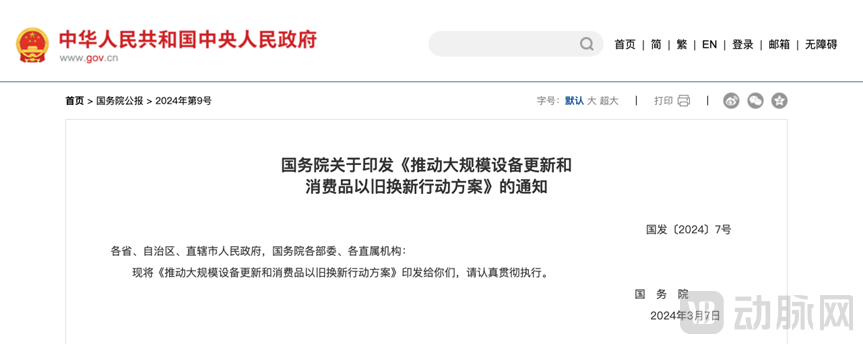
Against this backdrop, on March 7, 2024, the State Council issued the Action Plan for Promoting Large-Scale Equipment Renewal and Trade-In of Consumer Goods (hereinafter referred to as the “Two New Actions Plan”), which will focus on implementing four major initiatives: equipment renewal, trade-in of consumer goods, recycling and circular utilization, and standards upgrading. With a specific focus on equipment renewal, the plan clearly outlines four key directions: advancing equipment renewal and transformation in key industries; accelerating equipment renewal in the construction and municipal infrastructure sectors; supporting the renewal of transportation equipment and outdated agricultural machinery; and enhancing the level of medical equipment in the education, culture, and tourism sectors. These measures span both the industrial supply side and the consumer demand side, covering areas such as industry, construction, transportation, agriculture, education, healthcare, and cultural tourism.
Favorable Policies Emerge Frequently, Industry Faces “Crisis and Opportunity Intertwined”
It is evident from the frequent rollout of favorable policies this year that promoting the “Two New” initiatives has become one of China’s key priorities in 2024. These include:
The Fourth Meeting of the Central Financial and Economic Commission, held on February 23, emphasized that implementing large-scale equipment upgrades and trade-in programs for consumer goods will effectively boost investment and consumption, yielding both immediate and long-term benefits. The meeting also pointed out the need to promote the renewal and technological transformation of various production and service equipment, encourage trade-ins for traditional consumer goods such as automobiles and home appliances, and advance trade-in initiatives for durable consumer goods.
The Government Work Report released on March 5 stated that efforts would be made to encourage and promote the trade-in of consumer goods, and to drive the renewal and technological upgrading of various types of production and service equipment.
On March 7, the “Action Plan for Promoting Large-Scale Equipment Renewal and Trade-In of Consumer Goods” was officially released.
On March 27, the Ministry of Industry and Information Technology (MIIT) and six other departments issued the “Implementation Plan for Promoting Equipment Renewal in the Industrial Sector,” which emphasizes digital transformation and green upgrading as key priorities and calls for integrated updates of both hardware and software.
On the same day, the Ministry of Housing and Urban-Rural Development issued the “Implementation Plan for Promoting the Renewal of Equipment in Buildings and Municipal Infrastructure,” proposing to advance the categorized renewal of equipment in buildings and municipal infrastructure, with a focus on residential elevators, water supply, heating, gas supply, sewage treatment, environmental sanitation, urban lifeline projects, and building energy-efficiency retrofits.
On May 16, the Ministry of Industry and Information Technology released the Recommended Catalogue of Energy-Saving and Carbon-Reduction Technologies and Equipment in the Fields of Industry and Information Technology (2024 Edition), which identifies a range of targeted technologies and high-efficiency energy-saving equipment for energy-saving and carbon-reduction scenarios across 12 industrial subsectors and three informatization domains.
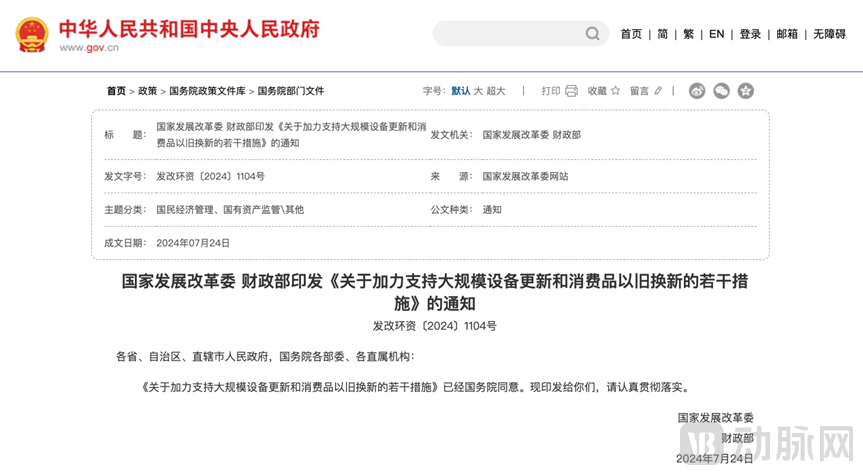
On July 24, the National Development and Reform Commission (NDRC) and the Ministry of Finance jointly issued the "Several Measures on Strengthening Support for Large-Scale Equipment Renewal and Consumer Goods Trade-In," arranging approximately RMB 300 billion in ultra-long-term special sovereign bond funds to continuously promote the effective implementation of the "Two New" policies.
On September 23, the National Development and Reform Commission (NDRC) held a special press conference to brief on the overall progress and effectiveness of the “Two New” policy. It is reported that at the local level, all 31 provinces (autonomous regions, and municipalities directly under the Central Government), five cities with independent planning status, and the Xinjiang Production and Construction Corps have issued implementation plans to strengthen support for the “Two New” initiative, along with more than 140 sets of supporting local detailed rules.
Undoubtedly, driven by the twin engines of targeted policies and fiscal support, the “Two New” initiative is accelerating onto the fast track. A comprehensive “renewal” reform is in full swing across myriad industries, with “old-for-new” retrofitting projects rapidly taking root in sectors such as industry, construction, transportation, and agriculture. For the industrial sector, this presents both opportunities and challenges. On one hand, the surge in demand for new equipment procurement and solution upgrades will significantly boost business growth for relevant enterprises. On the other hand, the core objective of the “Two New” initiative extends beyond mere equipment replacement; it aims to enhance production efficiency and drive the intelligent and low-carbon transformation of traditional industries. Therefore, companies must address the specific pain points of different niche segments with precision, effectively helping industry users achieve quality improvement and efficiency gains.
Two Major Closed Loops: Midea Building Technologies Launches the “Green Action·Trade-In” Program
Unlike new projects, which allow for more flexible planning of intelligent systems, renovation projects face distinct challenges across four dimensions: technology, solution design, economic cost, and project implementation.
Technical Level, constrained by the existing building structure and internal layout, urban renewal projects require in-depth research and exploration of the original equipment and systems to gain a comprehensive understanding of the project entity. This enables assisting clients in clarifying their renovation requirements and selecting innovative technologies tailored to the on-site environment and equipment conditions, thereby achieving visualized equipment management and data analysis.
Scheme DesignThe decommissioning timeline for aging equipment is highly dependent on its operational context, and there are currently no uniform standards. Therefore, in renovation projects, it is necessary to evaluate whether the equipment can continue to be used based on its actual condition, thereby informing the design scheme. Meanwhile, as renovation projects often involve older facilities, original design drawings and other documentation may have been lost or damaged during transitions in management and operations teams, which to some extent increases the complexity of detailed design.
Economic Cost Aspects, the preliminary survey phase of urban renewal projects may involve cleaning and comparing existing data, as well as demonstrating and adjusting plans, requiring substantial investment of manpower, material resources, and funding.
AtImplementation Level, clients of urban renewal projects mostly require uninterrupted operations and production, ensuring the continuity of existing businesses while also guaranteeing system stability and security, making the challenges evident. Furthermore, during project implementation, issues may arise where intelligent systems cannot interoperate due to differing protocols between new and legacy systems, or because the new system needs to process foundational data from disparate sources, necessitating further coordination among various departments.
In summary, urban renewal projects are far more complex than simply replacing existing equipment with new smart devices; they test a company’s comprehensive capabilities. As the market undergoes natural selection, while many companies may seize opportunities presented by policy incentives and surging industry demand, those capable of confronting challenges must possess not only technical prowess but also extensive industry experience.
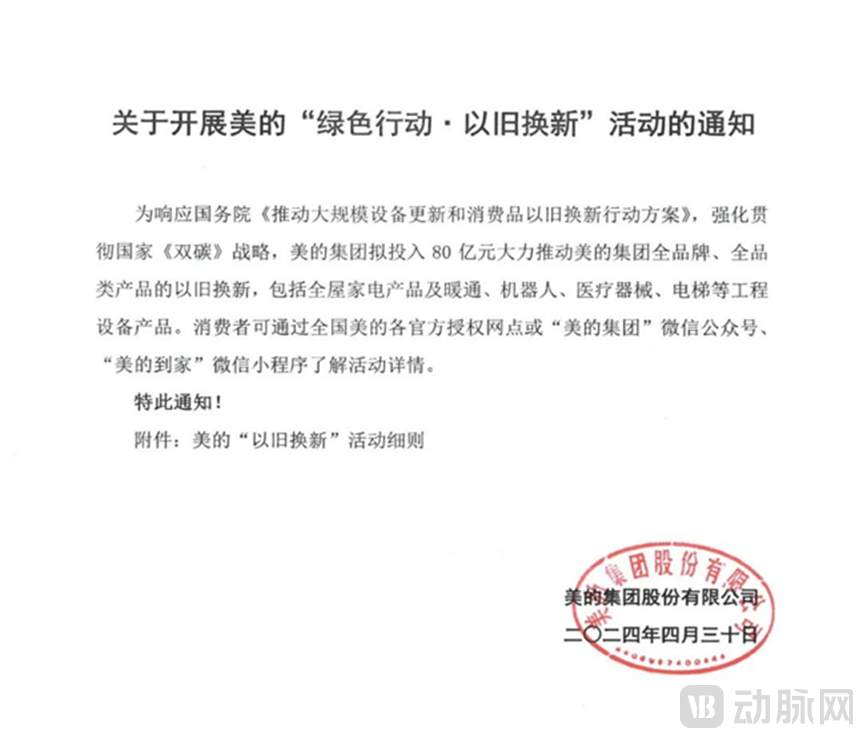
As an industry leader, Midea Group has consistently been a proactive responder to and implementer of national policies. From the “Home Appliances to the Countryside” initiative in 2009, to the “Green Strategy” in 2021, and further to the “Recycling Subsidies” and “Trade-in Subsidies” campaigns in 2023, Midea’s products and business operations have undergone continuous expansion and iteration. Currently, in response to the “Two New” policy, Midea Group announced on April 30 an investment of RMB 8 billion to vigorously promote trade-in programs and equipment upgrades across all its brands and product categories, encompassing whole-home appliances as well as engineering equipment such as HVAC systems, elevators, robotics, and medical devices.
Among Midea Group’s five major business segments—Smart Home, Building Technologies, Industrial Technology, Robotics & Automation, and Innovative Businesses—Midea Building Technologies is undoubtedly a key participant in the “Two New” initiative. Leveraging its two closed-loop systems, it has successfully implemented numerous urban renewal projects across various fields.
One is a closed-loop system integrating hardware and software,The company’s smart ecological integration solution for buildings provides integrated hardware and software solutions for energy-efficient building retrofits. The solution specifically includes high-efficiency equipment, system optimization, intelligent control, smart operation and maintenance, and building automation. It can offer optimal energy-saving combinations tailored to different scenarios and provide various empowerment models for diverse project requirements, such as energy-saving diagnostics, high-efficiency plant rooms, Energy Management Contracting (EMC), and Build-Operate-Transfer (BOT).
The second is the closed loop of delivery and intelligent operations and maintenance., following the initial completion of equipment and system upgrades, further leveraging its intelligent operation and maintenance system to provide customers with value-added services such as visual analysis of operational data, thereby continuously advancing green and low-carbon operations.
Furthermore, in active response to the “Two New” policy, Midea Building Technologies has also launched the “Green Action·Trade-In” program. Effective May 1, it provides comprehensive support and preferential policies for newly signed old building renovation projects, including subsidies for new equipment and specialized renovation services.
First, the promotional subsidies for new models cover the entire product series, including VRF systems, water-cooled chillers, modular units, ducted units, and elevators.
Secondly, specialized urban renewal services extend to the pre-sales phase, project implementation phase, and value-added services:
● During the pre-sales phase, we provide complimentary on-site assessments and expert consultations, along with free customized retrofit designs to streamline the installation process. Additionally, we offer professional recycling services for large central air conditioning systems to maximize the residual value of existing equipment.
● During the project implementation phase, we provide complimentary supervision services, including supervision reports and commissioning recommendations, as well as free inspection of piping and wiring for existing systems. During the warranty period, we also offer i-Steward smart operation and maintenance services, including free proactive alerts, unit health reports, and energy-saving operational recommendations.
● In terms of value-added services, we provide customers with comprehensive technical support and training, including annual technical training and emergency troubleshooting training, to ensure the stable operation of equipment. During the warranty period, we also offer free annual inspections and technical Q&A services. For major projects, we provide server room aesthetic enhancement and on-site support during critical milestones. For cases covered by the national “Three Guarantees” law, customers may also enjoyFree Returns and ExchangesServices.
Insight from Details: Three Case Studies Reveal Industry Expertise
Leveraging its integrated hardware and software solutions, Midea Building Technologies has implemented distinctive industry-empowering strategies across multiple sectors, including construction, industry, agriculture, healthcare, and education. It has established numerous exemplary projects, such as the Citigroup Tower in Shanghai, the Dezhou Caijin Smart Agriculture Industrial Park, Zhoushan Putuoshan Airport, Shanghai No. 1 Department Store, the Comprehensive Office Building of the Ministry of Education in Beijing, Li Ning’s Shenzhen Headquarters, Ningbo No. 6 Hospital, and Xiangtou Holding Group. By examining these details to understand the broader picture, this article will further analyze Midea Building Technologies’ approach to building retrofitting through three case studies: the Citigroup Tower in Shanghai, the Dezhou Caijin Smart Agriculture Industrial Park, and Zhoushan Putuoshan Airport.
First,Citigroup China Headquarters BuildingStanding on the banks of the Huangpu River, this 42-story Shanghai financial landmark was completed in 2005. During nearly two decades of diligent operation, it has gradually revealedSevere performance degradation due to equipment aging, high system failure rates, and low overall energy efficiency.Numerous issues exist; for instance, its energy consumption per unit area is more than 30% higher than the average level of comprehensive office buildings in Shanghai during the same period, and its cooling performance has been deteriorating.
In November 2022, Midea Building Technologies officially became a “partner” in the energy-saving retrofit of the Citigroup Tower, undertaking comprehensive optimization and upgrading of its centralized energy station. By implementing a top-level design that integrates cloud, software, and hardware, it achieved unified and centralized management of equipment, applications, and data.
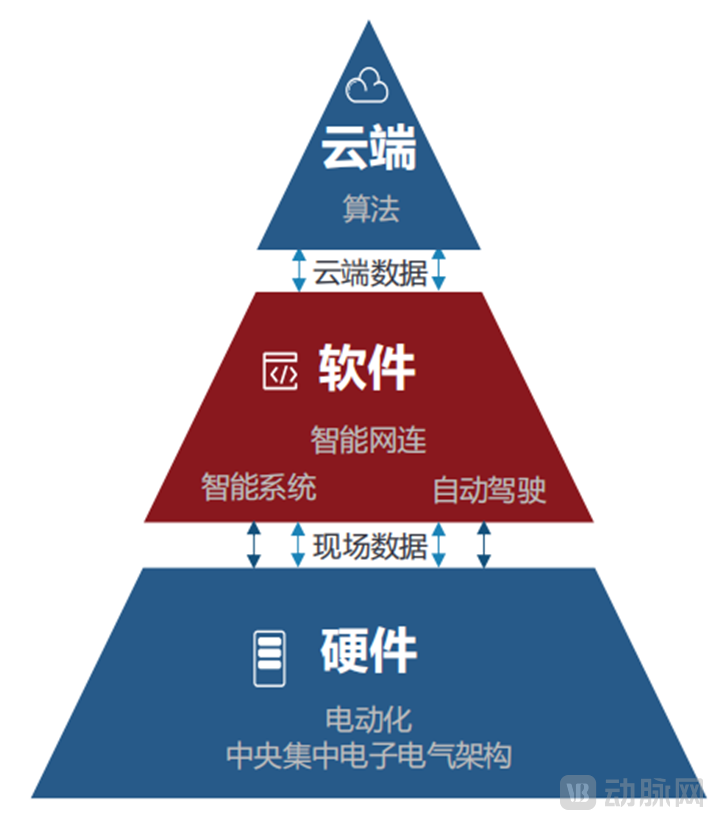
In terms of hardware, this retrofit project adopts Midea Kunyu magnetic bearing variable-frequency centrifugal chillers and connects all chillers to the Midea ChillerDoctor intelligent chiller control system. Additionally, the equipment is equipped with the Midea M-BMS high-efficiency energy-saving control system, which utilizes AI E+E (Energy Efficiency + Environment) optimization algorithms to achieve fully automated optimized system operation. On the software side, leveraging the Midea Smart Operations Center (IOC) and the cloud-based energy efficiency management platform enables comprehensive building energy consumption management, load control, and efficient operations and maintenance (O&M). The cloud infrastructure employs a smart O&M engine, a data mining engine, and an optimization decision-making engine to realize digital monitoring, predictive warning analysis, and automatic generation of energy efficiency calendars.
Ultimately, as calculated by the simulation system software, the energy efficiency ratio (EER) of the cooling system at Citigroup Center increased from approximately 1.0 W/W before retrofitting to over 5.5 W/W, reducing system operating costs>40%, equivalent to an annual reduction of over 2,600 tons in carbon emissions.
Secondly, as the largest single-unit Venlo-style smart glass greenhouse in Asia,Dezhou Smart Agriculture Industrial ParkIt is also a demonstration project for the conversion of old and new kinetic energy in Shandong Province and a key provincial project. During this renovation and upgrade, the Dezhou Smart Agriculture Industrial Park replaced traditional “natural gas boiler heating” with “1,500-meter medium-deep geothermal energy.” In accordance with the principle of “determining extraction based on reinjection,” the project constructed four production wells, six reinjection wells, and one geothermal energy station. It installed seven Midea Kunyu high-temperature heat pump units and adopted the Micontrol Smart Energy Integrated Solution, achieving a total heating capacity of approximately 21,712 kW, which can meet the heating demands of 254,000 square meters of greenhouses.
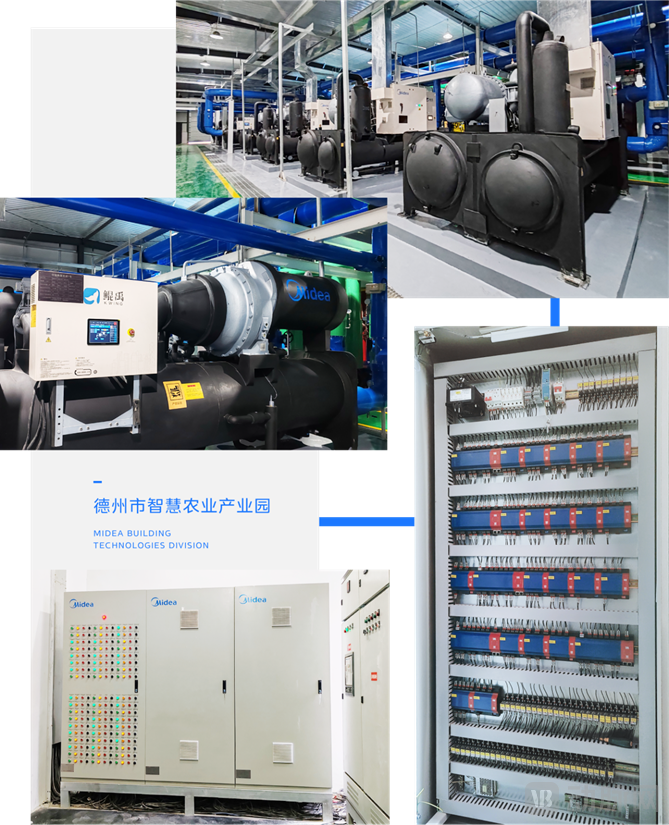
Specifically, in terms of hardware, Midea Kunyu customized high-temperature heat pump units for the project, adopting the "medium-deep geothermal energy + high-temperature water-source heat pump" technology. The low-temperature circulating medium of the heating system within the park enters the geothermal energy station for three-stage heat exchange and temperature lifting. In terms of software, the M-Smart Energy Integrated Solution enables unattended management by monitoring parameters, weather conditions, and sensor data from over 350 equipment points, including the supply and return water temperatures on the primary and secondary sides of the primary plate heat exchangers. The system can automatically control the outlet water temperature and flow rate based on changes in outdoor ambient temperature and the heating demands of the planting greenhouses. Meanwhile, the system provides real-time monitoring of data such as geothermal well water level, temperature, and flow rate, as well as system energy consumption, heat supply volume, and system COP (Coefficient of Performance), thereby achieving efficient management and scientific utilization, and ultimately realizing digitalized, informatized, standardized, and modernized operation of the heating station.
It is reported that, following this renovation, the primary production sector of the Dezhou Smart Agriculture Industrial Park has reduced its energy costs during the season.Over RMB 11 million, equivalent to an annual saving of standard coal10,200 tons, carbon dioxide emission reduction24,200 tons。
Finally,Zhoushan Putuoshan AirportApplying Midea Building Technologies' HVAC AI Energy-Saving System,Without replacing any of the existing indoor or outdoor units,Achieved fully automated intelligent operation of the central air conditioning system, while also implementing automatic control at the chiller terminal end to reduce energy consumption across multiple aspects, including cooling and heating sources, terminal units, and power equipment.Energy Saving Rate Increased by Over 20%。
In summary, Midea Building Technologies offers energy-saving retrofits for hardware such as VRF systems, hydronic systems, heat pumps, and elevators. It also provides comprehensive AI-driven solutions tailored to specific sectors—including public buildings, industry, agriculture, and low-carbon industrial parks—to facilitate intelligent upgrades. While ensuring seamless software-hardware integration, the company deeply engages with diverse industries to precisely address their pain points, thereby empowering enterprises to achieve revitalization.
# Conclusion
Song Yingqian, Senior Solutions Architect at Midea Building Technologies, stated in a media interview that the future development trends of the old-building renovation market are mainly reflected in four aspects: the integration of policy drivers and market demand, the widespread adoption of intelligence and green technologies, the practical application of modular and integrated technologies, and the growing trend toward comprehensive energy management and sustainable development.
As 2024 draws to a close, the transformation of traditional industries and enterprises remains a formidable task. We are confident that Midea Building Technologies will continue to leverage its advantages in integrated software and hardware systems across more specialized sectors, contributing to energy-saving retrofits, cost reduction, and efficiency enhancement within the industry.
* References:
“Building a Win-Win for Economy and Environment: Trade-In Programs Unlock Trillion-Yuan Market Opportunities,” IoT Think Tank
“Green Retrofit” of Citigroup Tower: Midea’s Magic Is “Incredibly Effective”!, Midea Building Technologies
“Midea Building Technologies Partners with Dezhou Smart Agriculture Industrial Park to Promote Low-Carbon Agriculture,” Midea Building Technologies