

Cardiovascular Giant Biotronik to Sell Core Vascular Intervention Business to Teleflex for Up to €1 Billion

Teleflex
Supplier of disposable medical products, surgical instruments, and medical devices

BIOTRONIK
Developer of Cardiac Rhythm Management and Vascular Intervention Medical Technologies
On December 16, global cardiovascular giant BIOTRONIK announced its intention to sell its core vascular intervention business to Teleflex, a top-100 medical device company, for a price ranging from €500 million to €1 billion (approximately RMB 3.8–7.6 billion). BIOTRONIK’s divestiture of this core business aims to alleviate approximately €600 million in debt and to significantly reinforce its core rhythm management business.
BIOTRONIK, which started with pacemakers, has formed four major business lines: cardiac rhythm management, electrophysiology, vascular intervention, and neuromodulation. Among them, the vascular intervention business was added in 1995, providing cutting-edge products such as coronary drug-eluting stents, balloons, drug-coated balloons, and bioresorbable scaffolds.
Although it entered the market relatively late, BIOTRONIK quickly overtook its competitors by leveraging its technological expertise in the cardiovascular field. Today, BIOTRONIK offers a strong portfolio of products for bradycardia, tachycardia, cardiac resynchronization therapy, external devices, coronary vascular access, and peripheral vascular access.
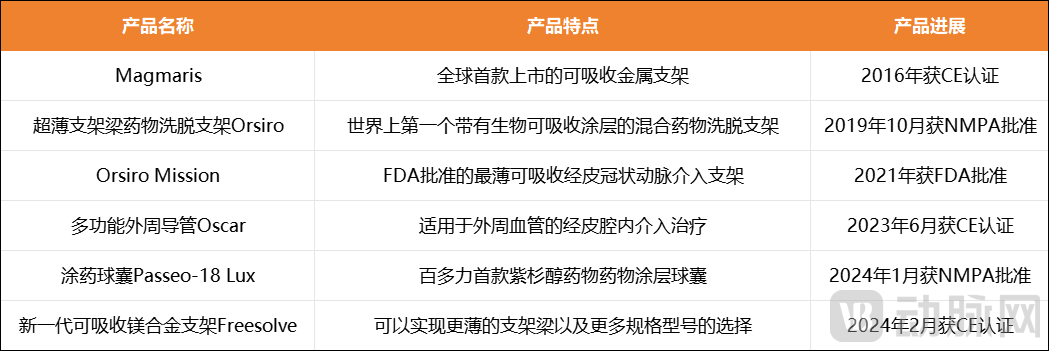
BIOTRONIK's Innovative Products in Vascular Intervention
In 2023, BIOTRONIK’s total revenue exceeded €1.5 billion (approximately RMB 11.77 billion). According to data from the German business daily Handelsblatt, BIOTRONIK’s cardiovascular business generates annual revenue of approximately RMB 3.07 billion, with peak profits reaching around RMB 614 million. Why, then, is BIOTRONIK divesting its profitable vascular intervention business?
Persistent Overseas Expansion Leads to Financial Crisis; BIOTRONIK “Sells Assets to Repay Debts”
In 1970, just three years after its founding, BIOTRONIK embarked on its global expansion. Today, it has become a global leader in cardiovascular medical devices and clinical solutions, with its products and business presence spanning more than 100 countries and regions worldwide.
An examination of BIOTRONIK’s global expansion trajectory reveals three distinct phases: it established East Germany as its initial overseas foothold, gradually expanding across the European market; in the 1980s, it embarked on expansion into the Americas; and in the 1990s, it launched its development initiatives in the Asia-Pacific region, rapidly gaining prominence.
To further expand its global market share, BIOTRONIK has invested heavily in establishing production and R&D bases in Germany, Switzerland, the United States, and Singapore. For instance, at the end of 2023, BIOTRONIK opened its Asia-Pacific Manufacturing and Innovation Center in Singapore. Covering an area of 20,000 square meters, this facility serves as a central hub for the Asia-Pacific region, where hundreds of employees are engaged in manufacturing, quality assurance, research and development, sales, and marketing activities.
Meanwhile, BIOTRONIK is continuously increasing its investment in digital health. In 2024, BIOTRONIK secured a RMB 6.5 billion financing package with an overseas banking consortium, with the loan maturity extending to 2026. The combination of sustained expansion expenditures and external debt has left BIOTRONIK’s financial position in a precarious state.
Focus on core businesses to expand leadership in cardiac rhythm technology and markets.
BIOTRONIK has become one of the global leaders in the pacemaker market. Judging from its product iteration dynamics in recent years, BIOTRONIK is heavily investing in its cardiac rhythm management business.
In May 2023, BIOTRONIK’s Amvia pacemaker series received CE certification. This product utilizes pacing in specific regions of the left bundle branch, offering a more physiological approach and superior clinical outcomes compared to standard right ventricular pacing. Previously, BIOTRONIK had already launched its Conduction System Pacing (CSP) solution, which includes components from the Amvia pacemaker series.
In February 2024, BIOTRONIK announced that it had successfully implanted 100,000 single-chamber implantable cardioverter-defibrillators (ICDs) equipped with DX technology. Since the launch of this technology in 2009, clinicians in more than 80 countries across all continents have been using DX ICDs.
In April 2024, BIOTRONIK’s latest insertable cardiac monitor, the ICM-Biomonitor IV, received CE marking and became the first implantable device of its kind approved in Europe. The uniqueness of this device lies in its ability to distinguish between premature ventricular contractions and atrial contractions, a first for ICMs on the market.
In September, BIOTRONIK announced that its Selectra 3D sheath system, in combination with the Solia S pacing lead, had received FDA approval for left bundle branch area pacing (LBBAP). These two products are also the only wire-supported leads and dedicated delivery sheath systems approved by the FDA for LBBAP.
In terms of R&D investment, BIOTRONIK is focusing its efforts on its core rhythm management business.
Let’s now discuss the other party to the proposed transaction, Teleflex.According to the latest 2023 ranking of the top 100 medical device companies, Teleflex ranked 40th; among medical device companies in the cardiovascular sector, the second-largest segment of the global medical device industry, Teleflex ranked eighth.
Founded in 1943, Teleflex was originally an engineering company specializing in the production of cables and associated components. After 1981, it rapidly entered the medical industry through aggressive acquisitions of peers. Currently, Teleflex’s business portfolio spans vascular access, interventional therapy, surgical solutions, anesthesia, cardiac care, urology, and emergency medicine.
Teleflex’s prominent position in the cardiovascular field stems from its $2 billion acquisition of Arrow, a cardiovascular device company, in 2007. Arrow is a leading enterprise in the fields of vascular access and cardiac intervention products. Its core product, the Arrow Quickflash Catheter Insertion Kit, is primarily used for peripheral artery puncture and catheter insertion, making it one of the key devices required for vascular interventional procedures and treatments.
By acquiring Arrow, Teleflex expanded its product portfolio and market influence in the field of vascular access devices. However, Arrow’s repeated involvement in product recall incidents has also impacted Teleflex’s performance. During the February earnings conference call, Teleflex’s CEO cited the product recalls initiated in May 2023 as a major factor contributing to the decline in the company’s vascular business in the first quarter of 2024.
Repeated Recalls of Same-Brand Products Force Teleflex to Upgrade Strategy to Alleviate Pressure from Recall Crisis. Teleflex Adopts a Two-Pronged Approach, Pursuing Internal Innovation While Continuing Its M&A Strategy.
On the internal innovation front, Teleflex has strengthened its collaboration with clinicians, hospitals, and clients to further explore clinical needs, and announced that it will allocate 5.6% of its revenue to product technology research and development. Meanwhile, Teleflex has expanded its core production and R&D bases to increase the manufacturing capacity for precision extrusion and access devices, including stent delivery catheter shafts, electrophysiology and diagnostic catheters, neurovascular devices, and cardiac ablation equipment.
In terms of external M&A, in addition to the proposed acquisition of BIOTRONIK’s vascular intervention division, Teleflex has also acquired HPC Medical Products, a supplier of medical tubing and wire components, to upgrade catheter materials that have been subject to frequent recalls. HPC is a renowned supplier of low-friction PD-Slick® liner tubing, hybrid tubing, micro-diameter guidewires and tubing, as well as conductor-embedded tubing.
Every move by industry giants invariably causes significant ripples in the market. Multinational corporation BIOTRONIK is also continuously expanding its footprint in China’s cardiac rhythm management market.
According to data from Medical Device Data Cloud, BIOTRONIK ranked third in the 2023 annual pacemaker brand bid-winning statistics, trailing only Medtronic and Lifetech Scientific, with its total winning bid amount accounting for 13.6%. Furthermore, public information indicates that BIOTRONIK China’s pacemaker product division continues to post job openings, primarily seeking personnel for product marketing and sales.
However, BIOTRONIK is also facing challenges from a wave of domestic competitors. The Chinese cardiac rhythm management market has seen participation from domestic companies such as MicroPort CRM, LifeTech Scientific, Lepu Medical, Wushuang Medical, and Vivasure. According to data from the “Blue Book on Clinical Application and Development of Cardiac Implantable Devices in China 2023,” a total of 15,239 domestically produced pacemakers were implanted in 2023 (accounting for 11% of the market), representing a 28% year-on-year increase.
In October, the PLATINIUM series of implantable cardioverter-defibrillators (ICDs) developed by a subsidiary of MicroPort Scientific Corporation received approval from the National Medical Products Administration (NMPA); meanwhile, Suzhou Wushuang Medical’s ICD product completed clinical trials involving 75 cases, with its second-generation product currently under development.
With the implementation of volume-based procurement policies, Chinese enterprises are trading price for market share. Coupled with continuous breakthroughs in technology and products by domestic companies, China’s cardiac rhythm management industry is poised to seize opportunities for accelerated growth.