Non-Contact, Dual-Dimensional, Multi-Scenario! Junzhi Medical Builds an Intelligent and Precise Physiological-Psychological Monitoring Platform | Brain Innovation Center
The human heart beats more than 2 billion times over a lifetime, with each beat subtly releasing a wealth of signals that provide insights into our health status, lifestyle, emotional state, and even the early onset of cardiovascular diseases.
Among these, heart rate variability (HRV) refers to the variation in successive heartbeat cycle intervals. It contains information on the neurohumoral regulation of the cardiovascular system and can quantitatively reflect the activity and balance of the cardiac autonomic nervous system, as well as facilitate the assessment of related pathological conditions.
Photoplethysmography (PPG)Electrocardiography (ECG) and photoplethysmography (PPG) are currently the two primary biomedical techniques for assessing heart rate variability (HRV). Both methods can acquire HRV signals, but they operate on different principles: ECG primarily works by detecting the electrical signals of the heart, whereas PPG monitors optical signals generated by changes in blood volume.
“After undergoing a series of processes such as filtering, amplification, and analog-to-digital conversion, PPG signals can be directly displayed, recorded, computed, and analyzed. These signals contain rich hemodynamic and microcirculatory information, exhibiting greater prominence in terms of morphological and biometric diversity. They serve as a crucial source of information for studying human cardiovascular function and the pathophysiological mechanisms of the circulatory system. Furthermore, compared with ECG, PPG is gaining increasing attention in the healthcare sector due to its advantages in simplicity, portability, and real-time monitoring,” stated Lin Kailun, CEO of Junzhi Medical, a partner of the Brain Innovation Center, in an interview with VCBeat.
Junzhi Medical is an innovative medical device company focused on technological innovation in biomedical engineering, fundamental research in bioinformatics, R&D of medical electronic systems, and the expansion of smart healthcare applications. Discussing the original motivation behind starting the company, CEO Lin Kailun stated, “I worked for many years in foreign investment banks and private banking. In 2016, I moved from Hong Kong to Shanghai and served as a business unit head at a multinational corporation in the broader health sector. During that period, I accumulated extensive experience in market operations and cross-cultural team management, and developed a strong interest in smart healthcare based on vital sign data, with a particular focus on technological advancements in this field and their role in promoting health management.”
During this period, Karen Lin observed the rapid development of wearable medical monitoring devices, which are increasingly integrating into people’s daily lives. She developed a strong interest in medical terminal products poised to enter communities and households. Particularly against the backdrop of China’s entry into a phase of “deep aging,” demand for intelligent applications closely tied to health management is growing steadily, revealing substantial market potential.
When assessing an individual's health status, it is often necessary to frequently monitor key vital signs, including body temperature, heart rate, blood pressure, respiratory rate, and blood oxygen saturation. These data points help us understand the basic physiological condition of the body. Similarly, in clinical settings, healthcare professionals rely on these indicators to determine the urgency of a patient's condition and whether immediate emergency intervention is required.
As photoelectric sensors continue to improve in performance and are widely applied in medical electronic systems, hemodynamic monitoring technology based on photoplethysmography (PPG) has demonstrated significant advantages due to its non-invasive nature, ease of operation, and low cost. PPG technology plays a vital role in a wide range of applications, from basic calculations of respiratory and heart rates, including the widely recognized blood oxygen saturation monitoring during the pandemic, to complex cardiovascular function assessments and heart rate variability analysis, as well as dynamic observation of blood pressure trends and quantitative evaluation of peripheral blood supply. By substantially reducing the equipment costs required for self-collected health data, PPG has become an essential component of wearable monitoring devices, particularly in wristband-type products.
In the field of electrophysiology, traditional electrocardiogram (ECG) technology is equally important. This technique serves as a classic method for detecting various myocardial-related conditions, including atrial fibrillation, ventricular fibrillation, arrhythmias, old or new myocardial infarctions, and conduction blocks.More importantly, the synchronized detection of ECG and PPG signals can reveal more complex pathophysiological mechanisms underlying disease progression. The complementarity and interchangeability of these two modalities under specific conditions are of great significance for extending wearable medical monitoring applications to community and home settings, while also providing multidimensional biological data for big health data analytics.
However, the penetration of wearable applications has not proceeded as smoothly as anticipated.
In fact, despite the concerted efforts of numerous technical teams to develop powerful wearable terminal products, inaccurate or even severely biased data still account for a substantial proportion of the health data collected and uploaded by users in their daily lives. Taking heart rate variability (HRV) analysis of autonomic nervous system function and psychological stress as an example, controlling for bodily stability is a fundamental prerequisite for ensuring high-validity results; therefore, traditional testing protocols require users to maintain a strict resting state. However, in non-clinical settings, the proportion of low-validity HRV results from self-administered tests remains persistently high.
Existing research indicates that hemodynamic and heart rate variability (HRV) metrics are inherently fluctuating and exhibit significant inter-individual variability. When these metrics contain a certain proportion of low-validity test results, they adversely affect statistical analysis and model training to varying degrees. Such flawed data contribute to misleading conclusions and ineffective interventions in health big data analytics, and represent a major obstacle to the practical implementation of smart healthcare applications.
“How to Break Through?” With this question in mind, Karen Lin found the answer from Professors Luo Xiaomin and Lü Yongqiang, who were then conducting interdisciplinary research on PPG and human-computer interaction.
In addition to innovating detection techniques and diagnostic methods, technological innovation in medical devices should also be reflected in key technologies that enhance the validity of testing.At that time, in addition to expanding foundational research on quantifying hemodynamic features based on photoplethysmography (PPG) to characterize intrinsic physiological responses during human-computer interaction, the two professors were also dedicated to constructing validity analysis models using hemodynamic features, thereby providing a quantifiable method for validity assessment in big data analytics related to electrophysiological signs.
The alignment of these principles defines the uniqueness of Junzhi Medical’s technological trajectory.First, we will continue to deepen fundamental research in biomedical engineering and medical electronics, thereby sustaining our capacity for source innovation in medical devices. Second, while focusing on the research and development of innovative medical electronic systems, we will vigorously advance the development of smart healthcare applications. In particular, we will integrate core technologies that enhance test validity with medical testing products, thereby removing obstacles to the widespread adoption and application of health big data.
Over the past four years, Junzhi Medical has put this philosophy into practice through tangible technological achievements. The Junzhi Biomedical Research Laboratory has developed a series of innovative medical diagnostic devices, among whichDual-Dimensional Mental Stress Analysis SystemIts functionalities encompass cardiovascular function testing and early health risk screening, autonomic nervous system assessment, and multidimensional analysis of mental stress. While meeting the application needs of multiple departments in Grade IIIA hospitals, it is also suitable for primary healthcare and wellness care scenarios. The system supports terminal miniaturization and customized wireless terminal solutions, and provides cloud-based operational service solutions.
We are rapidly entering the era of big data, where industries across the board are inundated with massive volumes of data every moment, and health data is no exception. In this context, decision-making in various fields is increasingly reliant on data analytics rather than traditional experience and intuition. As daily life becomes more dependent on data, the importance of data quality continues to rise. Junzhi Medical is rising to the challenge within its unique technological niche, continuously providing innovative medical electronic products for smart healthcare applications and delivering high-quality data for the utilization of health big data.
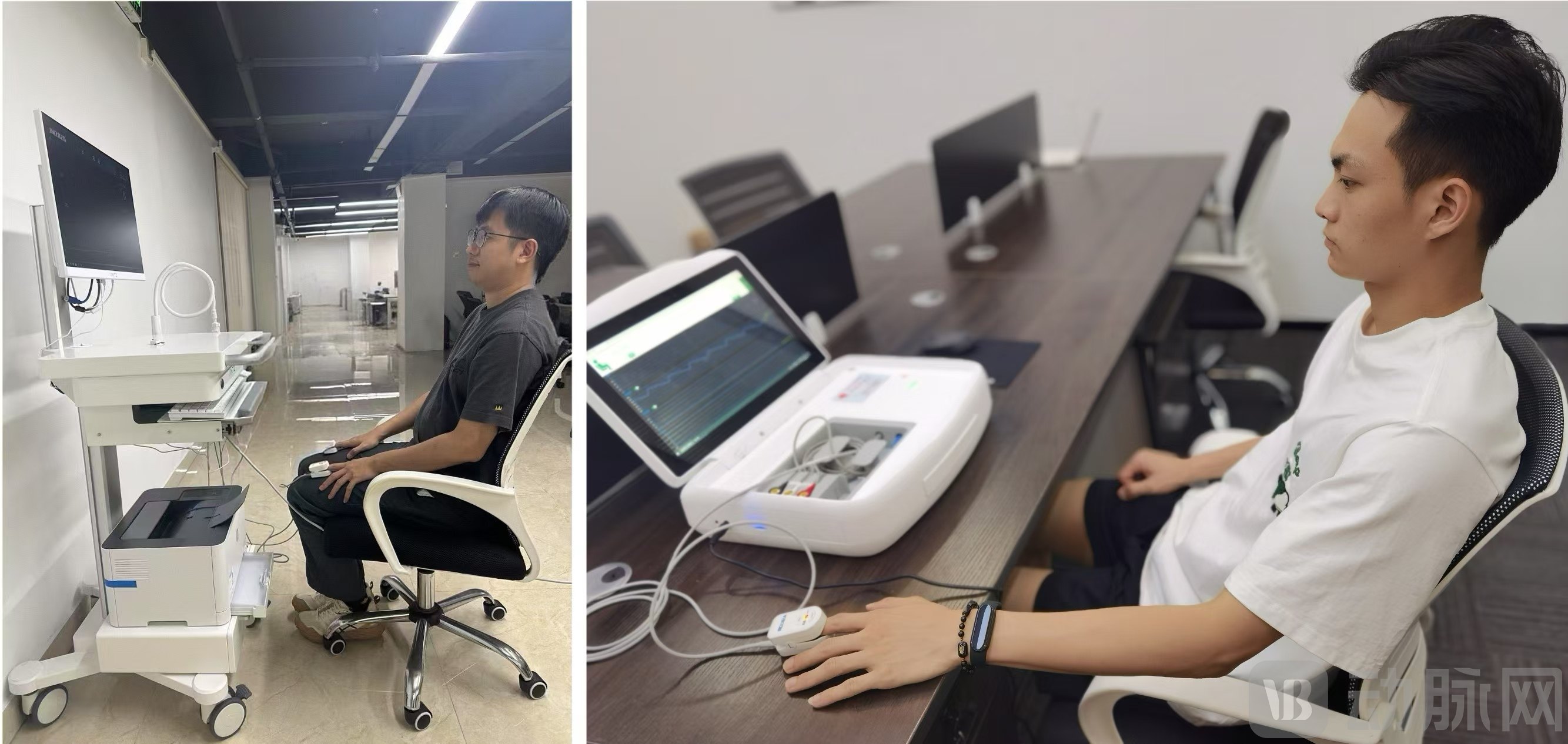
Image source: Junzhi Medical
At the demo site for the Dual-Dimensional Mental Stress Analysis System, Lin Kailun continued to provide a detailed introduction to VCBeat.
In addition to this hospital-oriented product, Junzhi Medical is committed to developing a diversified product portfolio tailored to different application scenarios and user needs. The company aims to expand early health screening services to a broader market, enabling more people to access convenient and efficient health monitoring solutions, thereby promoting the widespread adoption and advancement of health technology.
“Addressing the needs of primary healthcare institutions, the Junzhi team has developed aCommunity Edition Heart Rate Variability Analysis System“This portable device is designed in the form of a follow-up kit and equipped with an ID card reader. When integrated with our team’s cloud-based analytics system, it enables the creation of health records for elderly individuals at the primary care level and facilitates long-term data tracking, making it particularly suitable for use in grassroots institutions such as elderly care and wellness centers,” introduced Lin Kailun.
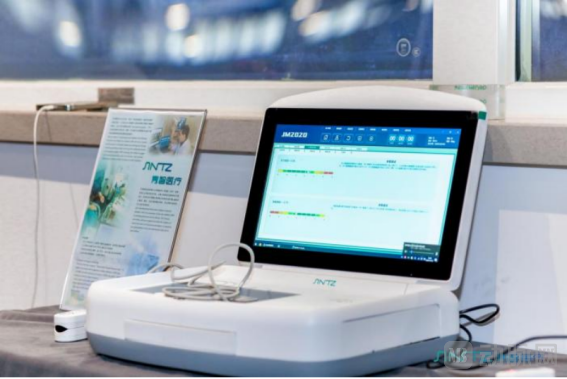
Image source: Junzhi Medical
Specifically, the device’s core algorithms and backend systems are deployed in the cloud, ensuring efficient data management and analysis. Furthermore, leveraging validation from large-scale clinical data, the team has developed advanced data cleaning and algorithm optimization techniques that significantly enhance the reliability of the data collected by the device, thereby providing higher-quality data support for the field of smart healthcare.
Meanwhile, this portable device is capable of outputting research-grade data. This capability is critical for basic research and algorithm development that rely on big data, meeting the demand of scientific research institutions for high-precision physiological data, and helping Junzhi Medical further accelerate the deep integration of technological R&D with industry applications.
In this regard, Karen Lin emphasized, “In the field of healthcare big data, it is essential to ensure data accuracy from the very first step of data collection. The heart rate variability (HRV) validation technology developed by Junzhi Medical not only simplifies the data cleaning process but also significantly enhances data accuracy. More importantly, this creates favorable conditions for the widespread application of healthcare big data, both within and outside hospital settings.”
“In the future, we plan to launch a home edition, streamlined to function solely as a data acquisition terminal. Once uploaded to the cloud, the data can be used for risk prediction and analysis, facilitating use in home settings. Additionally, we are developing a multi-user synchronous monitoring version to enhance the efficiency of large-scale population screening, such as for mental health assessments. This will expand the application scenarios of the stress-induced vascular response index (sVRI), independently proposed by our PPG team at CHI 2015, thereby further unlocking the value of data.”
In addition to the aforementioned dual-dimensional mental stress monitoring system for multiple scenarios, Junzhi Medical is currently developing a device capable of detecting early-stage lesions that traditional angiography fails to identify.Arterial Stiffness and Endothelial Function Analyzer。
Lin Kailun explained, “Currently, the assessment of vascular endothelial function largely relies on costly and complex ultrasound equipment, which limits its widespread adoption in large-scale applications. Vascular endothelial function is a key indicator for predicting cardiovascular risk and is crucial for the early identification of high-risk individuals and the prevention of conditions such as atherosclerosis, thrombosis, and stroke.”
This innovative device integrates PPG sensors with a blood pressure cuff to quantitatively assess vascular endothelial function by measuring the Reactive Hyperemia Index (RHI). It enables convenient detection of early indicators of vascular pathology anytime and anywhere, thereby making vascular health monitoring more accessible and widespread. Currently, the Junzhi team has completed prototype development and published related research findings, and is actively conducting clinical trials and pursuing medical device certification for the product.
To further explore the value of PPG technology,At the 2024 Shenzhen High-Tech Fair, Junzhi Medical took the lead in launching its product based on domestically produced UWB radar chips.Non-Contact Heart Rate Variability Detection System PrototypeThis has drawn significant attention, signifying that vital signs monitoring technologies related to smart cockpit and smart home application scenarios have reached new heights. Leading automotive manufacturers and major home appliance companies are also raising demands and exploring industrial models and technological division of labor.
“In recent years, UWB radar has gradually gained traction in civilian applications, but there are currently few teams developing biological detection algorithms based on this technology. In early 2024, we partnered with Changsha Chixin Semiconductor to develop an innovative non-contact heart rate variability detection system based on the Chixin UWB CX100 radar module,” said Lin Kailun.
UWB radar features high precision and high sensitivity, enabling the accurate capture of vital sign data such as subtle thoracic movements. Junzhi Medical converts radar data into PPG signal formats through signal processing algorithms, ensuring data consistency and efficiency. Furthermore, by leveraging advanced signal processing and algorithm design, the system extracts complete respiratory and cardiac curves, thereby enabling non-contact heart rate variability (HRV) detection.
The integration of these two core technologies enables Junzhi’s proprietary bioinformatics analysis and intelligent psychophysiological sensing technology to break free from the constraints of traditional sensors, extending into diverse human-computer interaction scenarios and contactless sensing domains—such as smart automotive cockpits and elderly care solutions—thereby significantly enhancing the volume and convenience of vital sign detection.More importantly, through the innovative application of PPG technology, Junzhi Medical has achieved reconstruction of radar signal waveforms, thereby overcoming the bottleneck of existing UWB radar technology that can only measure heart rate and respiration.
The application of big data and artificial intelligence technologies has brought new opportunities and challenges to the healthcare sector. As an innovative medical device R&D enterprise, Junzhi Medical is not only developing medical-grade early detection products that balance convenience, accessibility, and reliability, but also actively applying AI technologies such as data mining, machine learning, and neural networks to the fields of medical big data and health cloud computing. This effort provides essential data sources and intelligent assessment systems for smart healthcare applications, along with a series of extended applications in the realm of intelligent sensing and human-computer interaction.
“Driving innovation at the source of technology to empower smart healthcare” is the development philosophy upheld by Junzhi Medical. In the concluding remarks of the interview, Lin Kailun stated, “To achieve our goal of enhancing the intelligence level of medical services, the company has established partnerships with multiple institutions and enterprises, including the Shenzhen Brain Science and Technology Industry Innovation Center, Changsha Chixin Semiconductor, Eternal Asia Medical, and Qianhai Huiyi Technology. Meanwhile, we are actively engaging in collaborative research projects with institutions such as the Shenzhen Institute of Big Data, the Seventh Medical Center of the Chinese PLA General Hospital, Renji Hospital Affiliated to Shanghai Jiao Tong University School of Medicine, and Dongguan Rehabilitation Hospital. Through these collaborations, we aim to provide patients with more precise and convenient health monitoring and management solutions, thereby promoting the overall quality and efficiency of medical services.”
Shenzhen Brain Science and Technology Industry Innovation Center (hereinafter referred to as the “Brain Innovation Center”) is a specialized incubation platform established with strong support from the Shenzhen Municipal Government and the Guangming District Government. It receives technical support and operational management from the Institute of Brain Cognition and Brain Diseases, Shenzhen Institutes of Advanced Technology, Chinese Academy of Sciences, and the Shenzhen-Hong Kong Institute of Brain Science–Shenzhen Fundamental Research Institutions. The Brain Innovation Center is committed to building China’s first “plug-and-play” specialized incubation and empowerment platform, striving to become a demonstration highland for brain science and technology industry innovation that serves China and radiates globally. Since commencing trial operations in October 2022, the Brain Innovation Center has developed over 220,000 square meters of phased incubation and industrial space. It has attracted nearly 50 enterprises to settle in its incubators and industrial parks, with full occupancy achieved in both the incubator and the China Merchants Group Brain and Brain-like Intelligence Industrial Park. The cumulative historical financing amount of resident enterprises exceeds RMB 1 billion, with valuations surpassing RMB 10 billion. The center has facilitated additional financing of over RMB 200 million for resident enterprises and established China’s first venture capital fund in the field of brain science and brain-like intelligence entirely funded by social capital, with a scale of RMB 100 million, focusing on investing in high-quality early-stage projects at the Brain Innovation Center. The Brain Innovation Center warmly invites enterprises, institutions, and research teams in the fields of brain science, brain-computer engineering, brain health, and related areas to visit and exchange ideas!
Junzhi Medical is currently undergoing a new round of financing.If investment institutions are interested in the company and its technical products, please scan the QR code below to contact us.