

Tasca Therapeutics Files for IPO Following $52M Series A Backed by Regeneron Ventures to Advance First-in-Class Auto-Palmitoylation Inhibitor CP-383

Tasca Therapeuticstasca
Small Molecule Inhibitor Developer
Recently, Tasca Therapeutics completed a $52 million Series A financing round.
Tasca Therapeutics (hereinafter referred to as “Tasca”) is a biotechnology company focused on the discovery and development of small-molecule inhibitors targeting auto-palmitoylated proteins that play critical roles in cancer.
It is reported that Tasca Therapeutics’ Series A financing round was led by Regeneron Ventures, the venture capital fund established by Regeneron in 2024, and Cure Ventures, with participation from Invus Group. The funds will be used to advance Tasca’s novel drug discovery platform, propel its lead program CP-383 into Phase I/II clinical proof-of-concept studies, and expand its pipeline of drug candidates.
As a newly established company, why did Tasca Therapeutics attract the favor of Regeneron and several well-known venture capital firms in its initial financing round?
Over 20 years of drug development experience, with involvement in the R&D of Keytruda
Tasca was co-founded by Milenko Cicmil, Xu Wu, David Fisher, and Dr. Duojia Pan.
 From left: David Fisher, Milenko Cicmil Image source: Tasca Therapeutics
Dr. Milenko Cicmil currently serves as the Company’s Chief Executive Officer (CEO) and a member of the Board of Directors. He has over 20 years of experience in drug discovery and development in the field of biology, particularly in inflammation, auto-Immunityand possesses a profound understanding of oncology. Dr. Cicmil has held R&D positions at companies such as Ipsen, Merck, and AstraZeneca, and contributed to the development of Brilinta (ticagrelor), the first dual-acting antiplatelet therapy approved by the U.S. FDA.The First Dual-Combination Anti-Inflammatory Therapy Approved in China for the Treatment of Mild Asthma—Symbicort (Budesonide and Formoterol Fumarate Powder for Inhalation II) andThe World's First Approved Anti-PD-1 Therapy—Drugs such as Keytruda (pembrolizumab) have made significant contributions.
Dr. Xu Wu has over 16 years of experience in biomedical research and drug discovery. Dr. Xu graduated from the College of Chemistry and Molecular Engineering at Peking University in 1997, and in 2005Earned a Ph.D. from The Scripps Research Institute, studying under Peter G. Schultz, the founder of chemical biology.He currently serves as an Associate Professor at Massachusetts General Hospital and Harvard Medical School,Published multiple research papers.
Dr. David Fisher is a Professor of Dermatology and Pediatrics at Harvard Medical School, and also serves as the President of the Melanoma Research Foundation, the world’s largest international academic organization dedicated to melanoma research. His research focuses on identifying novel skin-targeted therapies by using robotic high-throughput screening technologies to study lipophilic drugs capable of penetrating the skin. These studies not only contribute to the development of drugs that modulate skin pigmentation but also hold significant potential for reducing the risk of skin cancer.
Dr. Duojia Pan is also a co-founder of Tasca Therapeutics, Inc. He was elected as a member of the U.S. National Academy of Sciences in recognition of his outstanding achievements in the field of science. His laboratory has conducted in-depth research on the Hippo signaling pathway using Drosophila models, providing key insights into the molecular mechanisms underlying the role of this pathway in growth control and disease.
Dr. Praveen Tipirneni was recently appointedAppointed as DirectorChairman.Dr. Tipirneni previously served as President and CEO of Morphic Therapeutics, a company focused on developing oral integrin therapies for chronic diseases, which was acquired by Eli Lilly and Company in July 2024 for approximately $3.2 billion.
Furthermore, Tasca Therapeutics, Inc. is embarking onBuildEstablish a team ofPassionate Scienceteam composed of family members. According to Cicmil, they will move into their new laboratory in Cambridge, Massachusetts, in mid-January.
Based on Research from Harvard Medical School, Precisely Targeting Protein Sites
Within living organisms, post-translational modifications (PTMs) of proteins play a crucial role in determining protein structure and function, thereby increasing their complexity and refining their functional capabilities. Among these, palmitoylation, as a significant form of protein lipid modification, plays a key role in cell signaling, metabolism, apoptosis, and the pathogenesis and progression of diseases. However, research progress in this field has been significantly hindered by the lack of clearly identified protein palmitoylation sites.
Tasca Therapeutics’ platform technology is built upon research findings from scientists at Harvard Medical School. It employs mass spectrometry-based proteomics technologies, combined with proprietary reagents, to identify and map novel lipid-binding pockets on proteins, particularly those undergoing specific post-translational modifications (auto-palmitoylation). Notably, the process of auto-palmitoylation does not require enzymatic catalysis.
The core of this platform lies in its ability to precisely identify and characterize protein sites undergoing auto-palmitoylation within unique hydrophobic pockets (potential binding sites for new drugs). Once located and characterized, these sites can serve as unique binding targets for novel therapeutics, enabling the development of new drugs that modulate the function of target proteins.
In 2016, Tasca co-founder Wu, Dr. Duojia Pan, and others in “Nature Chemical Biology》, which described how auto-palmitoylation regulates human TEA domain (TEAD) transcription factors. Their work provided early evidence that proteins possess autocatalytic sites capable of binding lipid groups and can be targeted by small-molecule drugs.
By employing chemical probes and investigating the crystal structure of TEAD bound to palmitate, the research team discovered that the lipid chain of the fatty acid inserts into a conserved hydrophobic pocket on the protein. Building on these findings, Wu and his team established a broader chemoproteomics platform to extend the initial discoveries beyond TEAD.
Tasca’s platform is capable of identifying enzyme-independent, spontaneous palmitoylation processes that uniquely target protein pockets, forming chemical bonds that subsequently stabilize into covalent linkages. Unlike competitors that more broadly target protein surfaces, this targeted approach enables Tasca to “access specific codes,” namely, to precisely target distinct protein pockets.
1,000 protein targets identified; fastest pipeline poised for Phase I/II clinical proof-of-concept studies
At the application level, Tasca will first evaluate the efficacy of its lead candidate drug, CP-383, in small cell lung cancer, colorectal cancer, head and neck cancer, and glioblastoma.
Currently, CP-383 has demonstrated superior efficacy across multiple cancer types, showing potential to become a best-in-class and first-in-class innovative small-molecule drug.
In preclinical in vivo studies, CP-383 has demonstrated its ability to cross the blood-brain barrier (BBB), representing a significant breakthrough for the treatment of aggressive brain cancer. The company plans to conduct Phase I/II clinical proof-of-concept studies next year to further evaluate the efficacy of CP-383.。
Furthermore, Tasca Therapeutics, Inc. plans to leverage artificial intelligence to facilitate the identification of inhibitors targeting protein pockets. By training AI algorithms to comprehend the structural characteristics of these pockets, the company aims to identify drugs that target them, thereby accelerating the discovery of drug molecules.
Supported by its automated palmitoylation platform, Tasca is building an innovative drug candidate pipeline covering multiple cancer indications.
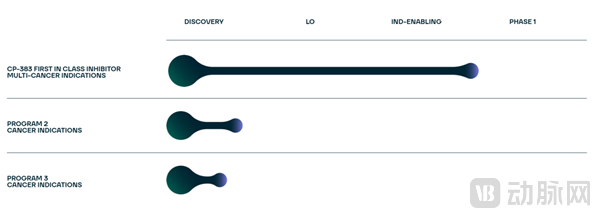
Tasca Pipeline. Image source: Tasca Therapeutics
According to Cicmil, Tasca has identified approximately 1,000 protein targets that undergo auto-palmitoylation, with about two-thirds of them associated with neurodegenerative, metabolic, and autoimmune diseases.
Regeneron Pharmaceuticals, in which Tasca Therapeutics is bullish, also has an extensive R&D footprint in the field of small-molecule inhibitors, covering multiple therapeutic areas including ophthalmology, cardiovascular disease, immuno-inflammation, and oncology.
In 2019, Regeneron combined its ophthalmic drug EYLEA with pre-filled syringes to develop a sterile, pre-filled injectable formulation, which received FDA approval for market launch. EYLEA is a vascular endothelial growth factor (VEGF) inhibitor that can control tumor cell growth and treat certain ophthalmic diseases. Subsequently, in 2021, Regeneron partnered with AstraZeneca,Identification of Small-Molecule Modulators Targeting GPR75 for the Treatment of Obesity and Its Related Complications
Furthermore, Tasca’s research on the application of mass spectrometry-based proteomics in precision oncology aligns with Regeneron’s strategy for precision medicine R&D and market expansion, particularly regarding advances in the development of small-molecule inhibitors targeting automatic palmitoylation proteins.
According to the "2024 White Paper on Small-Molecule Targeted Anti-Tumor Drugs in China," the global market size for small-molecule anti-tumor drugs grew from USD 36 billion in 2017 to USD 84.3 billion in 2023, representing a compound annual growth rate (CAGR) of 15.2% during this period. Meanwhile, the Chinese market also demonstrated rapid growth, expanding from RMB 9.8 billion in 2017 to RMB 73.4 billion in 2023, with a CAGR of 39.9%. This growth trend is expected to continue, with the CAGR for the Chinese small-molecule anti-tumor drug market projected to reach 16.0% from 2023 to 2030.
With the continuous expansion of the small-molecule drug market, advances in protein modification technologies, and scientific innovations in small-molecule inhibitors, we believe that more drugs based on novel mechanisms will emerge in the future.