

BioTheryX Files for IPO Following $130M Funding and $477M R&D Collaboration

BioTheryX
Developer of Protein Homeostasis Modulators
Glioblastoma (GBM) is the most common primary malignant brain tumor in adults. It is highly invasive, rapidly spreading from the central mass, and is difficult to completely eradicate.
According to INC ( (International Neurosurgeon Group) A systematic review of glioblastoma patients with a 10-year survival period determined that the proportion of long-term survivors (10 years) with glioblastoma was 0.76%. The recurrence rate of GBM is high (in 75-90% of patients), occurring within 2 to 3 cm of the original lesion boundary, and multiple lesions were found in 5% of cases after treatment.
As mentioned in the article “Epidemiology and Outcome of Glioblastoma,” published by Codon Publications in 2017,1, Over the past three decades, survival rates for patients with glioblastoma multiforme (GBM) have not shown significant improvement across demographic data. Therefore, it is imperative to identify a reliable therapeutic agent to enhance the survival probability of GBM patients.
In GBM research, certain specific molecules and signaling pathways have become the focus of investigation due to their roles in tumor development. Research data indicate2In 18 GBM tumor cases, the expression of CDK4 and CDK6 was elevated (44%) relative to matched normal brain tissue, demonstrating the functional importance of CDK4 and CDK6 in astrocytoma tumorigenesis, particularly during the later stages of tumor progression.
Amidst such market demand and industry opportunities, the U.S. biopharmaceutical company BioTheryX has developed BTX-9341 using its PRODEGY platform. BTX-9341 is an investigational oral, bifunctional degrader of cyclin-dependent kinase 4 (CDK4) and cyclin-dependent kinase 6 (CDK6), demonstrating significant antitumor activity in both treatment-naïve and resistant preclinical models of CDK4/6 inhibition.
BioTheryX, founded in 2007, has raised a total of $130 million in funding to date. In 2020, it secured a $35 million Series D financing round led by MSD Partners, followed in 2021Awarded by$92 million Series E financing round led by Farallon Capital Management.
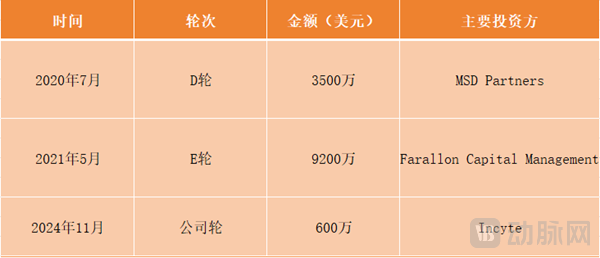
BioTheryX’s Funding History | Chart by VCBeat
Conquering "Undruggable" Targets: Achieving Three Molecular Degradation Methods
Many human diseases are driven by aberrant protein expression, yet approximately 85% of proteins are considered “undruggable.” Targeted protein degradation (TPD) technology, developed based on the proteasome, offers therapeutic potential for these intractable diseases by leveraging the endogenous protein disposal system to eliminate pathogenic proteins.
BioTheryX is a clinical-stage biopharmaceutical company dedicated to restoring protein homeostasis through protein modulation, including targeted protein degradation (TPD) and multi-kinase inhibition, to develop therapies that extend and improve the quality of life for patients with life-threatening diseases.
The founding and scientific team members of BioTheryX previously developed IMiDs (immunomodulatory drugs), the first Cereblon (CRBN) modulator approved by the U.S. FDA in 1998. Cereblon is the most extensively validated E3 ligase involved in protein degradation.
Since Crews et al. first proposed the concept of PROTAC (Proteolysis Targeting Chimeras) in 2001, this technology has been continuously developed and refined, with an increasing number of researchers dedicated to targeting the degradation of specific proteins via PROTACs.3。
PROTAC is an innovative targeted protein degradation strategy that employs small-molecule chimeras to simultaneously recruit the protein of interest (POI) and an E3 ubiquitin ligase, thereby inducing ubiquitination of the POI and its subsequent degradation by the proteasome. Its core mechanism leverages the intracellular ubiquitin-proteasome system (UPS) to trigger the degradation of target proteins. This system marks specific proteins for degradation through a series of biochemical reactions and then breaks them down into small peptides and amino acids for recycling.
E3 ligases are the final enzymes in the ubiquitination process, directly transferring ubiquitin molecules to target proteins, thereby marking them for degradation. Cereblon is one such E3 ligase that participates in the ubiquitination and subsequent degradation of certain proteins.
It is worth noting that Cereblon, as an E3 ligase, has been successfully employed in PROTAC technology to target a wide range of proteins, with indications spanning from cancer and immune diseases to neurodegenerative disease-related proteins (Tau), and even hepatitis C virus proteins (NS3).
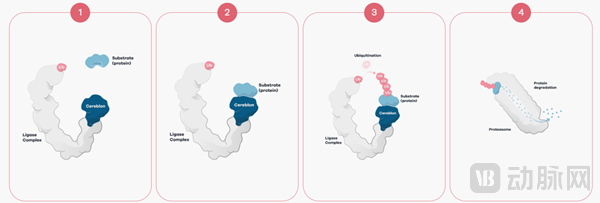 The Natural Process of Protein Degradation. Image source: BioTheryX official website
Leveraging its expertise in Cereblon binding, BioTheryX has built a novel and powerful target protein degradation drug discovery engine—the PRODEGY platform (Protein Degrader Technology)—designed to develop best-in-class bifunctional degraders (TPD) to address significant unmet medical needs.
According to Nature, the current field of targeted protein degradation (TPD) primarily encompasses three types of molecules: molecular glues, heterobifunctional degraders, and selective estrogen receptor degraders (SERDs).
Meanwhile, PRODEGY has also implemented three molecular degradation approaches: molecular glues, bifunctional degraders, and hybrid degraders.
Molecular glues are a class of small-molecule compounds that induce or stabilize interactions between two proteins, including the target protein and an E3 ubiquitin ligase, thereby promoting the ubiquitination and degradation of the target protein. Through the PRODEGY platform, molecular glues enable Cereblon to bind and degrade a range of novel substrates even in the absence of binding pockets—expanding the scope beyond the current 15% of “druggable” proteins and overcoming many limitations associated with traditional inhibitor-based approaches.
Heterobifunctional degraders typically possess more complex structures, such as PROTACs, which feature a “dumbbell” architecture comprising two distinct ligands and a linker. In contrast, bifunctional degraders have simpler structures that directly engage both the E3 ligase and the target protein through a single ligand. Bifunctional degraders designed via PRODEGY can optimize protein orientation to achieve efficient ubiquitination and degradation.
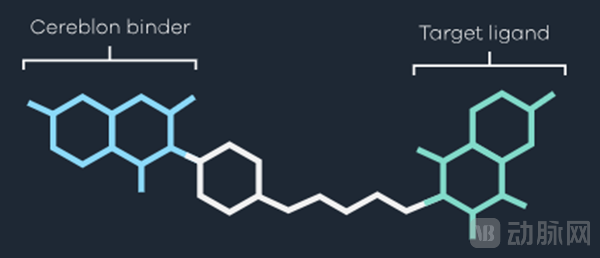 Bifunctional Degrader. Image source: BioTheryX official website
Hybrid degraders can function as either molecular glues or bifunctional degraders, offering greater flexibility in degrading proteins and novel substrates using a single molecule. Using the PRODEG platform, the same molecule can be employed to degrade novel substrates and proteins with binding pockets. These molecules are referred to as hybrid degraders.
BioTheryX, Inc. is leveraging the body’s natural protein homeostasis mechanisms to develop a novel approach for degrading specific proteins that are typically not broken down under physiological conditions. This method holds the potential to treat a variety of diseases caused by abnormal proteins. Based on this principle, the company has developed its proprietary PRODEGY platform, which aims to target key validated targets in cancer and inflammatory diseases by creating best-in-class protein degraders, including bifunctional degraders and molecular glues.
$477 Million Partnership Reached; Lead Pipeline Enters Phase I Clinical Trials
In April 2023, BioTheryX entered into a research collaboration and license agreement with Incyte (a global biopharmaceutical company) to discover and develop targeted protein degraders against multiple novel oncology targets that have historically been considered undruggable.
Under the terms of the agreement, BioTheryX will leverage its proprietary PRODEGY platform to identify and conduct initial development of molecular glue degraders targeting multiple “undruggable” oncology targets. For the initial targets, BioTheryX will receive a $7 million technology access fee, plus up to $6 million in additional potential R&D funding from Incyte to cover collaboration-related expenses. BioTheryX is also eligible for up to $347 million in potential future regulatory and commercial milestones, as well as tiered single-digit royalty rates on global net product sales of the initial targets. Incyte will assume full responsibility for the further development and commercialization of any molecular glue degraders discovered via BioTheryX’s PRODEGY platform.
Furthermore, BioTheryX is leveraging its proprietary PRODEGY platform to advance the development of a series of protein degraders. Supported by this platform, BTX-9341, the company’s most advanced pipeline candidate, has achieved first-patient dosing in its Phase I clinical trial.
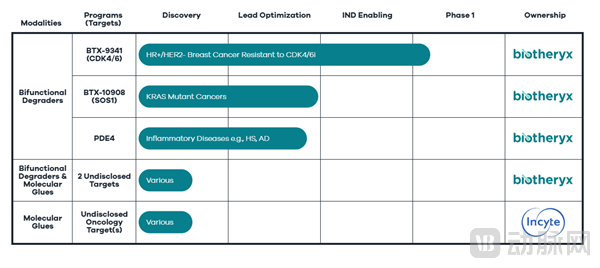 BioTheryX’s Pipeline Projects | Image source: BioTheryX official website
BTX-9341 is a first-in-class oral degrader of CDK4/6, an important target in a range of cancers that has been clinically validated in HR+/HER2- breast cancer.
BTX-10908 is a first-in-class oral degrader of SOS1. It demonstrates rapid and potent SOS1 degradation across multiple KRAS-mutant cancer cell lines and inhibits tumor growth in vivo in KRAS-driven models.
PDE4 (Phosphodiesterase 4) is a highly validated target for autoimmune and inflammatory diseases. It has demonstrated up to 4,000-fold greater potency in clinically inhibiting key pro-inflammatory cytokines, such as TNF-α, IFN-γ, and IL-1β.
Founding Team Previously Led the Development of Pomalidomide; Molecular Glue Sector Sees Influx of MNCs
If the research achievements driven by BioTheryX’s rapid development in recent years constitute an outstanding response to the challenge of developing protein degraders, this accomplishment undoubtedly reflects the collective efforts and wisdom of the team behind it.
BioTheryX founders Professor Miles Houslay and Dr. David Stirling previously led the discovery and development of the first generation of degraders—immunomodulatory drugs (IMiDs)—Revlimid® (lenalidomide) and Pomalyst® (pomalidomide).
Miles Houslay currently serves as Professor of Pharmacological Innovation at King’s College London and as Chief Executive Officer/Managing Director of BioGryffe Consulting Ltd. BioGryffe Consulting Ltd is a biotechnology consulting firm dedicated to translating cell signaling research into therapeutic and diagnostic applications, with a primary focus on cell signaling systems, particularly the regulatory mechanisms of cyclic nucleotide signaling networks. Professor Houslay has published more than 440 research papers, including articles in prestigious journals such as Science and Nature. In addition, he has served as a consultant or member of scientific advisory boards for numerous companies across Asia, Europe, Japan, the United Kingdom, and the United States.
David Stirling previously served as Chief Scientific Officer and Executive Vice President of Drug Research and Development at BioTheryX, and he is also a co-founder of Celgene, a leading biopharmaceutical company. Dr. Stirling spearheaded the clinical and research programs for Thalomid® (thalidomide), which led to the successful market launch of Celgene’s first clinical product, Thalomid®. Under Dr. Stirling’s leadership, Celgene secured major franchise rights to develop Thalomid® derivatives, including Revlimid®, Pomalyst®, and Otezla® (apremilast).。
Dr. Leah Fung serves as the Chief Executive Officer and a member of the Board of Directors at BioTheryX. Dr. Fung established BioTheryX’s molecular glue screening library for the discovery of novel neosubstrates and has guided the development of more than 25 U.S. patents covering a broad range of small-molecule protein degraders.
Prior to this, Dr. Fung served as Vice President of Medicinal Chemistry at NovoMedix (a biotechnology company focused on developing novel small-molecule multi-pathway modulators for the treatment of cancer, fibrosis, and inflammatory diseases), Associate Director of Medicinal Chemistry at Structural Genomix (a leading high-throughput structural biology company), and Assistant Director of Medicinal Chemistry at Structural Bioinformatics (a global leader in the field of computational proteomics). Additionally, she was a pioneer in combinatorial chemistry technologies.(One of the leading scientists in a method for the rapid synthesis and screening of large compound libraries, which enables scientists to quickly evaluate the biological activity of numerous compounds to identify potential drug candidates; co-inventor of more than 40 issued U.S. patents and hundreds of international patents.
Prior to 2015, capital interest in the targeted protein degradation market was extremely low. With the complete elucidation of the mechanisms of action of molecular glue drugs such as pomalidomide, attention to the protein degradation market has rapidly increased.
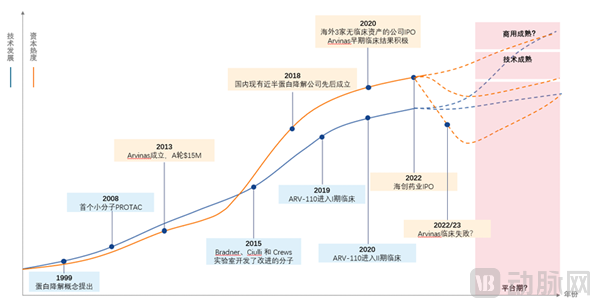 Overview of the Protein Degradation Sector. Source: VCBeat Eggshell Research Institute
Currently, numerous companies both domestically and internationally have established their presence in the field of protein degradation through independent research or commercial collaborations. According to VCBeat’s VBInsight, approximately 20 companies in China are involved in this sector, with nearly half of the existing protein degradation companies founded between 2017 and 2019.。From 2021 to 2022, multinational corporations (MNCs) entered into 14 collaborative projects in the protein degradation sector, a figure equal to the total number of deals struck prior to 2021. In the past year alone, the disclosed value of these collaborations exceeded $6 billion, with an average of one new partnership announced each month. The targets of pharmaceutical companies’ investments and partnerships have expanded from a few representative leading players in the field to a broader range of startups specializing in niche areas with distinct expertise.
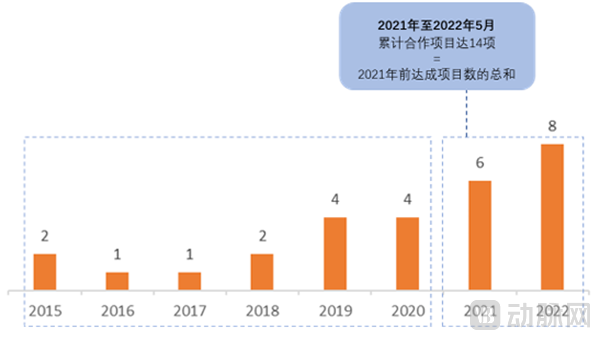
MNC Business Collaboration Review | Source: VCBeat
On January 30, 2022, the Ministry of Industry and Information Technology and eight other departments jointly issued the “14th Five-Year Plan for the Development of the Pharmaceutical Industry,” which lists frontier core technologies and drugs—including targeted protein degradation technologies such as PROTAC—as key areas for development.
According to Data Bridge Market Research, a global market research and consulting firm, the targeted protein degradation market was valued at USD 103.31 million in 2021 and is projected to surge to USD 224.7 million by 2029, registering a compound annual growth rate (CAGR) of 10.20% during the forecast period from 2022 to 2029.
References:
1.Tamimi, Juweid. Codon Publications 8, (2017)
2.Lam, Tomaso, et al. Brit J Neurosurg, 14(1), 28–32 (2000)
3.SAKAMOTO K M, KIM K B, KUMAGAI A, et al. Protacs: Chimeric molecules that target proteins to the Skp1–Cullin–F box complex for ubiquitination and degradation[J]. Proc Natl Acad Sci U S A,2001,98(15):8554-8559.doi:10.1073/pnas.141230798