

Shanghai Jiao Tong University Institute of Medical Robotics: Redefining Innovation in Surgical Robotics Through Ten Empowered Centers Over Five Years
In the field of surgical robots, which faces substantial clinical and industrial demands, a new wave of innovation is unfolding.
On the one hand, in the early model of follow-on innovation, domestic enterprises lacked independent core competitiveness in the face of strong leadership from overseas giants; on the other hand, the various challenges encountered in the clinical implementation of surgical robots have gradually brought to light the issue that domestic clinical needs remain inadequately met. These phenomena all reveal a profound fact:The model of micro-innovation based on mere imitation and simple follow-up needs to gradually shift toward source innovation that is closely aligned with clinical needs.
However, achieving such “innovation” is no easy feat. Throughout the innovation process, every stage—from strategic direction and technological validation to market commercialization—poses a significant test for market entrants. Furthermore, as numerous scientific and technological innovations emerge from the laboratory, another challenge that cannot be overlooked is how to rapidly secure talent, market access, and resources while simultaneously mitigating the inherent risks associated with innovation.It requires a “prerequisite,” namely, the possession of a robust innovation system with long-term application value.
Shanghai Jiao Tong University Medical Robot Institute(hereinafter referred to as the “Research Institute”) has been exploring this field for five years, carving out an innovative path less traveled.
Since its establishment, the Institute has fully integrated the medical-engineering interdisciplinary teams of Shanghai Jiao Tong University to conduct frontier technology research and clinical applications. Meanwhile, it has engaged in collaborative research with multiple high-level research-oriented hospitals in Shanghai, establishing joint clinical research centers based on these hospitals’ advantageous and specialized disciplines to promote clinical translation. Serving as a multidisciplinary talent training and industry incubation base, the Institute supports the clinical translation of innovative robotic technologies, further promotingOrganic Integration of the Medical Robot Technology Innovation Chain with Clinical Application and the Industrial Chain。
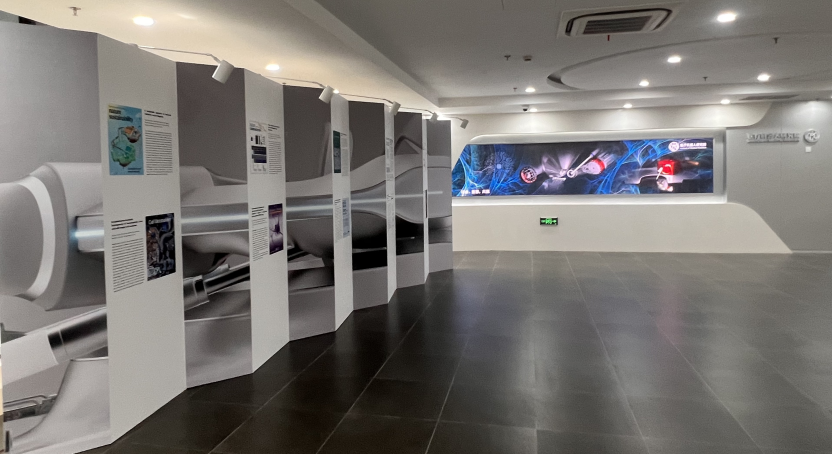
At the recent International Academic Forum and Achievements Exhibition, the Research Institute and its partner companies showcased a series of products representing cutting-edge industry innovations, including microsurgical robots and natural orifice transluminal endoscopic surgery (NOTES) robots, attracting international experts to stop and engage in discussions. The foundation for these achievements lies in the comprehensive and mature innovation system established by the Research Institute.
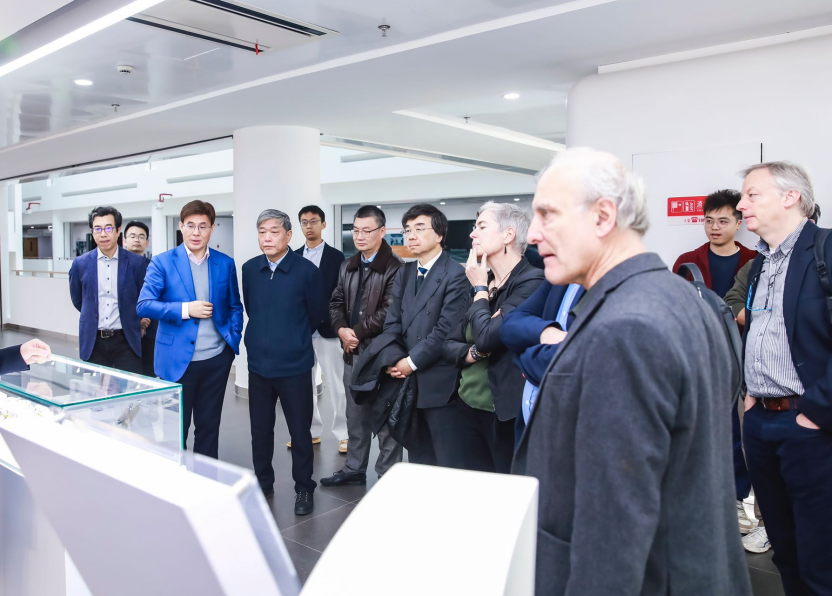
There is no doubt that the model of the Shanghai Jiao Tong University Medical Robotics Institute is being validated.
The gradual expiration of the first batch of patent protections for the da Vinci Surgical Robot in 2018 marked a significant milestone in the history of surgical robots.
At that time, medical device giants such as Medtronic, Johnson & Johnson, Siemens, and Stryker, along with domestic companies possessing relevant technological reserves, were all vying to enter the market. However, in this fiercely competitive landscape, the development model previously dominated by follow-on innovation has left many unresolved issues for the clinical deployment of related products. Consequently, some companies have gradually faded from the market, prompting the industry to realizeThe Importance of "Source Innovation" Closely Aligned with Clinical Needs.
Academician Yang Guangzhong, Chief Scientist at the Shanghai Jiao Tong University Medical Robotics Institute, is a leading expert in the field of surgical robotics. He is the Founder of the Hamlyn Centre for Surgical Robotics at Imperial College London, the Founding Editor-in-Chief of Science Robotics, and serves as Chairman of the Advisory Board of the UK Association for Robotics and Autonomous Systems. He was elected a Fellow of the Royal Academy of Engineering and was awarded the Commander of the Order of the British Empire (CBE) by Queen Elizabeth II, becoming the first Chinese scientist to receive this honor.
In late 2019, Academician Yang Guangzhong made the resolute decision to return to his alma mater, Shanghai Jiao Tong University, where he assumed the roles of Founding Dean and Chief Scientist of the Institute of Medical Robotics. Over the past five years, while he and his team have been quietly and diligently tackling key scientific challenges in medical robotics, they have also been exploring an innovation pathway tailored to China’s national conditions—one that differs from the approach he pursued in the United Kingdom.
Academician Yang Guangzhong Identified Four OpportunitiesFirst, surgical robots impose stringent requirements on the industrial chain and manufacturing technologies, thereby helping to drive the transformation of China’s domestic manufacturing sector. Second, China boasts abundant clinical resources and physicians with strong innovation capabilities, providing broad application and development opportunities for medical robots. Third, the gap between basic research and the translation of innovations in China is continuously narrowing. Fourth, it is necessary to explore a development path distinct from existing systems such as the da Vinci Surgical System, with a focus on addressing issues related to early diagnosis and early treatment. The immediate priority is to identify specific breakthrough points.
Meanwhile, Academician Yang Guangzhong pointed out that merely replicating traditional surgical techniques is not the direction for the development of surgical robots. True innovation should focus on addressing problems that traditional methods cannot solve, namely, establishing a solid market position by leveraging technological innovation to target specific markets. The breakthrough need not be confined to traditional models; it can stem from exploratory basic research that is not directly tied to immediate applications, or from scientific research topics derived from solving specific clinical problems, tailored to China’s national conditions and training systems.
In summary, it is toAnchor the market through innovation, advance robotics development via fundamental science (“science for robotics”), and promote basic research through robotics (“robotics for science”). Meanwhile, leverage international cooperation to circumvent unnecessary foundational barriers and accelerate deeper scientific progress.
Based on this foundation, the Research Institute targets clinical needs and the cutting-edge frontiers of the future development of surgical robots, emphasizingThe integration of basic science, clinical needs, and engineering innovation establishes a comprehensive innovation system.
Surgical Robots, Rehabilitation and Assistive Robots, Hospital Automation and High-Throughput Robotic TechnologiesThree Core Research Areas, the Institute is developing surgical robots, rehabilitation and assistive robots, hospital automation and high-throughput robots, micro-nano systems, perception and cognition, intelligent composite materials, bionic and bio-hybrid systems, biophotonics, precision mechatronics and manufacturing, and robotic vision and image-guided interventionTop 10 Research Centers, to achieveLeadership in innovative concepts, continuous generation of high-quality scientific research outcomes, and the development of robotic research, education, technology development, and clinical translation.
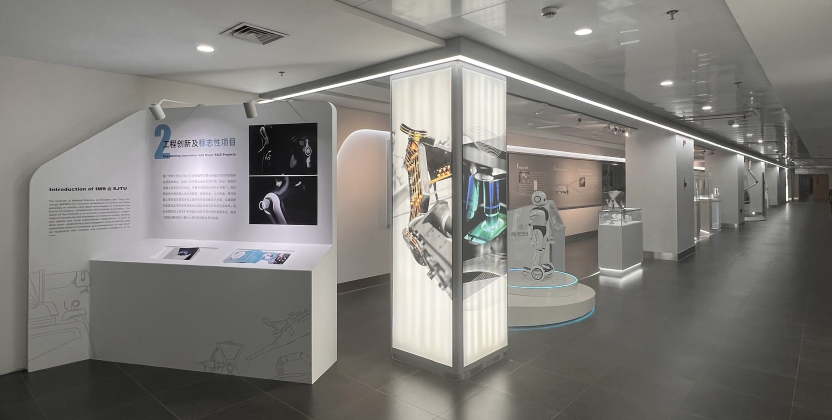
After establishing the platform, the Research Institute leveraged Shanghai’s strengths in engineering technology, basic scientific research, and clinical medicine to form a multidisciplinary team specializing in the intersection of medicine and engineering. Through interdisciplinary collaboration, the team has accelerated the rapid development of medical robotics technologies. Comprising experts from diverse disciplinary backgrounds, the team has also attracted numerous young researchers passionate about advancing the field of medical robotics.
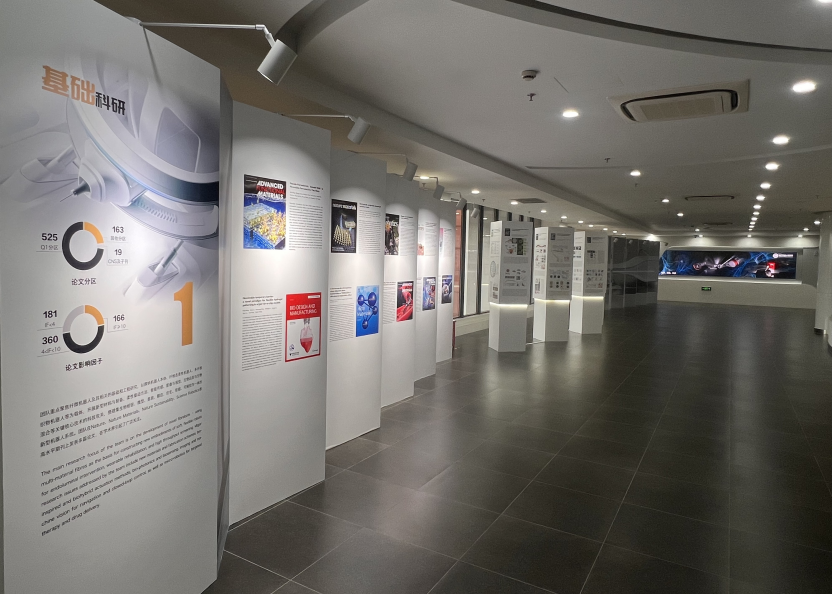
By integrating multidisciplinary fields such as robotics, biomedical engineering, and materials science, the team continuously drives the deep integration and innovation of medical robotics technologies. Focusing on the early diagnosis and personalized treatment of major diseases—including cancer, cardiovascular disorders, and neurodegenerative conditions—the Institute concentrates on developing dexterous, intelligent, and minimally invasive medical robotic technologies, as well as next-generation medical equipment centered on robotics and artificial intelligence.
Beyond this, the Research Institute also leverages SJTU’s engineering foundation and clinical resources,Centered on the Cultivation of Multidisciplinary Talents, establish a multidisciplinary, cross-disciplinary talent cultivation mechanism geared toward major national strategic needs, to lead innovative research on key technologies in medical robotics. Meanwhile, engage in academic exchanges and international cooperation with world-renowned research institutions, organize international conferences, academic forums (such as the “Zero Bay Robotics Grand Lecture Series”), and medical robotics competitions, bringing together top-tier international talent to build intoA hub for scholars at the forefront of medical robotics research, and a gathering place for inventors driving clinical application, industrialization, and applied research.
Having completed its exploration of cutting-edge technological innovations, the Institute recognizes that the true value of innovative technologies lies in their ability to solve practical problems and achieve clinical implementation. To this end, it has established an innovation ecosystem spanning from source innovation to technology incubation, and further from incubation to real-world application.
During the innovation process, the Research Institute places particular emphasis on close alignment with clinical needs, leveraging the specialized strengths of various hospitals, in collaboration with Shanghai Jiao Tong University School of Medicine, Renji Hospital, Shanghai Chest Hospital, Shanghai Ninth People’s Hospital, Shanghai General Hospital, Shanghai Sixth People’s Hospital, Shanghai International Peace Maternity and Child Health Hospital, Shanghai Children’s Hospital, Xinhua Hospital, Tongren Hospital, Zhongshan Hospital Fudan University, and Huashan Hospital Fudan University, among others.More than 10 organizationsEstablishedClinical Joint Research Center, to facilitate clinical translation while ensuring that the developed robotic technologies can truly address practical problems.
It is worth mentioning the collaborative research conducted by the Clinical Joint Research Center.Intelligent surgical and rehabilitation robots covering oncology, cardiovascular, stroke, orthopedics, urology, stomatology, ophthalmology, otolaryngology, gynecology, pediatrics, rehabilitation, medical imaging, and other fields, and each Clinical Joint Research Center will focus on its 2–3 areas of strength to conduct collaborative research on medical robots, jointly promoting the R&D, industrialization, and clinical application of medical robots.
Currently, in the context ofMedical robots for urological, thoracic, and oral and maxillofacial diseases, as well as assistive robots based on soft exoskeletonsIn these fields, the Research Institute has achieved breakthroughs in innovative technologies.
At the project incubation level, the Institute actively encourages team members to propose innovative ideas and solutions, providing comprehensive support—including capital injection, technological empowerment, and talent acquisition—to transform these concepts into tangible products or services. Meanwhile, the Institute proactively collaborates with industry partners to accelerate the commercialization and industrial implementation of these projects.
Specifically, the Institute has established“Shanghai Medical Robotics Technology Innovation Center”. The Center gathers high-quality, high-end innovative resources for medical robots from Shanghai, China, and abroad, and has been initially established in the 17-square-kilometer Greater No. 0 Bay area.An Industrial Ecosystem Aggregating Upstream and Downstream Enterprises in the Medical Robotics Industry Chain, accelerate the construction and integration of the innovation chain and industrial chain in the field of medical robots, form a fusion system of the innovation chain and industrial chain for medical robots with Shanghai as the core, linking the Yangtze River Delta, and radiating across China, while comprehensively carrying out international industrial cooperation to achieve international development.
To meet the product requirements of medical robots, the Center has leveraged Shanghai’s medical resources and clinical advantages to establish“Dual-Core Drive Model: In-House R&D + Original Technologies from SJTU Research Institute”, providing industrial incubation services to clients. Meanwhile, the Center has established an industrial alliance and developed functional platform services. By innovating mechanisms and systems, and fostering deep collaboration among technology, capital, hospitals, and industry, it has established a national-level functional innovation platform in the field of medical robotics.
Its objective is to promote the organic integration of the technological innovation chain for medical robots with clinical applications and the industrial chain, collaborate with a group of high-level hospitals to establish clinical demonstration and application bases for medical robots, partner with local governments to create demonstration zones for medical robots and scientific and technological innovation, and synergistically foster the formation and development of clinical applications and the medical robot economy.
This is undoubtedly the key to the sustained development of the medical robotics industry, and this move will also maximize the potential of the medical robotics industry.
Currently, the surgical robotics market is fiercely competitive, grappling with challenges such as severe product homogenization, valuation mismatches between primary and secondary markets, insufficient integration of technology with clinicians’ practical experience, and issues related to cost control and safety performance. Nevertheless, the explorations conducted by VCBeat Institute highlight a promising prospect for innovative breakthroughs: achieving such breakthroughs is well within reach. Leveraging abundant clinical resources, vast market demand, an outstanding research team, profound technological expertise, and an unwavering commitment to innovation, we are poised to scale new heights and deliver greater achievements.