

Chinese Pharma Giant Jemincare Sells Anti-IgE Monoclonal Antibody JYB1904 in $707.5M Deal, Files for IPO

RAPT
Anti-cancer Biopharmaceuticals Manufacturer
On December 23, Nasdaq-listed RAPT Therapeutics announced an exclusive licensing agreement with Jemincare for JYB1904 (RPT904), a clinical-stage, long-half-life anti-immunoglobulin E (IgE) monoclonal antibody developed by the latter.
Under the terms of the license agreement, RAPT has obtained the rights to develop and commercialize RPT904 globally, excluding Mainland China, Hong Kong, Macau, and Taiwan. Jemincare will receive an upfront payment of $35 million, and is eligible for up to $672.5 million in milestone payments and royalties upon achieving various regulatory and commercial milestones (totaling approximately RMB 5.2 billion). RAPT plans to initially launch the development program for JYB1904 targeting patients with food allergies.
Since 2018, this marks Jemincare’s fourth license-out deal in its global expansion efforts. Following the announcement, RAPT Therapeutics’ stock price surged by 111% on the same day, reaching a market capitalization of $60.8274 million at the time of publication.
JYB1904 Has Entered Phase II Clinical Trials
JYB1904 (RPT904) is a novel half-life-extended anti-IgE monoclonal antibody for the treatment of patients with food allergies, chronic spontaneous urticaria (CSU), and other allergic inflammatory diseases. RPT904 is designed to bind free immunoglobulin E (IgE), a key driver of allergic diseases. Early clinical studies have demonstrated that JYB1904 has more than doubled the half-life compared to omalizumab (Xolair), the first-generation anti-IgE monoclonal antibody, thereby extending its pharmacokinetic and pharmacodynamic properties.
Omalizumab (Xolair) is an anti-IgE monoclonal antibody approved for the treatment of various allergic diseases, including asthma, chronic spontaneous urticaria, chronic rhinosinusitis with nasal polyps, and food allergies.
Previously, Jemincare completed a randomized, double-blind, Phase I single ascending-dose study in China, enrolling 56 healthy volunteers to primarily evaluate the safety, pharmacokinetics (PK), and pharmacodynamics (PD) of the drug. The trial results demonstrated that JYB1904 had a favorable overall safety and tolerability profile, with all treatment-related adverse events being Grade 1–2. The pharmacokinetic properties of JYB1904 were approximately dose-proportional, and its median half-life at the same dose was more than twice that of omalizumab. The Phase I study also showed that, compared with omalizumab at the same dose, JYB1904 achieved a deeper and more sustained reduction in free IgE levels while increasing the cumulative amount of total IgE.
Jemincare is currently conducting two Phase II trials of JYB1904 in China, targeting asthma and chronic spontaneous urticaria, respectively. The Phase II asthma study primarily focuses on the pharmacokinetic (PK) and pharmacodynamic (PD) profiles of JYB1904 compared with omalizumab to determine the dosing regimen for future Phase III registration studies. Jemincare expects to obtain top-line data from the asthma Phase II trial in the second half of 2025. The Phase II trial for chronic spontaneous urticaria is focused on evaluating safety and efficacy, with top-line data anticipated in the first half of 2026.
8 Years of R&D Investment Reaching Tens of Billions of Yuan, with Multiple Drugs Launched Overseas
Since its establishment in 1999, Jemincare has achieved remarkable success in the fields of cardiovascular and cerebrovascular diseases, nephrology, oncology, anti-infectives, and emergency medications through continuous deep cultivation in the traditional Chinese medicine (TCM) sector. Its core products, including “Jinshuibao,” “Xingnaojing,” “Xineng,” “Huangshi Xiangsheng Wan,” and “Jiuhua Hemorrhoid Suppositories,” hold significant market shares in their respective niche categories across China. Notably, “Jinshuibao” is China’s first Class 1 new TCM drug, a synthetic alternative to natural Cordyceps sinensis, a state-protected confidential TCM variety, and included in the National Reimbursement Drug List.
In 2018, Jemincare proposed a strategic policy of innovative transformation, determined to commit the group’s future to technological R&D and innovation. According to E-Pharma Manager, at the company’s cadre conference in 2019, Li Yihai, Chairman of Jemincare, made a pledge to more than 800 executives, stating that he was “committing the group’s future to technological R&D and innovation, just as a father would betroth his daughter.” At the same meeting, Li Yihai clearly articulated his innovation philosophy: “The global pharmaceutical market is growing rapidly, and innovation is the only way forward. Chinese pharmaceutical companies can only secure room for development by developing more cost-effective products that can replace imports. Accelerating R&D is the inevitable path for Jemincare to undertake major strategic adjustments, promote sustainable corporate development, and uphold its original aspiration of ‘benefiting the world and serving the people with integrity’ in this new historical stage.” To this end, Jemincare has formulated detailed plans and targets, including investing RMB 10 billion over eight years in new drug R&D and product enhancement.
In 2018, Jemincare established its Global R&D Center in Zhangjiang, Shanghai. The center comprises three preclinical research institutes and is supported by teams specializing in clinical medicine, regulatory affairs, and planning and operational management. This infrastructure has enabled the establishment of a comprehensive R&D system covering the entire process from basic research, preclinical studies, and clinical trials to new drug registration and commercialization, thereby building a pharmaceutical R&D team composed of top-tier scientists from around the world.
According to the financial report, from 2018 to 2023, Jemincare’s cumulative investment in R&D reached nearly RMB 5 billion, and it continues to increase its R&D spending. It is expected that from 2024 to 2028, Jemincare will invest an additional RMB 10 billion in the development of innovative drugs. Jemincare’s innovation efforts have already yielded significant results. Currently, Jemincare has more than 70 new drugs in development, covering multiple therapeutic areas including nephrology, oncology, cardiovascular and cerebrovascular diseases, respiratory conditions, and pain management.
Since 2021, Jemincare has been advancing the global expansion of its innovative drugs through license-out transactions, entering into licensing agreements with HUYABIO International, ORION Corporation, and Genentech, a member of the Roche Group.
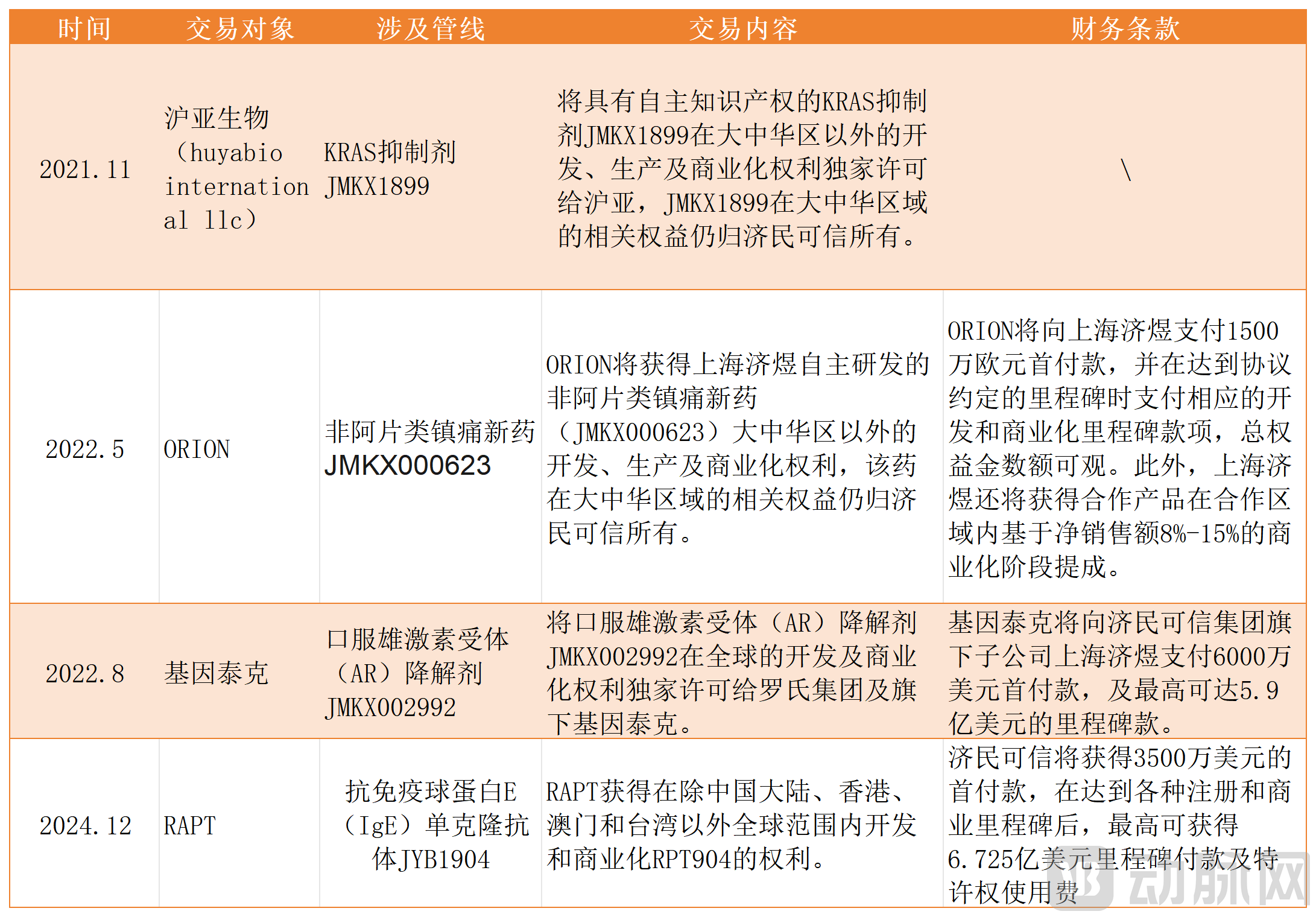 Jemincare’s Overseas Collaboration | Chart by VCBeat
During its innovation-driven transformation, Jemincare has also prioritized the intelligent and automated upgrading of its production lines. By making substantial investments to establish headquarters bases and large- and small-molecule pharmaceutical manufacturing bases with globally leading technical capabilities in Jiangxi, Jiangsu, Zhejiang, and other regions, and by implementing technological process improvements and digital upgrades to equipment at existing production facilities, Jemincare has achieved a significant increase in production efficiency and an effective reduction in production costs. Currently, Jemincare operates industrial platforms across multiple locations, including Jiangxi, Beijing, Shanghai, Jiangsu, Zhejiang, and Jilin, comprising 10 major pharmaceutical manufacturing bases, more than 40 GMP-compliant production lines, one international-level postdoctoral research station, one national-level laboratory accredited by CNAS, and seven provincial-level engineering technology centers.
Reasons to Buy RAPT
In February this year, the FDA approved omalizumab (Xolair), an IgE monoclonal antibody co-developed by Novartis and Roche, for the prevention of severe allergic reactions to common foods such as peanuts, tree nuts, milk, eggs, and wheat. This approval has become a key reason for RAPT’s announcement to take the lead in advancing the food allergy indication for IgE monoclonal antibodies. According to RAPT, there are 17 million patients with food allergies in the United States, 50% of whom experience severe symptoms, resulting in 30,000 emergency department visits annually. The U.S. market for food allergy medications could reach up to $4.5 billion in sales. Additionally, the development of antibodies for chronic spontaneous urticaria (another approved indication for Xolair) could generate an additional $1 billion in revenue.
At the same time, the FDA suddenly announced a clinical hold on RAPT’s Phase IIb trial of zelnecirnon, an investigational oral small-molecule CCR4 antagonist, for the treatment of moderate-to-severe atopic dermatitis (AD), as well as its Phase IIa trial for asthma, due to cases of severe adverse events involving liver failure in the AD trial. Consequently, RAPT halted the studies in early May and announced the complete termination of the program in November.
Currently, RAPT’s pipeline has only one CCR4 small-molecule inhibitor for oncology in clinical development, which is being evaluated as both a monotherapy and in combination with Merck’s Keytruda. Another next-generation CCR4 small-molecule inhibitor is in preclinical studies.
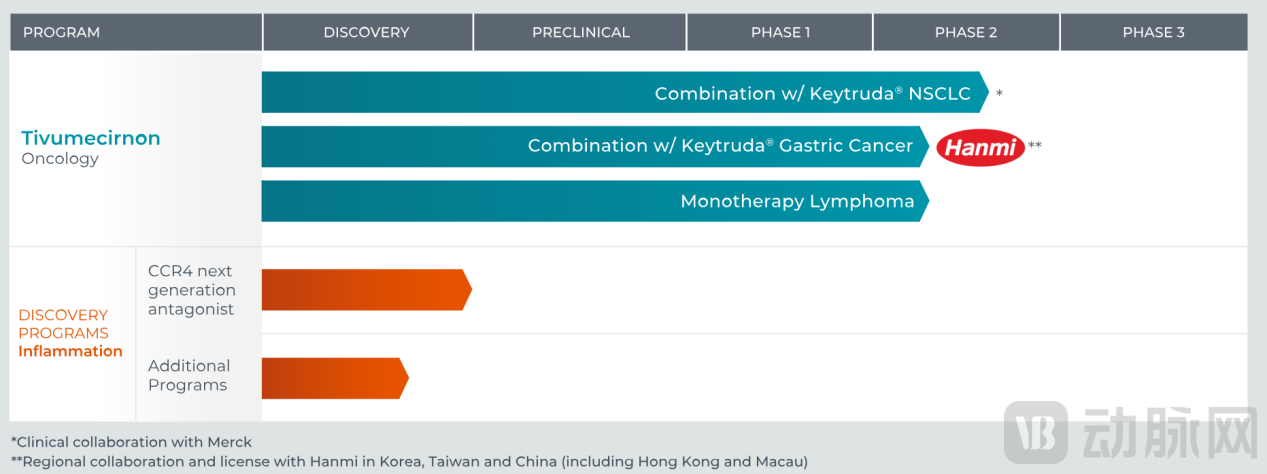 RAPT Candidate Pipeline | Source: RAPT Official Website
Following the in-licensing of Jemincare’s IgE monoclonal antibody, RAPT simultaneously announced the completion of a $150 million financing round led by The Column Group and TCGX, with participation from both new and existing investors, including BVF Partners LP, Deep Track Capital, Foresite Capital, Medicxi, OrbiMed, Perceptive Advisors, Redmile Group, and RTW Investments. This funding will extend RAPT’s cash runway, enabling it to continue advancing the development of its Phase 2b clinical data for food allergies, with potential submission anticipated in the first half of 2027.
Reference Article:
1. Why did RAPT license Jemincare’s IgE Blue Elf No. 1?
2. Three License-Out Deals in 9 Months: Jemincare’s “Fast” Innovation Path as Its In-House Products Attract Interest from HUYA Bioscience, Orion, and Genentech | E-Pharma Manager