

ZhiKang Robotics Receives NMPA Certification for 'Rehab-in-a-Backpack' to Bridge the Last-Mile Gap in Home-Based Upper Limb Rehabilitation
ZHIKANG ROBOT
Rehabilitation Robot Developer
“Why can I walk already, but still cannot lift my arm or move my hand?” During rehabilitation, patients often have such confusion. Indeed, lower limb function tends to recover relatively quickly, whereas upper limb recovery is often unsatisfactory, with movement of the hand and arm remaining limited. What exactly is the reason for this?
In daily life, the upper limbs are required to perform more diverse and complex movements than the lower limbs; consequently, the functional areas of the brain allocated to the upper limbs are significantly larger than those for the lower limbs. The upper limbs are responsible for fine motor skills, with both the sensory and motor cortices having substantially greater surface areas compared to those governing the lower limbs. This indicates that neural control over the upper limbs is more complex and extensive. As a result, among stroke patients, the prevalence of upper limb dysfunction is often higher than that of lower limb motor impairment.
Compared to lower limb rehabilitation, upper limb rehabilitation is not only more intricate and complex, but its recovery process is also slower and more arduous. Furthermore, while lower limb impairment may prevent patients from standing, unilateral loss of upper limb function can often be compensated for by the contralateral side. This “compensatory effect” makes upper limb dysfunction more prone to being overlooked, thereby increasing the difficulty of recovery.
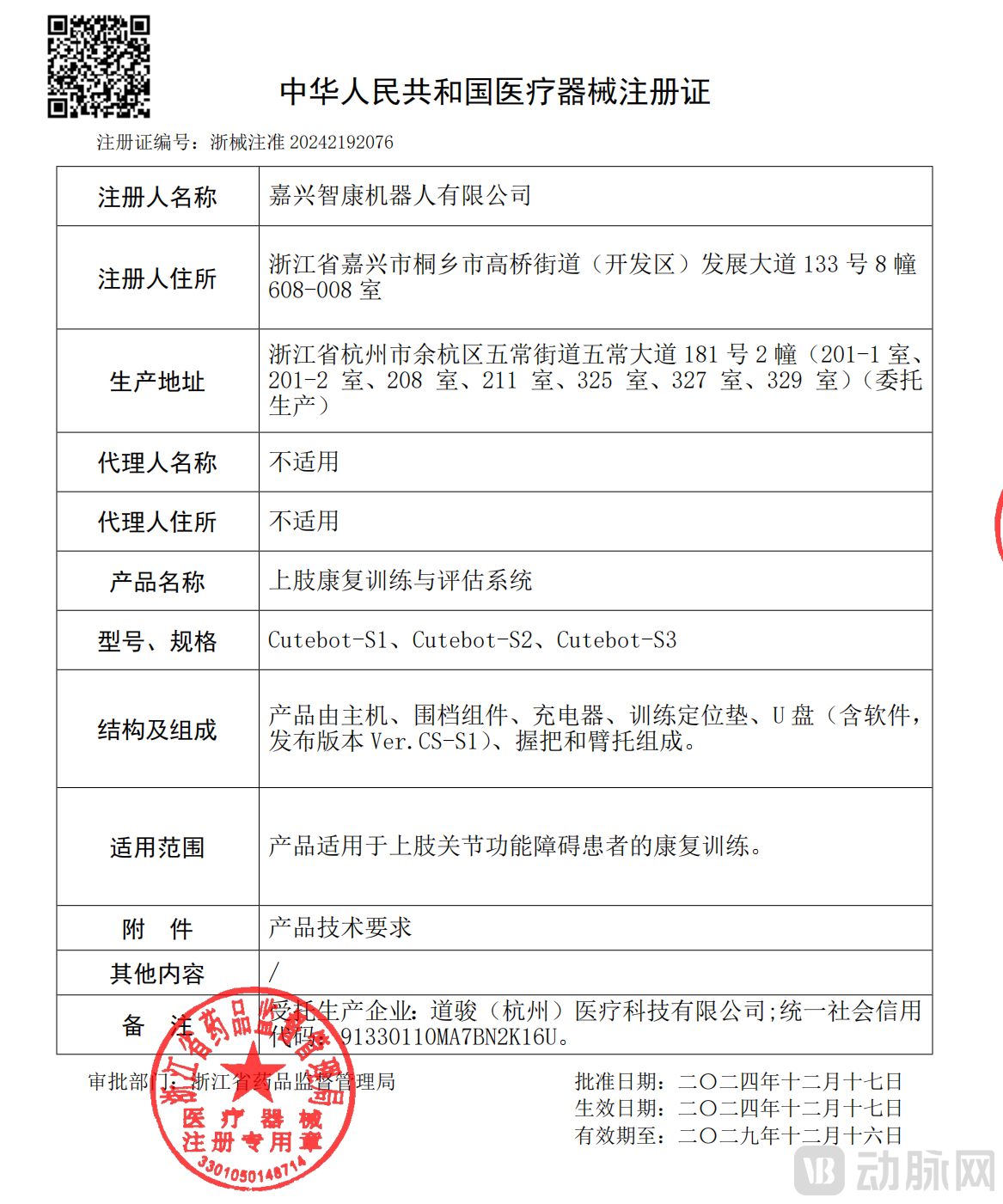
Most patients still face upper limb mobility impairments after discharge, while lacking continuousRehabilitation training often leads to further functional decline. To break this dilemma,ZHIKANG ROBOT Launches Independent Innovation Project——“"Rehabilitation Therapist in a Backpack," i.e.Full-Cycle, Multi-Scenario Portable Intelligent Upper Limb Rehabilitation Robot。The medical version of this product, the Upper Limb Rehabilitation Training and Assessment System, received NMPA certification in December 2024 (Zhejiang Medical Device Registration No. 20242192076) and was included in the “Recommended Directory of Benchmark Enterprises and Application Scenarios for Intelligent Robots in Shanghai for 2024.”
“We hope to spare patients the hassle of long-distance travel, transcend geographical constraints, and enable them to bring rehabilitation specialists from top-tier (Grade 3A) hospitals into their homes for the daily cost of just a cup of coffee.” As its founder, Xu Peiqi, stated, “Our goal is to address the accessibility of rehabilitation care, bring intelligent rehabilitation into households, and enhance the quality of life.”
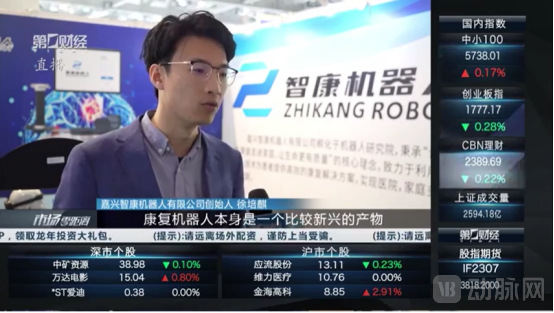
ZHIKANG ROBOT Founder Xu Peiqi Accepts Interview with Yicai
Each person’s experiences are a unique and precious asset. As Steve Jobs once said, “Life experiences are like pearls; when you string them together someday in the future, they become a beautiful necklace.” Xu Peiqi’s life journey is no exception.
He specialized in mechatronic automation during his undergraduate studies and delved into advanced control and systems engineering for his master’s degree. After graduation, he accumulated extensive experience in robotics technology and management at leading companies such as Siasun Robot & Automation (Zhongke XinSong) and SICK. However, witnessing a relative’s inability to recover in time from a stroke deeply moved him, prompting his determination to establish ZHIKANG ROBOT, a company dedicated to upper-limb rehabilitation in home settings.
By collaborating with experts from the Rehabilitation Research Institute of Shanghai Jiao Tong University School of Medicine and the Department of Rehabilitation at Huashan Hospital, Xu Peiqi ingeniously integrated robotics technology with rehabilitation medicine through medical-engineering convergence, launching the “Full-Cycle, Multi-Scenario Portable Intelligent Upper-Limb Rehabilitation Robot.” This product series comprises a rehabilitation robot, a training mat, and rehabilitation software, and is available in medical, institutional, and home-use versions to address diverse scenarios throughout the entire rehabilitation continuum.
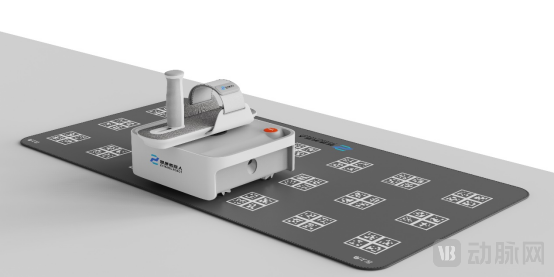
ZHIKANG Full-Cycle, Multi-Scenario Portable Intelligent Upper Limb Rehabilitation Robot (New Exterior Design Rendering)
This robot adopts an end-effector traction design, covering all six stages of the Brunnstrom approach for patients with various upper limb dysfunctions. During the flaccid stage, it facilitates passive movements to stimulate the patient’s active motor capabilities; during the synergy stage, it effectively enhances joint range of motion; and during the isolated movement stage, it further strengthens muscle strength and motor coordination.
In terms of rehabilitation functionality, the robot features fixed-trajectory training protocols meticulously designed by therapists, encompassing a wide range of leisure-oriented activities of daily living (ADL) scenarios, over 20 training movements, and more than 10 virtual environments. The research edition further incorporates VR mirror therapy and brain-computer interface (BCI) training to activate neural pathways and promote neuroregeneration and repair.
ZHIKANG ROBOT’s portable intelligent upper-limb rehabilitation robot weighs only about 7 kg and has a volume of approximately 0.008 m³, comparable in size to an office projector. Its lightweight and compact design allows it to be carried in a backpack for easy transport and delivery. It can be used not only in rehabilitation halls at hospitals and rehabilitation institutions but also placed on a mobile cart and wheeled beside a patient’s bed to facilitate bedside rehabilitation training.
The “intelligence” of its research-oriented products is reflected in three aspects:First, it features an adaptive training mode,ZHIKANG ROBOT, through its self-developed nonlinear force control algorithm, can perceive patient exertion in real time and dynamically adjust the magnitude of outputted assistive force, thereby enhancing patient engagement and rehabilitation outcomes;Second, a brain-computer interface (BCI) training mode has been added.The robot can perceive the patient's motor intentions, making it particularly suitable for patients in the flaccid paralysis phase and capable of efficiently inducing active movement;Third, intelligent recommendation of training programs,The robot can provide personalized rehabilitation pathways based on the patient's activity feedback and rehabilitation stage.
“Backpack Rehabilitators”: How to Ensure Patients’ Rehabilitation Duration and Efficacy Without the Guidance and Supervision of Professional Therapists During Home Visits?
ZHIKANG ROBOT effectively addresses this challenge through three key strategies: enhancing the enjoyment of rehabilitation training, providing personalized intelligent rehabilitation plans, and collaborating closely with professional rehabilitation institutions.
To address the lack of patient motivation caused by vague goals and monotonous movements in traditional rehabilitation therapy, ZHIKANG ROBOT has meticulously designed a series of games tailored to the interests of the elderly, aligning them with different rehabilitation protocols.Xu Peiqi explained, “These games not only add fun to the rehabilitation process but also provide clear task objectives for each session through level progression and difficulty settings—such as catching a fish, playing a chess game, or baking bread. This approach more effectively stimulates patients’ initiative in rehabilitation and leads to better outcomes.”
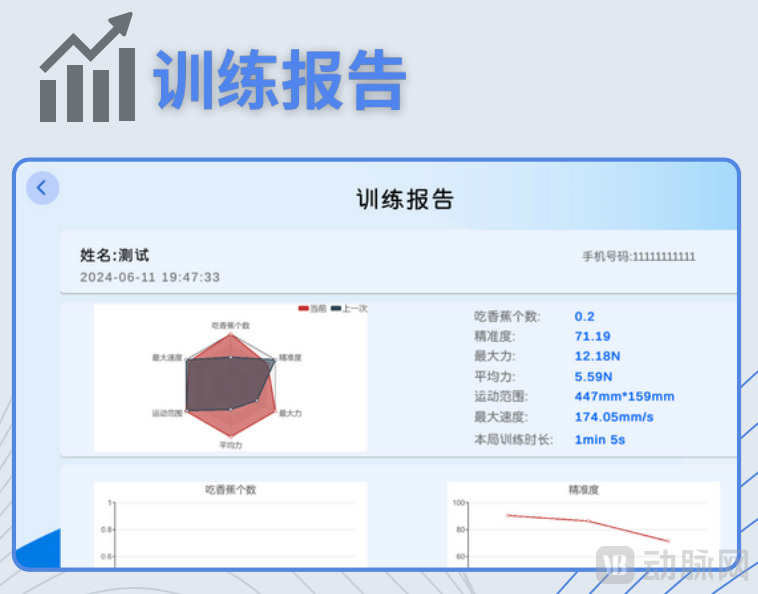
ZHIKANG ROBOT’s portable intelligent upper-limb rehabilitation robot features a variety of engaging puzzle and leisure games, including fishing, Gomoku (Five-in-a-Row), banana-eating challenges, bumper cars, and cooking simulations. Patients simply place their affected limb on the device, allowing the system to perceive patient feedback through force control algorithms and adaptively adjust assistance levels. This guides patients to complete upper-limb movements such as flexion, extension, and abduction through game-based challenges, thereby promoting the recovery of joint mobility and enhancing muscle strength. Furthermore, these games incorporate immersive scenarios and random surprise events to create a positive reinforcement mechanism. After each session, an automatic training report is generated, enabling therapists to promptly adjust rehabilitation plans.
Furthermore,The robot also features intelligent recommendation capabilities,It can recommend personalized training plans tailored to the patient’s current rehabilitation stage for physical therapists, based on automatically generated training reports after each session, thereby further enhancing the effectiveness of rehabilitation.
Meanwhile,ZHIKANG ROBOT has also established partnerships with domestic chain rehabilitation service institutions.For Initial Use, professional rehabilitation therapists conduct home assessments and develop personalized rehabilitation plans. Patients can then simply power on the device to begin rehabilitation training according to the preset protocol. Meanwhile, therapists perform periodic stage-based evaluations and adjust the training regimen based on the results, ensuring the continued effectiveness of the rehabilitation process.
Currently, ZHIKANG ROBOT’s upper limb rehabilitation training and assessment system has been deployed at Tongren Hospital, Shanghai Jiao Tong University School of Medicine; the Huashan Hospital Rehabilitation Sub-center (Shanghai New Start Rehabilitation Hospital); rehabilitation and elderly care institutions; and community health service centers.
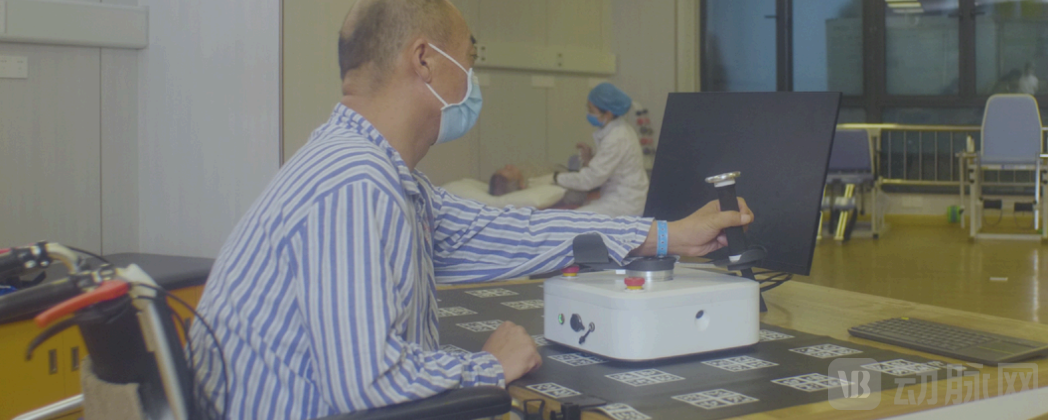
For home-based rehabilitation scenarios, ZHIKANG ROBOT thoughtfully offers two flexible options—purchase and rental—to alleviate the financial burden on patients. Excluding in-home visits by rehabilitation therapists and other additional rehabilitation services, users can rent this robot for a daily cost equivalent to just a cup of coffee. For those seeking better rehabilitation outcomes, ZHIKANG also provides additional assessment services two to three times per month, as well as other customized rehabilitation services.
Xu Peiqi shared an inspiring case: an 89-year-old patient who had suffered three strokes regained upper limb mobility through continuous home-based rehabilitation training using the ZHIKANG Portable Intelligent Upper Limb Rehabilitation Robot, ultimately achieving the ability to independently perform daily activities such as eating. Furthermore, user satisfaction surveys indicated that approximately 70% of respondents were very satisfied, 30% were relatively satisfied, and 80% reported significant improvements in mobility and coordination.
Discussing the future development of upper-limb rehabilitation robots, Xu Peiqi cited Academician Li Jian’an’s view that “miniaturization, wearability, and intelligence” represent the direction of advancement. Meanwhile, Xu believes that home-based use will become a major trend in terms of application scenarios. In the future, rehabilitation robots will evolve to be more lightweight, intelligent, and user-friendly, with their target users gradually expanding from medical institutions to individual consumers, and their application scenarios extending from professional facilities to home-based rehabilitation training.
Currently, ZHIKANG ROBOT is working in close collaboration with the team from Shanghai Jiao Tong University School of Medicine to jointly develop next-generation rehabilitation robotics products. Moving forward, the company will continue to focus on upper-limb rehabilitation, steadily building a diversified portfolio of rehabilitation products, with the aim of becoming “the top choice for upper-limb rehabilitation robots in home-care settings.”
With the approval of ZHIKANG ROBOT's upper limb rehabilitation training and assessment system, the company has fully launched its nationwide investment promotion plan in China, sincerely inviting agents and distributors to join hands in expanding the market.