

Siemens Healthineers Accelerates Clinical AI Deployment with MONAI Integration on Digital Marketplace

Siemens Healthineers
Medical Solutions Provider
MONAI Integration Now Available on Siemens Healthineers Digital Marketplace, Accelerating the Clinical Deployment of AI in Workflows.
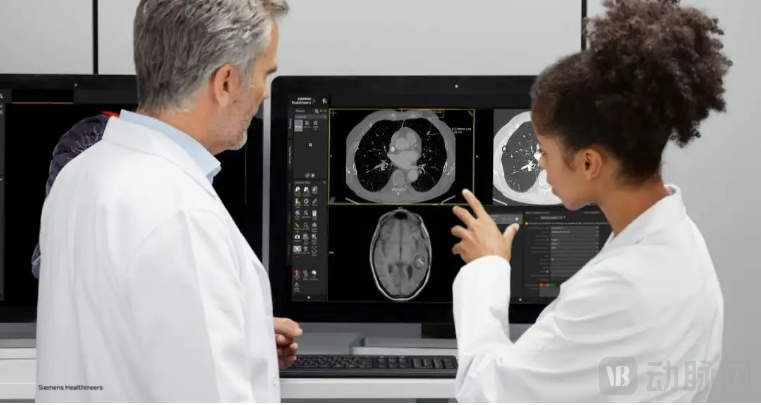
Globally, 3.6 billion medical imaging examinations are performed annually for the diagnosis, monitoring, and treatment of various diseases.
Accelerating the processing and evaluation of medical imaging examinations, such as X-rays, CT scans, magnetic resonance imaging (MRI), and ultrasound, would significantly help physicians manage their workload and contribute to faster improvements in patient health outcomes.
For this reason, NVIDIA launchedMONAI, this open-source R&D platform can be used to develop AI applications in medical imaging and other fields. Through MONAI, clinicians and data scientists can jointly unlock the power of healthcare data, building deep learning models and deployable applications tailored for medical AI workflows.
At the Radiological Society of North America (RSNA) annual meeting held last week, NVIDIA announced that Siemens Healthineers had usedMONAI Deploy Module. This module is included in MONAI and bridges the gap between research and clinical practice, enabling faster and more efficient integration of medical imaging AI workflows into clinical deployment.
More than 15,000 medical devices worldwide have been installed with Siemens Healthineers’ Syngo Carbon and syngo.via enterprise imaging platforms. They help clinicians better interpret medical images from multiple sources and extract insights.
Developers often use various frameworks when building AI applications, making it difficult to deploy these applications in clinical settings.
With just a few lines of code, MONAI Deploy enables the creation of AI applications that can run anywhere. This module supports the development, packaging, testing, deployment, and execution of medical AI applications in clinical settings, helping to streamline the development workflow for medical imaging AI applications and integrate them into clinical workflows.
MONAI Deploy on the Siemens Healthineers platform significantly accelerates the AI integration process. With just a few clicks, users can deploy trained AI models into real-world clinical settings—a task that previously took months. This enables researchers, entrepreneurs, and startups to deliver their applications to radiologists more rapidly.
Axel Heitland, Head of Digital Technologies and Research at Siemens Healthineers, stated, “By accelerating the deployment of AI models, we help healthcare institutions adopt and benefit from the latest AI-based medical imaging technologies faster than ever before. With MONAI Deploy, researchers can rapidly customize AI models and translate laboratory innovations into clinical practice, enabling tens of thousands of clinical researchers worldwide to directly leverage AI-driven advanced technologies on their syngo.via and Syngo Carbon imaging platforms.”
By leveraging applications developed with MONAI, these platforms can significantly simplify AI integration. Users can easily access and utilize these applications on the Siemens Healthineers Digital Marketplace, where they can browse, select, and seamlessly integrate them into clinical workflows.
MONAI has been released for five years, with over 3.5 million downloads and 220 contributors worldwide. It has been cited in more than 3,000 published articles, won 17 MICCAI challenges, and been applied in numerous clinical products.
The newly released MONAI v1.4 includes multiple updates, enabling researchers and clinicians to leverage MONAI’s innovations more effectively and contribute to Siemens Healthineers’ Syngo Carbon and syngo.via, as well as the Siemens Healthineers Digital Marketplace.
MONAI v1.4 and related NVIDIA product updates include the addition of new foundational models for medical imaging. These models can be customized within MONAI and deployed as NVIDIA NIM microservices. Models currently officially available as NIM microservices include:
MAISI(A Medical AI for Synthetic Imaging) is a latent diffusion generative AI foundation model capable of simulating high-resolution, full-format 3D CT images and performing anatomical structure segmentation on these images.
VISTA-3Dis a foundation model for CT image segmentation, offering precise out-of-the-box performance across more than 120 major organ categories, as well as effective adaptation and zero-shot capabilities required for learning to segment new structures.
Leading medical institutions, academic medical centers, startups, and software vendors worldwide are actively using and advancing MONAI, including:
German Cancer Research CenterLead MONAI’s Benchmarks and Metrics Working Group, which is responsible for providing metrics to measure AI performance and guidelines on how and when to use these metrics.
Memorial Sloan Kettering Cancer Center (MSK)Nadeem Lab pioneered the deployment of multiple AI-assisted annotation workflows and pathology data inference modules in the cloud using MONAI.
University of Colorado School of MedicineThe university’s faculty developed MONAI-based ophthalmic tools to detect retinal diseases using various imaging modalities. The university has also leveraged MONAI to pioneer original federated learning developments and clinical demonstrations.
MathWorks MONAI Label has been integrated with its Medical Imaging Toolbox, bringing medical imaging AI and AI-assisted annotation capabilities to tens of thousands of MATLAB users in academia and industry who are working on medical and biomedical applications.
GSK Exploring MONAI foundation models, including VISTA-3D and VISTA-2D for image segmentation.
Flywheel Provides a platform featuring MONAI. This platform leverages MONAI to streamline imaging data management, automate research workflows, and support AI development and analysis, while offering scalability tailored to the needs of research institutions and life sciences organizations.
Alara Imaging Work on integrating MONAI foundation models, such as VISTA-3D, with LLMs like Llama 3 was presented at the 2024 Society for Imaging Informatics in Medicine (SIIM) Annual Meeting.
RadImageNet Exploring the development of cutting-edge vision-language models using MONAI's M3 framework to leverage MONAI's imaging AI expert models for generating high-quality radiology reports.
Kitware Providing professional software development services centered on MONAI, helping customers integrate MONAI into custom workflows for device manufacturers and products approved by regulatory agencies.
Researchers and enterprises can now use MONAI on cloud service providers to run and deploy scalable AI applications. Cloud platforms supporting MONAI include AWS HealthImaging, Google Cloud, the Precision Imaging Network under Microsoft Cloud for Healthcare, and Oracle Cloud Infrastructure.
See the disclosure statements for the following products:
syngo.via:
https://www.siemens-healthineers.com/digital-health-solutions/syngovia
Syngo Carbon:
https://www.siemens-healthineers.com/digital-health-solutions/syngo-carbon
Digital Marketplace:
https://marketplace.teamplay.siemens-healthineers.cn/apps?country=cn&language=zh