

Dexcom Backs Oura in $200M Round, Smart Ring 'King' Valued at $5.2B Eyes IPO

Oura Health
Sleep Health Platform Operator
On December 19, Oura, a well-known unicorn in the smart ring sector, announced the completion of a $200 million Series D financing round, co-led by the renowned company Dexcom. This has raised its valuation to $5.2 billion, nearly double the $2.6 billion valuation it held in 2022. Moreover, Oura has achieved multiple breakthroughs in the healthcare field in recent years, with the “King of Rings” rapidly rising to prominence. Behind this success lies the rapid advancement of smart rings in recent years.
Smart Rings: An Increasingly Unignorable Sector in Digital Health
Oura was founded in 2013 and is headquartered in Finland. It is a rare digital health enterprise from Northern Europe, and its phenomenal “blockbuster” start has become an industry legend.
In 2015, Oura’s first-generation product launched a crowdfunding campaign on Kickstarter, achieving tremendous success. A total of 2,383 backers helped raise over $650,000, far exceeding its initial goal of $100,000. Subsequently, this generation of the product was awarded the title of Best Innovation at CES 2016.
Oura also quickly gained favor in the capital markets. In September 2016, Oura completed its first Series A financing round, raising $6 million. Since then, Oura has secured funding almost every year. According to Crunchbase data, following its most recent Series D round, Oura has completed a total of 11 financing rounds, with officially announced cumulative funding reaching $423 million.
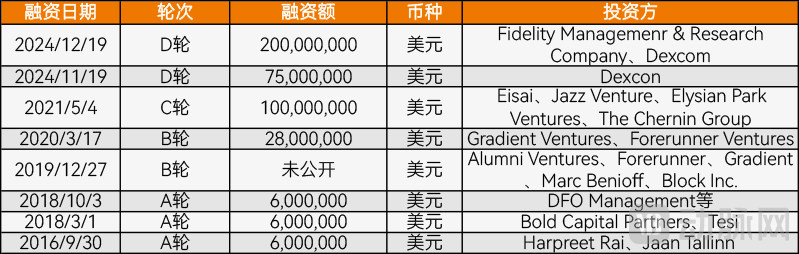
Oura's Major Funding Rounds Over the Years
This has also provided Oura with ample “ammunition” for its expansion. Particularly since 2023, Oura has embarked on aggressive expansion, acquiring the digital identity company Proxy through an all-equity transaction. Proxy’s digital identity technology, designed to replace keys, cards, badges, apps, and passwords, is well-suited for smart rings.
In September and October 2024, Oura consecutively acquired Veri and Sparta Science within a short period. The former provides users with blood glucose insights through an app integrated with Abbott’s CGM system, offering personalized dietary and exercise recommendations; the latter enables Oura to integrate its own collected data with third-party data via its data platform.
In particular, the acquisition of Veri enabled integration with chronic diabetes management, significantly expanding the application scenarios for smart rings and paving the way for Dexcom’s subsequent market entry.

Oura's Major Acquisitions Over the Years
After years of functional iterations, Oura’s smart ring now includes features such as sleep monitoring, early disease detection, exercise rehabilitation, heart health, women’s health, and stress analysis. Meanwhile, Oura has expanded the application of its products in the healthcare sector through external collaborations. For instance, its partnership with Talkspace, a leading online mental health provider, enables Oura smart ring users to share their sleep and activity data with Talkspace therapists, thereby enhancing the quality of care received during treatment.
To date, Oura has not obtained FDA medical device clearance, but since the beginning of this year, its penetration into healthcare settings has accelerated significantly.
First, in May, Oura added two important cardiac health monitoring features: vascular age estimation and cardiorespiratory fitness assessment. The former uses photoplethysmography (PPG) data measured by the ring to estimate a user’s vascular age relative to their chronological age; the latter establishes a baseline for maximal oxygen uptake (VO2 Max) by guiding users through a walking test, thereby estimating cardiorespiratory fitness.
Subsequently, Oura entered the diabetes sector through its acquisition of Veri in September, forging a partnership with CGM giant Abbott. As Abbott’s direct competitor, Dexcom quickly followed suit, announcing a strategic partnership with Oura in November and leading a substantial Series D funding round.
As planned, in the first half of 2025, the two companies will collaborate to develop and launch a new application that integrates Oura’s data on vital signs, sleep, stress, heart health, and activity with Dexcom’s CGM data, enabling patients with diabetes to manage their chronic conditions more comprehensively. Meanwhile, the two companies will jointly market through their respective sales channels and engage in cross-selling of each other’s products.
Enhanced product features and a more robust ecosystem have garnered increasing user recognition for Oura’s smart ring, driving sustained sales growth. According to data released by Oura, cumulative sales of its smart rings reached 2.5 million units as of June this year. Notably, sales revenue in 2024 doubled compared to previous years, reaching $500 million, with the company having achieved profitability.
A new generation of the “Ring King” is on the rise.
Oura’s rapid progress in 2024 is merely a microcosm of the breakthroughs smart rings are achieving in the broader health and wellness sector. According to a market research report by Global Market Insights, the global smart ring market size reached $210 million in 2023 and is projected to grow at a compound annual growth rate (CAGR) of 24.1% from 2024 to 2032, reaching a market value of $1 billion by 2032.
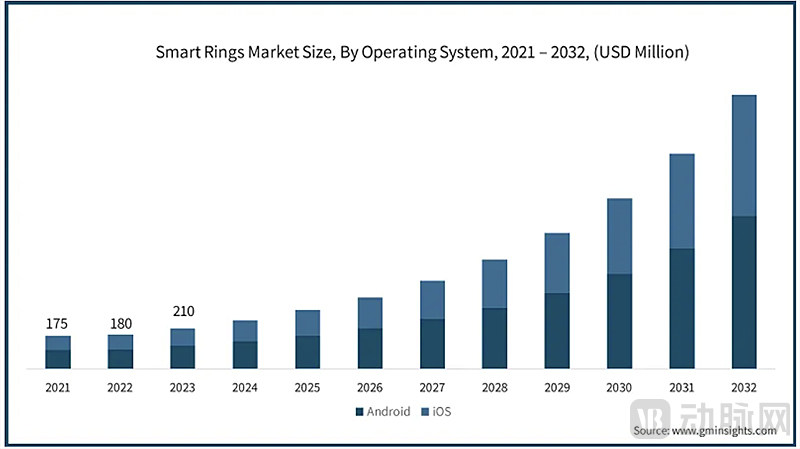
Global Smart Ring Market Size Forecast (2021-2032) (Screenshot from GMI Official Website)
However, the data Oura released in June was far more aggressive than GMI’s forecasts. After all, Oura alone surpassed $500 million in sales in 2024, significantly exceeding the report’s projections. Although the overall market size is not yet substantial, such robust growth and frequent breakthroughs clearly indicate that the sector is on the verge of an explosion.
Consumer electronics giants, with their particularly keen market sense, have already taken action and are actively exploring this sector.
In July, Samsung released its first smart ring—the Galaxy Ring. It provides real-time, continuous monitoring of sleep, physical activity, heart rate, and women’s health, issuing alerts when abnormal heart rates are detected. The device also introduces AI-powered algorithms for sleep tracking, supporting features such as snore analysis, detection of sleep movements, and measurement of sleep latency.
Apple Has Not Been Idle Either. According to reports from foreign media, Apple is developing a smart ring capable of monitoring blood pressure, blood oxygen levels, and heart rate, as well as tracking steps. These rumors are not unfounded; as early as August 2023, Apple was granted a new patent for a smart ring that supports various gesture controls and can connect with various smart devices within its ecosystem.
At a deeper level of medical regulation, the FDA consecutively approved multiple smart rings and their software solutions in 2024, surpassing the cumulative progress of previous years.
In February, Samsung’s sleep apnea feature for wearable devices received FDA approval via the De Novo pathway (similar to China’s innovative medical device classification), enabling sleep apnea monitoring through blood oxygen levels and sleep posture. This feature also laid the groundwork for the July launch of the Samsung Galaxy Ring.
In June, Qompium NV’s FibriCheck software, developed by a Belgian digital health company, received approval for atrial fibrillation (AFib) monitoring. Just one month later, Ultrahuman’s Ring Air smart ring incorporated this feature, becoming the world’s first smart ring to offer AFib monitoring.
In October, Happy Health’s Happy Ring received regulatory approval, enabling real-time, continuous monitoring of physiological parameters such as acceleration/motion, electrodermal activity (EDA), blood oxygen saturation, pulse rate, and peripheral skin temperature. Additionally, the product incorporates artificial intelligence, including large language models, to interpret monitoring data and integrate it into clinical workflows.
Just one month later, Movano Health’s Evie Ring was approved as a wearable pulse oximeter. It provides unobtrusive, continuous monitoring of blood oxygen levels and heart rate with medical-grade accuracy, and is specifically optimized for individuals with darker skin tones. Additionally, the Evie Ring can track metrics such as sleep, activity, body temperature, calories, and respiratory rate.
One piece of good news is that China has not fallen behind in the field of smart rings—RingConn, a smart ring brand under Jiuzhi Technology (formerly known as Jiuzhi Technology), enjoys considerable global recognition. As early as 2022, Jiuzhi Technology’s smart ring obtained a Class II medical device registration certificate in China under the name “pulse oximeter,” allowing for non-invasive clinical estimation and monitoring of adult arterial oxygen saturation and pulse rate.
As a representative of China’s smart ring sector, this company has also attracted significant attention in the primary market. Since its establishment in October 2022, it has completed three rounds of financing, with the most recent being an Angel+ round closed in August 2024.
Major domestic wearable technology giants are also paying close attention to this sector. At the beginning of the year, Huami Technology launched its first smart ring, the Amazfit Helio Ring, which features health monitoring capabilities such as heart rate tracking, sleep analysis, stress monitoring, and blood oxygen saturation measurement. In addition, Xiaomi, Honor, and OPPO have reportedly been developing their own smart rings.
Advances in sensors determine the progress of wearable health devices. Currently, the sensors on smart rings related to medical and healthcare applications mainly include PPG sensors, body temperature sensors, and accelerometers.
The most critical component is the PPG sensor, which generates photoplethysmography (PPG) signals by detecting changes in light reflection from the skin surface, thereby enabling monitoring of physiological parameters such as heart rate and blood oxygen saturation. Additional functionalities are achieved through integration with other sensors or artificial intelligence assistance. The sleep monitoring feature of smart rings is realized by combining PPG signals with body posture data from accelerometers and temperature measurements.
This also imposes certain limitations on the current use of smart rings in healthcare. However, apart from a few products capable of blood pressure monitoring, most commercially available smart bands and smart watches do not differ significantly from smart rings in terms of functionality. Furthermore, the industry is seeking breakthroughs; according to public information, some teams have made significant progress in continuous blood pressure monitoring with smart rings.
Compared with smart bands and smartwatches, smart rings have their obvious advantages.
First, smart rings offer superior convenience; typically weighing only a few grams, they are significantly lighter than fitness bands and smartwatches, providing a nearly imperceptible wearing experience. Second, as smart rings lack power-intensive displays, their battery life extends to approximately one week, far surpassing that of fitness bands and smartwatches. Furthermore, smart rings are predominantly crafted from premium titanium, featuring high water and dust resistance ratings for exceptional durability. Their stylish and photogenic design suits various occasions, thereby indirectly enhancing users’ willingness to wear them.
Smart rings also hold an advantage in data accuracy, which is paramount in medical settings. For smartwatches or fitness trackers, a strap that is too loose can lead to inaccurate measurements, while one that is too tight can compromise wearing comfort. In contrast, the sensors on smart rings achieve better contact with the skin, enabling more precise measurements—provided, of course, that the correct ring size is selected.
These advantages give smart rings a distinct edge in continuous, unobtrusive health and medical data monitoring. Taking sleep monitoring as an example, the near-imperceptible nature of wearing a smart ring has far less impact on users’ sleep than watches or fitness bands, thereby enabling long-term, continuous monitoring.
Furthermore, by integrating with other medical devices, the compact smart ring can deliver significant impact. A prime example is the collaboration between Oura and Dexcom, which combines blood oxygen, heart rate, body temperature, and acceleration data from the Oura Ring with glucose data from continuous glucose monitors (CGMs), leveraging artificial intelligence to create a more comprehensive monitoring ecosystem for chronic diabetes management.
Under these conditions, the functional disadvantages of smart rings compared to smart bands and watches can be fully compensated for by the ecosystem. Smart rings, which can be worn comfortably for extended periods without being noticed, are likely to be favored by many users and become an important component of the health and medical monitoring ecosystem.
By extrapolation, there appear to be numerous interconnected healthcare scenarios where such integration is possible, representing a significant opportunity for smart rings.
Of course, smart rings in their early developmental stage also have distinct disadvantages. The most significant drawback is cost. Due to highly integrated and miniaturized component and structural designs, the use of precious metals, and currently low shipment volumes, production costs remain high. As a result, smart rings are significantly more expensive than fitness bands with similar functionalities, which substantially dampens consumer purchase intent.
Meanwhile, the size of a smart ring significantly affects its wearing comfort and measurement accuracy. Although companies typically provide various ring sizers for users to try on for a period before finalizing their size, some degree of deviation is still inevitable.
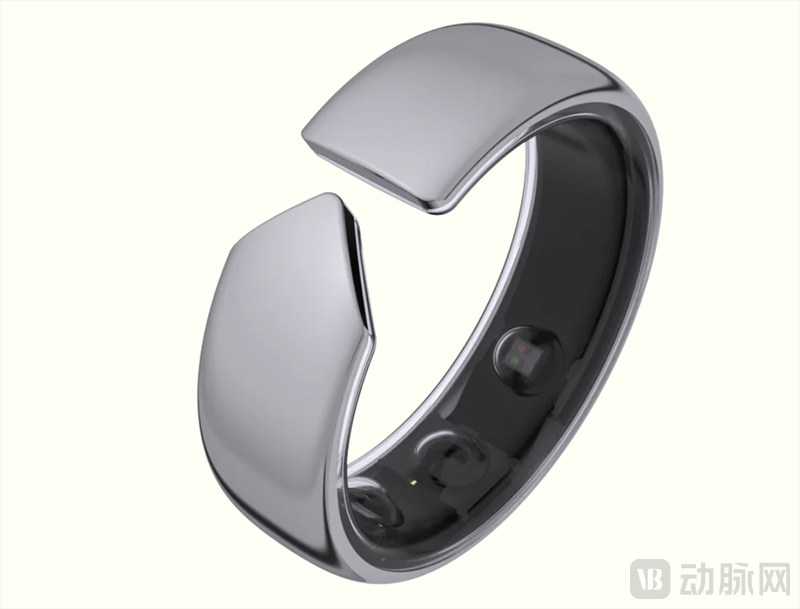
Movano Health’s Evie Ring Features an Open Design (Image from Movano’s Official Website)
Certainly, this issue is gaining attention within the industry. For instance, Movano Health’s Evie Ring adopts an open-ring design that allows for a certain degree of deformation, making it better suited for female users whose finger circumference fluctuates with hormonal levels. Additionally, some disclosed patents are introducing a degree of elastic deformability to traditional fully enclosed designs.
Furthermore, the inner circumference of most current smart rings is not a smooth circle; instead, there are protrusions in the sensor area. Depending on the specific product, those with more pronounced sensor bulges can exert pressure on the finger, compromising wearing comfort. However, as products continue to iterate, this shortcoming is being rapidly addressed.
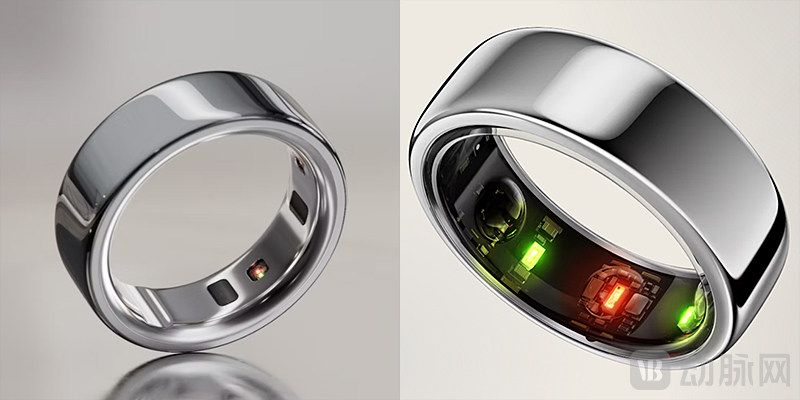
The Oura Ring 4 (left) is almost completely smooth, while the sensor bumps on the Oura Ring 3 (right) are visible to the naked eye.
Smart rings are not a new concept, but they have long remained outside the mainstream due to technological bottlenecks and limited user awareness. As technology continues to mature, smart rings achieved significant breakthroughs in 2024. From Oura’s substantial funding round to the rapid evolution of products and regulatory approvals within the year, these developments may well signal that the inaugural year of smart rings has arrived, with their rise becoming unstoppable.
VCBeat will continue to monitor whether smart rings can achieve the rapid rise anticipated in the future.
References:
Yoho Hong Kong (yohohongkong.com): “Smart Ring Buying Guide 2024 (Recommendations for the Latest Models and Comparative Evaluation of Features)”
Shenzhen Bay: "Research Report on Smart Rings"
Jessica Hagen,mobihealthnews.com:Smart ring maker Oura announces third acquisition in two years
Nathan Eddy,mobihealthnews.com:Oura smart ring company extends heart health capabilities
Anthony Vecchione,mobihealthnews.com:Happy Health receives FDA clearance for smart ring
Fred Pennic,hitconsultant.net:ŌURA Secures $200M to Fuel Growth and Innovation in Health Wearables
Jasmine Pennic,hitconsultant.net:Movano Health Receives FDA Clearance for Evie Ring Pulse Oximeter
Sudz Niel Kar,myhealthyapple.com:Samsung obtains FDA DeNovo for Sleep Apnea detection prior to the release of Galaxy Ring