

Allink Biotherapeutics Files IPO Prospectus: Seizing the Optimal Moment for Differentiated Bispecific Antibodies and ADC Innovation
Allink Biotherapeutics
Innovative Drug Developer
At the dawn of 2025, looking back on 2024, business development (BD) transactions in China’s pharmaceutical industry maintained strong momentum. Domestically developed bispecific antibodies were undoubtedly the protagonists of 2024, with bispecific antibody-drug conjugates (ADCs), as an emerging technological frontier, positioning themselves at the forefront of the era.
In March 2024, Hansoh Pharma and Biotheus reached an agreement regarding the latter’s anti-EGFR/cMet bispecific antibody HS-20117/PM1080 for the development of ADC products, with a total transaction value approaching RMB 5 billion.
Beyond project-based transactions, 2024 also witnessed the first-ever acquisition of a Chinese ADC R&D company. In April, Puxing Biologics was acquired by Denmark’s Genmab for $1.8 billion, setting a new record for the highest acquisition price of a Chinese biotech firm.
Unlike the “hot” landscape of bispecific antibodies and bispecific antibody-drug conjugates (ADCs), the current investment and financing market remains sluggish, with innovative companies continuing to scale back their operations; the “winter” in the pharmaceutical industry has not yet passed. Against this backdrop, Chinese pharmaceutical companies are also exploring new business development (BD) models.
The NewCo model, which has gained significant popularity in recent years, represents a new trend under this logic. Typically driven by external capital, a NewCo is established by spinning off one or a specific class of pipelines from domestic innovative pharmaceutical companies to form a new, independent entity focused on the development and promotion of specific products. Examples include Hengrui’s GLP-1 asset portfolio, Genor Biopharma’s CD3/CD20 T-cell engager (TCE), Keymed Biosciences and EMBiotech’s CD3/BCMA TCE, and Velocibio’s CD3/CD19/BCMA trispecific TCE, among others. The advantages of this model lie in its ability to enhance the R&D efficiency and returns for large pharmaceutical companies, while also providing flexible development pathways for smaller biotechs. By addressing urgent needs for funding and market access through collaborative models, it accelerates product commercialization and globalization.
As early as 2023, before the NewCo model gained widespread popularity, Allink Biotherapeutics was established using this very approach, dedicating itself to the early discovery and clinical development of bispecific antibodies and bispecific antibody-drug conjugates (ADCs). Within just a year and a half, Allink Biotherapeutics completed two rounds of financing, and its two core projects progressively advanced from the preclinical stage into clinical development.
Notably, the founder of Allink Biotherapeutics is Dr. Feng Hui, former co-founder and COO of Junshi Biosciences, who spearheaded the launch of China’s first PD-1 monoclonal antibody. In 2023, a year when the entrepreneurial environment appeared largely unfavorable, Dr. Feng surprisingly embarked on yet another venture.
VCBeat had the opportunity to interview Dr. Feng Hui, CEO of Allink Biotherapeutics, aiming to uncover the company’s core essence. How will Allink Biotherapeutics compete in the bispecific antibody and bispecific antibody-drug conjugate (ADC) sectors? And how will Dr. Feng lead his team to thrive against the tide during the industry’s downturn?
The PD-1 Pioneer from Junshi Biosciences Sets Out Again as a Veteran
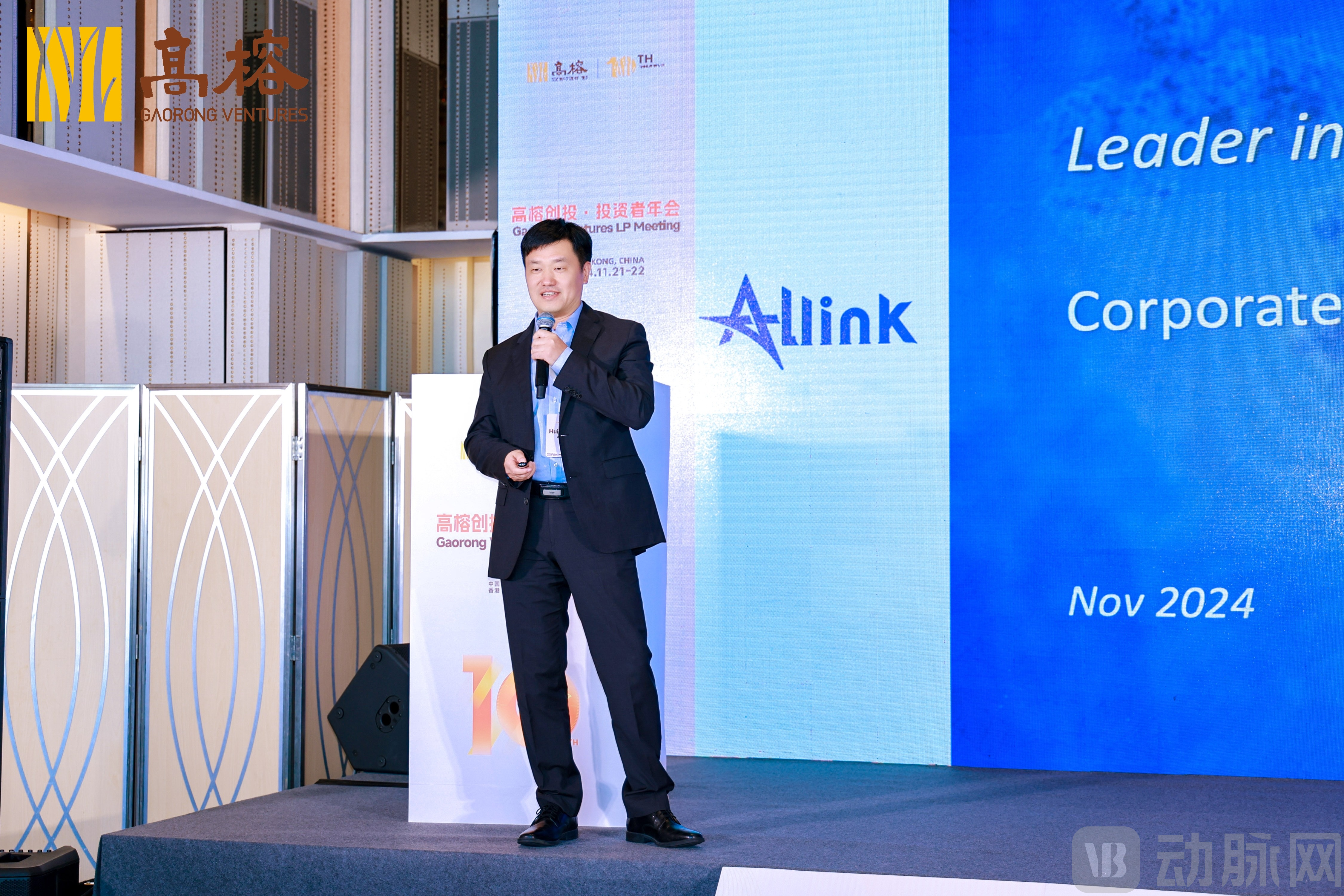
Dr. Hui Feng, CEO of Allink Biotherapeutics
After graduating from Tsinghua University in 1997, Feng Hui embarked on his overseas studies. Upon successfully earning his Ph.D. in Molecular Pharmacology from the Albert Einstein College of Medicine, he joined the institution as an Assistant Research Scientist in the Department of Molecular Pharmacology. In 2007, Feng Hui subsequently joined HumanZyme and MedImmune (a subsidiary of AstraZeneca), serving as a Scientist in the departments of Antibody Discovery and Protein Engineering.
The past decade has been the most rapidly transformative period in the history of China’s pharmaceutical industry. During this time, China’s pharmaceutical sector has achieved leapfrog development, evolving from generic drugs to “me-too” innovation, and further to “first-in-class” and “best-in-class” breakthroughs. Feng Hui is one of the witnesses and participants in this historical journey.
In 2013, Feng Hui returned to China with the ambition of developing novel antibody drugs independently researched and developed by Chinese scientists. Together with like-minded partners, he established Junshi Biosciences in Zhangjiang, Shanghai. At that time, Junshi Biosciences had only a laboratory of no more than 300 square meters, but it gathered a group of outstanding scientists. Within less than six years, the company completed the development of China’s first PD-1 monoclonal antibody and achieved its rapid listing on the capital market (Hong Kong Chapter 18A).
During this period, Feng Hui, as a core technical expert and Chief Operating Officer, led the research and development of more than ten antibody drug projects at Junshi Biosciences, including JS001 (toripalimab), JS002 (ongericimab), and JS016 (etesevimab). Under his leadership, Junshi Biosciences’ PD-1 antibody toripalimab was approved for marketing in China in December 2018, securing the first-mover advantage. Five years later, in October 2023, toripalimab became the first to receive FDA approval for launch in the United States, successfully expanding into the global market.
In Dr. Feng Hui’s view, 2023 marked a significant turning point. Prior to 2023, the model of China’s biopharmaceutical industry resembled that of companies such as Junshi Biosciences, Innovent Biologics, BeiGene, and Akeso, evolving from the initial concepts of early-stage research scientists into full-chain biopharmaceutical enterprises, following the traditional pharmaceutical pathway from new drug development to clinical trials and commercialization. After 2023, biotech companies will move toward more specialized and refined division of labor, with innovation capability and differentiation becoming key focal points, while fostering closer integration and interaction with international markets.
As the domestic innovative drug landscape evolves, with tightening IPO regulations, the industry faces new challenges and opportunities. Feng Hui decided to spin off two early-stage projects from Junshi Biosciences for fundraising and entrepreneurship, establishing an independently operated new company to meet the demands of the times. Allink Biotherapeutics was born against this backdrop.
In September 2023, Allink Biotherapeutics officially commenced operations. Leveraging its independently developed bispecific antibody and ADC technology platforms, the company has established a pipeline of innovative product candidates with first-in-class (FIC) and best-in-class (BIC) potential, dedicated to developing breakthrough therapies in oncology and immunology to deliver novel treatment solutions for patients worldwide. Concurrently, Junshi Biosciences entered into a Joint Venture Agreement with Allink Biotherapeutics, contributing equity through two preclinical-stage investigational projects and patent rights related to ADC technologies.
Since its inception, Allink Biotherapeutics has achieved rapid growth, securing $23.5 million in angel financing and $42 million in Series A financing within one year, and successfully advancing two core ADC pipelines into the clinical stage.
In terms of team building, the company has established an efficient R&D and leadership team, with core members accumulating nearly 30 years of experience in the development of biologics and antibody-drug conjugates (ADCs). The team not only possesses comprehensive expertise in drug discovery, clinical development, and manufacturing management but also brings extensive international perspective and collaborative experience in business development (BD).
In addition to Dr. Feng Hui, Ms. Fan Kehua, Co-founder and COO of Allink Biotherapeutics, brings nearly 20 years of experience in the pharmaceutical industry, spanning business development, clinical R&D of new drugs, and clinical practice at multinational pharmaceutical companies and innovative Chinese biopharmaceutical firms. During her tenure at Junshi Biosciences, she was primarily responsible for the company’s product pipeline development strategy and external collaborations, successfully leading multiple cross-border licensing deals for new drugs. Notably, she led the business negotiations that secured the overseas rights licensing of Junshi Biosciences’ COVID-19 neutralizing antibody to Eli Lilly and Company in the United States, generating over RMB 3 billion in revenue for the company. Prior to joining Junshi, she accumulated extensive experience in business development, clinical R&D strategy, and operations across various therapeutic areas at multinational corporations such as IQVIA, GlaxoSmithKline, Sanofi, and Pfizer.
Li Li, Co-Founder and Head of R&D, holds a Ph.D. from the Shanghai Institute of Materia Medica, Chinese Academy of Sciences, with extensive expertise in antibody protein engineering and structural biology. He currently oversees the early-stage development of the company’s bispecific antibody and bispecific antibody-drug conjugate (ADC) pipelines, as well as its technology platforms.
Leveraging a core team with extensive R&D and business development experience, Allink Biotherapeutics aims to identify differentiated, first-in-class preclinical candidate (PCC) drugs, rapidly advance clinical trials to obtain proof-of-concept (POC) data, actively pursue external collaborations for its pipeline at various development stages, gain recognition in the international market, and complete an initial public offering (IPO).
Differentiated Molecules, Top-3 Global POC Data: The Optimal Solution for “1+1>2”
In the field of oncology therapeutics, antibody-drug conjugate (ADC) drugs have ushered in a new chapter for the pharmaceutical market with their breakthrough efficacy. Currently, 15 monoclonal antibody-based ADCs have been approved for marketing worldwide, and the market size continues to expand year by year. Meanwhile, business development (BD) transactions related to ADCs are also highly active, featuring multiple blockbuster deals valued at billions of US dollars.
Bispecific Antibody-Drug Conjugates (BsADCs) further expand the clinical application of ADC therapeutics. By leveraging the synergistic effects of two distinct targets, BsADCs can enhance the anti-tumor activity of antibodies, improve tumor selectivity, increase internalization efficiency, and boost responses in patients with low target expression or tumor heterogeneity, thereby achieving a “1+1>2” therapeutic effect.
However, compared with monoclonal antibody ADCs, the preparation of bispecific antibody ADCs is more complex, requiring the resolution of dual challenges associated with both bispecific antibody and ADC manufacturing.
Building on this, Allink Biotherapeutics leverages the advantages of its STAR-Lite bispecific antibody platform, based on a common light chain, and its Hy-BEAM ADC platform to perfectly resolve heavy- and light-chain mispairing, thereby ensuring the superior functionality of complex molecules. Meanwhile, by innovating hydrophilic linkers, the company has developed bispecific antibody-drug conjugates (ADCs) characterized by high drug-to-antibody ratio (DAR), high hydrophilicity, and excellent stability.
Regarding Allink Biotherapeutics’ drug development strategy, Dr. Feng Hui stated that differentiation must be the primary consideration in the development of antibody-drug conjugates (ADCs). Currently, ADC targets such as HER2 and TROP-2 are facing homogeneous competition. Therefore, designing differentiated molecules is crucial for a drug’s developability and efficacy. Furthermore, whether the development focuses on unmet clinical needs directly determines the drug’s value in both clinical practice and the market.
First, ranking among the top three globally in point-of-care (POC) data is a critical consideration and the core key to prevailing in fierce competition. Whether it was Genmab’s $1.8 billion cash acquisition of ProfoundBio despite having only 40 patient cases for rinatabart sesutecan (Rina-S), or Bristol Myers Squibb’s $8.4 billion deal to acquire overseas rights to Baili Tianheng’s EGFR/HER3 bispecific antibody-drug conjugate (ADC), BL-B01D1, based on nearly 200 patient cases, these landmark transactions were all underpinned by clinical data that demonstrated both speed advantages and impressive results compared to peer drugs. Therefore, one of the key considerations for Allink Biotherapeutics during product initiation is to ensure a competitive position within the global top three, thereby safeguarding the value of its product pipeline.
Furthermore, Allink Biotherapeutics aims to leverage the dual mechanisms of antibodies and small-molecule chemotherapy to create novel molecules distinct from existing products. “We do not intend for the antibody to serve merely as a carrier for the payload; rather, we require the antibody itself to possess therapeutic efficacy. By combining the chemotherapeutic effects of small molecules with the intrinsic antitumor activity of the antibody, we aim to develop a differentiated molecule that achieves a ‘1+1>2’ synergistic effect, thereby standing out in the market,” said Feng Hui.
However, all of this is built upon a profound understanding of biological characteristics. Only after the mechanism of action of a target is clearly defined—such as EGFR, HER2, and HER3—and focused on an unmet clinical need, can we rationally design bispecific antibody-linker-payload combinations based on the biological characteristics of the ErbB family in that tumor indication, thereby developing an internationally leading innovative molecule for new drug development.
Leveraging its core technology platform and differentiated drug development strategy, Allink Biotherapeutics focuses on the early-stage research and clinical development of bispecific antibodies and antibody-drug conjugates (ADCs). The company has established a diverse portfolio of first-in-class (FIC) and best-in-class (BIC) candidate drugs in the fields of oncology and immunology, with more than 10 innovative assets in its pipeline.
Among these, the core product ALK201 is an ADC candidate drug targeting FGFR2b, indicated for the treatment of gastric cancer, breast cancer, non-small cell lung cancer, and other solid tumors. Currently, the IND application for this product has been accepted in China, the United States, and Australia, with the first patient dosed in Australia. This marks the official entry of Allink Biotherapeutics’ first project into the clinical stage.
This Phase I, multicenter clinical trial is designed to investigate and evaluate the safety, tolerability, pharmacokinetic profile, and preliminary antitumor activity of ALK201 in patients with advanced solid tumors. The study consists of two sequential parts: a dose-escalation phase to determine the maximum tolerated dose (MTD), followed by a clinical expansion phase to further investigate biomarker-guided patient populations.
The FGF/FGFR2 signaling pathway is widely aberrantly expressed in various malignant tumors, including gastroesophageal adenocarcinoma and breast cancer, and is associated with poor clinical outcomes. As an innovative antibody-drug conjugate (ADC) candidate, ALK201 specifically targets FGFR2b, a key cancer driver, while utilizing the company’s proprietary hydrophilic linker and optimized payload. Systematic preclinical studies have demonstrated that ALK201 possesses potent antitumor activity and a favorable therapeutic window, positioning it as a promising next-generation therapy for FGFR2b-driven malignancies.
Core Product ALK202 is an EGFR/cMET-targeted bispecific antibody-drug conjugate (ADC) for the treatment of non-small cell lung cancer, colorectal cancer, and other solid tumors. Currently, the first Phase I clinical trial of ALK202 monotherapy in solid tumors has been initiated (NCT06707610/ALK202-01).
It is reported that the company will also explore the application of T-cell engager (TCE) bispecific antibodies in solid tumors, unlocking the potential of more innovative targets for solid tumor therapy.
In addition to its footprint in oncology, Allink Biotherapeutics is gradually expanding into the field of immune-mediated diseases. The company has adopted the same differentiated drug development strategy used in oncology: developing differentiated bifunctional molecules based on a thorough understanding of disease mechanisms and biological characteristics, with the aim of achieving synergistic therapeutic effects (1 + 1 > 2). ALKN401, one of the company’s pipeline candidates, was developed under this framework and targets a broad spectrum of IgG-related immune-mediated diseases.
Promoting External Collaboration Across Project Stages, Dancing with the Times
Looking back at 2024, China’s business development (BD) scale for innovative drugs has ranked among the top globally in terms of total transaction value, number of transactions, and number of deal pipelines. This indirectly validates that the domestic pharmaceutical innovation capability is gradually gaining external recognition, with outstanding innovative technologies and drug projects still highly regarded overseas.
Feng Hui believes that projects at different stages hold distinct values, with product data remaining the core focus ultimately. Therefore, Allink Biotherapeutics will also fully consider matching projects at various stages with transactions of different types and extents.
“Regarding international business development (BD) collaborations, the company’s consensus is to maximize product value by exploring flexible partnership models with multinational corporations (MNCs) and investors both domestically and abroad, thereby creating greater clinical value for patients worldwide. We look forward to achieving breakthroughs in BD at the appropriate time,” said Feng Hui.
As Chinese enterprises continue to enhance their innovation capabilities, accelerate their global expansion, and diversify their overseas strategies, we are witnessing a growing number of Chinese innovative drugs gaining approval for market launch from the FDA and EMA. A more robust Chinese innovative pharmaceutical industry is emerging on the horizon.
Regarding the timing of his return to China, Feng Hui believes that even coming back five years earlier might not have yielded better results. In fact, the true turning point began with the 2015 reform of China’s drug review and approval system. This was followed by China’s accession to the ICH, the introduction of Chapter 18A of the Hong Kong Stock Exchange’s listing rules, and the launch of the Shanghai STAR Market, which together fostered a virtuous interaction among policy, regulation, and capital markets. The synergistic effects of these reforms ushered in a golden era for the development of innovative drugs in China, aligning perfectly with the historical opportunity characterized by favorable timing, geographical advantages, and human harmony.
In 2013, returning to China to launch a startup focused on innovative drugs was a path viewed with skepticism. However, subsequent developments have proven that it was, in fact, the most opportune moment to embark on Innovative Drugs 1.0. The logic behind founding NewCo ventures in 2023 follows the same rationale. Feng Hui and his team believe that developing differentiated bispecific antibodies and bispecific antibody-drug conjugates (ADCs), while pursuing internationalization, aligns with the future trends of the biopharmaceutical industry. Therefore, the present moment represents a perfect timing for launching Innovative Drugs 2.0.
“Dancing with the times is crucial,” said Feng Hui. Yet, even while riding the tailwinds of the era, it is essential to seize opportunities and maintain differentiated innovation. “We have consistently focused on unmet clinical needs, continuously launching products that meet the demands of patients worldwide.”
“The founding of Allink Biotherapeutics is a product of aligning with the trends of industry development.” Dr. Deng Lingquan, Partner at Mifang Health Fund and an early investor in the company, stated: “The market cooled sharply starting in late 2021, causing many companies to shelve their forward-looking next-generation R&D pipelines due to funding constraints. The establishment of Allink Biotherapeutics precisely seized this opportunity. We are honored to have joined forces with Dr. Feng Hui and the investor team to invest in and establish the company ahead of the NewCo wave in China. This is only the beginning, and we are full of confidence in the future of Allink Biotherapeutics and China’s biopharmaceutical industry!”
Throughout 2024, Allink Biotherapeutics achieved multiple significant milestones and successfully completed a new round of financing. Leveraging this momentum, the company will comprehensively accelerate the clinical development of its core pipeline projects in the coming year, while continuing to strategically invest in early-stage R&D within innovative fields. Looking ahead, under the vision of a new era for innovative drugs championed by Feng Hui and his team, the story of Allink Biotherapeutics will continue to unfold, growing in tandem with China’s biopharmaceutical innovation industry.