

HealthyWay Inc. Surges Over 36% on Hong Kong Debut Amid Robust Business Growth

HealthyWay
Provider of Digital Health and Medical Service Platforms
On December 30, 2024, Health Road officially listed on the Hong Kong Stock Exchange! By the close of trading that day, Health Road’s stock price surged36.67%, reaching HK$10.66, with a total market capitalization of HK$9.356 billion。
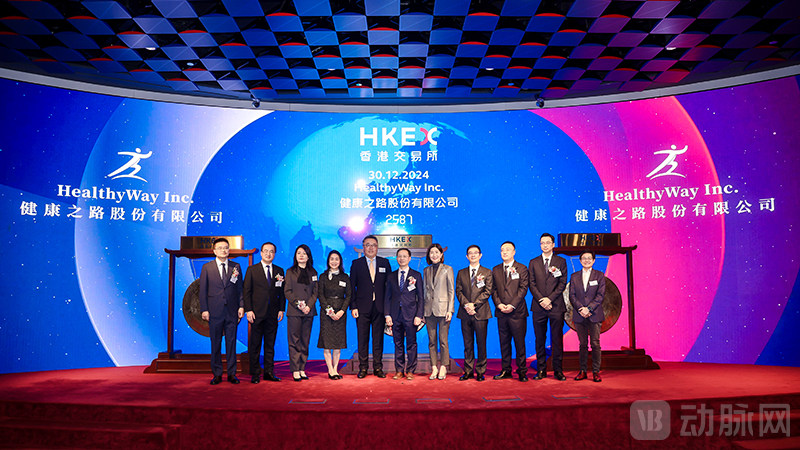
Listing Ceremony of Health Road
Over the past two decades, Health Road has remained committed to exploring the digital transformation of the healthcare service system. Its business model has gained recognition from investors in the primary market, securing investments from Baidu, Shangrao State-owned Assets, Haixia No. 1, Anji Kequan, and others.
Continuous efforts have yielded substantial results, with the core business segments of Health Road forming a “dual-flywheel effect” that has driven steady performance growth. In 2021, 2022, and 2023, Health Road recorded revenues of RMB 431 million, RMB 569 million, and RMB 1.244 billion, respectively. In the first half of 2024, total revenue reached RMB 611 million, representing a year-on-year increase of 14.5%. Health Road has achieved adjusted net profits in recent years.
Following a successful IPO, Health Road will further consolidate its core competitive advantages.
According to the Statistical Report on China’s Internet Development, as of June 2024, the number of internet healthcare users in China reached 365 million, accounting for 33.2% of the total internet population. The semi-annual statistics from this series of reports show that since the second half of 2022, the number of internet healthcare users has consistently remained above 300 million, peaking at 414 million.
Internet healthcare has demonstrated significant value in addressing the uneven distribution of medical resources and improving the patient care experience, becoming an integral component of the healthcare service system. In recent years, online diagnosis and treatment have become increasingly standardized under policy guidance, garnering growing recognition from patients.
As a pioneer in the field of internet healthcare, Health Road has been dedicated to digitizing medical service processes since 2001. Starting with online appointment registration, it has gradually expanded its service offerings. Currently, the company has established a comprehensive suite of services on its platform, including online medical consultations with physicians, e-prescribing, medical agency services, patient accompaniment, and health check-up appointments. Additionally, it has launched service-oriented products such as health membership programs and integrated healthcare service packages.
For patients, Health Road has established specialty-oriented disease treatment centers. As of June 30, 2024, it had built 42 online disease treatment centers covering conditions such as rheumatism and immunology, pediatric growth and development issues, and diabetes, providing end-to-end services spanning pre-diagnosis, during-diagnosis, and post-diagnosis stages. For healthy individuals, Health Road offers health record creation, health guidance and education, medical examination appointment scheduling, and health change tracking.
In other words,C-end users in various health conditions can access full-cycle medical and healthcare services through Health Road.
Despite experiencing a period of rapid development since 2020 and accumulating a substantial user base, internet healthcare still has a relatively low penetration rate compared to many other internet-based lifestyle applications.
In expanding service penetration, Health Road attracts users through multi-channel, scalable, and relatively low-cost approaches.
Among these, proprietary channels include the Health Road APP, WeChat Official Account, Mini Programs, and MedStaff Network. Their strong user reputation has driven user growth in these proprietary channels, making them the primary source of users.
Hospitals and physicians represent another major source of users. As of June 30, 2024, Health Road’s appointment registration services covered 2,789 hospitals across China, including 581 Grade A tertiary hospitals. By leveraging online appointment scheduling as an entry point, Health Road not only meets users’ essential needs but also showcases its other medical health services and products. When patients receive in-hospital care, physicians can recommend the online platform for subsequent follow-ups, repeat visits, or chronic disease management, facilitating convenient post-consultation communication between both parties.
Although the user base from hospitals and doctors is smaller than that of its own channels, these users almost all have clear demands for medical and health services. Therefore, Health Road continues to strengthen its cooperation with hospitals and doctors to acquire precise users.
Furthermore, Health Road extensively attracts new users through third-party partners, including self-media platforms and insurance companies.
Driven by high-quality services and strategic application, the user base of Health Road continues to grow.As of the end of 2021, 2022, and 2023, the number of registered individual users on the platform was approximately 156 million, 171 million, and 186 million, respectively;As of June 30, 2024, the platform had 195 million registered users.
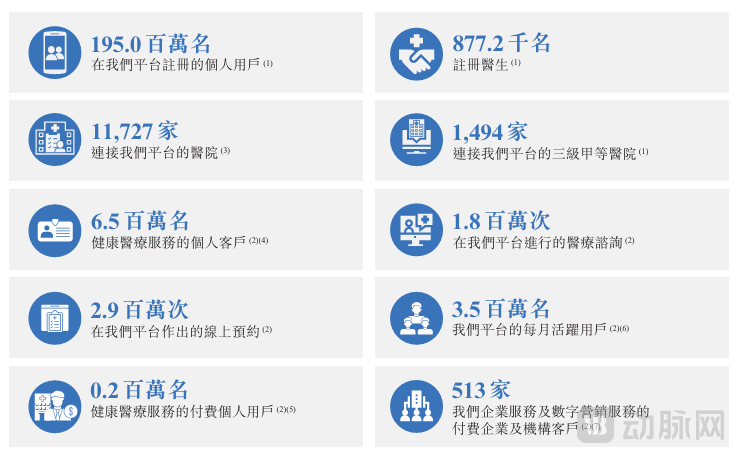
Key Operating Data of Health Road as of June 30, 2024
The extensive coverage of physician resources provides crucial support for Health Road’s user services. Positioning itself as “physicians’ medical assistants,” Health Road had 877,000 registered physicians on its platform as of June 30, 2024, including 334,000 physicians holding the title of associate chief physician or higher. According to Frost & Sullivan data,Based on the number of registered physicians as of December 31, 2023, Health Road ranks first among digital health and medical service platforms in China.
Through the relentless accumulation of physician-patient resources, continuous refinement of business lines, and iterative evolution of service models,Health Road has established two major business segments: “Healthcare Services” and “Enterprise Services & Digital Marketing Services,” with synergy between the segments creating a “dual flywheel effect.”
On the one hand, the large user base of healthcare services encourages more doctors to join platforms for practice, expanding the physician network and improving the quality of medical consultation services, which serves as a prerequisite for businesses such as pharmaceutical sales.
On the other hand, the enterprise services and digital marketing services cover a wide range of medical specialties. These offerings enable Health Road and its platform physicians to deepen their understanding of new products and therapies related to disease diagnosis and treatment, thereby better serving patients. Furthermore, collaborations with hospitals, pharmaceutical companies, and local health authorities enhance brand awareness among individual users, encouraging more of them to choose Health Road.
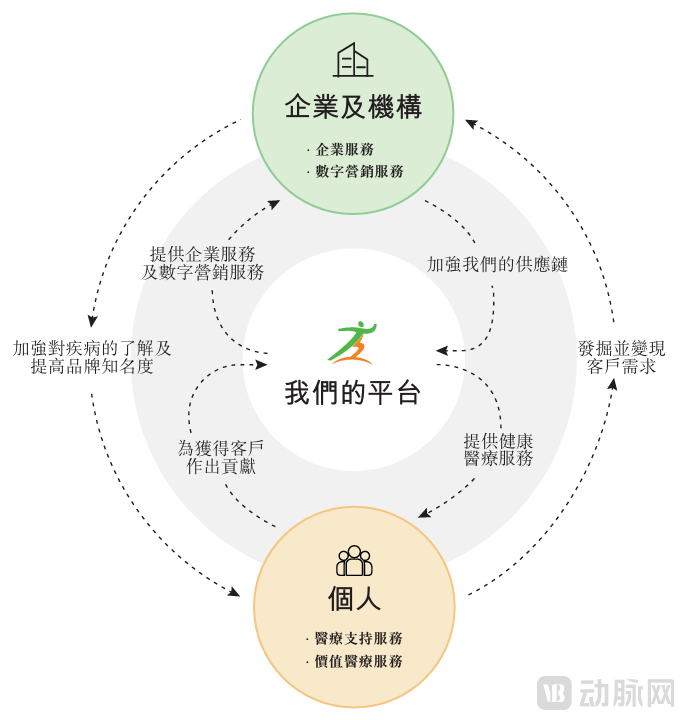
The “Dual Flywheel Effect” Formed by Health Road’s Two Major Business Segments. Image source: Prospectus
Benefiting from the virtuous cycle of the “dual flywheel effect,” Health Road can create value for multiple stakeholders in the healthcare industry.
For example, the value to healthcare institutions.As of June 30, 2024, a total of 11,727 medical institutions across China had been integrated into the online platform of Health Road, including hospitals at all levels and primary healthcare institutions. Among these, 1,494 were Grade A tertiary hospitals, accounting for over 85% of all such hospitals in the country.
Health Road leverages online appointment scheduling as its entry point, utilizing insights into patient healthcare-seeking behaviors and needs to build information systems for medical institutions, thereby optimizing operational efficiency and enhancing the patient care experience.
For B-side participants, including pharmaceutical companies and other healthcare product enterprises, Health Road delivers significant value in areas such as content services and digital marketing services.
Real-world studies (RWS) have become a critical area of research in evaluating drug efficacy, optimizing patient treatment strategies, and improving clinical practice, thereby driving innovation and optimization in pharmaceuticals and other medical products. Health Road maintains close ties with physicians, enabling the generation of large-scale, multi-dimensional real-world clinical data during user service delivery, thus better supporting RWS initiatives.
The platform has established an extensive nationwide network of physicians across various specialties, facilitating the creation of specialized medical content in diverse disease areas.
These factors are conducive to expanding the scale of content services.
In recent years, digital marketing in the pharmaceutical industry has risen rapidly. Under the influence of policies such as centralized procurement and national reimbursement drug list negotiations, the landscape of the pharmaceutical marketing market has been reshaped, prompting pharmaceutical companies to upgrade their marketing strategies. With the surge of digitalization, it has become commonplace for the public to obtain information, including health and medical-related content, from internet platforms. The rapid development and gradual standardization of internet healthcare have also, to some extent, changed the way people seek medical care and purchase medications. Consequently, digital marketing has become an increasingly popular choice for more and more enterprises.
Health Road has accumulated extensive operational data over the long term, leveraging algorithms, data analytics technologies, and search engine optimization strategies to generate actionable insights into user behavior. This provides robust support for digital marketing initiatives, such as optimizing marketing performance, thereby enabling pharmaceutical companies to conduct more precise, efficient, and cost-effective digital marketing campaigns while enhancing brand and product influence.
Over the past two decades, numerous internet healthcare companies were founded amidst investment frenzies, rapidly reached their peak, only to prove fleeting. Establishing scalable and sustainable business models has long been a challenging pursuit for the internet healthcare sector.
From the initial C-end to G-end and H-end (government, medical institutions), B-end, as well as commercial insurance and medical insurance, internet healthcare companies have been continuously verifying the possibility of long-term large-scale payment by payers and improving their business strategies.
However, each payer faces certain limitations: Consumer-side (C-end) payments require acquiring massive traffic at low cost and achieving efficient conversion to ensure sustainability; Government-side (G-end) and Hospital-side (H-end) payments are primarily based on fees for information technology projects and services, which are limited in scope; While medical insurance and commercial insurance involve large funding scales, they impose stringent requirements on risk and cost control.
Relying on a single payer as the primary revenue source while cultivating other payers as secondary sources represents the optimal strategy for enterprises today.
As its business lines continue to diversify, Health Road has gradually formed a diversified revenue stream primarily driven by B-side payments.
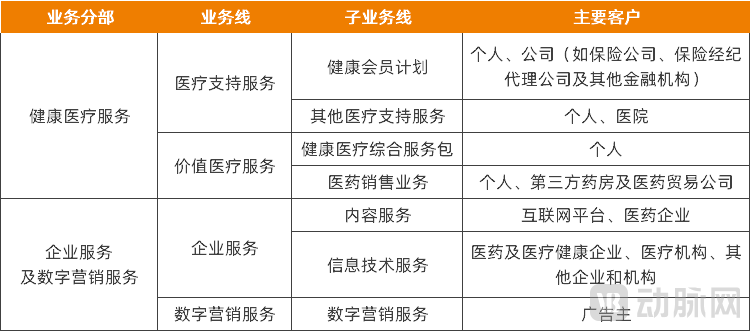
Health Road’s Diversified Monetization Model, Source: Prospectus
In summary, the main payers for Health Road include several categories:
First, individual users. Health Road provides individuals with online medical consultation services, health memberships, pharmaceutical and medical device products, and other health-related goods, generating corresponding service fees, membership fees, and product revenues.
Second, corporate clients constitute the primary revenue source for Health Road. Depending on the services provided, these corporate clients fall into different categories, including: insurance companies, insurance brokerage firms, and other financial institutions that purchase health membership plans; internet companies that procure popular science content; and pharmaceutical companies as well as other healthcare enterprises that acquire precise content services, Real-World Study (RWS) support services, and digital marketing services.
In addition, Health Road also generates revenue by providing information technology services to healthcare companies, medical institutions, and other entities.
To adapt to market changes, Health Road has remained committed to identifying new growth drivers, with RWS support services emerging as one of the successfully cultivated growth engines in recent years.
In 2022, Health Road launched RWS support services for pharmaceutical companies and other institutional entities (primarily including medical foundations and biotechnology firms), generating RMB 54.5 million in revenue that year. In 2023, revenue from RWS support services surpassed the RMB 100 million mark, reaching RMB 422 million. In the first half of 2024, revenue from this service amounted to RMB 268 million, representing a year-on-year increase of 56.9%.
Health Road has positioned its RWS support services as a new growth curve, while also introducing new collaboration nodes into its existing business synergy system. VCBeat had previously in the “Health Road Passes IPO Hearing: Annual Revenue from Real-World Studies Exceeds RMB 400 Million, New Growth Drivers Emerge》(Click to view)In the article, it provides an in-depth analysis of this business and its logic.
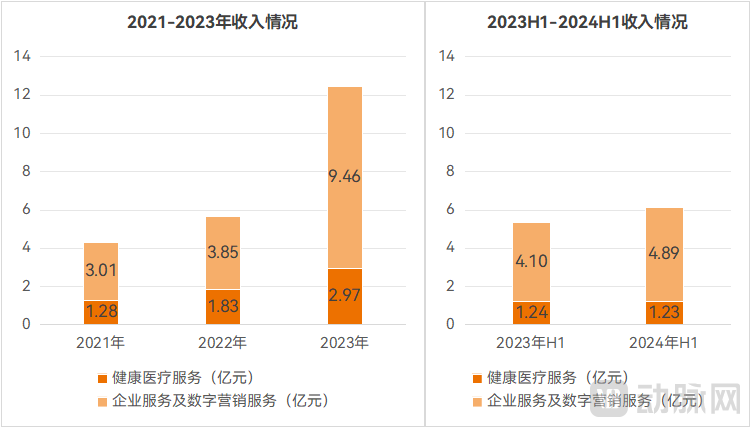
Health Road’s Main Revenue Structure and Growth Trends, Data Source: Prospectus
Overall, Health Road ensures a stable revenue stream through its primary monetization model, while diversifying risk and creating synergies via multiple additional income sources, thereby driving overall revenue growth. Furthermore, the company has promptly expanded into new business lines to reserve sufficient growth momentum for the next stage.
An IPO is a hallmark of success in one phase and the beginning of another.
As revealed in the prospectus regarding strategic planning and use of proceeds, Health Road will further consolidate its existing competitive advantages and build stronger barriers through new monetization models.
Following the logic analyzed above, expanding doctor-patient resources, optimizing B-side services, and diversifying monetization models will become key priorities for Health Road.
Regarding the expansion of doctor-patient resources, Health Road will continue to broaden its physician partnerships and encourage more doctors to participate in various services and research initiatives on its online platform.To better support physicians in their practice, Health Road will promote digital tools to an increasing number of doctors and expand its team of on-site health assistants to provide more meticulous physician support services.
For patients, Health Road will further expand the breadth and depth of its services by establishing more specialty-oriented disease treatment centers and integrating medical resources from a wider range of hospitals, thereby providing users with cross-institutional healthcare services that better meet their actual needs.
In terms of B-side service optimization, Health Road plans to allocate more physician resources to content services, particularly RWS support services.For example, by expanding the scope of real-world clinical data collection to cover a broader range of diseases and treatment regimens, we can meet pharmaceutical companies’ diverse needs for real-world studies. Furthermore, by broadening collaborations with more physicians and strengthening the production of high-quality medical content, we will be able to cover a wider spectrum of diseases and healthcare products.
In terms of expanding monetization models, Health Road plans to enlarge its footprint in pharmaceutical sales.
Previously, Health Road operated six specialty drug pharmacies and one community pharmacy. Going forward, it will expand its specialty pharmacy network through new openings or acquisitions, with a particular focus on storefronts located near tertiary hospitals. At that time, the platform will integrate online healthcare services with offline pharmacy operations to further meet users’ needs throughout the entire medical care journey.
In 2024, Health Road expanded its pharmaceutical wholesale business and was authorized as the sales agent for three drugs. The company plans to secure additional drug sales agency rights in the future to strengthen its operations in the wholesale segment.
Health Road has already established a large user base and robust service capabilities on both the patient and provider sides. Its close collaborations with medical institutions and pharmaceutical companies to expand its pharmaceutical sales footprint are a natural progression, further perfecting its layout across the entire healthcare service industry chain to form a more complete business closed loop.
Of course, as a technology-enabling enterprise, Health Road will continue to invest at the technological level.For example, enhance the platform’s digital capabilities to help individual users track and manage their health conditions; optimize digital tools for physicians by developing additional clinical functionalities; integrate AI technologies and solutions into the platform to improve functionality for users, physicians, and other stakeholders; provide greater support to pharmaceutical companies in drug development and clinical trials; and upgrade systems developed for hospitals and local health departments to boost their management and operational efficiency.
Currently, whether listed or unlisted leading internet healthcare companies, most have found their most suitable strategic paths after years of exploration, with each focusing on specific areas such as medical services, pharmaceuticals, nursing care, and insurance. As post-listing plans are implemented, what will the new Health Road look like? What contributions will it make to the digital transformation of the healthcare service system? It is worth looking forward to.