

NeuroGenesis Announces First Patient Dosed in China for Global Phase III Trial of AR1001 in Early Alzheimer's Disease
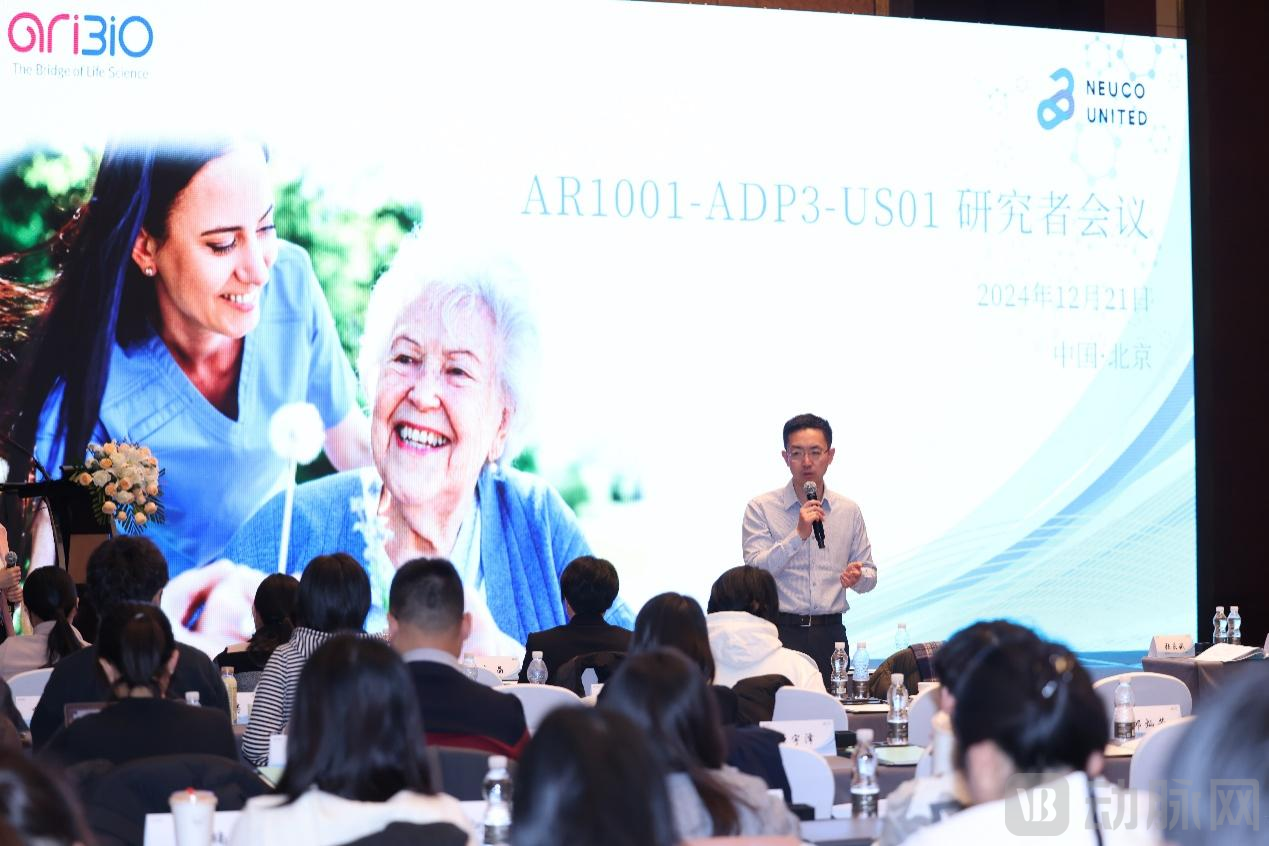
NeuCo SmartLink (Shanghai) Pharmaceutical Co., Ltd. (hereinafter referred to as “NeuCo SmartLink”) recently announced that the first patient was dosed on December 19, 2024, in the Phase III, double-blind, randomized, placebo-controlled, multicenter trial jointly initiated by the company and AriBio Co., Ltd. (AriBio) from South Korea in China, titled “A Study to Evaluate the Efficacy and Safety of AR1001 in Subjects with Early Alzheimer’s Disease Over a 52-Week Treatment Period.” Professor Tang Yi, Executive Vice President of Xuanwu Hospital of Capital Medical University and Department of Neurology, serves as the global co-principal investigator for this trial. Xuanwu Hospital of Capital Medical University acts as the leading site in China, with nearly thirty hospitals across the country participating in the study.
AR1001 is a candidate drug for the treatment of early-stage Alzheimer’s disease (AD), featuring potent and highly selective inhibition of phosphodiesterase-5 (PDE-5). Preclinical studies have demonstrated that AR1001 can clear AD-associated amyloid plaques, inhibit abnormal tau protein phosphorylation, suppress inflammatory responses, and provide neuroprotective effects. Results from a Phase II clinical trial conducted in the United States and previously approved by the U.S. Food and Drug Administration (FDA) indicated that oral AR1001 tablets (30 mg) exhibit a favorable safety profile and hold promise for delivering therapeutic benefits to patients with early-stage AD, including those with mild cognitive impairment due to AD and mild dementia.
Currently, in addition to China, AR1001 is undergoing multicenter Phase III clinical trials in the United States, the United Kingdom, the European Union, South Korea, and other regions, with a planned enrollment of 1,150 patients. To date, more than half of the global enrollment target has been achieved. Professor Tang Yi, one of the global co-principal investigators for this trial, stated, “Alzheimer’s disease (AD) is a geriatric condition with multifactorial etiologies. In recent years, rapid advancements in diagnostic technologies and pathological research have ushered in new hope for AD treatment. As an oral small-molecule drug with multiple mechanisms of action and an excellent safety profile, AR1001 holds promise for providing novel therapeutic strategies and directions for AD. We look forward to the prompt validation of its clinical efficacy, so that it can meet the growing clinical demands driven by population aging and benefit a broad population of AD patients as soon as possible.”