

Billion-Dollar Orders Surge as Healthcare IT Accelerates Amid National Innovation Drive
“With less than two years remaining, the overall construction schedule remains highly urgent.“At the 2024 Conference on Medical Artificial Intelligence and the Development of the Medical Information Technology Application Innovation Industry,” remarked a representative from an IT application innovation vendor.
In accordance with Document No. 79 issued by the State-owned Assets Supervision and Administration Commission (SASAC), all central and state-owned enterprises are required to achieve 100% replacement of their office OA systems with information technology application innovation (ITAI) solutions by 2027. Focusing on the healthcare sector, local health commissions and centers for disease control and prevention have successively issued ITAI guidance policies since 2023, with some regions specifying clear implementation timelines.
For instance, Shanghai mandates that municipal-level hospitals complete comprehensive IT application innovation upgrades by June 2025, while Tianjin requires the completion of domestication-related construction for medical systems by the end of June 2026.
Xinchuang initiatives enter the settlement phase, with hospitals accelerating their efforts. Multiple experts indicate that 2025 will mark the inaugural year of Xinchuang in healthcare, ushering in a period of comprehensive and explosive growth.
What is the basis for experts’ conclusions? What is the attitude of hospitals toward information technology application innovation (Xinchuang)? What innovative explorations have emerged on the industry side?
On December 20, the “2024 Conference on Medical Artificial Intelligence and the Development of the Medical Information Technology Innovation Industry,” jointly organized by the Ministry of Education’s Engineering Research Center for Medical Informatics Technology and other relevant entities, provided the answer. VCBeat participated in the entire event and synthesized insights from keynote speeches delivered by experts from major Grade-A tertiary hospitals, including Xiamen University Affiliated Chenggong Hospital and Ruijin Hospital affiliated with Shanghai Jiao Tong University School of Medicine, as well asWest China Digital Health, Hygon Information, Lenovo Group, KylinSoft, Xugu Database, China Information Technology Designing & Consulting Institute, China Electronics Cloud(This document was compiled from interviews with IT application innovation hardware and software vendors, listed in alphabetical order, for industry reference.)
Policy is the paramount driver among the numerous factors propelling the development of healthcare informatization in China. Initiatives such as the “Three Pillars” of smart hospitals, interoperability standards, and Level 3 Classified Protection of Cybersecurity are all mandatory requirements that medical institutions must address. Currently, healthcare IT application innovation represents one of the key innovative challenges facing the sector.
Industry development requires standards to lead the way, yet standard-setting for medical information technology application innovation (Xinchuang) remains a blank slate. Taking the unification of technical standards and protocols as an example, if different devices or software adopt disparate standards and protocols that are incompatible with one another, barriers to information transmission and processing will arise. Therefore, in the process of domestic substitution through Xinchuang, it is essential to ensure compatibility between Xinchuang products and existing IT infrastructure and technical environments to achieve a smooth transition.
Blank issues in various standards are prevalent across industries. In light of this, in March 2024, the National Information Technology Standardization Technical Committee released draft versions for public comment on nine “Secure and Reliable Industry Standards,” providing selection references for the “2+8+N” initiative on information technology application innovation (ITAI) upgrades and replacements.
Standard specifications are of great significance. For industry vendors, they will help enhance the performance, quality, usability, and user-friendliness of IT application innovation products. For users in the “2+8+N” sectors, they facilitate the selection of IT application innovation products that closely align with needs and are truly applicable, thereby significantly reducing operation and maintenance costs. From a broader perspective, the establishment of these standards will, to some extent, ensure the supply chain security of domestically produced hardware and software, accelerate the construction of an IT application innovation ecosystem, and drive the rapid development of China’s IT application innovation industry.
It is against this backdrop that, in active response to the directive to formulate “industry standards for safety and reliability,”Under the auspices of the Chinese Society for Health Informatics and Medical Big Data, the Digital Health and Healthcare Information Technology Application Innovation Branch, in collaboration with relevant organizations, has initiated the compilation of the “Group Standard on Migration of Healthcare Information Technology Application Innovation Applications.”(hereinafter referred to as the “Standards”).
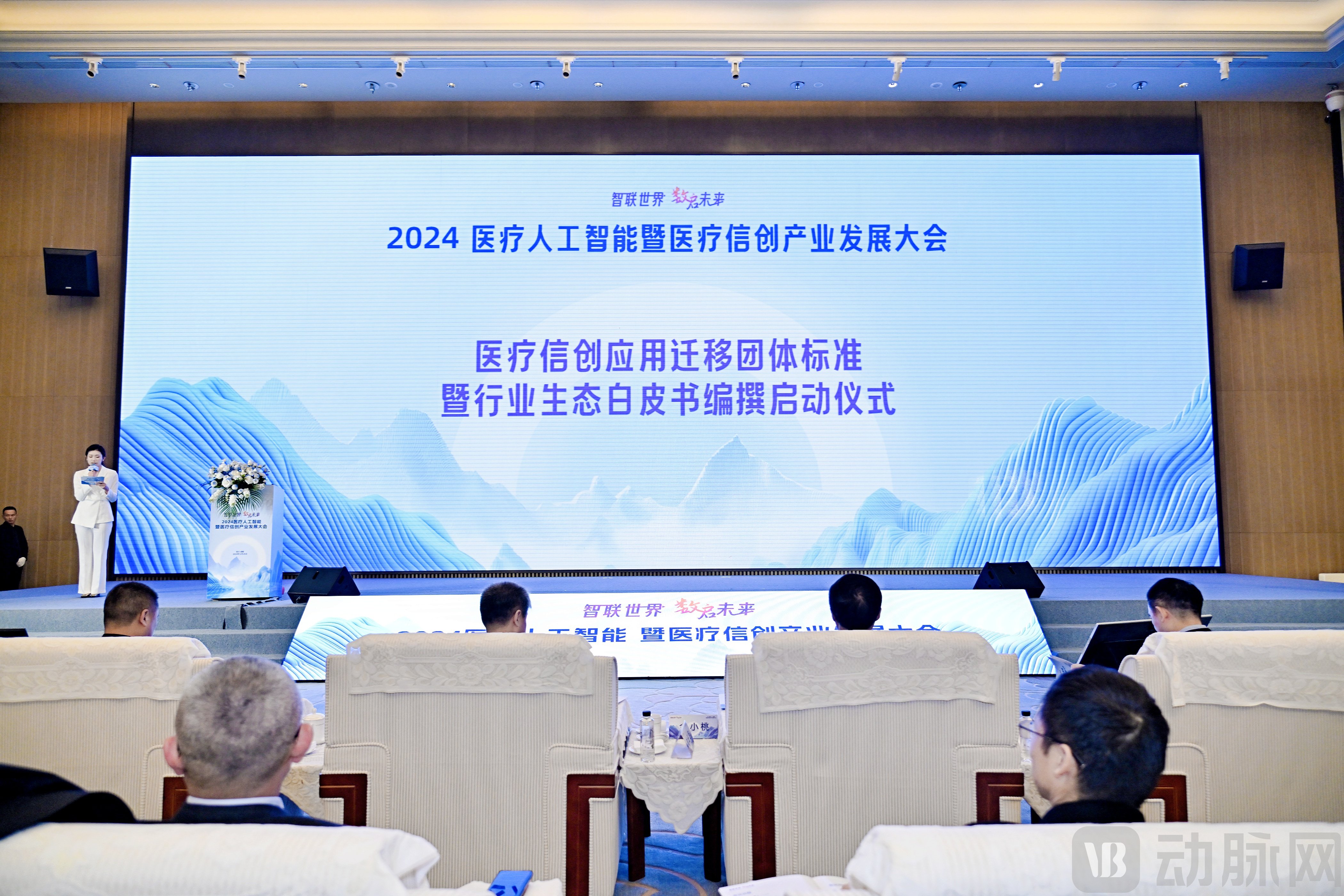
“Launch Ceremony for the Compilation of Group Standards on Medical Information Innovation Application Migration and the Industry Ecosystem White Paper”
VCBeat has learned that the development of this Standard fully leverages the role of market entities in standard-setting. It represents a significant step toward establishing a group standard system in the health and medical sector that is coordinated with and mutually supportive of national and industry standards. This initiative will accelerate the formation of technical standards for digital health infrastructure characterized by full-stack indigenous innovation, integrated empowerment, and demand-driven customization, thereby promoting the standardized development of medical application migration within China’s indigenous IT innovation ecosystem.
It is worth noting that, in order to enhance the operability of the “Standard,”The editorial team has also joined forces with academic and research experts, as well as leading medical institutions and technology enterprises in the industry, to launch the writing of the “White Paper on the Medical Information Technology Application Innovation Ecosystem.”(hereinafter referred to as the “White Paper”).
In the future, the White Paper will serve as the foundation for supporting independent innovation in digital transformation. It will provide methodologies to address challenges faced by medical information technology application innovation (Xinchuang), such as the lack of standards, insufficient practical experience, shortage of specialized talent, and immature ecosystem development, thereby promoting standardized and regulated growth of the medical Xinchuang industry. Furthermore, it will offer guidance on Xinchuang-oriented transformation for healthcare institutions and conduct regional training programs to alleviate the shortage of Xinchuang professionals, thus providing intellectual support for the construction of the industrial ecosystem and the advancement of the Xinchuang process.
Bidding data can, to some extent, directly reflect hospitals’ construction needs. In 2020, the transaction value of bids for medical information technology innovation (IT innovation) amounted to only RMB 180 million, rising to RMB 358 million in 2021. By 2022, this figure reached RMB 3.191 billion, marking exponential growth.
The reason is that, with the completion of the “pilot” phase of the information technology application innovation (Xinchuang) ecosystem in party and government sectors, Xinchuang initiatives have been expanded since 2020 to eight major livelihood-related fields, including finance, electric power, telecommunications, and healthcare.
Given the unique nature of healthcare scenarios and the complexity of medical systems, the pace of information technology application innovation in the healthcare sector has been more cautious.
“The healthcare industry features complex business processes, with a single hospital often operating hundreds of distinct business systems, making system integration and adaptation significantly more challenging than in other industries.”Liu Min, General Manager of Lenovo Group's Infrastructure Business in the Southwest RegionIt stated that, as a leading enterprise in IT equipment for China’s information technology application innovation (Xinchuang) initiative, Lenovo Group has achieved extensive coverage across sectors such as party and government organs, finance, energy, and telecommunications operators, accumulating rich practical experience. Currently, the company is strategically focusing on advancing Xinchuang adoption within the healthcare industry.
Wang Zimou, Solutions Engineer at Hygon Information TechnologyIt stated: “Informatization serves as a critical foundation for hospital service systems. In advancing the adaptation of hospitals to information technology application innovation (Xinchuang), it is essential to fully consider business security, as information systems underpin the normal operation of hospital services. Therefore, such adaptation must meet the business requirements for security and stability. Leveraging superior processor performance and inherent ecosystem compatibility, Xinchuang solutions based on Hygon C86 processors have been implemented in numerous large hospitals across China, accumulating extensive case studies and best practices that facilitate the ongoing advancement of Xinchuang transformation in healthcare information systems.”
“Medical IT innovation must return to its essence of serving hospitals and the healthcare industry. It should not only meet the current demand for domestic substitution in hospitals but also address their future needs for digital upgrading. As the most critical component of medical information systems, databases currently face challenges in application migration and transformation, including issues related to product performance, migration capabilities, and operational maintenance service assurance.”Ming Yuzhuo, Director of Products and Solutions at Xugu WeiyeAs stated.
“Since the global operating system market is predominantly dominated by foreign enterprises, domestically developed operating systems face challenges in ecosystem development and pressure from market competition. Users harbor certain doubts and concerns regarding the stability and compatibility of domestic information technology application innovation (Xinchuang) products. As a leading provider of domestically developed operating systems in China, Kylin Software has seen its Galaxy Kylin Operating System widely adopted across numerous industries. Its security and stability have been rigorously tested and validated in sectors such as party and government affairs, finance, electric power, energy, and aviation. Currently, Kylin is dedicated to building an ecosystem for the healthcare industry, having completed pilot validations for systems including Hospital Information Systems (HIS), Picture Archiving and Communication Systems (PACS), and Laboratory Information Systems (LIS). This enables the company to offer users a safer, more stable, more reliable, and more user-friendly choice.”Deng Shanling, Sichuan-Tibet Business Department, Kylin Softwareindicated.
Zhang Nanyi, China Information Technology Designing & Consulting InstituteIt also addressed the issue of talent development: “For hospitals, information technology application innovation (ITAI) products represent an entirely new product ecosystem and technological paradigm, with limited industry benchmarks for hospital-based R&D and testing practices, resulting in a shortage of experienced personnel. The new generation of digital and intelligent operating rooms built by Zhongxun Design Institute based on 5G ITAI technology enables interconnected interaction across multiple dimensions—including equipment, personnel, materials, information, workflows, scientific research, and education—thereby achieving comprehensive improvements in quality and efficiency.”
Zhu Guoping, Chief Scientist of China Electronics Corporation (CEC) and Chief Engineer of CEC CloudHe expressed an optimistic outlook on the industry’s future, stating, “As a core component of China Electronics’ autonomous computing ecosystem, China Electronics Cloud is seizing opportunities in the era of information technology application innovation (Xinchuang) within the healthcare sector. By continuously refining its full-stack Xinchuang cloud solution for healthcare, and building upon autonomous and controllable foundations, it is strategically deploying next-generation computing infrastructure, data exploration and governance, and AI-plus-healthcare initiatives. These efforts support the digital and intelligent transformation of healthcare and health services, thereby solidifying the digital-intelligent foundation of smart healthcare.”
Furthermore,Zhao Huan, Deputy General Manager of Technology at West China Digital MedicalThe discussion also highlighted challenges in the localization and innovation of medical IT infrastructure, including difficulties in migrating large volumes of medical data, inconsistent performance and service quality among domestic IT products, incompatibility of system integration solutions, and ensuring the continuous and stable operation of systems post-migration. As an emerging force in the field of medical IT localization and innovation, West China Digital Medicine is actively addressing these challenges with artificial intelligence as its core component.
As experience in information technology application innovation (Xinchuang) transformations accumulates in sectors such as finance, telecommunications, and electric power, the pace of Xinchuang transformation in the healthcare industry has also accelerated significantly. According to publicly available information, billion-yuan procurement deals in healthcare Xinchuang began to emerge in 2023, exemplified by China Unicom Digital Tech’s winning bid for the RMB 110 million Xinchuang informatization project for the new campus of Zhengzhou Hospital of Colorectal and Anal Diseases.
In 2024, medical institutions in Fuzhou, Wuhan Yangluo Central Hospital, and Shanghai Ninth People’s Hospital successively issued major procurement orders for information technology application innovation (Xinchuang), with the highest single amount reaching RMB 190 million, marking a record high in healthcare Xinchuang procurement. According to incomplete statistics from VCBeat, the total publicly disclosed procurement demand for Xinchuang and informatization across various regional healthcare systems in China reached RMB 1 billion in 2024.
Looking Beyond Appearances to the Essence,Behind the record-high volume and scale of procurement orders for IT application innovation in healthcare lies a proactive shift by medical institutions, driven by policy guidance and their observation that industry technologies have been validated through practice, with an increasing number of hospitals successfully implementing IT application innovation initiatives.。
Driven by policy, the industry side is also continuously enhancing product capabilities to bolster hospitals’ confidence in information technology application innovation (Xinchuang).
On the one hand, domestic enterprises specializing in foundational hardware and software—such as autonomous chips, operating systems, and databases—have significantly intensified their efforts to expand into the healthcare industry.
At the 2024 Conference on Medical Artificial Intelligence and the Development of the Medical Information Technology Innovation Industry,Kylin Software, the Leading Domestic Operating System ProviderPositioning to support the development of a healthcare IT innovation ecosystem, leveraging its deep expertise in operating systems to co-create healthcare industry products and solutions with ecosystem partners;Hygon Information, the Leading Domestic Server CPU Chip MakerBased on the requirements of medical business scenarios, we provide healthcare users with corresponding CPU and general-purpose GPU products and solutions, covering data services, artificial intelligence, cloud computing, and intelligent edge computing, thereby laying the foundation for the development of digital and intelligent healthcare;Xugu Weiye: A Leading Domestic Database EnterpriseThe introduced original standalone-distributed integrated database features compatibility, stability, scalability, and unified management capabilities, meeting the needs of hospitals for IT application innovation (Xinchuang) transformation and data processing; it is designed for Xinchuang replacement scenarios in the healthcare industry.China Electronics Cloud: A Pioneer of China's Information Technology Application Innovation CloudUnder the design philosophy of “Cloud-Native + AI-Native,” deeply integrate computing power, data, advanced storage, and security to create a full-stack healthcare IT innovation solution that efficiently supports data and artificial intelligence applications, thereby accelerating the digital and intelligent transformation of healthcare.Huawei, the World's Leading ICT Infrastructure ProviderDedicated to building the foundation of healthcare information technology innovation, we have established a product matrix covering the entire industry chain of IT innovation, including chips, basic software, storage devices, terminal devices, and cloud platforms.
On the other hand, medical software vendors have also successively launched medical IT innovation products.
China Information Technology Designing & Consulting InstituteA wholly-owned subsidiary of China Unicom, it aims to innovatively build an integrated capability system encompassing cloud, network, endpoint, edge, data, and business operations. In the field of smart healthcare, it focuses on pre-hospital emergency care, in-hospital emergency services, and operating room management. At the conference, it provided a detailed introduction to the nationally demonstrated 5G emergency rescue system it has constructed, featuring “one 5G private network + one emergency rescue platform + coordinated multi-terminal devices.”
West China Digital HealthJointly established by Chengdu Wuhou District and West China Second University Hospital, the initiative aims to comprehensively advance the adaptation process for information technology application innovation (Xinchuang), spanning from domestically produced servers and databases to terminal operating systems. At the conference, Huaxi Digital Medicine’s Xinchuang products, including its AI Health and Medical Intelligent Assistant, AI Physician Intelligent Assistant, AI Smart Ward, and embodied robots, were prominently unveiled.
Taking the AI-powered smart ward as an example, this solution features a high degree of integration, enabling efficient collaboration among nurses, physicians, and caregivers within a unified workflow. Through the smart ward system, various types of medical information are seamlessly transmitted, significantly enhancing the quality and efficiency of healthcare services.
On the other hand, AI-enabled smart wards place significant emphasis on patient engagement and self-management capabilities. The system clearly presents key information to patients, including their current treatment plans, rehabilitation progress, and important precautions. This transparent approach to information delivery not only provides patients with a more comprehensive understanding of their health status but also encourages them to participate more actively in their treatment and rehabilitation processes, thereby accelerating clinical improvement and physical recovery.
VCBeat learned during the interview that,Future Xinchuang ecosystem collaborations, organized by business units, will exhibit increasingly close and diversified trends.Hospitals, IT service providers, hardware and software vendors, and research institutions will form a tighter collaborative network centered on specific business needs. This model of cooperation will help integrate resources and technological strengths from all parties, jointly promoting the in-depth application of information technology innovation (Xinchuang) in the healthcare sector.
The initiative to adopt indigenous information technology innovation in the healthcare sector is still in its nascent stage. The effectiveness of upgrades and compatibility adaptations by mainstream hardware and software vendors remains to be verified. Without the bold trials of pioneering hospitals, it would be difficult for this initiative to gain traction in the healthcare industry. Therefore, hospitals that dare to be “the first to eat crabs” are particularly valuable.
In December 2024, Xiamen University Affiliated Chenggong Hospital marked the first anniversary of “achieving full-scenario application on an entirely domestically produced technology stack.” As a Grade A tertiary hospital that fired the “first shot” in the comprehensive push for information technology application innovation (Xinchuang),Chenggong Hospital has adopted an IT innovation pathway for gradual localization, replacing hardware and software from the core to the edge with domestic alternatives.: “Leveraging hardware replacement to drive software substitution,” by ceasing the procurement of non-domestic terminals and mandating that domestically produced terminals be equipped with domestic operating systems, thereby compelling hospitals to accelerate their information technology innovation initiatives.
andRuijin Hospital, Shanghai Jiao Tong University School of Medicine, chose the opposite route., adhere to the “phased implementation” model, with application scenarios as the core, planning in stages and advancing in batches,Build a progressive implementation model for deepening information technology application innovation, advancing layer by layer from simple to complex and from the periphery to the core.
It should be noted that,The selection of a hospital’s information technology application innovation (ITAI) model is a comprehensive decision made after thoroughly evaluating the specific circumstances of each institution. Shanghai Ruijin Hospital conducted a holistic assessment across multiple dimensions, including accumulated ITAI experience from other industries, the maturity of ITAI products, the level of risk associated with ITAI implementation, and the scope of business coverage.Only then was it decided to designate the OA system as the “pioneer” for IT application innovation transformation, in order to accumulate experience in this area.
Currently, hospitals across China are vigorously advancing their information technology application innovation (ITAI) initiatives. Institutions such as Chenggong Hospital Affiliated to Xiamen University, the Chinese PLA General Hospital, Peking University First Hospital, and Shanghai Ruijin Hospital have successively completed ITAI replacement of their core systems at various stages, setting a demonstrative example for medical institutions nationwide.
It is anticipated that, driven by the demonstrative effect of pioneer hospitals, more practical implementations will emerge in the field of medical information technology innovation (Xinchuang) in 2025.