

Nuvig Therapeutics Secures $161M Series B Financing Led by MNCs to Advance First-in-Class Fc-Based Immunomodulator for Autoimmune Diseases
Nuvig Therapeutics
Developer of Chronic Inflammation and Autoimmune Disease Transformation Therapies
Recently, Nuvig Therapeutics (“Nuvig”) announced the completion of a $161 million Series B financing round. The round was co-led by Sanofi Ventures, Blue Owl Healthcare Opportunities (formerly Cowen Healthcare Investments), and Norwest Venture Partners, with participation from new investors B Capital, Leaps by Bayer, Global BioAccess Fund, LOTTE Holdings, Alexandria Venture Investments, and abrdn Inc., as well as existing shareholders Novo Holdings, Platanus, Bristol Myers Squibb, Digitalis Ventures, and Mission BioCapital.
In May 2022, Nuvig Therapeutics, which had been established for just one year, secured $47 million in Series A financing. Within a mere three years, the company’s total fundraising has surpassed $200 million. What sets Nuvig apart, enabling it to attract significant attention from major investment institutions in such a short period?
Led by Academicians from Three Academies, Delving into the Inflammatory Regulatory Mechanisms of the Antibody Fc Domain
Nuvig is a clinical-stage biotechnology company headquartered in California, USA, dedicated to translating novel scientific insights into therapies for patients with inflammatory and autoimmune diseases. Unlike approaches that rely on traditional immunosuppressive mechanisms, Nuvig focuses on modulating immune function by harnessing natural mechanisms that induce immune homeostasis. Currently, Nuvig’s lead candidate, NVG-2089, is poised to enter Phase 2 clinical development for the treatment of chronic inflammatory demyelinating polyneuropathy (CIDP) and other undisclosed indications.
Dr. Pamela Conley, Co-founder, Chief Scientific Officer, and Chief Executive Officer of Nuvig Therapeutics, has over 30 years of experience in the biotechnology industry. Dr. Conley holds a Bachelor’s degree in Biochemistry from the University of Texas at Austin and a Ph.D. in Biochemistry from the University of California, Berkeley. She completed her postdoctoral fellowship at the Howard Hughes Medical Institute and the Carnegie Institution for Science at Stanford University.
 Pamela Conley. Image source: Nuvig official website
Prior to founding Nuvig, she served as Senior Vice President of Research and a member of the executive team at Portola Pharmaceuticals, a U.S.-based commercial-stage pharmaceutical company. There, she led the development of Andexxa and Bevyxxa, approved reversal agents for factor Xa inhibitors. Andexxa was the first FDA-approved reversal agent for factor Xa inhibitors. Given its leading position, Alexion acquired Portola in 2020 for $1.4 billion to expand its drug pipeline. During her tenure at Portola, Pamela and her team also submitted multiple Investigational New Drug (IND) applications for research molecules in the fields of thrombosis, hemostasis, inflammation, and hematologic cancers.
Another co-founder of Nuvig, Jeffrey V. Ravetch, is a professor at Rockefeller University and the head of the Laboratory of Molecular Genetics and Immunology.Person.
 Jeffrey V. Ravetch Image source: The Rockefeller University
His laboratory focuses on antibodies'FcDomains and their associated receptors: Elucidating the mechanisms by which these domains enable antibodies to mediate their diverse biological activities in vivo.RavetchThe Professor's Work IsFcThe functional diversity of domains provides a new structural basis and establishesFcRThe Critical Role of Pathways in Host Defense, Inflammatory Response, and Immune Tolerance。
Furthermore, Professor Ravetch’s research has also elucidated novel inhibitory signaling pathways. These newly identified pathways help explain the complex role of antibodies in both promoting and suppressing inflammatory responses. These findings have been widely applied in clinical practice for the treatment of tumors, inflammatory diseases, and infectious diseases.
Over the past two decades, Professor Ravetch has been active in the biotechnology sector and currently serves on the Scientific Advisory Boards of several start-ups, including Asylia, Biohaven, Harpoon, Jasper, Palleon, Vir, and Xencor. He is a member of the U.S. National Academy of Sciences (2006), the U.S. Institute of Medicine (2007), the American Academy of Arts and Sciences (2008), and the American Association for the Advancement of Science (2009).
“Zero” Immunosuppressive Side Effects: First-in-Class Fc Fragment Immunomodulator Poised to Address Multiple Inflammatory Conditions
Chronic Inflammatory Demyelinating Polyneuropathy (CIDP) is an autoimmune disorder of the nervous system, characterized by symmetric muscle weakness and sensory disturbances in the limbs. Although the pathogenesis of CIDP remains unclear, it is widely believed to be associated with immune system abnormalities. Currently, clinical treatment for patients with CIDP is categorized into first-line and second-line therapies. First-line treatments primarily include intravenous immunoglobulin (IVIg or SCIg) and plasma exchange, while second-line treatments encompass immunosuppressants/immunomodulators, monoclonal antibodies, and hematopoietic stem cell therapy. Most patients achieve clinical remission following immunotherapy.
However, the article “Research Progress on Chronic Inflammatory Demyelinating Polyneuropathy” published in the Chinese Journal of Neurology points out that a considerable proportion of patients require long-term maintenance therapy with corticosteroids or immunosuppressants after initial immunotherapy. A small number of patients may still develop disabilities despite aggressive treatment, or experience complications due to prolonged use of immunosuppressants.
As a primary first-line therapy, intravenous immunoglobulin (IVIg) has been proven effective in restoring immune homeostasis. After completing the initial course of treatment, most patients with chronic inflammatory demyelinating polyneuropathy (CIDP) typically require regular IVIg maintenance therapy. However, IVIg is not only costly but also scarce, and long-term use may lead to other immune-related complications in patients. According to a 2023 report by Debon Securities, each IVIg treatment session in the United States costs nearly $10,000, with substantial annual consumption. Therefore, if CIDP patients could be treated with alternative therapies instead of IVIg, it would help conserve valuable medical resources for patients with other conditions.
Second-line treatment regimens are generally limited by small sample sizes, and their efficacy and safety in CIDP require further validation.
Since its establishment in 2022, Nuvig has been dedicated to developing a novel therapeutic agent that mitigates autoimmune dysregulation while avoiding the adverse effects associated with immunosuppression. Its lead candidate, NVG-2089, is a first-in-class recombinant Fc fragment immunomodulator engineered to bind Type II Fcγ receptors and engage endogenous regulatory mechanisms involved in ameliorating autoimmune dysregulation.
NVG-2089 is an engineered Fc fragment designed to precisely target type II Fcγ receptors, activating endogenous regulatory mechanisms to ameliorate autoimmune dysregulation. Clinical studies have demonstrated that NVG-2089 exhibits significant anti-inflammatory effects without the need for immunosuppression. Furthermore, research on NVG-2089 has established a reproducible and scalable recombinant approach that mimics the therapeutic action of intravenous immunoglobulin (IVIg) while avoiding its adverse effects and supply constraints.
Specifically, traditional high-dose intravenous immunoglobulin (IVIg) can restore immune homeostasis. This blood-derived product contains a small fraction of sialylated antibodies (a form of antibody glycosylation), accounting for 5%–15% of total IgG. Preclinical and clinical studies have demonstrated that the efficacy of IVIg in alleviating autoimmune symptoms is strictly dependent on the sialylated fraction of immunoglobulin G (IgG) binding to type II Fcγ receptors.In patients with autoimmune diseases, lower levels of sialylation during periods of worsening inflammatory symptoms lead to an enhanced pro-inflammatory response.
The human body’s response to inflammatory stimuli, such as pathogenic infections, is a protective inflammatory cascade. This response is tightly regulated by molecular mechanisms involving circulating antibodies, which help reestablish homeostasis after the infection has been cleared.Therefore, these antibodies can be either pro-inflammatory or anti-inflammatory, depending on the modifications of the specific portion (Fc domain) of the IgG antibody. When sialylated, they are able to bind to type II Fcγ receptors, thereby restoring the immune environment to an anti-inflammatory state.
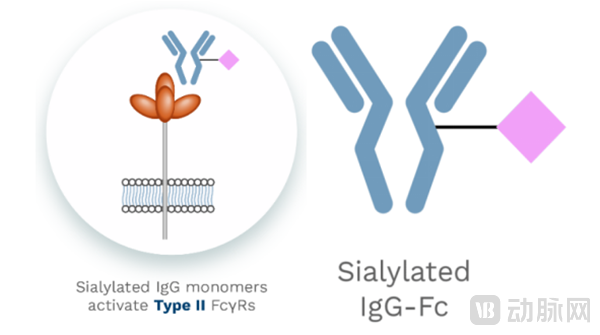 Mechanism of Action Image source: Nuvig official website
When NVG-2089 binds to its target, it upregulates the expression of type II Fcγ receptors, leading to the expansion of regulatory T cells and the downregulation of numerous inflammatory pathways, thereby ameliorating immune dysregulation. This approach offers a novel therapeutic strategy aimed at treating autoimmune diseases by modulating the immune system’s natural mechanisms, without the need for conventional immunosuppressive therapy.
NVG-2089 has entered Nuvig’s Phase 2 clinical development plan for the treatment of chronic inflammatory demyelinating polyneuropathy (CIDP) and other undisclosed indications. These indications represent areas with a high unmet need for non-immunosuppressive, effective novel therapies. Notably, the U.S. Food and Drug Administration (FDA) has granted Fast Track Designation (FTD) to NVG-2089 for the treatment of bullous pemphigoid. The proceeds from this Series B financing round will be used to support proof-of-concept clinical studies of NVG-2089 and to advance Nuvig’s preclinical pipeline.
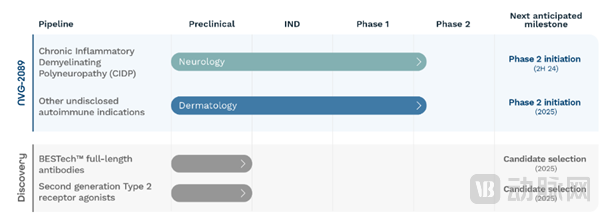 Nuvig’s Pipeline. Image source: Nuvig official website
Multiple MNCs Enter the CIDP Blue Ocean; China’s First Biologic Prescription for CIDP Has Been Issued
Previously, CIDP was frequently misdiagnosed due to the lack of clear biomarkers and its similarity to other neuropathic disorders. However, with increased awareness and improved diagnostic capabilities, the prevalence of CIDP is on the rise globally.
According to Nuvig’s official website, the prevalence of CIDP in the United States alone is approximately 30,000 cases.
Overseas, the FDA had already approved Argenx’s FcRn antagonist efgartigimod for marketing in December 2021, for the treatment of anti-acetylcholine receptor (AChR) antibody-positive generalized myasthenia gravis in adults. According to the company’s financial reports, sales of efgartigimod reached $1.19 billion in 2023. In June 2024, the FDA approved this product for the treatment of adult patients with chronic inflammatory demyelinating polyneuropathy (CIDP). In August 2024, Johnson & Johnson announced that it had submitted a marketing application to the FDA for its investigational neonatal FcRn-targeting antibody therapy, nipocalimab. This drug received FDA designation for the treatment of CIDP in 2021.
According to Data Bridge Market Research, the global CIDP market was valued at USD 1.74 billion in 2023 and is projected to reach USD 3.11 billion by 2031, exhibiting a compound annual growth rate (CAGR) of 7.50% during the forecast period from 2024 to 2031.
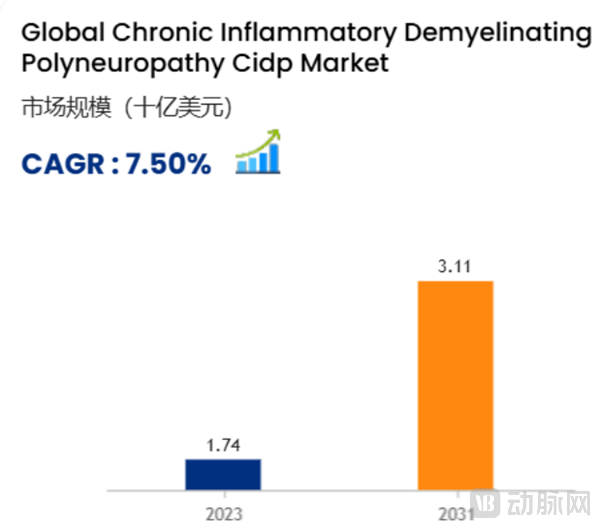 2023-2031 CIDP Market Size Source: Data Bridge Market Research
In China, since CIDP was included in the Second Batch of the Rare Disease Catalogue jointly issued by six national ministries and commissions last September, domestic attention to CIDP has further increased.
This November, Zai Lab and Argenx jointly announced that the subcutaneous formulation of efgartigimod for the treatment of chronic inflammatory demyelinating polyneuropathy (CIDP) has been approved by the National Medical Products Administration (NMPA), becoming the first targeted biologic agent approved for CIDP in China. As a subcutaneous injection, the drug requires patients to select only one injection site on the abdomen during clinical use, with administration completed in approximately one minute, significantly improving patient adherence and treatment experience.
It is worth mentioning that,As early as January 1 this year, efgartigimod was included in the new edition of the National Reimbursement Drug List and officially implemented nationwide.Following approval of this new indication for CIDP,In December, Huashan Hospital Affiliated to Fudan University issued the first prescription in China for the subcutaneous injection of efgartigimod, a targeted biologic agent for the treatment of CIDP, marking its official entry into clinical application. This provides patients with CIDP in China with a new treatment option.
According to the "Market Prospect Forecast and Investment Value Assessment Analysis Report on China's Chronic Inflammatory Demyelinating Polyneuropathy (CIDP) Industry," the total size of China's CIDP treatment market was approximately RMB 2.1 billion in 2023, and is projected to reach RMB 2.3 billion by 2025, with a compound annual growth rate (CAGR) of approximately 6%.
Globally, multiple multinational corporations (MNCs), including Sanofi, Eli Lilly, and AstraZeneca, have also placed significant bets on the CIDP market.
According to the official website of the China Drug Clinical Trial Registration and Information Publicity Platform, Sanofi is conducting a Phase 2 proof-of-concept study of BIVV020 (SAR445088), a monoclonal antibody targeting complement C1s, for the treatment of adult patients with chronic inflammatory demyelinating polyneuropathy (CIDP). Its latest candidate for CIDP treatment, riliprubart—a monoclonal antibody targeting complement C1s that mitigates inflammatory responses in CIDP patients by preventing excessive activation of the complement system—has entered Phase 3 clinical trials.