

Synthetic Biology Empowers Food Manufacturing and Drives the Upgrading of the Health Industry: Insights from Academician Huang He of the Chinese Academy of Engineering
At12Month24Recently concluded2024Health ConferenceAbove, renowned experts and scholars, entrepreneurs, and leading talents from the healthcare industry have gathered to discussAIEmpowering the Pharmaceutical Industry, of the Pharmaceutical IndustryAIApplication Scenarios and Other Major Health Themes: Joint ExplorationAIInnovative Applications and Development Prospects in the Healthcare Sector. The conference featured keynote addresses by three academicians.
Among the speakers, Academician Huang He, who has dedicated many years to the field of synthetic biology, delivered a presentation titled “Synthetic Biology Empowering Food Manufacturing and Facilitating the Upgrading and Development of the Greater Health Industry.” He provided an in-depth analysis of the immense potential and transformative power of this emerging discipline within the realm of food and health, sparking widespread attention and profound reflection.
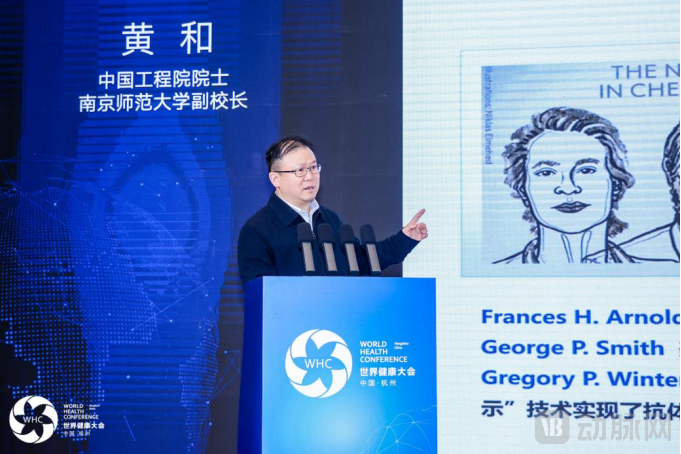
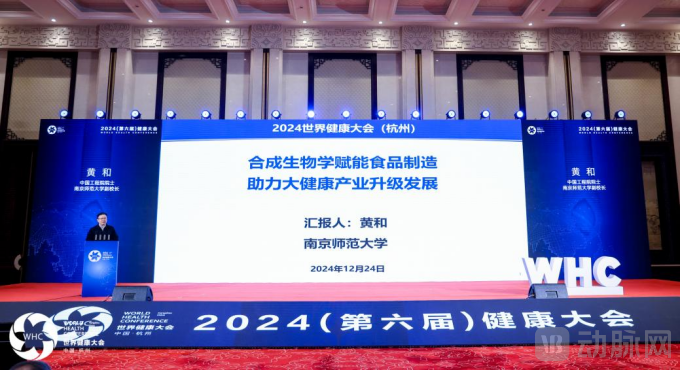
Huang He, Academician of the Chinese Academy of Engineering and Vice President of Nanjing Normal University
Academician Huang He has centered his work on the development and utilization of microbial resources, advancing theories of metabolic engineering for coupled regulation of matter and energy as well as global systemic regulation of metabolic networks. He has developed a series of methods for the precise and efficient synthetic biological engineering of non-model industrial microorganisms, enabling the industrial production of various novel fermentation products using biomass as feedstock. His major research achievements have been honored with two Second Prizes of the National Technical Invention Award (both as the first-ranked contributor), five First Prizes in Technical Invention at the provincial and ministerial levels (four as the first-ranked contributor and one as the second-ranked contributor), the Ho Leung Ho Lee Foundation Prize for Scientific and Technological Innovation by Young Scientists, the Highest Science and Technology Award of China’s Commerce Sector, the Min Enze Outstanding Contribution Award in Energy and Chemical Engineering, and the Bill & Melinda Gates Foundation Young Scientist Award, among others.
Since the dawn of the 21st century, the emerging interdisciplinary field of “synthetic biology” has become a major hotspot on the international scientific frontier and one of the key representatives of new-quality productive forces.As Academician Huang He mentioned in his speech: “When people discuss new quality productive forces, the first things that come to mind are intelligent manufacturing and chips; next are biomanufacturing and synthetic biology. In academia, the surge of interest in synthetic biology is evident, with Nobel Prizes awarded to scientists in this field for two consecutive cycles in 2018 and 2020, drawing significant global attention.”
Unlike traditional Nobel Prize-winning achievements, which often require a long wait for industrial application, synthetic biology exhibits a unique pace of development.Academician Huang He pointed out, “These two women (Carpentier and Doudna) had already successfully founded companies based on synthetic biology before winning the Nobel Prize, and these companies were subsequently listed in the United States.”
Synthetic biology is an interdisciplinary field that integrates biology, engineering, and information technology. It aims to achieve precise control and optimization of life processes through the rational design and construction of novel biological parts, devices, and systems. Demonstrating broad application prospects in chemical engineering, energy, materials, agriculture, pharmaceuticals, environment, and health, it is hailed as a “powerful tool” for life sciences.
In the realm of talent, synthetic biology also serves as a stage for young researchers. Professor Feng Zhang at the Massachusetts Institute of Technology broke the record for the youngest Chinese-American full professor in the university’s history; Professor David Liu at Harvard University achieved major breakthroughs in this field at the age of 32; and University College London successfully cured leukemia patients by applying the conceptual framework of this technology.
As Academician Huang He stated, “Synthetic biology, as I understand it, is not only a field that closely integrates basic research with industrial applications, but also one that is highly suitable for young Chinese researchers.”Notably, in 2023, Academician Huang He, at the young age of 49, was elected as a member of the Chinese Academy of Engineering by virtue of his outstanding scientific research capabilities and numerous breakthrough achievements.
Synthetic biology, an emerging branch of the life sciences in the 21st century, is currently experiencing a golden age of vigorous development, demonstrating immense potential and broad prospects. In this field, Chinese scholars, represented by Academician Huang He, are actively engaged, continuously exploring new applications and breakthroughs in synthetic biology, thereby injecting vitality into both the discipline and the industry.
Synthetic biology technology has transitioned from theoretical exploration to practical application, gradually permeating various industries and demonstrating significant application potential and market value in fields such as healthcare, agriculture, and energy.
In the face of a rapidly growing market, Academician Huang He, with “closely related to people’s daily health conditions,”"Sweeteners," "Acidulants," and "DHA"As an example, it provides an in-depth explanation of the intrinsic connection between synthetic biology and the industry, enabling attendees to gain a clearer understanding of how synthetic biology transitions from the laboratory to industrial application.
As people’s health awareness continues to rise, the demand for sugar has undergone profound changes.Academician Huang He stated, “The World Health Organization (WHO) conducted a study on the causes of death in populations across 23 countries and found that individuals with long-term excessive consumption of high-sugar foods had an average lifespan 10–20 years shorter than those with a normal diet. The WHO recommends that sugar intake for both adults and children should be limited to no more than 50 grams per day, preferably no more than 25 grams.”
Against this backdrop, the sweetener market is facing new opportunities and challenges. Although xylitol was once a common sweetener, it is being re-evaluated by the market due to potential risks for individuals with renal metabolic disorders (as noted by the FDA and the Animal Poison Control Center), while erythritol has emerged as a preferred option owing to its relatively favorable safety profile.
Academician Huang introduced, “Erythritol is a natural substance widely present in nature, commonly found in fruits and vegetables such as watermelon. However, its traditional extraction methods are costly, with prices far exceeding those of white sugar. This has made it difficult for erythritol to replace white sugar and achieve widespread commercial application.”
The emergence of synthetic biology has changed this landscape. Through chassis organism engineering and fermentation processes, the production cost of erythritol has dropped significantly in recent years, from 70,000 yuan per ton to 20,000 yuan per ton, thereby giving rise to numerous blockbuster sugar-free beverages.
Meanwhile, the rapid expansion of the market has also brought new challenges. Academician Huang He pointed out, “Erythritol production surged from less than 1,000 metric tons to hundreds of thousands of metric tons within five years, with its price consequently dropping to RMB 10,000 per metric ton.”
In this market environment, Academician Huang He emphasized that, on one hand, enterprises should strengthen self-discipline to avoid adverse consequences caused by overexpansion in a single market. On the other hand, from a technical perspective, the currently available sugar alternatives are relatively limited. Taking steviol glycosides as an example, if the issue of their bitter aftertaste can be resolved, they will become a highly promising healthy sugar option. In addition, sugar alcohols such as sorbitol and mogrosides have been gradually introduced to the market in recent years.
Looking ahead, as the pace of life accelerates and stress levels rise, consumer demand for sweetness has increased, while expectations for the quality and taste of sugar substitutes have become increasingly stringent. This indicates significant market expansion potential for sugar substitute products, warranting in-depth exploration and research and development by relevant enterprises.
In the construction of beverage mouthfeel, acidulants play a key role; however, compared to the rapid development of sweeteners, progress in acidulants has been relatively slow.Academician Huang stated, “Unlike the dazzling array of sweeteners, the development of acidulants has been highly conservative. The first-generation acidulant was phosphoric acid, whose high solubility poses potential risks to dental health; the second-generation was citric acid, which has been produced in China for over 30 years and now faces overcapacity, leaving enterprises with slim profit margins. Currently, malic acid has emerged as a healthier acidulant option, as it does not directly participate in fat metabolism.”
It is reported that DL-malic acid synthesized via traditional chemical methods poses potential risks because D-malic acid cannot be metabolized by the human body; therefore, U.S. federal law prohibits its use in infant food. Consequently, the production of L-malic acid through fermentation has become a key research focus.
Academician Huang He’s team has achieved significant success in producing malic acid by engineering *Aspergillus niger*, a citric acid-producing strain, using synthetic biology technologies. “Over the past three years, through the engineering of *Aspergillus niger*, we have increased the industrial fermentation yield of malic acid to nearly 200 g/L. The cost of malic acid has dropped from RMB 70,000 per ton to RMB 20,000 per ton, making it suitable for use in the food industry. If malic acid can capture 20% of the citric acid market, in addition to its own existing market, it is poised to foster a synthetic biology industry valued at tens of billions of yuan.”
To further advance the industrialization of bio-fermented malic acid, Academician Huang He’s team has partnered with SDIC Group to construct a 30,000-ton malic acid fermentation facility over a three-year period. The team has already completed the production of 300 tons of malic acid in Changzhou, with the first container shipped to the United States, thereby enhancing China’s international competitiveness and influence in the bio-fermentation industry.
DHA is an essential polyunsaturated fatty acid for the human body, with significant applications across multiple fields. Demand continues to grow in areas such as infant formula, pet nutrition, and aquaculture. Fish oil contains two primary Omega-3 fatty acids: EPA (eicosapentaenoic acid) and DHA. Over the past two decades, Academician Huang’s team reduced the EPA content from 5% to 1% to comply with restrictions on EPA in infant formula.
In recent years, the extraction of DHA from fish oil has faced challenges such as seawater pollution, environmental concerns, and resource scarcity. Consequently, a further challenge for the team is to increase the EPA content in DHA from 1% to 15% through microbial fermentation.
“We employed machine learning approaches to reconstruct the polyketide synthase (PKS) pathway in Schizochytrium, increasing eicosapentaenoic acid (EPA) content from 1% to 15% while maintaining docosahexaenoic acid (DHA) at 45%,” explained Academician Huang He. Furthermore, by leveraging machine learning and artificial intelligence technologies, the team raised DHA production from 0% to 59% within six months using a novel strain, achieving the world’s highest level. These findings were published this year in Nature Chemical Biology. The project is currently undergoing pilot-scale trials, with samples expected to enter the pharmaceutical sector within a year, providing new directions for the upgrading and expansion of China’s DHA industry.
Undoubtedly, synthetic biology is leading the transformation of the bioindustry. However, as synthetic biology technology and industry develop at a rapid pace, Academician Huang He has also pointed out that the industry is facing significant challenges.
To further promote the development of China's synthetic biology industry, Academician Huang He has called on more young people to join the field.Nanjing Normal University, where it is located, is among the first universities in China to offer a major in synthetic biology, contributing to the cultivation of reserve talent for the industry.
Regarding the future development of synthetic biology, Academician Huang He, drawing on his professional expertise and scientific research experience, has identified three promising directions:Deep Application of AI in Industrial Enzyme Design, Effective AI Assistance in Genetic Programming, and Rapid Custom Production of High-Quality GenesThese three directions, centered on the integration of synthetic biology and AI, are poised to address existing industry challenges and facilitate the transformation and upgrading of China’s biomanufacturing sector from traditional to modern and from low-end to high-end, thereby injecting strong momentum into the sustainable development of the economy and society.
In terms of industrial practice, synthetic biology industrial parks across China are developing rapidly. Academician Huang He shared, “Nanjing Normal University is actively deepening university-enterprise cooperation and promoting the industrialization of research achievements. We have established the Changzhou Institute of Synthetic Biology Industry at Nanjing Normal University, with a total investment of 150 million yuan. The institute is positioned to focus on technology incubation and industrialization in fields related to synthetic biology, committed to achieving the effective convergence of talent, technology, capital, and industry.”
In today’s increasingly fierce global technological competition, synthetic biology, as an emerging interdisciplinary field, is playing an ever more important role in the global industrial landscape. Its applications in the food and health sector are merely a microcosm; in the future, it holds immense potential awaiting deeper exploration across numerous fields, including medicine, energy, and the environment.