

Leikang Cell Announces Upcoming Launch of Hair Follicle Stem Cell-Based Hair Regrowth and Stem Cell Nebulization Products, Expanding Stem Cell Applications
In *Nature*’s list of the most anticipated technologies of 2023, stem cell technology made the cut.
As one of the most cutting-edge, prominent, and promising frontiers in contemporary medical research, stem cell technology and its associated industries have experienced rapid growth, becoming a key indicator for assessing a nation’s progress in life sciences and medicine. Publicly available data indicate that most developed countries and regions place significant emphasis on the development of the stem cell industry, viewing it as a crucial pillar that will drive future advancements in biotechnology. Consequently, these jurisdictions have established comprehensive policy frameworks for the stem cell sector, elevating its development to the level of a major national strategy.
Looking back at the development of cell therapy technologies in China, it is evident that with the enhancement of the nation’s comprehensive strength, emerging technologies such as stem cells and genetic engineering have become key areas of government support. Related stem cell research in China has continued to gain momentum, yielding a number of original achievements with international influence. According to the official website of the Center for Drug Evaluation (CDE), more than 30 new stem cell drugs have been accepted for review since 2023.
Although China’s entry into the stem cell field was not particularly early—dating back to the 1990s, whereas research abroad has a longer history—stem cell technology in China has advanced rapidly due to specific environmental and systemic factors. Currently, the level of stem cell technology in China is largely on par with that of Europe and the United States.
In terms of the application of stem cell products, there is still room for development in China, and compared with foreign cell companies, it is expected to better meet clinical needs.
Laikang Cell Biotechnology (hereinafter referred to as “Laikang Cell”) is one of the enterprises established in response to this expectation. In 2024, this emerging company, dedicated to innovation in the biomedical field and specializing in cell biology research and applications with the aim of providing advanced cellular solutions for medical diagnosis, treatment, and disease research, was officially launched at the West Taihu Medical Industry Incubation Park.
Creating Multiple “China’s Firsts”
Laikang Cell’s core team primarily hails from China’s largest publicly listed stem cell company. Led by an academician, the team members boast an average of over 15 years of industry experience, covering all key business departments and bringing with them proven expertise and established networks in their respective fields.
The company’s expert team includes Academician Wu Zze, an academician of the Chinese Academy of Sciences and renowned as the “Father of Hematopoietic Stem Cells in China.” Its management team features Dr. Wang Xuejun, a pioneer in stem cell collection within China’s stem cell storage industry, who is primarily responsible for the technology and sales operations of Laikang Cell.
Notably, the Laikang Cell team was the first in China to engage in the collection, storage, and preparation of stem cells derived from umbilical cords, placentas, umbilical cord blood, and endometrium. As a pioneer in the field, the team developed and manufactured cellular products, including the artificial skin “Antifu” and the artificial cornea “Aixintong.”
Dr. Lin Jianqiang, CEO of Laikang CellThey told VCBeat that, given the new company’s greater flexibility in capital market operations, they aimed to start from scratch and operate LaiKang Cell in accordance with the governance standards of a publicly listed company. The team had previously guided two companies through their entire journey to public listing, accumulating extensive experience in this area. Consequently, they opted to leverage a more adaptable new entity for these operations, with the goal of transforming LaiKang Cell into a newly listed enterprise.
When it comes to the strategic direction of corporate business development, the team identified a series of challenges and pain points facing stem cell technology and industrial development. First, from the perspective of the entire industry chain, the stem cell industry involves key stages such as collection, transportation, preparation, storage, and application. In these stages, companies generally encounter no significant issues in transportation or culture expansion and preparation; however, they face substantial difficulties in securing cell sources and achieving practical clinical applications.
Specifically, the sourcing of cells is strictly regulated by health authorities, with numerous restrictions governing the collection and application of autologous cells, such as endometrial stem cells. For instance, the collection of endometrial stem cells faces significant challenges due to widespread lack of awareness in China and the difficulties associated with market education.
Similarly, the collection of neonatal-related cells also faces obstacles, particularly in the storage of umbilical cord blood. According to national regulations, the collection and storage of umbilical cord blood must not be conducted across different regions, and no fees may be charged. Currently, only seven locations nationwide have been approved by the state for umbilical cord blood collection, while other provinces and cities lack the necessary qualifications.
Building on this foundation and leveraging Zhongyuan Union’s cell storage qualifications, Laikang Cell initiated its operations with cell storage services and has since gradually expanded into the field of cell-derived products.
Exploring Novel Routes of Stem Cell Administration: New Products to Be Launched Soon
The first step in entering the market is to address existing clinical pain points. Laikang Cell has selected two key areas for product commercialization, which not only have large patient populations but also present numerous unmet clinical needs.
China has a high-risk population of 150 million for pulmonary nodules, with 10 to 20 million new cases detected or diagnosed annually. Early screening for pulmonary nodules is one of the most common clinical concerns. In the past two years, i.e., in the post-pandemic era, the public has observed an increased prevalence of pulmonary nodules identified during CT examinations among themselves and those around them. Furthermore, pulmonary nodules may be malignant, with the rate of malignancy beginning to rise significantly in the 35–39 age group and peaking in the 80–84 age group.
Meanwhile, Laikang Cell is also addressing the pain points of stem cell therapy. Individual variability necessitates that treatment plans be customized by expert teams, a requirement that inevitably drives up the cost of cellular interventions, limits affordability to a small patient population, and imposes strict requirements on clinical settings. As patients cannot administer the treatment themselves, convenience is significantly reduced. Furthermore, variations in individual physiological responses and absorption experiences, coupled with the high technical demands of cell culture and intravenous infusion procedures, are all factors that impact therapeutic efficacy.
Based on these considerations, since 2019, Laikang Cell has been exploring new avenues for cell therapy through innovative administration methods, such as nebulization, eye drops, and nasal drops. During the research and development process, Laikang Cell encountered numerous challenges. There were no reference literature available for the development of nebulized cell products, so the team had to rely on trial and error. They determined the cell content in the product by statistically analyzing the number of cells reaching the lungs after intravenous infusion. Meanwhile, the team also addressed the issue of long-term product storage and planned to develop both freeze-dried powder and injectable series to meet diverse needs.
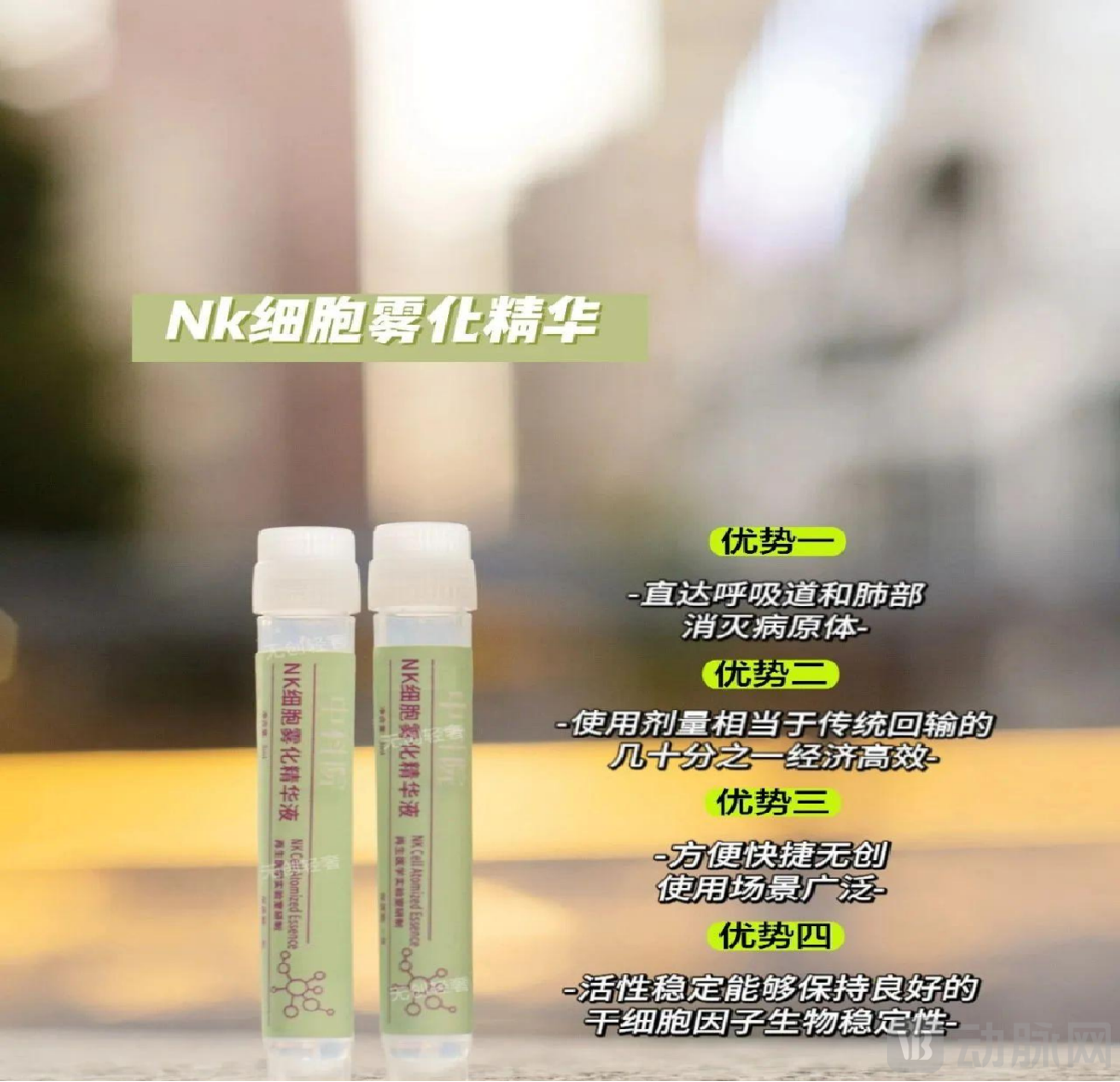
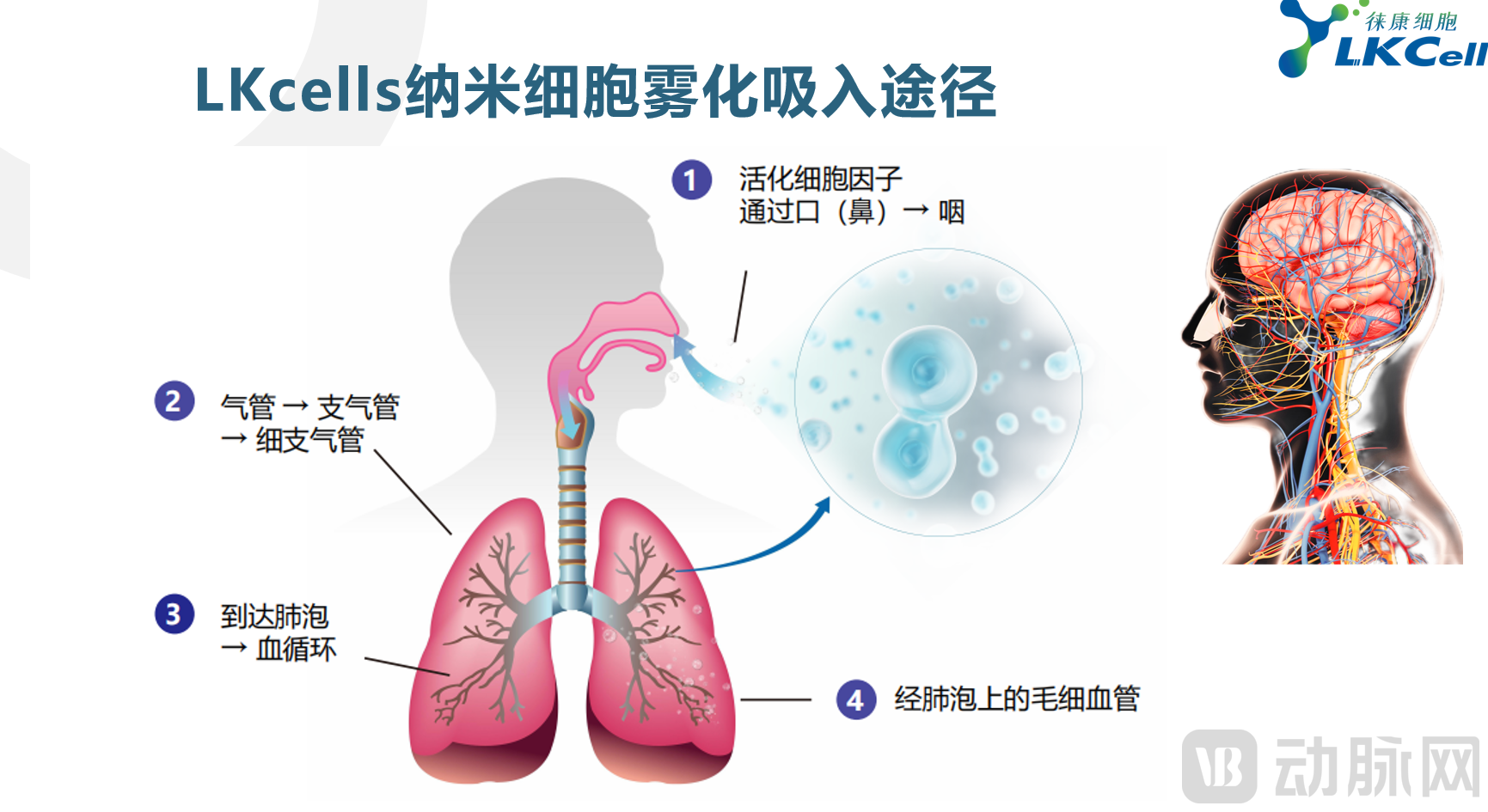
Compared with oral and injectable formulations, Laikang Cell’s nano-cell ultrafine nebulization product can cross the blood-brain barrier and vascular endothelium to directly reach the lesion site. It is rich in over one hundred types of cytokines and offers the following advantages:
Enhance the body’s cellular regeneration and repair capabilities, maintain normal organ function, boost innate immunity, eliminate inflammatory responses, prevent the occurrence of malignant diseases, and build an immune “firewall” for the body;
Easy to use, self-operable, non-dependent, and fully meets the body's needs;
Ultrafine nanoscale stem cells, with their small volume, can rapidly penetrate the blood-brain barrier and vascular endothelium to enter body cells and tissue fluids;
B+A Stem Cell Laboratory: Free from pathogenic microbial contamination, fully ensuring quality control and cleanliness requirements for cell preparation;
3D suspended hypoxic serum-free culture patent technology, fully preserving the high absorption rate and compatibility of cells;
Six Major Categories of Cytokines, mRNA, and miRNA Required by the Human Body.
Meanwhile, Laikang Cell is also developing hair follicle stem cell products, primarily aimed at addressing issues such as hair loss, thinning hair, and high hairlines. Currently, the product has obtained Class II Medical Device certification, and the company plans to gradually expand into related markets.
The "White Paper on Sub-Healthy Scalp Conditions in China" points out that 99% of the population in China currently suffers from various scalp problems, among which 35% experience issues such as hair loss, thinning hair, and oily scalp; 34% suffer from dandruff and itchy scalp; and 20% have dry, damaged hair that is prone to breakage. However, while mainstream pharmacological treatments for pathological hair loss, such as finasteride and minoxidil, can achieve expected results, discontinuation of medication leads to a loss of efficacy. Furthermore, all mainstream drugs come with side effects, requiring patients to endure a series of adverse reactions throughout their lives, resulting in significant costs.
In terms of laser therapy, laser hair growth devices are classified as medical devices, and there are few laser-based hair growth products certified by the National Medical Products Administration (NMPA). Furthermore, improper use of laser devices can cause irreversible damage to hair follicles, posing significant risks. Although hair transplantation is suitable for patients with extensive or severe hair loss and yields ideal postoperative results, it leaves scars in the donor area.
In contrast, Laikang Cell’s hair follicle stem cell product differs in its therapeutic mechanism,It employs fifth-generation hair follicle stem cell technology, including the preparation of a composite formulation of dermal papilla stem cells and hematopoietic stem cells, which can regenerate hair follicle tissue, activate hair follicle vitality, and effectively prolong the normal physiological function of hair follicle micro-organs. The advantage of this therapy lies in its ability to promoteAutologous hair follicle stem cell growth yields new hair with strong vitality and high survival rates, indistinguishable from native hair, while being free of side effects and adverse reactions, thereby addressing hair loss at its root cause.
Hair follicles are the basic units of hair, and hair follicle stem cells (HFSCs), which originate from epidermal keratinocytes, typically remain in a quiescent state but rapidly activate and proliferate during a new hair growth cycle. As adult stem cells, HFSCs share common characteristics with other adult stem cells. When adjacent tissues are injured, HFSCs can migrate from their original niche in the bulge region to participate in tissue repair, such as promoting hair regeneration.
Therefore, the cell therapy process needs to enhance the transformation of outer root sheath progenitor cells into hair follicle stem cells, reduce the depletion of hair follicle stem cells, and activate hair follicle stem cells in the telogen phase to re-enter the anagen phase.
Notably, co-culture of stem cells with human dermal papilla cells resulted in a 30% higher proliferation rate compared to the control group after 48 hours (Won, 2010). To ensure therapeutic efficacy, the Laikang Cell Team selected hair follicle tissue, isolated and cultured hair follicle stem cells, and combined them with dermal papilla stem cells.Industrial-scale serum-free culture, combined with autologous hematopoietic stem cells to provide nutrients and energy to hair follicle cells, ensuring optimal cellular nourishment; compounded with stem cell-secreted cytokines to achieve multiple therapeutic effects.
Laikang Cell’s hair follicle stem cell product is administered via manual injection into the superficial fascial layer (subcutaneous layer) of the scalp, with localized dense injections recommended to achieve mild whealing. The dosage varies depending on the size of the hair loss area. The treatment regimen consists of one injection every 3–4 weeks, with a recommended course of 5–6 sessions.
In addition, Laikang Cell plans to apply stem cell technology to the field of medical aesthetics, such as skin repair, pigmentation removal, and whitening for women. The team intends to deliver cells into the dermal layer of the skin via microneedling or mesotherapy (water-shine injection), combined with specially formulated topical products, to achieve comprehensive skin rejuvenation, resulting in effects such as whitening, firming, and spot reduction.
Powered by Strong Technological Advantages
Currently, Laikang Cell leverages the extensive experience of its core team in the field of stem cells. Since its inception, the company has possessed a complete set of Standard Operating Procedures (SOPs) covering 24 volumes and 260,000 words, which detail methodologies for the separation, purification, testing, cryopreservation, culture, formulation, and cell bank construction across all categories of the cell industry, ensuring mature and standardized technologies. The company holds 46 core technical invention patents related to the storage and formulation production of a comprehensive product portfolio, including endometrial stem cells, umbilical cord mesenchymal stem cells, and immune cells. The project is characterized by its uniqueness, non-replicability, and sustained growth potential.
In terms of specific products, Laikang’s cellular nano-ozone nebulization product boasts five proprietary patented technologies. Supported by vapor-phase liquid nitrogen storage technology, a serum-free culture system, and a remote monitoring system, it achieves a post-thaw cell recovery rate of 93%–95%, exceeding the WHO standard of 80%.
When discussing the company’s future development plans, Dr. Lin Jianqiang stated, “Laikang Cell will focus on strengthening its internal capabilities—i.e., ‘building core competencies’—and laying a solid foundation. Only after significantly enhancing its own strengths can the company further expand its business, including attracting capital and advancing toward an initial public offering (IPO).”