

China's First Brain-Computer Interface Dedicated Fund Reaches Inflection Point: Interview with Zhang Yutao of Heying Capital

HY Asset Management Co., Ltd.
Private Equity (PE) Investor
With the rapid advancement of technology, the boundary between humans and machines is becoming increasingly blurred. As one of the ten landmark products of future industries, “brain-computer interfaces” are accelerating the transformation of science fiction scenarios into reality. Major countries and regions around the world are hastening their strategic deployments in brain-computer interface technologies by introducing relevant policies and financial support programs.
In this context, the “Brain-Computer Interface HY Haihe Haitai Venture Capital Fund,” jointly initiated by HY Asset Management Co., Ltd. and Shurong Shuke (Beijing) Private Equity Fund Management Co., Ltd. (a subsidiary of China Electronics Corporation), and established in partnership with the Tianjin Angel Investment Guidance Fund, the Tianjin Haitai Haihe New Momentum Industrial Fund, and the Haihe Laboratory of Brain-Computer Interaction and Human-Machine Integration, was officially launched in May 2024.
“HY-Haihe Haitai Brain-Computer Interface Venture Capital Fund” is the first special-purpose fund in China dedicated to the development of the brain-computer interface industry, with a target size of RMB 1 billion.To gain a deeper understanding of the fund’s operations and its impact on the development of the brain-computer interface (BCI) industry, VCBeat interviewed the co-founders of the “HY-Haihe Haitai BCI Venture Capital Fund.”Zhang Yutao, Investment Director at HY Capital, and engaged in in-depth discussions on topics such as the development trends of the brain-computer interface (BCI) industry, investment strategies, and how funds can facilitate industrial growth.
As a focal point of global technological frontiers, the brain-computer interface (BCI) field is fraught with uncertainty and complexity across basic scientific research, product development, and commercialization pathways. Investing in BCIs is, in essence, investing in the future. As China’s first special-purpose fund dedicated to the BCI industry, the “Haihe Laboratory of Brain-Computer Interaction Fund” has possessed a robust core foundation since its inception.
First, the Brain-Computer Interface Haihe Haitai Venture Capital Fund is backed by the Haihe Laboratory of Brain-Computer Interaction and Human-Machine Integration. Zhang Yutao introduced, “Brain-computer interfaces are a key strategic focus for Tianjin’s development of new quality productive forces. In March 2023, under the close attention of the Tianjin Municipal Committee and Municipal Government, the sixth Haihe Laboratory—the Haihe Laboratory of Brain-Computer Interaction and Human-Machine Integration—was officially established, led by Tianjin University and spearheaded by the Tianjin Municipal Government. This laboratory also serves as a core support for Tianjin’s pillar artificial intelligence industry.”

Inauguration Ceremony of the Haihe Laboratory for Brain-Computer Interaction and Human-Machine Integration
Source: Tianjin News
It is reported that the Haihe Laboratory of Brain-Computer Interaction and Human-Machine Integration is composed ofGu Xiaosong, Academician of the Chinese Academy of Engineering; Ming Dong, Vice President of Tianjin UniversityLed by. The laboratory focuses onNovel Theories and Detection Methods for Neural Signal Sensing, Bionic Tissue-Engineered Nerves, and the Development and Translation of Key Technologies and Core Fundamental Components for Next-Generation High-Throughput Brain-Computer Interactionand four other key areas, dedicated to building a fully domestic, end-to-end non-invasive brain-computer information interaction technology system spanning chips, electrodes, algorithms, and systems.
Secondly, CEC Data Service Co., Ltd., the entity to which the co-founders of the Brain-Computer Interface HY Haihe Haitai Venture Capital Fund belong, is a subsidiary of China Electronics Corporation (CEC), possessing significant advantages in industrial foundation and industry integration capabilities.“As a pioneer in national strategy, China Electronics Corporation (CEC) has a broad business scope that includes not only chips, software, and terminal products, but also system applications and ecosystem development. Notably, CEC has developed CPUs and operating systems such as Phytium and Kylin,” said Zhang Yutao.
In addition, the Tianjin Angel Investment Guidance Fund (represented by the Tianjin Haihe Industry Fund), the Tianjin Haitai Haihe New Momentum Industry Fund, and HY Asset Management Co., Ltd. are all co-founders of the Brain-Computer Interface Haihe Laboratory Fund.The Haihe Industry Fund, established with a RMB 20 billion capital contribution from the Tianjin Municipal People's Government, focuses on investing in strategic sectors such as next-generation artificial intelligence, biopharmaceuticals and healthcare, new energy, and advanced materials. As a board-level shareholder of the Haihe Industry Fund, HY Asset Management Co., Ltd. will collaborate with the fund to jointly drive the development of the brain-computer interface (BCI) industry.
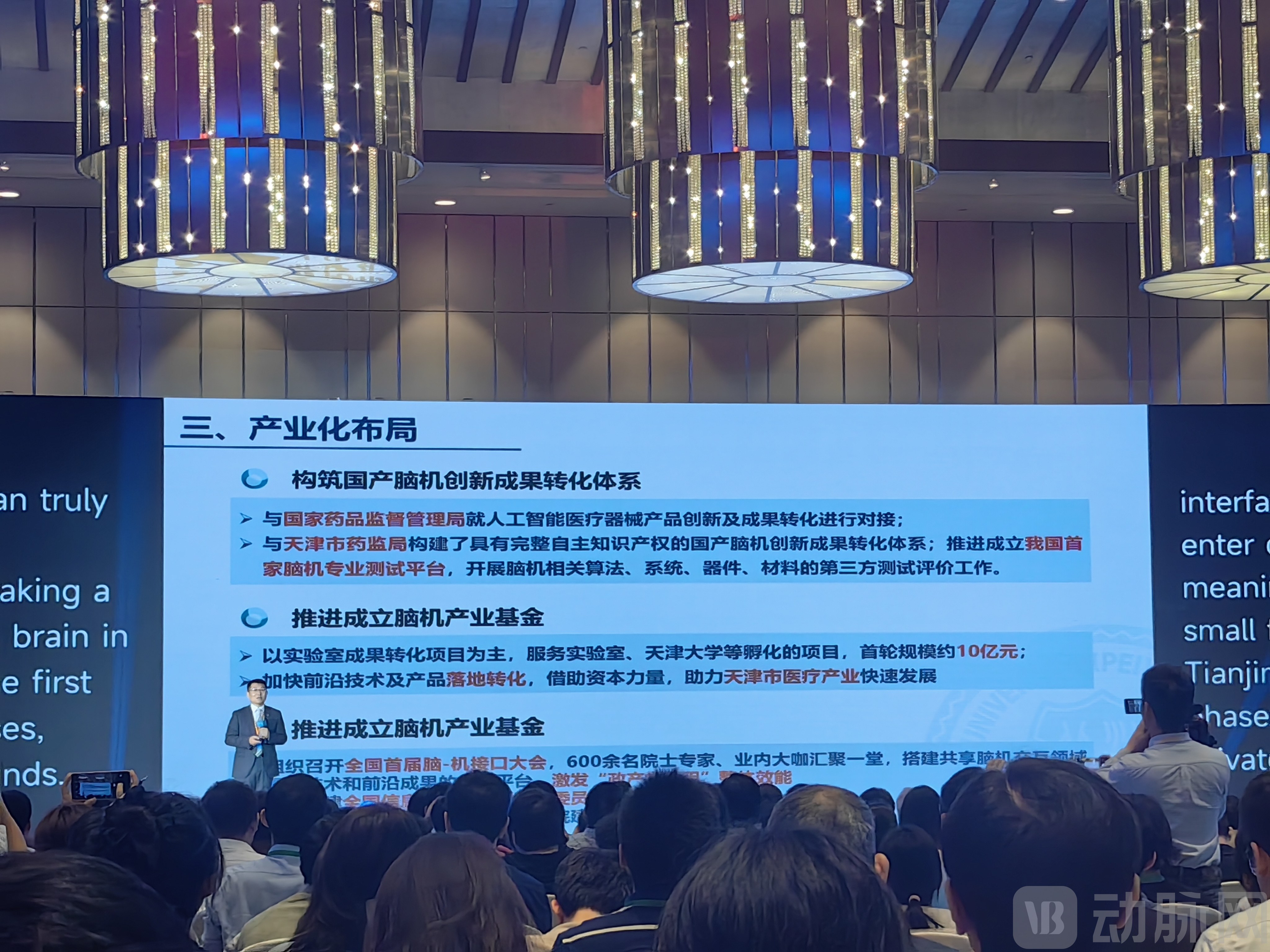
Tianjin University Vice President Ming Dong Delivers Speech at the 2nd Brain-Computer Interface Industry Alliance Conference
Image source: HY Capital
In summary, although the brain-computer interface (BCI) industry faces pressing practical challenges and investment risks, the BCI Heying Haihe Haitai Venture Capital Fund, supported by local governments, leading research institutes, and specialized capital, is committed to identifying high-potential BCI projects. By facilitating the translation of cutting-edge technologies from theoretical research into practical applications, the fund aims to support the successful implementation of China’s Brain Science Initiative.
In China, brain science has been designated as one of the national major scientific and technological innovation projects since 2014. Over the past decade, China has not only introduced multiple policies to support the development of brain science but also allocated RMB 3.148 billion to the major project “Science and Technology Innovation 2030—Brain Science and Brain-Inspired Research,” marking the official launch of the China Brain Project. In 2024, during the Two Sessions, brain-computer interface (BCI) technology was listed as one of the nine future industries comprising new quality productive forces, with a proposal to conduct research on a standardized roadmap for brain-computer interfaces.
As a hotspot at the global technological frontier, brain-computer interfaces (BCIs) demonstrate immense potential while also entailing high risks and significant technical challenges.Zhang Yutao, who has conducted in-depth research on nearly 100 brain-computer interface (BCI) projects worldwide, believes that investment in the BCI sector differs from traditional healthcare investments and primarily exhibits three major trends. “First, as a typical interdisciplinary field, the BCI industry is currently in the early to mid-stages of commercialization. Second, downstream applications of this technology are extensive, spanning multiple sectors from consumer electronics to healthcare. Therefore, third, making investment decisions requires keen business acumen and in-depth industry analysis capabilities.”
In this context, to further screen for investment projects with core competitiveness and market potential, HY Capital, in light of the aforementioned industry trends, has also focused onScientific Mechanism, Team Background, Commercial ImplementationThree evaluation criteria for investment decision-making.
First, it possesses scientific mechanisms and technological interpretability, as well as a clear commercial pathway.Currently, many phenomena in the field of brain science have not yet been fully explained by scientific means. Although scientists continue to strive for plausible explanations, from the perspectives of medical device R&D and clinical application, brain-computer interface (BCI) projects with reasonable and interpretable underlying scientific mechanisms not only contribute to scientific advancement and technological innovation but also enhance project credibility and acceptance, drive the development of related industries, and exert a positive impact on public health.
Second, it possesses a foundation for R&D and expansion backed by experts or institutions in the field of brain-computer interfaces.Brain-computer interfaces (BCIs) constitute a highly specialized and technology-intensive field that demands long-term, large-scale, and sustained investment. In this context, R&D teams from universities and research institutes possess distinct advantages in facilitating the clinical translation and application of technologies, as well as in fostering interdisciplinary collaboration, protecting intellectual property, leveraging policy support, and cultivating talent. These strengths lay a solid foundation for the project’s continuous growth and expansion of its applications.
3. Possession of rigorous clinical principal investigator (PI) resources and a unique ecological niche.Principal Investigators (PIs) play a pivotal role in the journey of brain-computer interfaces (BCIs) from the laboratory to the marketplace. They are not only responsible for designing and executing clinical trials to ensure scientific rigor and regulatory compliance, but also drive the practical implementation of innovative neuroscience technologies. Through close collaboration with clinical PIs, companies can rapidly achieve key development milestones. Meanwhile, BCI enterprises must carve out a unique ecological niche within the industry or market, targeting critical unmet needs and delivering differentiated products and services.
Brain-computer interfaces, as a frontier technological field and an emerging industry, are currently at a critical stage of development, requiring the convergence and substantial investment of resources. Against this backdrop, the Brain-Computer Haihe Laboratory Fund has established“Innovative Investment Model of ‘Scientists + Entrepreneurs + Fund Investors’”, aiming to leverage private capital to support the development of the entire brain-computer interface industry chain.
Zhang Yutao explained, “The concept of the ‘Darwinian Sea’ has long represented the chasm between scientific research and technological maturity on one side, and commercialized products on the other. Bridging this gap by leveraging capital to achieve commercialization is a shared mission for scientists, entrepreneurs, and investors. In this process, scientists serve as the ‘planks,’ providing the foundational support for the entire innovation system; entrepreneurs act as the ‘rudder,’ driving scientific achievements toward the market; and venture capital functions as the ‘sail,’ empowering both scientists and entrepreneurs through diverse resources. This constitutes our innovation investment model.”
To leverage the overall advantages of this innovative investment model, HY Capital has also established a comprehensive post-investment service system.First, leveraging the background of the Haihe Laboratory of Brain-Computer Interaction and Human-Machine Integration, HY Asset Management can empower enterprises in areas such as technology, equipment, and scientific research. Furthermore, its industrial fund background aligns with the concept of "patient capital" currently advocated in China, enabling it to support the growth of brain-computer interface companies with a long-term perspective.
Secondly, HY Asset Management Co., Ltd. deeply focuses on the fields of brain science and brain-inspired intelligence, multi-dimensionally and comprehensively exploring ecological resources. By collaborating with institutions such as the China Academy of Information and Communications Technology (CAICT) and the Brain-Computer Interface Industry Alliance, it opens up its achievements and resources to partners, promoting rapid integration of enterprises into the industrial ecosystem and facilitating upstream-downstream linkages. Meanwhile, HY Asset Management Co., Ltd.Possesses expertise in clinical validation and the manufacturing of engineering components.Strong Corporate Partners, Capable ofHelp enterprises effectively address key challenges in engineering-scale production, clinical validation, and sales during their development process.
Finally, Tianjin High-Tech Zone has established a pilot zone for brain-computer interfaces and brain science, supported by corresponding policies to create a favorable development environment for enterprises. Moreover, the zone offers a green channel for innovative medical devices, which helps shorten the product launch cycle and accelerate commercialization.
Brain-Computer Interfaces (BCIs) serve as a direct communication bridge between the human brain and machines, offering extensive application prospects and delivering transformative impacts across numerous fields. In the medical market alone, McKinsey predicts that the global market size for medical BCI applications will reach $40 billion by 2030 and grow to $145 billion by 2040.
In the face of a rapidly growing market, Zhang Yutao stated, “HY Asset Management’s short-term objective is to achieve strong investment returns for its brain-computer interface (BCI) fund, while continuing to collaborate with leading domestic universities, industry players, and capital institutions in the fields of brain science and brain-inspired intelligence to jointly establish more specialized funds. This strategy integrates resources from both northern and southern China to create a cohesive investment ecosystem. The long-term plan is to position HY Asset Management as a leading investment institution in the realms of brain science and brain-inspired intelligence, and to establish the Haihe Laboratory of Brain-Computer Interaction and Human-Machine Integration as a strategic hub for brain-computer interfaces in China.”
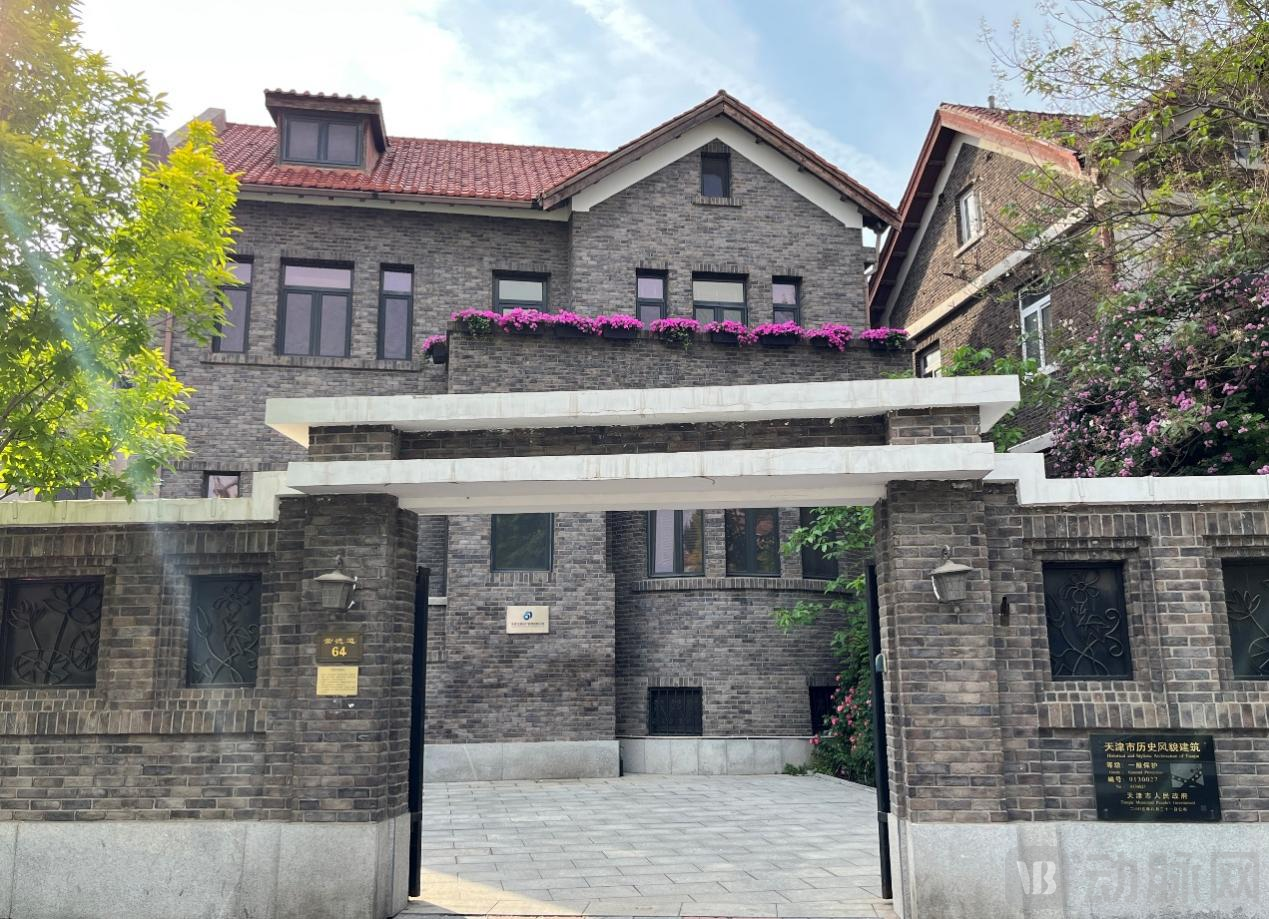
HY Asset Management Co., Ltd.'s Office in Tianjin
Image source: HY Capital
In an interview, Zhang Yutao revealed that HY Asset Management is poised to announce two significant investments in the brain-computer interface (BCI) sector. Both portfolio companies have demonstrated leading advantages and outstanding competitiveness within their respective niche markets.In previous investment cases, HY Asset Management also invested in a life sciences instrumentation company. The angel-stage investment in this project yielded a 26-fold return within two years.
“Overall, the success of this project is reflected not only in its financial figures but, more importantly, in the high degree of alignment between the business projections and milestone achievements and our team’s initial vision and planning. This congruence precisely validates the team’s composite capabilities in investing in scientific research instruments and medical devices, spanning multiple dimensions including technical assessment, clinical validation, and commercial scenario analysis. These successful experiences have strongly propelled us to advance steadily on our investment journey, continuously creating value,” said Zhang Yutao at the end of the interview.