

Weimai Secures RMB 200 Million Series D Funding to Advance Disease-Specific Management Solutions and AI Product Development, Files IPO Prospectus

Weimai
Digital Health Service Platform Provider

CHOICE CAPITAL
A Venture Capital Firm Focused on Healthcare

Cenova Capital
Investment institutions focused on healthcare and life sciences

Vision Capital
Technology Sector Investment Firm
On January 7, 2025, Weimai, a full-course disease management service platform, announced that it had completed a RMB 200 million Series D financing round. New investors in this round included CIF Investment, CHOICE CAPITAL, Zhejiang Yuhang Industrial Transformation and Upgrading Fund, Deqing County Industrial Development Investment Fund, and Jiaxing Nanhu Equity Investment Fund. Existing shareholders Source Code Capital, Cenova Capital, and Vision Capital continued to participate with follow-on investments.
Among them, Vision Capital and Source Code Capital have invested in Weimai multiple times consecutively, from the angel round to this current round.
Over the past year or two, mirroring trends across multiple industries, primary market investment in the broader health sector has slowed. Investors are adopting a more selective approach, exercising greater caution and maintaining more conservative investment scales. In the healthcare services segment, financing rounds exceeding RMB 100 million have become rare. Weimai’s recent RMB 200 million financing round not only marks a significant positive development for the broader health industry since the beginning of 2025 but also fully demonstrates that Weimai’s Chinese-style managed care model is highly recognized by the market.
Over the past nine years since its establishment, Weimai has built a Chinese-style Managed Care Organization (C-MCO). This round of financing will be used to continue R&D in disease-specific management solutions and AI within this model, and to further deepen its presence in the health service consumer market.
According to the latest data released by the National Health Commission, the average daily number of medical consultations at healthcare institutions in China reached 20.55 million in the first half of 2024. In traditional healthcare services, whether for health check-ups, outpatient visits, hospitalization, or surgery, the connection between patients and hospitals is primarily confined to within the hospital premises. However, the actual needs of a large number of patients extend far beyond this scope. There is an urgent demand for continuous medical services after discharge, including rehabilitation guidance, medication management, health education, nutritional intervention, emergency assistance, follow-up appointment scheduling, remote monitoring, and wound care.
Weimai leverages this foundation to build “wall-less” smart hospitals in partnership with healthcare institutions through an integrated approach of “technology + operations + management,” delivering comprehensive, full-cycle healthcare services to the entire population and meeting the public’s multi-level, diverse, and personalized healthcare needs.
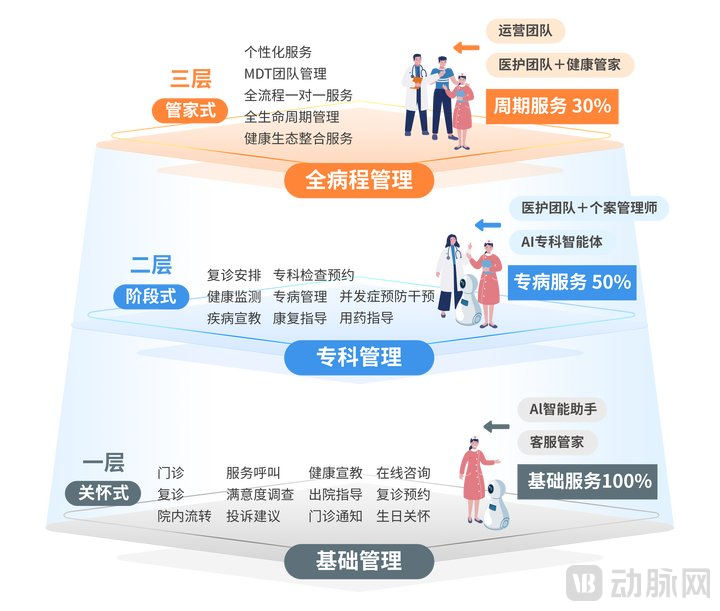
Weimai Empowers Hospitals to Establish a Multi-tiered and Diversified Service System
As of 2024, Weimai’s services have covered 30 provinces, municipalities, and autonomous regions across China, launching in more than 280 cities. It has partnered with over 2,500 hospitals, accumulated more than 1 billion service encounters, and enabled 200,000 doctors to offer over 20,000 SKUs of medical and health services on the Weimai platform. Among these partnerships, Weimai has engaged in deep collaborations with more than 500 hospitals, with its whole-course disease management business covering over 30 specialties and 1,000+ management pathways, serving more than 3 million patients.
The need for continuous healthcare services is particularly urgent among specific populations, such as women and children. From preconception care, pregnancy, and childbirth to postpartum recovery, as well as the growth and development of newborns and young children, the health service needs across these stages are highly interconnected. However, these services are typically dispersed across various hospital departments, including gynecology, obstetrics, women’s health, neonatology, and pediatrics. Furthermore, while prenatal check-ups, delivery, and pediatric health examinations are conducted within hospitals, most health interventions take place outside hospital settings. Therefore, there is a prominent demand among women and children for continuous healthcare services that span different stages and integrate both in-hospital and out-of-hospital care.
In response, Weimai has partnered with hospitals to integrate departments including reproductive medicine, obstetrics, gynecology, postpartum rehabilitation, child healthcare, pediatrics, and nutrition, thereby establishing a health management service system that covers the entire life cycle of women and children.
Full-lifecycle health management for women and children is Weimai’s flagship project, representing its earliest market entry, largest served population, and strongest service capabilities.This solution has been implemented in over 500 hospitals across China, including Guangdong Provincial Maternal and Child Health Hospital, Hangzhou First People’s Hospital Affiliated to Westlake University School of Medicine, Jinan Maternal and Child Health Hospital, and the Third Affiliated Hospital of Zhengzhou University. It has significantly expanded the boundaries of maternal and child health services, strengthened the continuity of medical care, and successfully improved inter-departmental service referral efficiency by 40%.
In recent years, the public has placed increasing emphasis on health checkups, with the number of checkup visits across China rising year by year. However, health checkups often remain disconnected from medical care, health management, and other related services. In response to this situation,Weimai shifts management upstream, extending from post-consultation care to health examination management. It establishes holographic health records for individuals undergoing health checks, develops tagging systems, and implements classified and stratified management based on these tags, thereby achieving closed-loop service coverage across pre-examination, intra-examination, and post-examination stages.
To further shift health management services toward prevention, Weimai and Taizhou Enze Medical Group jointly launched China’s first public hospital membership center in 2024, supported by information technology and AI.The Membership Center is established on the foundation of the hospital’s existing call center and Internet Medical Center. It explores multi-departmental collaboration and integrates various online and offline medical services. Through a joint team comprising “medical staff, case managers, and health stewards,” it provides members with comprehensive services spanning the entire chain of prevention, treatment, and rehabilitation.
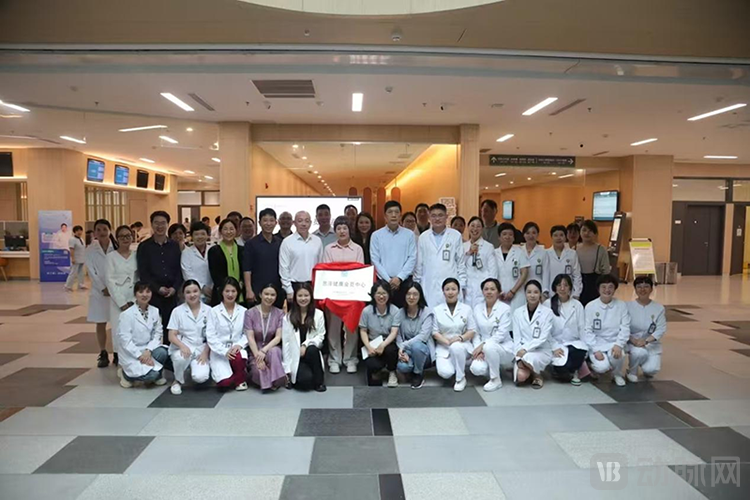
Unveiling Ceremony of the Enze Health Membership Center
An analysis of Weimai’s business model, service offerings, and technological capabilities reveals that the company has established core competencies in partnership models, team building, service content, and AI applications to more precisely meet public demand for continuous healthcare services.
In China's healthcare service system, physical medical institutions are the primary force in service delivery.Weimai has chosen hospitals as its entry point, accurately identifying the source of demand for continuous healthcare services. By collaborating deeply with hospitals to build its service model, Weimai ensures professional quality and has earned widespread public trust.
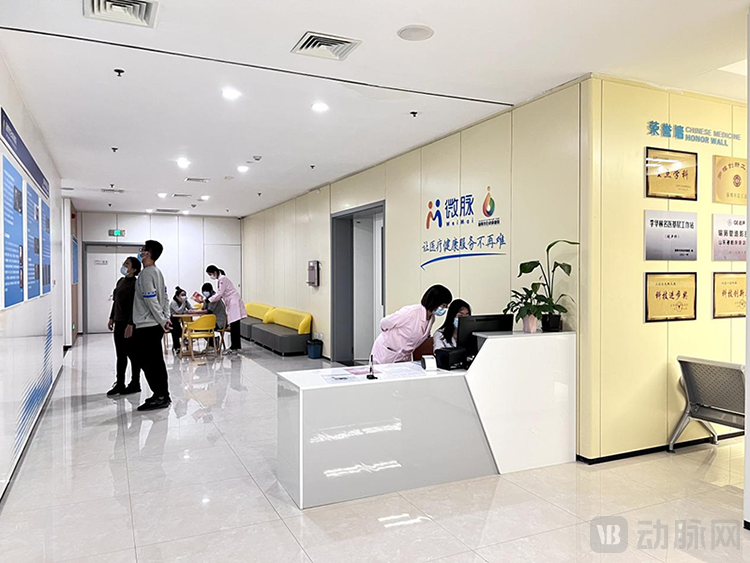
Weimai's Internet+ Full-Course Disease Management Center Co-established with Hospitals
Currently, the healthcare service system is continuously promoting a shift from being "disease-centered" to being "people's health-centered," and establishing mechanisms for coordination and integration between medical treatment and disease prevention. In this process, hospitals are also exploring the extension of service links to pre-diagnosis prevention and post-diagnosis management, as well as the expansion of service scenarios from within hospitals to outside them. However, given the limited human resources in hospitals, support from social forces is needed. Therefore,Weimai’s collaboration model with hospitals also helps them enrich service offerings, expand the scope of services, and improve the patient care experience.
In real-world settings, patients’ healthcare inquiries are not always framed around specific specialties or diseases; rather, they arise from their own symptoms, health status, or daily living needs. Such inquiries may span multiple medical specialties and require input or intervention from various healthcare professionals.However, in traditional service systems, healthcare professionals from various disciplines are distributed across different departments; in certain areas, specialists are even split between in-hospital and out-of-hospital settings. For instance, in mental health services, psychiatrists typically work within hospitals, while psychological counselors usually practice outside of hospital settings.
To ensure effective patient management, Weimai adopts a "multi-specialist co-management" model., established a multidisciplinary team comprising specialists, general practitioners, case managers, health stewards, and dietitians to achieve integration of personnel, resources, information, and services, thereby delivering interventions tailored to patients’ actual needs.
Due to variations in health status among individuals, their demands for health services also differ; even for the same user, corresponding health needs vary depending on their condition at different periods. Therefore,Continuous healthcare services do not merely involve linking professionals or service components; they also require the establishment of personalized and dynamic service mechanisms.
The aforementioned service mechanism has always been the principle adhered to by Weimai.
First, Weimai establishes holographic health records centered on patients. Upon discharge, personalized management plans are formulated based on individual characteristics such as age, education level, lifestyle habits, and disease severity, in conjunction with standardized disease management pathways provided by the whole-course management platform.
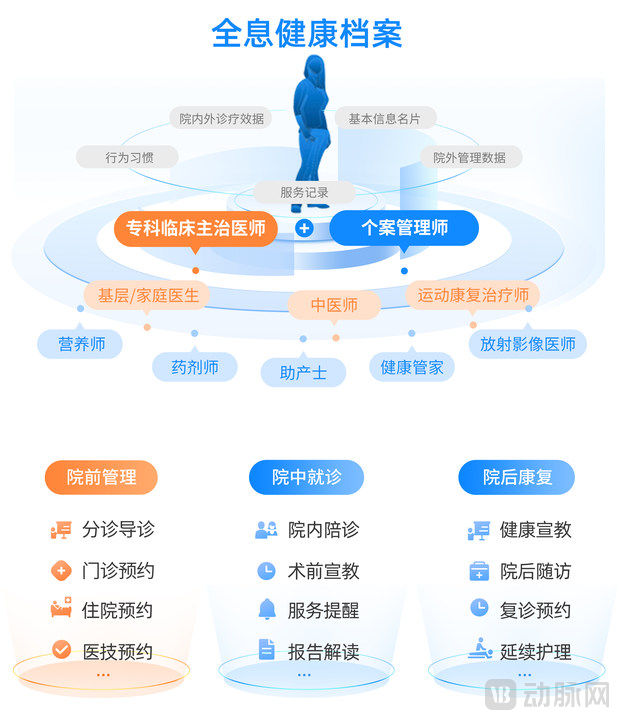
Weimai's Full-Course Disease Management Architecture
During subsequent health monitoring and management, the platform can dynamically adjust management plans. For instance, by automatically analyzing data from user inquiries, submitted images, and other information, the platform dynamically updates health records and intelligently pushes links to specialized hospital consultations or management services, thereby achieving personalized health management tailored to each individual.
In the past, it was common for patients to endure three-hour waits only to receive a three-minute consultation. Today, while advances in healthcare informatization have significantly alleviated queuing issues, the “three-minute consultation” remains a persistent challenge, fundamentally due to the limited availability of medical resources, particularly physicians. As public demand for continuous healthcare services emerges and grows, the scarcity of doctors and related healthcare professionals has become even more pronounced.For both hospitals and partners like Weimai, it is imperative to enhance efficiency and maximize the service efficacy of limited resources.
In recent years, Weimai has continuously integrated technologies such as large language models and big data into whole-course disease management to enhance the quality and efficiency of its services.In 2023, Weimai released careGPT, China’s first large language model for health management, and subsequently launched CareAI, an intelligent agent for health management, based on this foundation.
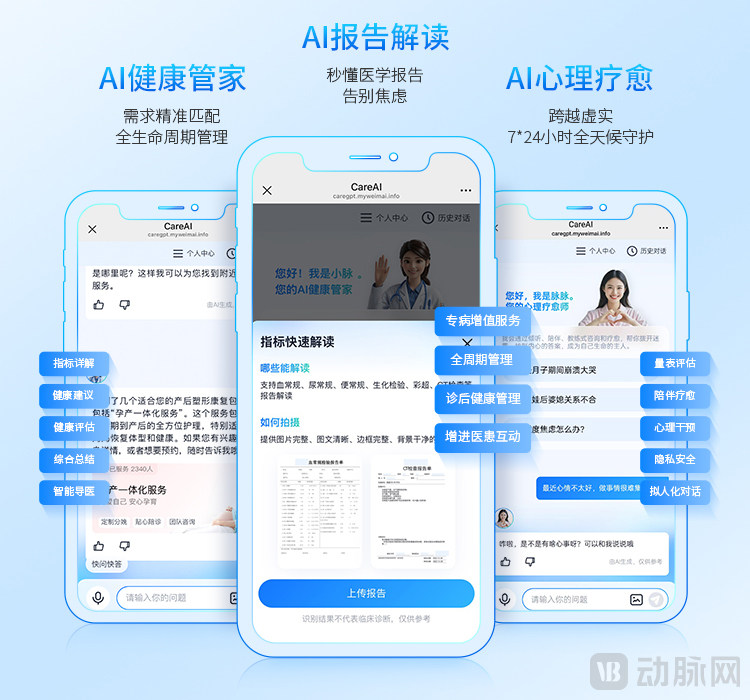
Weimai's Diverse AI Agents
Taking CareAI as an example, it not only analyzes patient interactions to deliver health recommendations in multiple formats—including text, images, and videos—but also assists health managers in designing whole-disease-course management plans, maintaining user tags and health records, and supporting hospitals, departments, and physicians in conducting intelligent analysis of clinical data for research purposes.
It is understood that a case manager could previously manage 50–70 patients simultaneously; with the assistance of AI technology, this number has surged to approximately 500 patients. Furthermore, after CareAI was iterated to version 2.0 and deployed in hospital settings, it efficiently handled over 100,000 user inquiries, saving hospitals a total of 31,200 hours in time costs and improving healthcare staff productivity by 40%.
Recently, the internet healthcare sector has seen a steady stream of positive news regarding initial public offerings (IPOs) and large-scale financing. Amid the capital winter, the long-term value of internet healthcare services remains intact. However, due to differences in their starting points, advantageous resources, and chosen development paths, companies within the industry have evolved diverse business models, each placing varying emphasis on specific segments such as medical care, pharmaceuticals, nursing, insurance, and management.
For Weimai, the differentiated business model based on whole-course disease management services has also become clearer and more defined. Meanwhile,Weimai is not limited to the "medical" aspect of internet healthcare services, but also focuses on the broader consumer market for health services.
The dividend period for health consumption has now arrived.
The “Report on the Development Trends of Health Industry Consumption” released by the China Consumers Association in August 2024 pointed out that health consumption is trending from “discretionary spending” toward “essential health needs.” In 2024, the National Bureau of Statistics noted in multiple statistical reports that, with rising living standards and shifting consumer mindsets, digital consumption, green consumption, and health consumption are increasingly becoming new hotspots in consumer spending.
Meanwhile, national policies are vigorously promoting the cultivation and upgrading of new types of consumption, including health-related consumption.
In August 2024, the “Opinions of the State Council on Promoting High-Quality Development of Service Consumption” called for fostering and expanding new forms of consumption, including health-related consumption, such as emerging service sectors like health check-ups, consultations, and management.
The 2025 National Health and Wellness Work Conference, held recently, also pointed out the need to support consumption promotion, stabilize economic growth, and enhance development momentum. It emphasized actively advancing the “Two Major” and “Two New” initiatives in the health sector, improving the informatization and intelligentization of medical and health services, and fostering consumption in areas such as health products, preventive care (“treating potential diseases”), and special-needs medical services.
Furthermore, technological innovation and iteration have enriched the supply of health-related consumer services, with technology-enabled solutions covering the entire process of appointment scheduling, in-hospital consultations, health advisory and online medical consultations, online pharmaceutical purchases, and health management.
In terms of consumption content, health consumption includes product consumption and service consumption, among which the consumption pattern for health products is relatively mature.As public health consumption concepts continue to upgrade, driven by the accelerating aging population, rising demand for health services due to increasing chronic disease prevalence, and technology-enabled expansion of health service supply, health service consumption has emerged as a promising new market with broad prospects.
In this emerging market, with sustained capital support, Weimai is expanding its disease management solutions and AI applications. As the integration of these two areas deepens, its C-MCO services are empowering more hospitals and better serving more patients, leading to increasingly optimistic growth prospects.