

Pan Yunhe, Academician of the Chinese Academy of Engineering: Convergence of AI and Healthcare Unveils Five Trends in Smart Medicine
In an era of rapid technological advancement, the integration of artificial intelligence with medicine and healthcare is profoundly reshaping the landscape of the medical field, injecting strong momentum into its development.At the 2024 (6th) Health Conference, Academician Pan Yunhe, a member of the Chinese Academy of Engineering and a professor at Zhejiang University, delivered a keynote speech titled “Trends in Intelligent Medicine (AI + Healthcare).”, introduced the latest advancements in the field of intelligent medicine to the attendees and emphasized that artificial intelligence technology has profoundly transformed the models of disease prevention, diagnosis, and treatment.
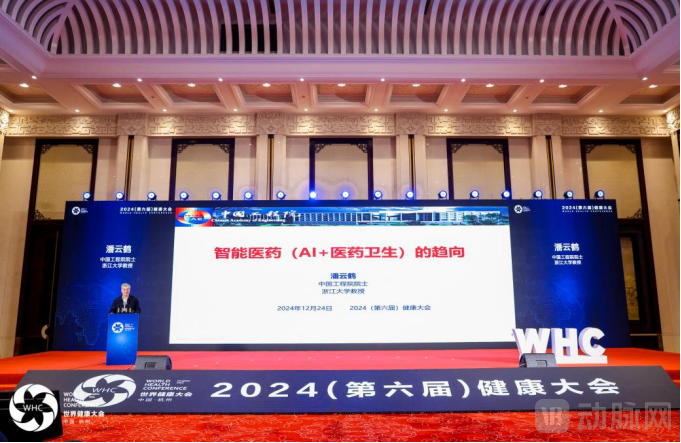
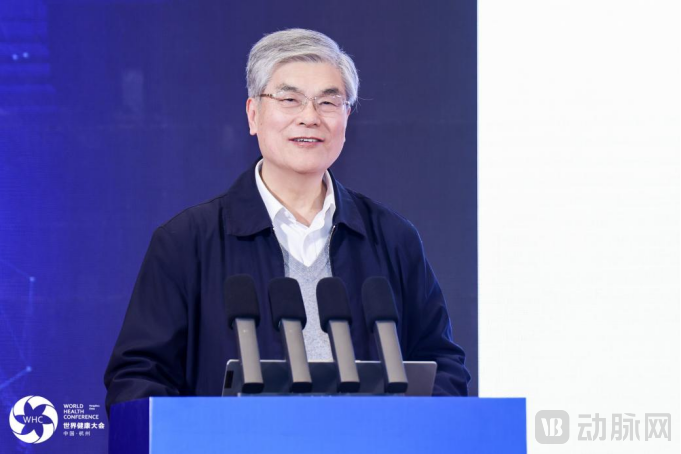
Academician Pan Yunhe, Academician of the Chinese Academy of Engineering and Professor at Zhejiang University
Academician of the Chinese Academy of Engineering and Professor at Zhejiang University. An expert in computer applications. Former Executive Vice President of the Chinese Academy of Engineering and former President of Zhejiang University. He has served as a member of the National Textbook Committee, Director of the National Strategic Advisory Committee on New Generation Artificial Intelligence, Chairman of the China Artificial Intelligence Industry Development Alliance, Chairman of the China Innovation Design Industry Strategic Alliance, Honorary Chairman of the China Invention Association, and Honorary Chairman of the China Society of Image and Graphics, among other positions. Pan Yunhe is one of the pioneers in the fields of intelligent CAD, new-generation artificial intelligence, and computer art in China. He has long been engaged in research on artificial intelligence, computer graphics, CAD, and industrial design. He has undertaken numerous major scientific research projects in areas such as computer art, intelligent CAD, computer-aided product innovation, virtual reality and digital cultural heritage preservation, digital libraries, smart cities, and knowledge centers. He innovatively proposed concepts including cross-media intelligence, data ocean, intelligent library, Artificial Intelligence 2.0, visual knowledge, and multiple knowledge representation. He has published numerous research papers, achieved a series of significant research outcomes, and received national science and technology awards on multiple occasions.
Voice assistants, facial recognition payment, smart homes... As a key engine of the Fourth Industrial Revolution, artificial intelligence has permeated every aspect of our daily lives. Amid this trend, Artificial Intelligence 2.0 has emerged.
What Is Artificial Intelligence 2.0?
As the proponent of the “Artificial Intelligence 2.0” strategic development direction, Academician Pan Yunhe stated in a previous interview that “the concept of artificial intelligence (AI), first proposed more than 60 years ago, was originally intended to make computers ‘smarter.’ Today, AI has entered a new stage and exhibits five major new trends: evolution through the integration of multiple technologies such as big data-based deep learning and knowledge graphs; the emergence of network-based swarm intelligence; rapid development of human-machine collaborative augmented intelligence; the rise of cross-media intelligence; and the advent of autonomous intelligent equipment. When these five directions are combined with emerging technologies such as 5G, the Industrial Internet, and blockchain, they will give rise to a series of new technologies, products, business models, industries, and regional ecosystems, driving the intelligent transformation of production and daily life, optimizing supply-demand matching, and making professional specialization more ecological.”
Currently, governments worldwide attach great importance to the development of artificial intelligence (AI) in the healthcare and pharmaceutical sectors, prioritizing it in their strategic planning. Meanwhile, China has actively responded to the global trend of integrating AI 2.0 with healthcare and medicine. “In the ‘New Generation Artificial Intelligence Development Plan’ released in 2017, China clearly defined five major development directions for next-generation AI: big data intelligence, cross-media intelligence, swarm intelligence, human-machine hybrid augmented intelligence, and autonomous intelligent systems. This has laid a solid foundation for the integration of AI with healthcare and medicine in China, guiding the path of technological development,” stated Academician Pan Yunhe during his presentation.
It is worth noting that Academician Pan Yunhe was a key driver behind the “Development Plan for New Generation Artificial Intelligence.”This plan is a forward-looking strategic blueprint bearing on China’s overall and long-term development, establishing a “three-step” objective: by 2020, to bring the overall level of artificial intelligence (AI) technologies and applications in line with advanced international standards; by 2025, to achieve major breakthroughs in fundamental AI theories and bring certain aspects of AI technologies and applications to a world-leading level; and by 2030, to reach a world-leading level overall in AI theories, technologies, and applications, thereby becoming a major global innovation center for artificial intelligence.
Today, China is in a critical period of transition from the second stage to the third. Academician Pan Yunhe also shared profound insights and predictions on the five major development directions of new-generation artificial intelligence, drawing on global practical cases.
Big data intelligence has become a focal point with the rise of large language models, and researchers worldwide are actively exploring innovative models for the deep integration of data and knowledge. Academician Pan Yunhe specifically highlighted two cases. First, the emergency department at Jeroen Bosch Hospital in the Netherlands achieved diagnostic accuracy rates of 97% and 87% using ChatGPT versions 3.5 and 4.0, respectively, for emergency case diagnoses, which is comparable to the 87% accuracy rate of physicians. Second, the Traditional Chinese Medicine (TCM) Knowledge Service System, led by Professor Zhang Yin of Zhejiang University, deeply integrates core TCM knowledge—including syndromes, diseases, herbal properties, and formulation logic—to provide comprehensive assistance to physicians in making precise prescriptions.
Academician Pan Yunhe stated, “By leveraging this system, physicians can readily assess the quality and side effects of medicinal materials, thereby infusing intelligence into clinical practice of Traditional Chinese Medicine (TCM) and significantly advancing its modernization. Furthermore, as the system is freely accessible to the public, it is poised to become a pivotal tool for the inheritance and innovation of TCM, promoting the dissemination and application of TCM knowledge.”
The application of artificial intelligence in the medical field is continuously advancing, making significant strides from assisted diagnosis toward knowledge discovery. For instance, a research team at Osaka University in Japan extensively trained an AI model using 140,000 chest X-rays, enabling it to assess complex indicators such as vital capacity and pulmonary function.Academician Pan Yunhe emphasized, “This marks a pivotal transition for artificial intelligence from generative capabilities to knowledge discovery, heralding a new era in medicine focused on ‘preventive treatment.’”
Brain-computer integration technology, as a cutting-edge hotspot in the field of human-machine hybrid augmented intelligence, is reshaping the industry landscape in specialized sectors such as medical rehabilitation. In his presentation, Academician Pan Yunhe highlighted that the École Polytechnique Fédérale de Lausanne (EPFL) has helped paralyzed patients regain walking ability through brain-computer interfaces, while the team at Zhejiang University achieved the first-ever application of human brain-controlled rat maze navigation.
Academician Pan Yunhe stated, “From a systems perspective, this brain-to-brain interaction system enhances the advanced cognitive capabilities of rats by ‘loading’ human cognitive intelligence regarding scenarios onto them. This achievement far exceeds the mere scope of brain reading, laying the foundation for the development of biological robots and expanding the boundaries of brain-computer integration applications.”
Meanwhile, Academician Pan Yunhe also emphasized that the application of brain-computer interface (BCI) technology in the medical field still faces safety concerns associated with implantable devices and precision limitations of non-invasive systems. He called on global research teams to join forces in overcoming potential technical challenges, with the aim of expanding the use of BCI technology in neurological rehabilitation and the treatment of nervous system disorders, thereby bringing new hope to patients.
The application of cross-media intelligence in medical assistance has brought revolutionary changes to the lives of the visually impaired. In a case shared by Academician Pan Yunhe, the robotic guide dog developed by Shanghai Jiao Tong University features a six-legged design equipped with radar and cameras, serving as a robotic assistant for the blind during travel. Stanford University in the United States has empowered blind canes with intelligent sensing and pathfinding methods derived from autonomous driving technology, utilizing multimodal sensing technologies and intuitive feedback systems to achieve obstacle detection and intelligent navigation. The smart glasses, which won the Gold Award at the Hangzhou Innovative Design Competition, capture environmental information through dual cameras and convert it into clear auditory signals via intelligent processing, providing real-time alerts to help blind users avoid obstacles and identify terrain.
Academician Pan Yunhe stated, “These innovative products fully demonstrate the boundless creativity and diverse potential of cross-media intelligence in the field of medical assistive devices. By continuously upgrading to meet the personalized needs of individuals with visual impairments, they significantly enhance their quality of life and independent mobility.” In the future, as technology iterates, intelligent guide products are expected to integrate more functionalities, deeply embed into the smart living ecosystem, and help individuals with visual impairments seamlessly connect with social life.
In the field of medical equipment, many traditional devices have achieved a leap toward intelligence. For instance, the intelligent ultrasound system developed by Professor Kong Dexing of Zhejiang University completed the ultrasound image recognition and diagnosis of thyroid cancer and breast cancer in just 1 minute and 36 seconds during a human-machine competition hosted by China Central Television (CCTV), achieving an accuracy rate of 90%. This performance significantly surpassed the average diagnostic time of 45 minutes and the 75% accuracy rate recorded by 200 physicians.
Academician Pan Yunhe emphasized, “Professor Kong’s team did not rest on their laurels in image recognition; instead, they innovatively equipped ultrasound systems with robotic arms to simulate clinicians’ manual techniques for dynamic scanning and real-time image interpretation. By precisely focusing on suspected lesions for enhanced scanning, this approach significantly improves diagnostic accuracy. This achievement has effectively promoted the enhancement of diagnostic capabilities at the primary care level, provided a replicable pathway for the intelligent transformation of medical equipment, and accelerated the advancement of high-end domestically produced medical devices.”
Innovative Applications of Swarm Intelligence in Healthcare Service Platforms Are Giving Rise to New Business Models. At the conference, Academician Pan Yunhe introduced the portable smart electrocardiogram (ECG) monitor developed by Haoluowei Medical. By integrating multiple sensors, this device enables wireless transmission and simultaneous monitoring of multiple indicators. Furthermore, it features a built-in intelligent analysis and diagnostic module capable of automatically analyzing and assisting in the diagnosis of 204 types of abnormal ECG patterns across 30 major categories, achieving an accuracy rate of 86%, which is comparable to the diagnostic proficiency of cardiologists.
Academician Pan Yunhe stated, “The portable smart ECG monitor features a compact design and wireless connectivity, making it widely applicable in both hospital and home settings. By leveraging the ECG cloud platform, users can conveniently connect with hospital specialists to obtain precise diagnostic recommendations. Throughout this process, vast amounts of ECG data and comparative diagnostic cases are accumulated, thereby enabling enterprises to upgrade and transform from hardware manufacturing to data-driven value-added services.”This innovative model leads the servitization transformation of medical device enterprises, promotes the aggregation and sharing of medical data and the construction of a collaborative diagnostic ecosystem, enhances the efficiency of medical resource allocation, and injects momentum into the innovative development of healthcare services.
Currently, the field of medicine and public health is striding into a new era of molecular medicine, with AI playing a crucial role in this process, particularly in gene editing, multi-omics diagnostics, and protein synthesis.For example, the CRISPR-Cas9 gene-editing tool uses guide RNA to precisely locate and cleave specific targets within human cell genes, effectively disrupting disease-causing mechanisms. Meanwhile, AI has played a pivotal role in the rise of nucleic acid (RNA) therapeutics in the post-pandemic era by enabling the screening of novel targets from vast genomic libraries and identifying materials that protect RNA drugs and facilitate their delivery to specific sites in the body.
More importantly, in recent years, the Nobel Prize in Physics and Chemistry has increasingly favored research related to artificial intelligence. “The repeated recognition of AI experts by the Nobel Prizes in Physics and Chemistry has sparked profound reflection within the academic community. Physics is transitioning from being dominated by mathematical analytical formulas to a data-driven approach, ushering in the fourth generation of big data-driven scientific research. The medical field is also accelerating its deep integration with artificial intelligence and data science, giving rise to disruptive innovations and reshaping the ecosystem of the healthcare industry.”
In the field of medicine and healthcare, we must closely align with the pulse of the times by integrating AI into medical and health services. By pooling resources from all sectors, accelerating technological breakthroughs and the translation of research outcomes, and strengthening the cultivation of an innovative ecosystem through multidisciplinary cross-integration, we will inject innovative vitality into the global health cause and ensure that frontier technologies such as AI benefit people worldwide.