

Fuyi Medical Unveils Akso: China's First Humanoid Intelligent Microsurgical Robot System

FUE Biosciences
Medical Robotics Developer
Market Confidence in Domestic Surgical Robots Remains UnshakenThe market has never lacked confidence in domestically produced surgical robots. Even during the capital winter, the domestic surgical robot sector secured over 100 financing rounds in the past four years (data from VCBeat Research). Whether driven by unmet clinical needs, the continuous output of innovative achievements through industry-academia-research collaboration, or the irreplaceability, robust assistive capabilities, and scalability inherent to surgical robots themselves, these factors continue to propel the market forward.
Today, Chinese surgical robot manufacturers are on equal footing with their global counterparts, making discussions of surpassing or replacing them unnecessary.
At the recently concluded 2024 International Academic Forum and Achievements Exhibition of the Medical Robotics Institute, Shanghai Jiao Tong University,Shanghai Fuyi Medical Technology Co., Ltd.(hereinafter referred to as "Fuyi Medical")The Dual-Arm Microsurgical Teleoperated Robotic Surgical System on Display, andDesktop Ultra-Precision Implantation PlatformIt has garnered significant attention from experts and scholars, investment institutions, and industry professionals both in China and abroad.
The reason why Fuyi Medical has attracted industry attention lies not only in the companyTechnical BarriersGao Zhu, SolutionsIntegrating cutting-edge technologies such as collaborative robotic arms and sub-micron precision motion stages, along with macro-micro control, teleoperation, and visual servoing.Advanced Technology Integration, ensuring that the system is user-friendly, highly accurate, and cost-effective, and also lies in the companyThe establishment of core technology platforms and product pipelines has enabled its solutions to comprehensively cover a wide range of application scenarios, including microsurgery, brain-computer interfaces, and hair transplantation.
By overcoming core technical challenges and establishing a comprehensive product pipeline, Fuyi Medical has effectively addressed the need for automation, high-precision repetitive tasks, and fine motor maneuvers that are difficult to achieve through manual operation by physicians.
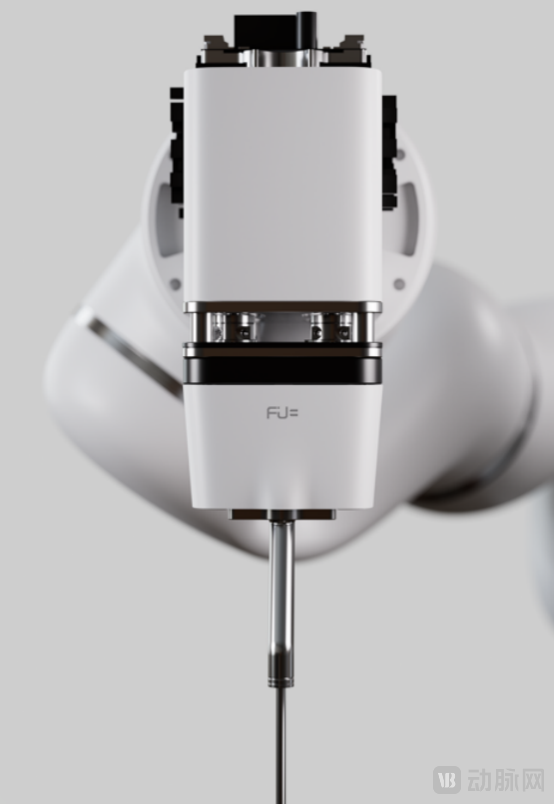
Capable of performing delicate 0.5mm microvascular anastomosis, the 13-DOF serial-parallel collaborative arm achieves micron-level precision
Akso Microsurgical Teleoperation Surgical Robot SystemAs the flagship product of Fuyi Medical, it addresses critical clinical challenges in microsurgery above the head and neck—namely, the demands for high precision, limited visual fields, and elevated risks—through precise, microscopic, dual-arm collaborative manipulation. It enables surgeons to achieve highly precise and stable operations in complex and confined surgical environments. The system is particularly suited for neurosurgical procedures, as well as complex tasks such as suturing, ligation, anastomosis, and reconstruction of blood vessels, nerves, and lymphatic vessels, capable of completing0.5 mm Microvascular Anastomosis: Fine Manipulation Techniques.
Specifically, the system comprises a patient-side robotic manipulator and a surgeon-side console. Through a master-slave control system, surgeons can precisely manipulate minimally invasive surgical instruments, thereby enabling efficient and safe surgical procedures.
itsPistol-Grip Instrument Design, facilitating multi-instrument manipulation by physicians through small incisions, and effectively overcoming the limitations in surgical depth and visual obstruction caused by the bulky size of traditional robotic arms. Akso can penetrate deep into tissues to perform more precise and deeper surgeries, thereby expanding the range of applicable surgical procedures. The system is equipped with articulated wrists featuring dexterous joints2.5mm Micro-Instruments, it offers precision and flexibility.
Not only that, the system adoptsDual-Arm Macro-Micro Architecture, among which7-DOF Serial Collaborative Arm with Sub-Millimeter Precision, which not only enhances surgical flexibility but also ensures operational stability. Meanwhile,6-DOF micro-motion platform provides micron-level precision operation, the multi-degree-of-freedom design enables the implementation of the Remote Center of Motion (RCM) module, further ensuring high precision and stability in surgical procedures.
However,Merely maintaining a lead in core technologies is insufficient to ensure the successful clinical application of products.Currently, some approved surgical robot systems on the market are facing commercialization challenges, with many technologies disconnected from actual clinical needs. Moreover, microsurgical robotics is a relatively innovative surgical robot technology.It is particularly important to let clinical needs guide basic research during the R&D process, thereby driving technological innovation in engineering.
Shanghai Fuyi Medical Technology Co., Ltd. has recognized this and works closely with major hospitals,Through the Clinical Joint Research Center, facilitating the translation of scientific research achievements into clinical applications to ensure that the developed robotic technologies can effectively address practical clinical problems. Meanwhile, continuouslyMaintain cooperation with the Institute of Medical Robotics at Shanghai Jiao Tong University, to support and empower its frontier basic research and major brain-computer interface projects, thereby driving engineering technology innovation and clinical translation.
Therefore, Fuyi Medical deeply integrates technology with clinical practice to createHuman-machine collaboration functionality, with room reserved for third-party manual operations., making the surgical procedure more flexible and safe.
This system pioneers the introduction of anthropomorphic innovative design into the field of surgical robots.
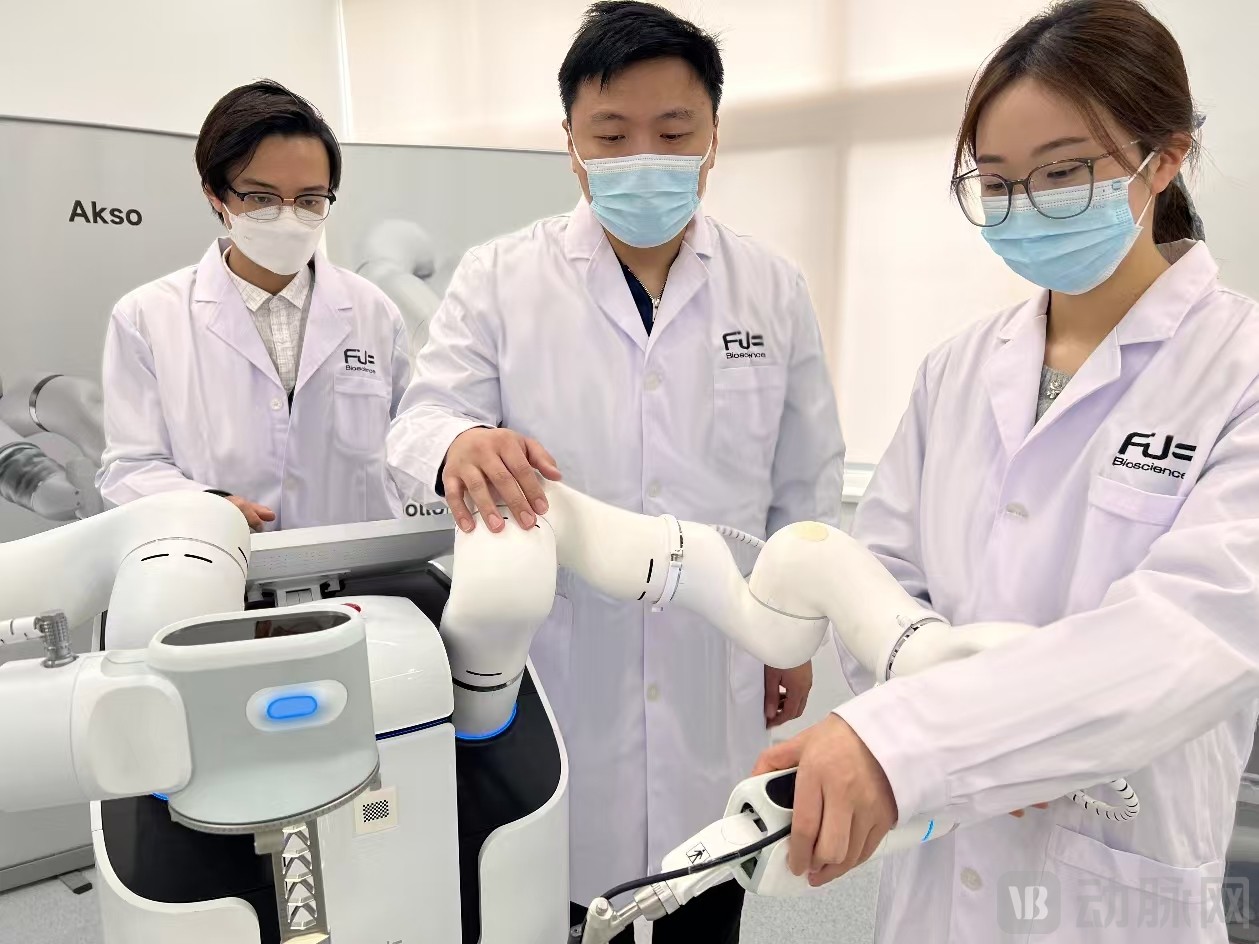
AksoIt separately simulates the surgeon’s eyes, arms, and wrists, featuring a high-magnification exoscope mounted on the central robotic arm, bilateral multi-degree-of-freedom robotic arms for convenient intraoperative instrument positioning, and dexterous wrist-like joints at the instrument tips. A unified control system enables anthropomorphic, efficient overall control and coordination, allowing the robot to perform ultra-precise microsurgical maneuvers that surpass the precision limits of the human hand.
As an integrated system, the anthropomorphic surgical robot features high-level coordination among its modules, processing information and making motion decisions by sharing sensory data, much like the human brain. From a clinical application perspective, the anthropomorphic design offers greater flexibility, stronger adaptability, and better space utilization compared to traditional single-arm surgical robots. This design effectively reduces spatial constraints during surgery, optimizes operational paths, and enhances surgical visualization. Through deep collaboration with medical teams and precise adaptation to patients’ physiological characteristics, the anthropomorphic dual-arm system can better integrate with medical staff, patients, and surgical instruments within the operating environment, thereby advancing intelligent medical robotics to a higher level.
Building on its independently developed microsurgical teleoperated robotic system, Fuyi Medical has continuously deepened its expertise in shared technologies such as collaborative multi-arm systems, micron-scale macro-micro control, visual servoing, and image-guided planning, thereby establishing a robust technology platform. The company has also launched a desktop-sized ultra-precise implantation platform and a dual-arm hair transplantation robot to comprehensively cover diverse application scenarios, meet clinical needs, and achieve self-sustaining operational viability.
EnterpriseDesigned for Universities and Research InstitutesDesktop Compact Ultra-Precision Implantation Platform, meeting the rapidly growing demands in the field of implantable brain-computer interfaces. By combining an ultra-high-precision parallel kinematic platform with vision-based AI algorithms, the system can actively avoid blood vessels and compensate for brain tissue movement induced by respiration, thereby enabling precise implantation of flexible micro-nano electrodes into target brain regions with an implantation error of <50 μm. This reduces damage to brain tissue and enhances the safety and efficacy of the procedure. It addresses the needs of customers who specialize in brain electrode design and cellular drug injection but lack expertise in the development of precision implantation hardware and software.
Shanghai Fuyi Medical Technology Co., Ltd. has also achieved the application of its core technologies through dimensional reduction, developing a dual-arm robotic system for hair transplantation surgery., for follicular unit extraction in hair transplantation surgery. This system addresses the pain points of traditional hair transplant procedures, including random estimation of follicular unit counts, prolonged operative times, high dependence of surgical precision on physician experience, and repetitive fatigue-inducing tasks. Currently,The hair transplant robot has successfully passed the type testing.
From laparoscopic surgical robots, orthopedic surgical robots, and percutaneous puncture surgical robots to natural orifice surgical robots, surgical robots have undergone a long developmental journey. Looking back at the entire course of development, it is basically certain that, current surgical robots are continuously focusing on minimally invasive and non-invasive treatments, and entering a new round of development stage.During the process, whether it isMicrosurgical robots, hair transplant surgical robots, and brain-computer interface surgical robots have all been key areas of industry focus in recent years.
Among these, microsurgical robots, as a product capable of surpassing the limits of human manual dexterity, offer a highly viable alternative to existing clinical treatment methods. By magnifying the surgical field through microscopic or supermicroscopic techniques, and leveraging sensor systems to precisely scale down the surgeon’s hand movements while effectively filtering out the natural physiological tremor of approximately 100 micrometers, these systems enable ultra-precise manipulation of delicate structures. This addresses key limitations in microsurgery, including the high technical demands on surgeons, the steep learning curve, and prolonged operative times.
Furthermore, this technology expands surgical boundaries and can be flexibly applied to microsurgical vascular anastomosis, microsurgical nerve repair, and microsurgical dissection. It is widely used in departments such as plastic surgery, neurosurgery, ophthalmology, oral and maxillofacial surgery, and surgical oncology. With its compact footprint, the device benefits patients alike in top-tier Grade A tertiary hospitals and in remote areas with limited medical resources.
Yet, despite its immense value, mature products leveraging this technology remain relatively scarce, largely due to the complexity of its technical pathways.
Microsurgical robotic systems require not only a combination of rigidity and flexibility but also robust mobility with high degrees of freedom. Furthermore, they demand precision mechanical structural design, a stable and sturdy base, and end-effectors that are both compact and delicate to enable accurate positioning and manipulation. Consequently, this technology presents significant barriers to entry for market participants across research and development, design engineering, and manufacturing.
Shanghai Fuyi Medical Technology Co., Ltd., established in 2021, has achieved rapid technological breakthroughs by leveraging the extensive technical expertise accumulated over many years at Imperial College London by its core R&D team, led by Dr. Liu Ning. Since its inception, the company has built a relatively advanced and mature portfolio of innovative achievements in fields such as surgical robotics, micro-nano systems, perception and cognition, intelligent composite materials, precision mechatronics and manufacturing, and robotic vision and image-guided intervention.
Meanwhile,The company’s R&D team accounts for as high as 70% of its workforce, and it has established a quality management system for the research, development, and production of active medical devices., and a comprehensive scientific advisory system,Bringing together top experts in the field of surgical robotics, clinical directors from leading Grade A tertiary hospitals, and investors from renowned healthcare venture capital firmsetc., forLaying the foundation for accelerating the translation of products from R&D to market.It is precisely based on the accumulation and translation of innovative achievements, as well as the support from the team and scientific advisory system that Fuyi Medical has quickly emerged in the field of surgical robots. In 2023, Fuyi Medical also won recognition from the capital market and successfully obtained funding fromSequoia Capital and DaoTong Capitalinvestment.
In the future, Fuyi Medical will continue to deepen its technological advantages in the field of microsurgical robotics, constantly advancing product innovation and clinical applications. Meanwhile, it will strengthen collaborations with leading medical institutions both domestically and internationally, aiming to achieve further breakthroughs in surgical robot technology and meet a broader range of clinical needs.