

Orionis Biosciences Files for IPO Following $2 Billion Back-to-Back Partnerships with Novartis and Roche

Orionis Biosciences
Innovative Drug Developer
Recently, molecular glue technology has achieved significant progress in collaborations and research within the pharmaceutical industry.
In September 2024, Bristol Myers Squibb announced at its R&D Day that it had ten molecular glue candidates for oncology in the full discovery and IND-enabling stages. Subsequently, in October, Monte Rosa Therapeutics partnered with Novartis on a $2.25 billion deal to co-develop MRT-6160, a molecular glue degrader for autoimmune diseases, leveraging its QuEEn™ platform.
According to incomplete statistics from VCBeat, eight multinational corporations (MNCs), including Novartis, Roche, and Bristol Myers Squibb, have partnered with other companies to develop molecular glues.
As early as September 2023, Genentech, a member of the Roche Group, announced a long-term collaboration with Orionis Biosciences to discover and develop novel small-molecule drugs targeting challenging indications in major disease areas, including oncology and neurodegenerative diseases.
Under the agreement, Orionis will be primarily responsible for the discovery and optimization of specific target molecular glues using its ALLO-GLUE™ platform, while Genentech will handle subsequent preclinical/clinical development, regulatory submissions, and commercialization.
Through this collaboration, Orionis will receive a $47 million upfront payment and be eligible for potentialOver $2 billion in development, commercial and net sales milestones, as well as tiered royalties on sales of collaborative products.
Prior to its collaboration with Roche, this “star” company in the field of molecular glues had also secured $55 million in financing from Novartis, Cormorant, and others.
Over 25 Years of R&D Experience, with Core Technologies Originating from the Founding Team
Orionis Biosciences, founded in 2015, is dedicated to developing novel, highly specific, and tunable therapies for cancer and other indications by driving technological innovation in large-scale genomic drug discovery.
Furthermore, Orionis is focusing on developing monovalent molecular glue drugs using its proprietary ALLO-GLUE™ platform, as well as creating new types of precision biologics and cytokine-based immunotherapies using its A-Kine™ platform.
Dr. Nikolai Kley is the Co-founder and Chief Executive Officer of Orionis Biosciences, with over 25 years of experience in drug discovery and development. He serves as a Research Professor in the Department of Molecular Biology at Princeton University, focusing on the design and development of targeted therapeutics through technological innovation. In academia, Dr. Kley completed his postdoctoral research at Harvard Medical School and has published more than 50 peer-reviewed scientific papers and book chapters. Additionally, he is a co-inventor on numerous patents and patent applications, several of which form the core of Orionis’s technology platform.
 Dr. Nikolai Kley. Image source: Orionis official website
Prior to joining Orionis, Dr. Nikolai was the co-founder of FORMA Therapeutics, a clinical-stage biopharmaceutical company dedicated to transforming the lives of patients with sickle cell disease (SCD) and rare blood disorders. The company was acquired by Novo Nordisk for $1.1 billion in 2022.
In addition, he has served in executive and senior scientific leadership roles in drug discovery and development at multiple companies and organizations, including GPC Biotech, Genome Therapeutics Corporation, and the Bristol-Myers Squibb Pharmaceutical Research Institute.
Dr. Jan Tavernier, Co-founder and Chief Scientific Officer of Orionis Biosciences, is equally noteworthy. Dr. Jan earned his Ph.D. in 1984 for his work on the cloning of interferon and interleukin genes, and has made pioneering discoveries in cytokine biology and translational applications. Together with Professor Gilles Uze of the French National Centre for Scientific Research (CNRS), he conceived the early concept of AcTakines (targeted active cytokines), which forms part of the foundational seed technology behind Orionis Biosciences.
 Dr. Jan Tavernier. Image source: Orionis official website
In addition, Dr. Jan holds 49 patents, has published more than 300 manuscripts, and was named to Nature Biotechnology’s 2018 list of the Top 20 Translational Researchers.
With the support of such a founding team, Orionis Biosciences is poised to make further advancements in the biotechnology sector, bringing more effective treatment options to patients.
Mapping Over 20,000 Genes: Dual-Platform Synergy Driving Innovative Drug Development
Orionis Biosciences’ ALLO-GLUE™ platform employs multiple unique approaches to discover potential small-molecule drugs targeting disease targets that are difficult to address with traditional drug discovery methods.
This platform integrates a proprietary suite of chemobiology technologies, including bioassays, computational analysis, chemical libraries, and high-throughput discovery automation, for the rational design and optimization of small molecules that promote or induce protein–protein interactions in living cells. These include molecular glues that promote interactions leading to target degradation, as well as small molecules that modulate target protein function through direct or allosteric mechanisms. ALLO-GLUE™ molecule-induced interactions can lead to the degradation, inhibition, or functional alteration of target proteins via the cell’s native protein processing machinery.
Furthermore, the platform offers three primary approaches for monovalent conjugates and disease protein degraders:
Ligase-Centric Approach: Determining the interaction capacity of ligase ligands (candidate glues) with any of the approximately 20,000 proteins encoded by the human genome. In simple terms, the platform can map molecular drug interaction fingerprints for up to approximately 20,000 gene products, equivalent to the entire human genome.
Reverse Targeting Approach: Assesses the ability of a target ligand to promote the interaction between its target and any one of over 400 qualified E3 ligases, thereby facilitating the target’s self-degradation.
Target-Centric Approach: Identifying molecular glues that promote the interaction between a specific target and any one of a panel of qualified E3 ligases through screening of chemically diverse libraries.
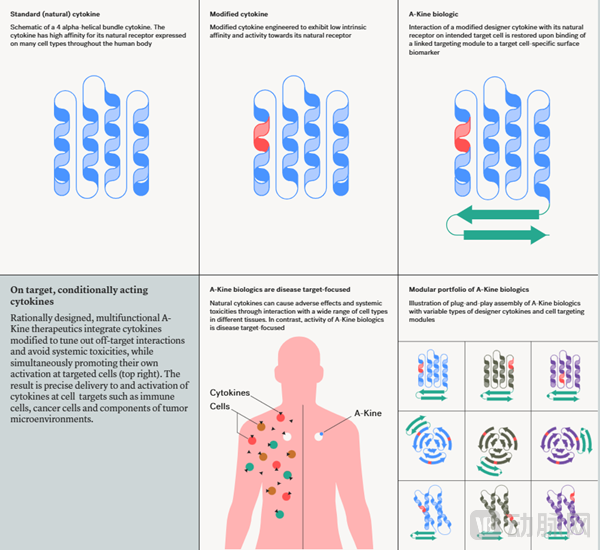 ALLO-GLUE™ Platform Image source: Orionis official website
In addition to the ALLO-GLUE™ platform, Orionis also possesses the A-Kine™ platform. According to its official website, the development of the A-Kine™ platform covers a variety of tumor types, including “cold” tumors and refractory tumors that are difficult to treat with traditional immune checkpoint inhibitors. By leveraging unique cytokine and biologic engineering technologies, it overcomes the limitations of conventional cytokine therapies. Furthermore, A-Kine™s® demonstrate favorable tolerability profiles, holding promise for providing new therapeutic avenues for the treatment of early-stage diseases.
Specifically, the platform utilizes protein engineering technologies to modify and engineer cytokines. The resulting modified cytokines exhibit high specificity and conditional activity, enabling them to precisely target specific cells within immune populations and the tumor microenvironment. This approach aims to restore immune function, effectively eliminate cancer cells, and induce immune memory and anti-tumor immunity.
Given its unique mechanism of action and tolerability profile, A-Kine™s® also holds therapeutic potential in combination with other treatment modalities, including immune checkpoint inhibitors, radiotherapy, radioligand therapy, molecular glues, and cell therapies.
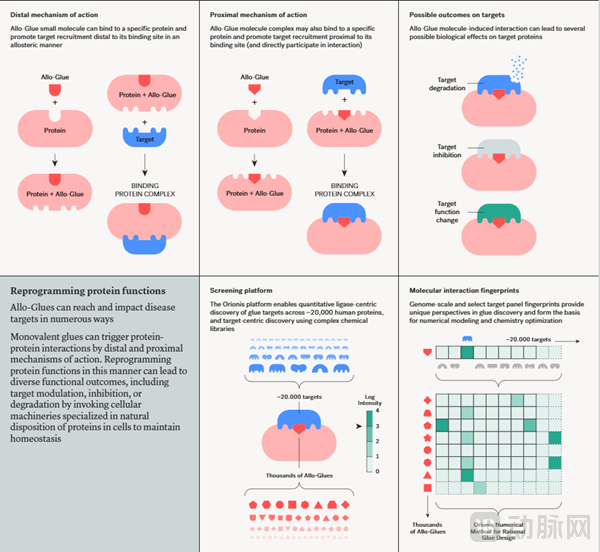
A-Kine™ Platform. Image source: Orionis official website
Currently, Orionis is advancing its pipeline of cancer therapeutic biologics based on the A-Kine™ platform.
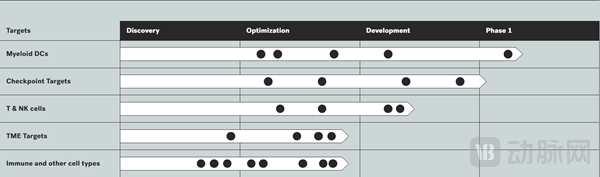
Orionis Pipeline. Image source: Orionis official website
Among these, the A-Kine™ project integrates cytokine families such as interferons, interleukins, and tumor necrosis factors, and employs engineering strategies to achieve selective action on specific targets. The company utilizes proprietary molecular scaffolds and linker technologies, combining targeting modules with cytokine effectors, to develop a diverse portfolio of biologics with unique properties.
The ALLO-GLUE™ project is primarily focused on targets in the fields of oncology and immunology, while Orionis Biosciences’ collaborations with Novartis and Genentech are driving target discovery for multiple classes of molecular glues across various therapeutic areas.
Total Value Exceeds $13 Billion, MNCs Rush to Partner
In the healthcare sector, multinational corporations (MNCs) have always demonstrated acute sensitivity to emerging technologies and new frontiers, rapidly identifying any developments conducive to drug development. Unlike other areas where the primary strategy is in-licensing pipelines, MNCs in the molecular glue field show a stronger preference for collaborating with biotechnology companies on co-development or acquiring their technology platforms.
As early as 2020, Orionis and Novartis entered into a four-year R&D collaboration focused on Orionis’s proprietary ALLO-GLUE™ small-molecule platform. The two parties leveraged this platform to discover and design innovative small-molecule therapies across various therapeutic areas, including protein degraders. In 2023, building on the ALLO-GLUE™ platform, Orionis Biosciences further secured a collaboration with Roche valued at over $2 billion.
Unlike Monte Rosa Therapeutics’ QuEEn™ platform, which combines AI and proteomics technologies to discover and develop molecular glues, ALLO-GLUE™ has a broader scope of application. It is not limited to targets that are difficult to drug, but also provides unique insights for optimizing drug design strategies.
According to incomplete statistics from VCBeat, the molecular glue sector has seen 13 deals totaling over $13 billion in the past two years. From January to October 2024 alone, nine deals were completed.
 Molecular Glue Trading Market | Chart by VCBeat
The fervor in the molecular glue sector has long extended to China, with domestic biotech companies frequently licensing their molecular glue products overseas. In May 2024, Dage Biotechnology entered into a collaboration with Takeda Pharmaceutical Company to leverage its GlueXploer platform for the discovery, validation, and optimization of molecular glue degraders targeting specific disease targets selected by Takeda, with potential deal values reaching up to $1.2 billion.
Subsequently, in August, Seed Therapeutics, a subsidiary of Wanchun Pharma, established a strategic research collaboration with Eisai to discover, develop, and commercialize novel molecular glue degraders targeting multiple undisclosed neurodegenerative disease and oncology targets, with a potential deal value of up to $1.5 billion.