

Nanjing University Alumnus-Founded Biopharma Upstream Firm Sefin Technology Goes Public on STAR Market

Sepax Technologies
Developer of Chromatography Technologies for Biopharmaceutical Separation and Purification
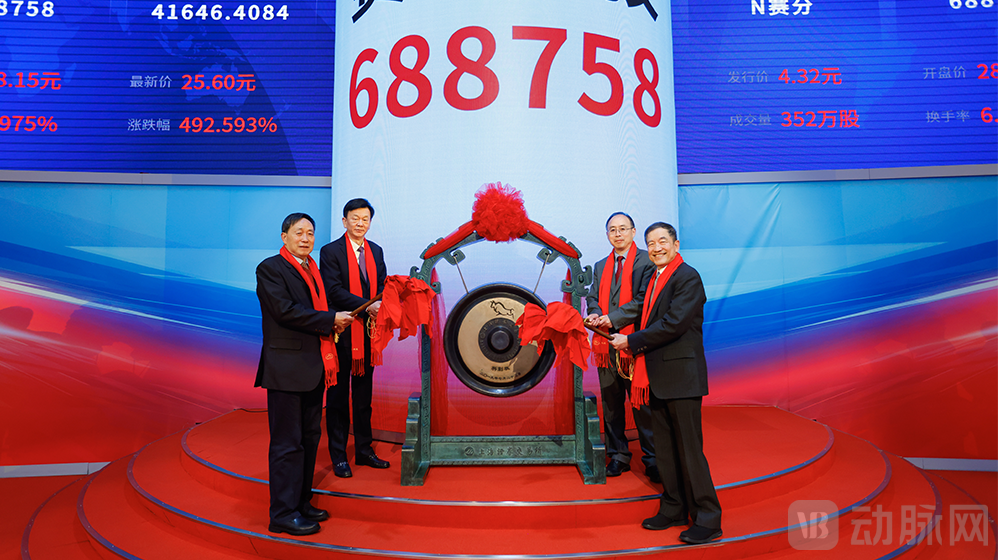
On January 10, SuZhou Sepax Technologies Co., Ltd. (hereinafter referred to as “Sepax Technologies”) officially listed on the STAR Market of the Shanghai Stock Exchange, with stock code 688758, an issue price of RMB 4.32 per share, and total funds raised of RMB 216 million, becoming the first biopharmaceutical-related company to complete an initial public offering (IPO) on the STAR Market in 2025. Its closing price surged by 379.17% on the first day of trading, bringing its total market capitalization to over RMB 8 billion.
Founded in 2002, Sepax Technologies focuses on the research and development and production of liquid chromatography materials for drug analysis, testing, separation, and purification—specifically chromatographic media and liquid chromatography columns.
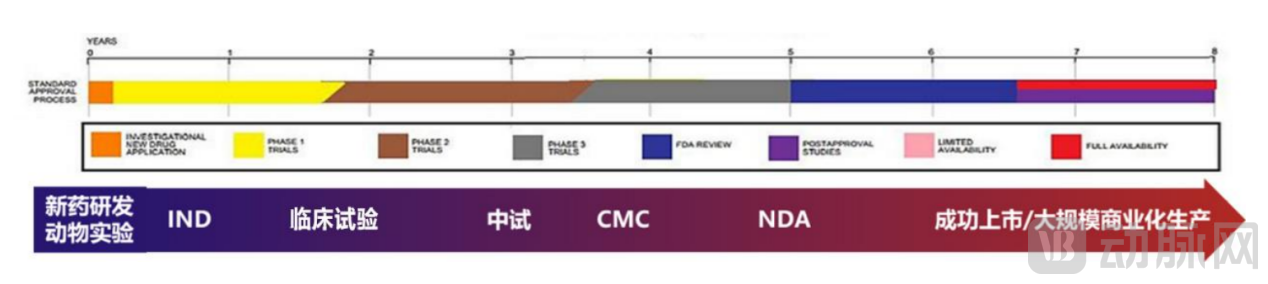
The aforementioned products cover the entire process of drug development and manufacturing, and are applied in multiple stages including drug R&D, IND filing, clinical trials, marketing authorization applications, and commercial-scale production. They serve as critical core consumables required by pharmaceutical companies, particularly biopharmaceutical enterprises, from early-stage drug discovery to large-scale commercial manufacturing. According to the “Classification of Strategic Emerging Industries (2018)” issued by the National Bureau of Statistics, Sepax Technologies falls under the category of “4.1.4 Manufacturing of Key Equipment and Raw/Auxiliary Materials for Biopharmaceuticals,” positioning it as an upstream player in the pharmaceutical industry chain.
▲ Image source: Prospectus
After nearly 23 years of development, Sepax Technologies has become one of the few companies in the industry with both R&D capabilities and large-scale production capacities in analytical chromatography and industrial purification. It is also a leading enterprise in the domestic market and a major player in international competition.
In terms of revenue, according to the prospectus, the company’s operating revenues from 2021 to 2023 were RMB 154 million, RMB 212 million, and RMB 245 million, respectively, reaching RMB 218 million in the first nine months of 2024, demonstrating a consistent growth trend. Net profits for the same periods were RMB 47.1393 million, RMB 52.4857 million, and RMB 54.4879 million, respectively.
In this process, SuZhou Sepax Technologies Co., Ltd. secured investments from prominent firms including Tonghua Investment, China Life Jiequan, Huatai Health Industry Fund, CPE Yuanfeng, Fosun, Hillhouse, Sinopharm Capital, and Sherpa Investments.
It is worth noting that Huang Xueying, the founder of Sepax Technologies, is an alumnus of Nanjing University, where she studied in the Department of Chemistry. As another listed company with ties to Nanjing University alumni, what is the underlying quality of Sepax Technologies? What are the development prospects and challenges facing its industry? Are any new trends emerging? In response to these questions, this article will provide an in-depth analysis based on the company’s prospectus.
The entrepreneurial history of Sepax Technologies is the development history of China's chromatography technology industry.
In 1990, after graduating from the Department of Chemistry at Nanjing University, Huang Xueying, founder of Sepax Technologies, went to the United States to pursue a Ph.D., specializing in ion chromatography. Leveraging his strong research capabilities, Huang served as a Senior Research Scientist and Senior Chemist at Dionex Corporation and DuPont’s R&D Center in the United States between 1999 and 2005.
At that time, the global analytical chromatography market was nearly monopolized by foreign companies. In response to this situation, Dr. Huang Xueying decided to break the status quo. He established Sepax Technologies in the United States in 2002 and, after returning to China in 2009, founded SuZhou Sepax Technologies Co., Ltd. in Suzhou.
However, achieving breakthroughs in the field of chromatography technology is no easy feat—chromatography-related products involve high technical complexity and significant R&D barriers, making it a talent-intensive and technology-intensive industry.
In response, Dr. Huang Xueying extensively recruited talent before and after the company’s establishment, gradually building a technical team centered on chromatography R&D. Dr. Huang Xueying, the company’s founder, serves as the head of the Chromatography Science R&D team. She has published more than 20 papers in prestigious international academic journals such as Macromolecules, JACS, and Analytical Chemistry, and has filed 79 patent applications as an inventor, 34 of which have been granted. Dr. Mao Huiming serves as the head of the Materials Science R&D team; Dr. Wang Hongyu is the Chief Quality Officer; Dr. Mathew George leads the R&D and application of the size-exclusion chromatography column product line; and Dr. Yang Ke serves as the head of the Protein Engineering R&D team.
With the continuous influx of talent, along with ongoing R&D exploration and the accumulation of experience,Sepax Technologies has mastered several core technologies, including microsphere synthesis, surface modification, functionalization, preparation of core-shell composite chromatographic media, synthesis of functional biological macromolecules, and chromatography media packing.
According to the prospectus, Sepax Technologies applies the aforementioned core technologies to various stages of chromatography product manufacturing. Leveraging these core technologies and production processes, the company has established a comprehensive portfolio of chromatography products covering multiple separation modes and performance characteristics. These products are widely used in the separation and purification of pharmaceutical molecules with varying molecular weights and spatial conformations, including small-molecule compounds, antibodies, vaccines, insulin, nucleic acids, and recombinant proteins.
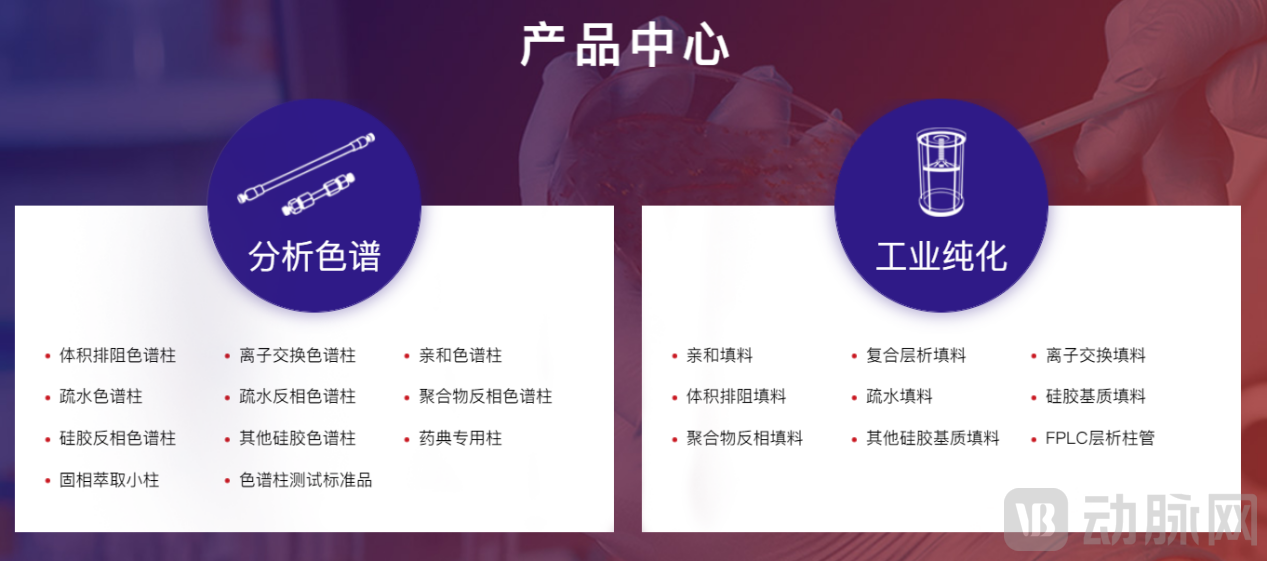
Specifically, in terms of product portfolio, Sepax Technologies primarily offers chromatography columns and chromatographic resins, which are categorized into two major fields based on their applications: analytical chromatography and industrial purification.
▲ Image source: Sepax Technologies official website
Chromatography ColumnThe product is manufactured by packing micron-sized stationary phase chromatography media into stainless steel or PEEK plastic column tubes using proprietary technology. By connecting the resulting chromatography column to a liquid chromatography analysis instrument, mixed components can be separated for the analysis of various drug molecules. High-performance chromatography columns offer excellent stability, reproducibility, and extended service life, ensuring superior resolution and accuracy while reducing separation time and costs.
Chromatography columns with various specifications can be manufactured by varying the particle size, pore size, functional groups, and surface modification technologies of the chromatographic microspheres, as well as the material, diameter, and length of the column tubes. To date, Sepax Technologies offers over 1,000 specialized chromatography products, with specifications covering particle sizes from 1.7 to 10 μm, pore sizes from 80 Å to 2000 Å, and inner diameters from 0.3 mm to 5 cm.
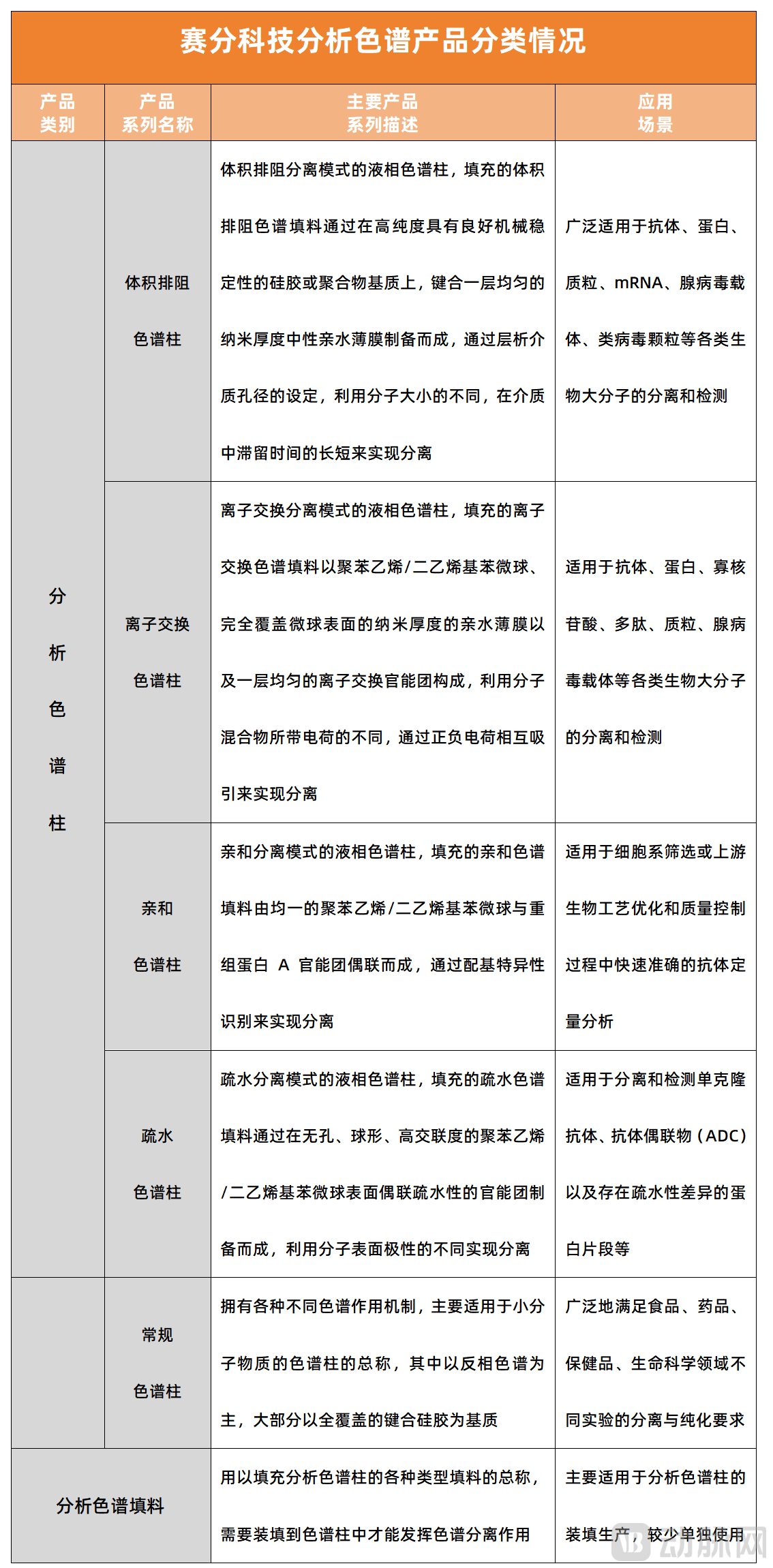
Chromatography Media(also known as “chromatography media”) typically have a particle size of 10 micrometers or larger. They are primarily used for separation and purification during the clinical research and industrial production stages of pharmaceuticals to achieve the extraction of target components. Industrial-grade chromatography products for purification are mostly supplied as bulk chromatography media, facilitating large-scale purification by pharmaceutical companies. Additionally, chromatography media can be packed into empty column tubes and provided as pre-packed columns for customers to conduct small-scale screening and purification.
Sepax Technologies has independently developed innovative chromatography media for cutting-edge applications such as mRNA nucleic acid therapeutics and polyclonal antibody drugs, with its product portfolio exceeding 100 varieties.
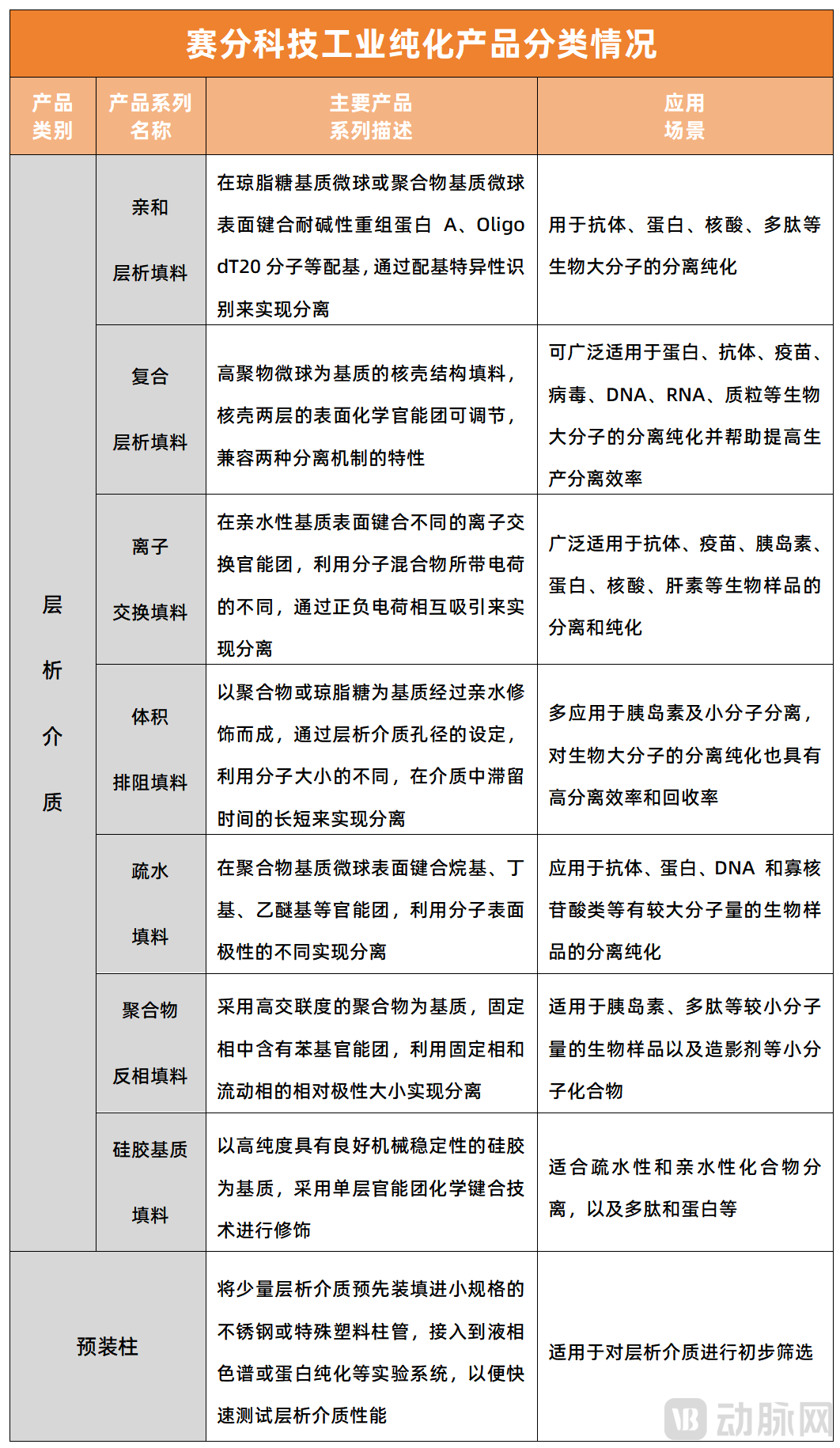
Benefiting from continuous product refinement, Sepax Technologies has accumulated a client base of over 5,000 in the global analytical chromatography sector. The company has established strong business partnerships with leading international pharmaceutical groups, biopharmaceutical companies, and innovative drug developers, including Roche, Pfizer, Eli Lilly, Gan & Lee Pharmaceuticals, Chia Tai Tianqing Pharmaceutical Group, Qilu Pharmaceutical, Regeneron, and Moderna. Furthermore, Sepax Technologies maintains long-term, stable collaborations with industry giants such as Agilent and Sigma-Aldrich.
While providing critical consumables for analysis and separation/purification,SuZhou Sepax Technologies Co., Ltd. also actively participates in the establishment of quality control systems for biopharmaceutical companies and the development of downstream purification processes.The prospectus shows that the company has established good cooperative relationships with domestic pharmaceutical enterprises such as Innovent Biologics, Gan & Lee Pharmaceuticals, Henlius, Qilu Pharmaceutical, Sinopharm CNBG, and Tonghua AnruiTe.
As its business continued to grow, SuZhou Sepax Technologies Co., Ltd. gradually emerged as a leading enterprise in China’s chromatography technology sector. The most notable milestone occurred in November 2021, when the company announced the completion of its Series D financing round, raising over RMB 500 million and attracting heavyweight strategic investors such as CPE Yuanfeng, Hillhouse Ventures, Sinopharm Capital, and Sherpa Investment, along with industry investors including Sinovac Biotech and Gan & Lee Pharmaceuticals.
Finally, after more than 20 years of entrepreneurial marathon, the moment to ring the bell for the IPO has officially arrived.
Although Sepax Technologies’ total revenue is currently in the hundreds of millions, its revenue growth rate is rapid, with an average annual growth rate exceeding 20% over the past three years.
What Exactly Is Driving the Higher Average Annual Growth Rate?
In terms of business structure, SuZhou Sepax Technologies Co., Ltd.'sBusiness revenue is primarily derived from two major segments: analytical chromatography and industrial purification., with service revenue accounting for approximately 1%.
Specifically, the revenue from analytical chromatography amounted to RMB 93.7322 million, RMB 110.3023 million, and RMB 115.1967 million in 2021, 2022, and 2023, respectively, and reached RMB 56.6320 million in the first half of 2024. Although the overall amount showed an upward trend, the growth rate was modest.
As can be seen from the proportion of main business revenue, the share of analytical chromatography revenue is showing a downward trend, accounting for 60.67%, 52.14%, 47.22%, and 37.29% respectively during the aforementioned periods.
The core of the growth comes from industrial purification revenue.
From 2021 to 2023, Sepax Technologies’ industrial purification revenue amounted to RMB 58.3809 million, RMB 98.0023 million, and RMB 125.6406 million, respectively, reaching RMB 93.6965 million in the first half of 2024, demonstrating rapid growth. Its proportion of total operating revenue stood at 37.79%, 46.32%, 51.51%, and 61.70%, respectively, showing a clear upward trend.
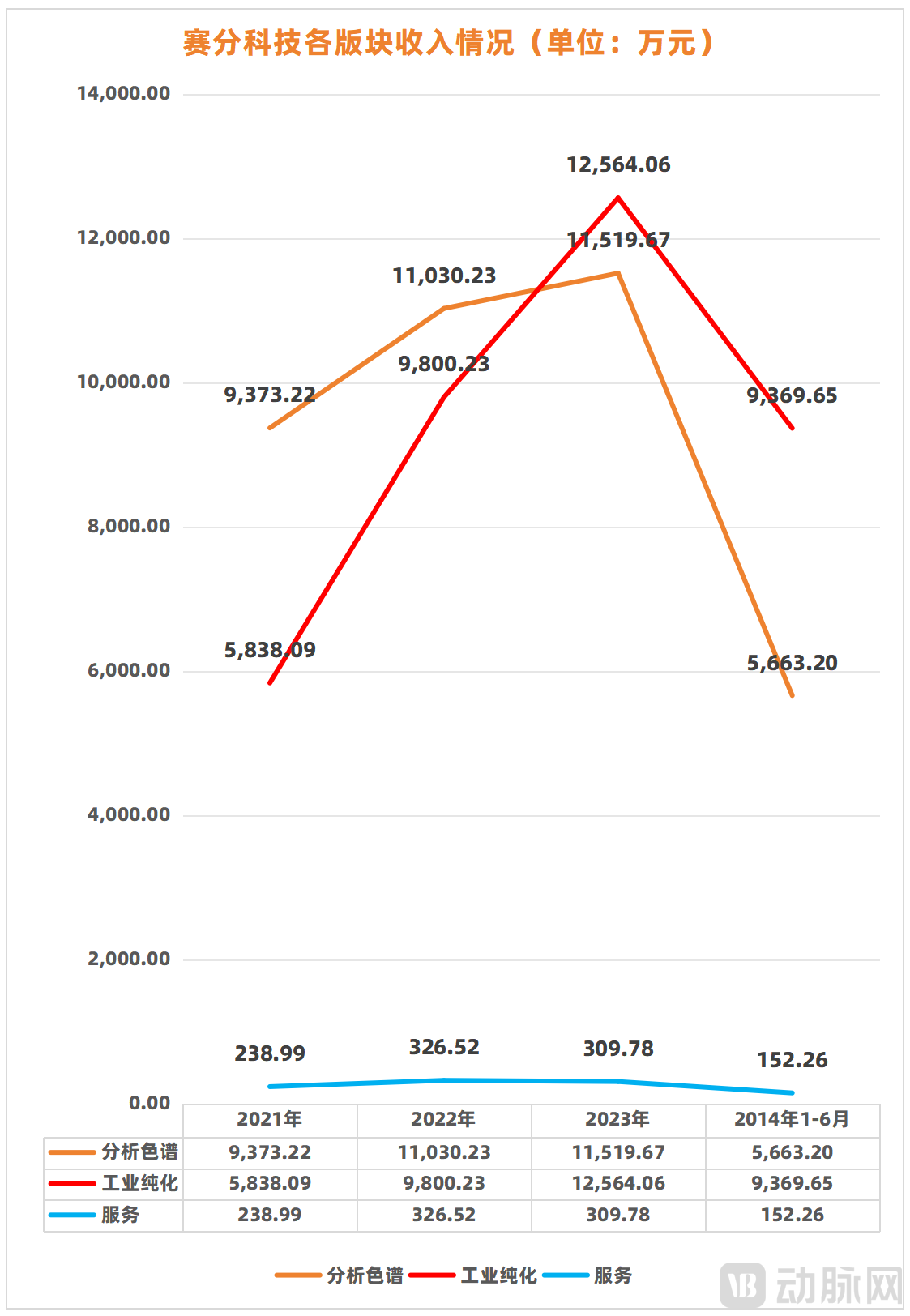
▲ Data source: Prospectus; Chart by VCBeat
There are two underlying reasons. First, since 2021, the chromatography media production line of Sepax Technologies’ Yangzhou facility has been officially commissioned, significantly increasing industrial purification media capacity to meet the growing demand from more customers. Second, downstream demand from biopharmaceutical companies continues to be released.
Taking 2023 as an example, the revenue growth of Sepax Technologies’ industrial purification segment was primarily driven by increased sales of ion-exchange resins, silica-based resins, and other types of resins (mainly hydrophobic resins).
As disclosed in the prospectus, Sepax Technologies’ key strategic customers, Gan & Lee Pharmaceuticals and Tonghua Anruite, expanded their production capacity in 2023, thereby increasing their purchases of related products. Gan & Lee Pharmaceuticals continued to repurchase ion-exchange resins and silica-based chromatography media for multiple insulin projects at both clinical and commercial production stages, as well as for the capacity expansion of its subsidiary, Gan & Lee Pharmaceuticals (Shandong) Co., Ltd. Tonghua Anruite, which primarily develops and manufactures human serum albumin products, repurchased ion-exchange resins during the year to support sample production for clinical-stage trials and validation for its facility expansion.
Additionally, if revenue is categorized by domestic and overseas sources, it can also be observed thatDomestic revenue is becoming a key driver of Sepax Technologies’ performance growth.
According to the prospectus, Sepax Technologies’ overseas revenue accounted for 35.20%, 33.30%, 30.86%, and 25.11% of its total revenue in 2021, 2022, 2023, and the first half of 2024, respectively, showing a significant decline; correspondingly, the proportion of domestic revenue increased from 64.80% to 74.89%.
This is closely related to the broader industry context. In recent years, the Chinese government’s heightened emphasis on biosafety, coupled with complex international relations, has led domestic pharmaceutical companies to impose stringent requirements on the supply capability of core production consumables. Meanwhile, overseas enterprises have faced disruptions in their global supply chains due to international trade frictions. Consequently, driven by concerns over supply chain security and the stability of raw material deliveries, pharmaceutical clients have demonstrated a strong demand for cost-effective Chinese-made chromatography suppliers.China's Chromatography Industry Embraces Opportunities for Domestic Substitution, Sepax Technologies has thus benefited.
Taking the chromatography media market as an example, according to data from the Qianzhan Industry Research Institute, China’s chromatography media market size reached RMB 11.2 billion in 2023 and is projected to reach RMB 20.3 billion by 2026, representing a compound annual growth rate (CAGR) of 21.92% from 2023 to 2026. In 2023, the market size for chromatography media used in biologics in China was RMB 7.3 billion. With the continuous increase in R&D investment in the biologics sector in China and the expiration of patents for major international biologic drugs, the Chinese biologics chromatography media market is expected to maintain rapid growth over the next five years, reaching RMB 13.2 billion by 2026, with a CAGR of 21.83% from 2023 to 2026.
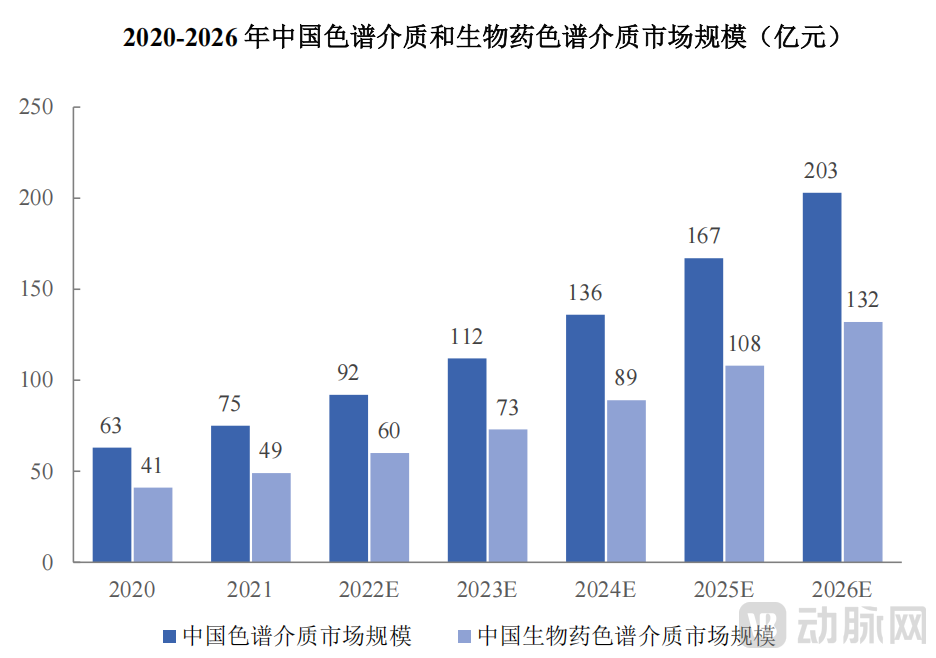
▲Image source: Prospectus
Moreover, the industrial purification business, which is Sepax Technologies’ strongest growth segment, currently serves predominantly domestic customers, further highlighting the momentum of its growth within China.
In summary, strong performance in industrial purification revenue and domestic operations has continued to drive SuZhou Sepax Technologies’ annual revenue growth rate above 20%.
During its period of rapid growth, Sepax Technologies still faces significant challenges.
On the one hand,In terms of market share, foreign companies still dominate China's chromatography media market.Among them, the market share of international mainstream manufacturers such as Cytiva, Thermo Fisher, and Tosoh exceeds 50%. Data disclosed in the prospectus reveals that in 2023, Sepax Technologies held only approximately 5.16% of the domestic analytical chromatography market, about 1.02% of the industrial purification (chromatography media) market, and roughly 1.20% of the biomacromolecule chromatography media market, indicating a significant gap compared with overseas industry leaders that entered the field earlier.
On the other hand,Amid the Major Trend of Domestic Substitution, Competition Among China’s Local Chromatography Manufacturers Intensifies, domestic chromatography manufacturers are striving to seize favorable opportunities to replace imported resin suppliers, integrate into the industrial purification supply chains of downstream pharmaceutical clients, and thereby capture market share. In the future, more competitors will enter this field, leading to increasingly intense market competition among domestic chromatography manufacturers.
It should be noted that,Once overseas supply chains stabilize, the process of domestic substitution may face competitive resistance from foreign manufacturers.The prospectus specifically notes that foreign manufacturers such as Cytiva and Thermo Fisher have further increased their focus on the Chinese market, given its favorable development prospects and substantial market potential in the downstream pharmaceutical sector. These companies have strengthened their efforts in customer acquisition and retention, including marketing initiatives, participation in bidding processes, commercial negotiations, and supply chain reliability. Consequently, domestic manufacturers may face heightened competitive pressures from foreign firms seeking to maintain their dominant position in the Chinese market, thereby impeding the progress of import substitution.
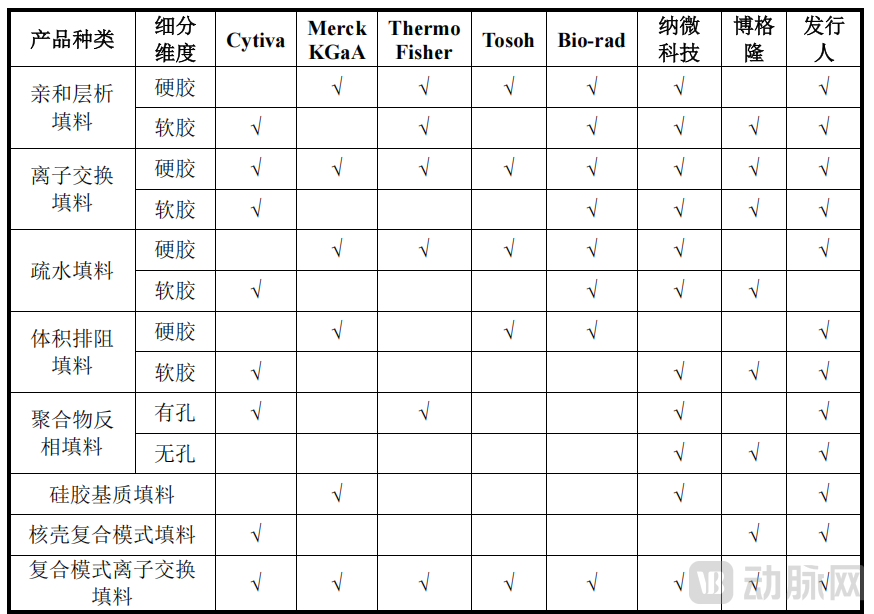
▲ Coverage of Major Global Players in the Industrial Purification Sector Across Dimensions Including Product Variety, Matrix Types, Pore Structures, and High-End Products Image Source: Prospectus
In response to these challenges, SuZhou Sepax Technologies Co., Ltd. aims to leverage the proceeds from this IPO to enable its wholly-owned subsidiary, Yangzhou Sepax, to construct a new “200,000 Liters/Year Auxiliary Materials for Biopharmaceutical Separation and Purification” project on the basis of its existing production capacity, thereby significantly increasing the production capacity of industrial purification resins.
Meanwhile, Sepax Technologies is also accelerating the research, development, and strategic deployment of related products, including alkali-resistant silica-based size exclusion chromatography (SEC) resins and columns, chromatographic media based on PSDVB macroporous microspheres, next-generation alkali-resistant high-capacity affinity chromatography media, next-generation agarose-based beads featuring high flow rates, high mechanical strength, and low backpressure, chromatographic media for vaccine industrial purification, and column packing processes for purification resins, with the aim of launching more new products in the future market.
Coinciding with the IPO of SuZhou Sepax Technologies, Bokang Shiyun, founded by Nanjing University alumnus Ni Jinsong, and Adience Therapeutics, founded by Nanjing University alumnus Wu Yongqian, both filed for listing on the Hong Kong Stock Exchange last month. This demonstrates that the entrepreneurial cohort of Nanjing University alumni is seeing a concentrated wave of IPO successes.
VCBeat’s analysis reveals that,In the field of medical innovation, healthcare companies founded by Nanjing University alumni have achieved nine IPOs., namely Hengrui Medicine, Qianyuan Pharmaceutical, GenScript, Zhongqi Shares, Pharmablock Sciences, Adicene Therapeutics, Legend Biotech, Abbisko Therapeutics, and Sepax Technologies.
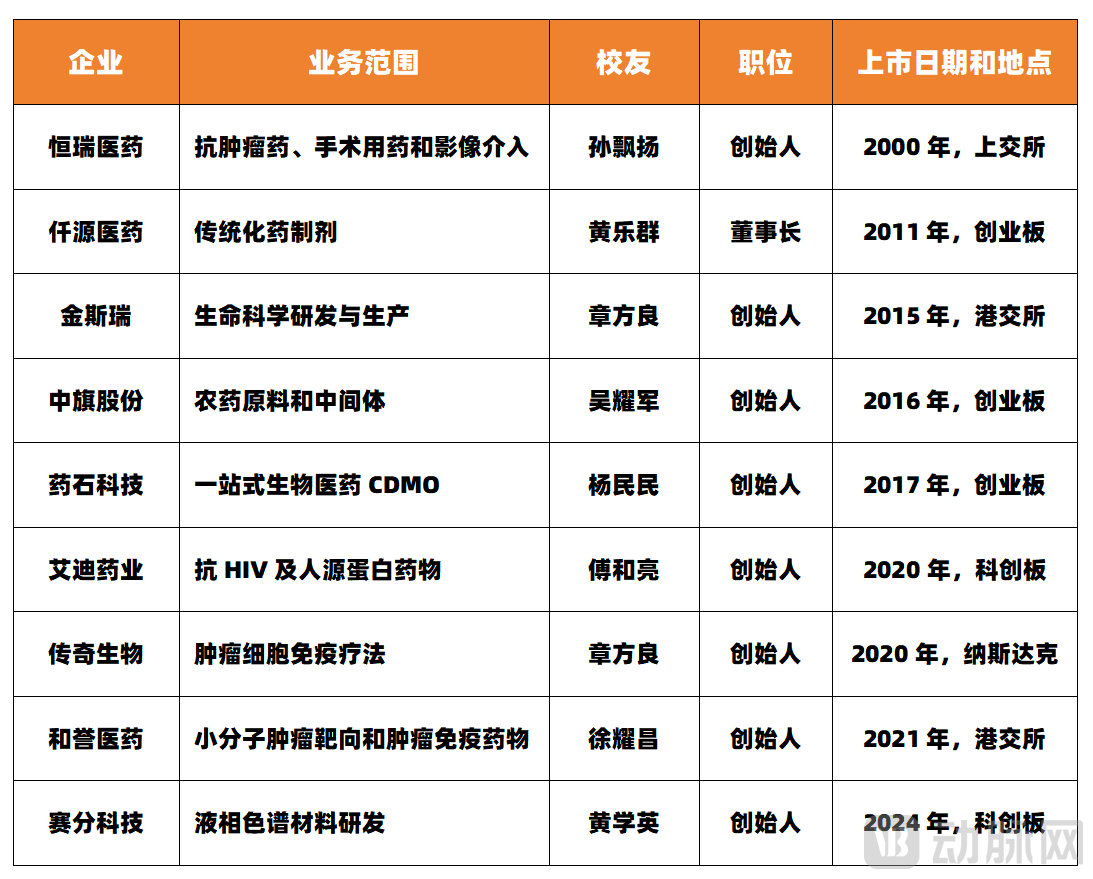
Meanwhile,Healthcare Companies Founded by Nanjing University Alumni Are Also Highly Sought After in the Primary Market. In just the past two years, more than a dozen alumni enterprises, including BioMingSai, Jingjie Biotech, MedXin Health, Hanxin Pharma, Lanacheng Biotech, Junjun Future, and Wandao Cell, have completed new rounds of financing.
Interestingly,Nanjing University alumni are well-represented in the medical investment community.For instance, Chen Penghui, Founding Partner of Boyuan Capital, has actively positioned the firm in the medical and biotechnology sectors, focusing on identifying true “innovators in biopharmaceuticals”; Li Jia, Partner at Longsheng Investment, oversees all venture capital activities in the healthcare and wellness sector; and Yida Capital, where Zhou Chunfang serves as a Founding Partner, has also designated healthcare as a key strategic focus.
In addition to securing sufficient capital support, entrepreneurs from Nanjing University can also leverage resources from various alumni associations in the biomedical and pharmaceutical fields, such as the Biomedical and Pharmaceutical Committee of the Nanjing University Sci-Tech Innovation Investment Alumni Association and the Nanjing University Biomedical Industry Alumni Association.
Take the Nanjing University Alumni Association in the Biopharmaceutical Industry, established in 2017, as an example. The association brings together more than 2,600 members, including nine academicians, over ten founders of listed companies, hundreds of entrepreneurial business owners, renowned investors, and experts and scholars. It has established an Innovation Center for Entrepreneurship and specialized companies in Nanjing, providing pro bono industry-finance services to Nanjing University alumni, such as venture capital financing, forum exchanges, investment promotion for industrial parks, technical training, resource matchmaking, and talent recruitment.
In recent years, ““The Alumni Economy” Is Becoming One of the Drivers of Regional Innovation and Development, universities are also prioritizing innovation and entrepreneurship initiatives for their alumni, cultivating the ecosystem for an "alumni economy" to facilitate the successful commercialization of more innovative achievements.
Thanks to this, more academic luminaries will step out of academia in the future, keeping the spark of medical innovation and entrepreneurship alive.