

Convergent Therapeutics Files for IPO: Advancing Alpha-Particle Radiopharmaceutical CONV01-α for Metastatic Castration-Resistant Prostate Cancer

Convergent Therapeutics
Radiopharmaceuticals Therapy Developer
Convergent Therapeutics, a radiopharmaceutical therapy research company (hereinafter referred to as “Convergent”), has added another powerhouse to its ranks.
On December 11, 2024, U.S. biotechnology company Convergent Therapeutics announced the appointment of Barbara Duncan to its Board of Directors.
Ms. Barbara Duncan holds an MBA from the Wharton School of the University of Pennsylvania and has over 25 years of experience in financial management. She currently serves on the boards of directors and various committees of three publicly traded biopharmaceutical companies: Atea Pharmaceuticals, Halozyme Therapeutics (a leader in subcutaneous drug delivery), and Ovid Therapeutics.Nuclear Medicine DrugsEnterpriseFusionOn the wayIn June of that year, it was announced that AstraZeneca would acquire the company for approximately $2.4 billion. Prior to the acquisition, Barbara also served as the company’s Chairman.
In 2023, Convergent completed a $90 million Series A financing round led by OrbiMed and RA Capital Management, with participation from Invus. Last September, it secured an additional $40 million in Series A+ financing led by Novo Holdings. To date, Convergent’sThe total amount of Series A financing increased to $130 million.
25+ Years of R&D, Spun Out of Cornell University
Convergent Therapeutics, Inc. was founded in 2020 and is headquartered in Cambridge, Massachusetts, USA. Convergent is a clinical-stage pharmaceutical company focused on developing next-generation radiopharmaceutical therapies for prostate cancer and other cancers.
Dr. Philip Kantoff is the Chief Executive Officer and Co-Founder of Convergent Therapeutics, as well as the Director of the Center for Solid Tumor Oncology and the Director of the Lank Center for Genitourinary Oncology at Dana-Farber Cancer Institute (DFCI) of Harvard University.
Prior to founding Convergent, Dr. Kantoff served for six years as Chair of the Department of Medicine at Memorial Sloan Kettering Cancer Center, the world’s largest cancer research center, where he developed biomarkers and cancer therapies while treating patients with cancer.
If Dr. Kantoff is the torso of Convergent, then Dr. Neil Bander, a pioneer in radioimmunoconjugate technology and the field of prostate-specific membrane antigen (PSMA), is its core.
Dr. Neil Bander is the Co-Founder and Chief Scientific Officer of Convergent Therapeutics, and currently serves as Professor Emeritus of Urologic Oncology at Weill Cornell Medicine. Over the past 25 years, he has led his team in developing the first monoclonal antibody targeting PSMA and validated the efficacy of PSMA as a therapeutic target for prostate cancer and other malignancies.
Convergent’s core proprietary technology—dual-targeted radionuclide therapy (RNT)—originates from Professor Bander’s research and has been licensed by Cornell University.
Alpha Particle-Based Therapy to Minimize Treatment Side Effects
Radioimmunotherapy is a targeted therapy in which antibodies are linked to radioactive payloads. These radioactive payloads have the ability to kill cancer cells by destroying them from within.Each radioimmunoconjugate is prepared by carefully selecting antibodies with high affinity for specific cancer targets. This enables the radioimmunoconjugates to home in on and bind to the surface of cancer cells. Once attached, the radioimmunoconjugates are internalized into the cells, delivering the radioactive payload to the vicinity of the nucleus.,Ultimately killing cancer cells.
However, radiation therapy is a double-edged sword; while it kills cancer cells, it also causes irreparable damage to surrounding healthy tissues.Following radiotherapy, patients may experience symptoms such as limb weakness, nausea and vomiting, and skin darkening.
To this end, Convergent has leveraged its proprietary technology to address the limitations of current radiation therapies. Compared with other technologies, including those relying on beta-emitting isotopes such as Lu-177, alpha-emitting radioimmunoconjugates offer greater precision and potency.While it does not achieve “zero” side effects, it can minimize damage to other healthy tissues to the greatest extent possible, thereby reducing radiotherapy-related side effects.
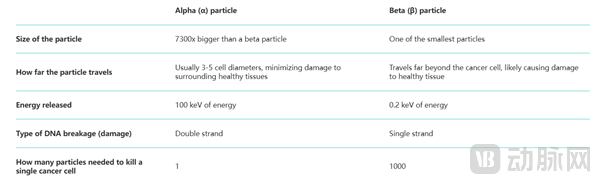 Advantages of Alpha Particles Over Beta Particles | Image Source: Convergent Official Website
Leveraging its expertise in alpha particles and the flexible application of dual-targeted radionuclide therapy technology, Convergent Therapeutics has developed its lead pipeline product, CONV01-α (Ac-225 rosopatamab tetraxetan). Alpha particles possess potent short-range properties, with a path length equivalent to a few cell diameters (<100 μm), thereby minimizing radiation exposure to healthy adjacent cells and tissues. When conjugated with its proprietary antibody, it forms an effective and precise radioimmunoconjugate that specifically targets cancer cells and delivers the radioactive payload directly into them.
The mechanisms of alpha-emitting radionuclides are more complex than those of traditional beta-emitters, with many unknowns remaining, making their development highly challenging. First, these agents must exhibit extremely high targeting specificity to minimize damage to normal tissues. Second, it is necessary to overcome the recoil effect that may occur during the decay of Actinium-225 (one of the alpha-particle-emitting radionuclides that kills cancer cells by inducing DNA double-strand breaks), which can lead to off-target effects. Furthermore, the limited supply of Actinium-225 poses a major challenge, as currently only a few centers worldwide are capable of producing this radionuclide, and the limited output cannot meet the global demand for routine clinical therapy.
Xofigo, a radium-223 drug developed by Bayer, is currently the only approved alpha-emitting therapy. According to Targeted Alpha Therapy Market Size, Drug Approvals, Proprietary Technologies, and Clinical Trial Insights (2024), more than 20 alpha-particle-emitting radiopharmaceuticals are currently in clinical trials. In November 2024, SK Biopharmaceuticals and the Korea Institute of Radiological & Medical Sciences (KIRAMS) announced a collaboration aimed at discovering and developing radiopharmaceutical candidates using the alpha-particle-emitting radioisotope actinium-225.
Best-in-class, with the lead candidate drug entering Phase II/III clinical development
According to the projections in the 2024 “Lancet Commission on prostate cancer: planning for the surge in cases,” the global number of new prostate cancer cases is expected to rise from 1.4 million per year in 2020 to 2.9 million per year by 2040.
As early as April last year, the FDA approved the IND application for Convergent’s lead drug candidate, CONV01-α. Subsequently, in September, the first patient was dosed in the Phase II clinical trial, demonstrating its safety and efficacy in patients with metastatic castration-resistant prostate cancer (mCRPC).
CONV01-α is a proprietary, best-in-class Actinium-225-labeled radioantibody that targets a protein (antigen) expressed on the surface of nearly all prostate cancer cells. It combines the precision and pharmacokinetic properties of antibodies with the tumor-killing potential of alpha-emitting radionuclides, enabling precise radiation to kill cancer cells while sparing healthy tissue.
Specifically, CONV01-α differs from other antibodies by simultaneously leveraging both the antibody and an alpha-emitting radionuclide. By harnessing the selectivity of the antibody and the tumor-destructive potential of the alpha radioisotope, Convergent’s radioimmunoconjugate can precisely target cancer cells with effective localized radiation.
Selecting an alpha-emitting radionuclide is a sufficient condition for successful development, while pairing it with a highly selective antibody is a necessary condition for creating an effective cancer therapy.
Monoclonal antibodies exhibit greater affinity for targets such as PSMA, enabling superior tumor internalization and retention. This results in enhanced drug potency, lower required doses, and reduced overall radiation exposure. In contrast, small-molecule ligands labeled with β or α emitters lack these advantages.
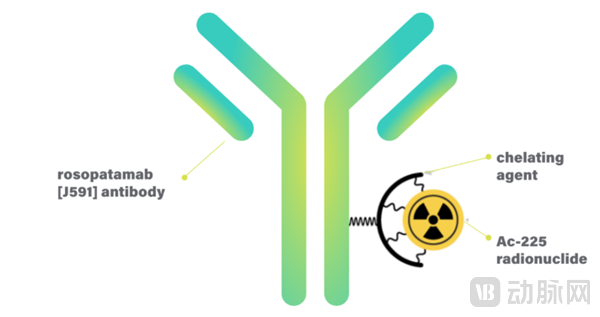 Mechanism of Antibody Action. Image source: Convergent official website
Furthermore, by conjugating Actinium-225 with tumor-targeting antibodies, the delivery rate of tumor-killing radiation is enhanced while significantly reducing off-tumor effects and the radiation dose per treatment course, thereby improving therapeutic efficacy and safety.
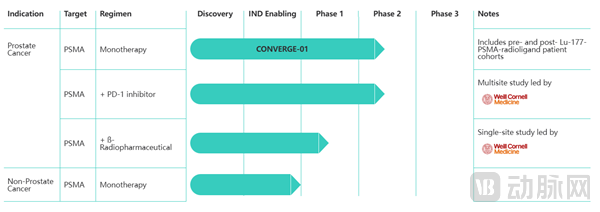 Convergent Pipeline. Image source: Convergent official website
Currently, Convergent Therapeutics is conducting a randomized, open-label, multicenter Phase 1/2 clinical trial to evaluate the safety and efficacy of CONV01-α in patients with metastatic castration-resistant prostate cancer (mCRPC). According to publicly disclosed data, among patients treated with CONV01-α at Weill Cornell Medicine, 67% achieved a ≥50% reduction in prostate-specific antigen (PSA; a biomarker for prostate cancer), and 27% achieved a ≥90% reduction in PSA. Recruitment for the CONVERGE-01 trial is ongoing, and plans for future studies are proceeding.
Leveraging the development of alpha-emitting radioisotopes, Convergent Therapeutics may utilize existing technologies to develop drugs targeting solid tumors. The project is currently in the exploratory stage.
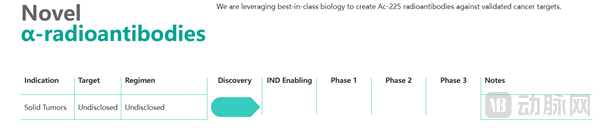
Convergent Pipeline. Image source: Convergent official website
According to incomplete statistics from VCBeat, since 2024, multiple multinational corporations (MNCs), including AstraZeneca and Bristol Myers Squibb, have invested tens of billions of US dollars to enter this field. In recent years, China has also made significant progress in the field of targeted alpha-particle radiotherapy.
On July 7, 2021, the Affiliated Hospital of Southwest Medical University completed China’s first ²²⁵Ac therapy, marking a substantial breakthrough in this field in China. In September of the same year, China conducted the world’s first ²²⁵Ac-DOTATATE therapy for metastatic pheochromocytoma, achieving favorable therapeutic outcomes.
According to Panmedi Holdings, research on alpha-emitting radionuclides worldwide is still in its early stages, requiring further advances in both theory and technology.
In October 2024, Professor Yu Fei’s team published a research paper titled “Targeting senescence with radioactive 223Ra/Ba SAzymes enables senolytics-unlocked One‐Two punch strategy to boost anti-tumor immunotherapy” in *Theranostics*. This study was the first to explore the radiobiological effects of alpha-emitting radionuclides from the perspective of radiation-driven bystander effects. It represents a pioneering achievement in China in the field of basic research on the application of 212Pb/212Bi, providing new perspectives and theoretical support for further research and clinical application of alpha-particle radiotherapy.