

Breakthrough Gene Therapy NGGT-001 Offers New Hope for Patients with Bietti Crystalline Dystrophy (BCD)
Imagine if your world gradually grew blurry, until one day you could barely see anything—this is the reality faced by patients with Bietti crystalline retinopathy (BCD).
Bietti Crystalline Dystrophy (BCD) is a rare hereditary eye disease caused by mutations in the CYP4V2 gene, leading to progressive vision loss and potentially resulting in blindness. Currently, there are no effective treatments for this condition, leaving patients to face the harsh reality of gradually deteriorating vision and eventual loss of independence in daily living.
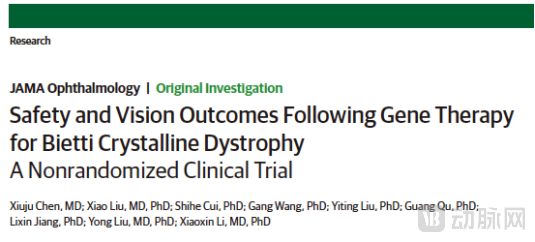
Just recently, exciting clinical trial results were published in the premier ophthalmology journal JAMA Ophthalmology (January 9, 2025). This study, conducted byProfessor Li Xiaoxin and Dr. Chen Xiuju from the Xiamen Eye Center, and Professor Liu Yong from the Department of Ophthalmology at Southwest HospitalThe multicenter, open-label, dose-escalation trial led in China has brought a ray of hope to patients with BCD.
They tried a new approach—gene therapy,Specifically, a specialized viral vector is used to deliver healthy genes directly into the patient’s eyes in an attempt to treat this “incurable disease.”
In the trial, 12 patients with genetically confirmed Bietti crystalline dystrophy (BCD) received rAAV-hCYP4V2 (NGGT-001), an innovative therapy administered via a single subretinal injection. The patients, with a mean age of 40.5 years, all had intermediate to advanced-stage disease and were divided into two groups to receive different doses (1.5 × 10^11 vg/eye and 3.0 × 10^11 vg/eye).
The analysis results show that,This gene therapy is not only safe but also yields surprisingly improved vision.Over the course of a one-year observation period, no significant safety issues associated with the therapy were identified. Only one patient experienced mild ocular inflammation in the short term post-operatively, which resolved spontaneously, thereby fully validating the safety profile of this therapy.
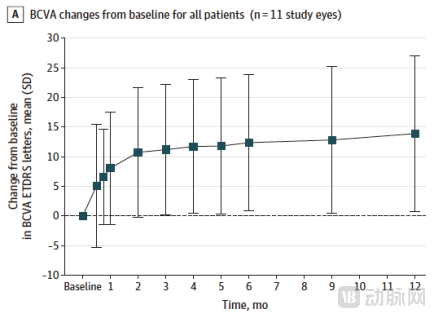
More encouragingly,This therapy also significantly improved the subjects' visual acuity.At 12 months post-dosing, the mean best-corrected visual acuity (BCVA) improved by 13.9 letters in all patients, compared with an improvement of only 6.3 letters in the non-study eyes (see Figure A).
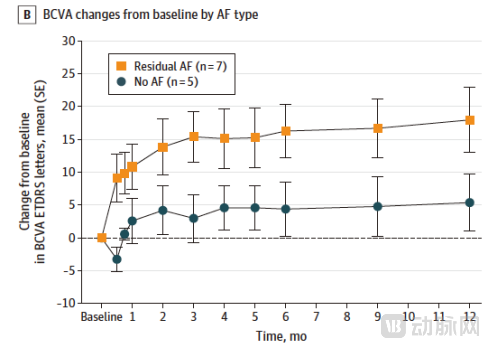
In particular, patients with residual areas of normal retinal function in the eye (detectable via a specialized fluorescence imaging technique known as autofluorescence [AF]) showed a more pronounced improvement in best-corrected visual acuity, gaining 18 letters, whereas the untreated eyes improved by only 5.4 letters (see Figure B).This suggests that the therapy may have the potential for long-term efficacy.
The product NGGT-001 used in this study isSuzhou Nuojiebei Biotechnology Co., Ltd.Gene therapy products developed for Bietti crystalline dystrophy (BCD). The results of this study undoubtedly bring new hope to the vast number of BCD patients. For them, every incremental improvement in vision means a better quality of life.
Currently,The product has completed its Phase I/II clinical studies for registration in China and plans to initiate broader Phase III clinical studies in 2025.It is believed that with the continuous advancement of research, this innovative therapy may bring hope to more BCD patients, restoring clarity to their world.
Chen X, et al. Safety and Vision Outcomes Following Gene Therapy for Bietti Crystalline Dystrophy A Nonrandomized Clinical Trial. JAMA Ophthalmol. Published online January 9, 2025. doi:10.1001/jamaophthalmol.2024.5619