

Over 100 Companies Participate and Two Innovation Leaderboards Announced as Beijing Synthetic Biology Proof-of-Concept Accelerator Concludes Successfully
Synthetic biology is regarded as the key to understanding life and a disruptive technology that will shape the future, serving as a critical pathway for humanity’s leap from “understanding life” to “designing life.”
By designing and constructing new biological systems, or re-engineering existing ones to meet specific needs, synthetic biology has demonstrated unprecedented potential for industrial applications across multiple sectors, including pharmaceuticals, chemicals, materials, food, consumer goods, environmental remediation, and energy. Meanwhile, as the variety of products and application scenarios rapidly expands, critical issues warranting discussion include how to accelerate the validation of new products and their replacement of traditional chemical methods, and how to translate laboratory achievements into productive capacity on manufacturing lines.
Across China, a series of industrial policies for biomanufacturing have been introduced, all emphasizing support for the establishment of synthetic biology proof-of-concept centers, pilot-scale and intermediate-scale trial facilities, and public service platforms. These initiatives aim to drive engineering breakthroughs and industrial applications of technological achievements in traditional, emerging, and future industries, thereby enhancing the technical value and quality of innovative outcomes and accelerating the translation and implementation of research results.
Plug and Play China’s Beijing Synthetic Biology Proof-of-Concept Accelerator was launched against this backdrop.It is reported that the accelerator has successfully held two industry scenario innovation workshops, promoting strategic cooperation between innovative enterprises and Beijing’s Pinggu District as well as Zhongguancun Pinggu Park, and completing the initial matching of synthetic biology innovation pipelines with industrial needs.
On January 16, 2025, as the finale of this accelerator program, “Synthesis Creates Value, and Innovative Achievements Emerge”The Synthetic Biology Concept Validation Accelerator Camp Results Showcase Concluded Successfully in Pinggu District, BeijingGuided by the People’s Government of Pinggu District, Beijing, and co-hosted by the Administrative Committee of Zhongguancun Science Park Pinggu Park and Plug and Play China, with strategic support from BioValley, the event brought together top innovators in synthetic biology from across the country—including representatives from leading corporations, technology-driven startups, academic experts, and investment institutions—to jointly explore future trends and prospects for the industry.
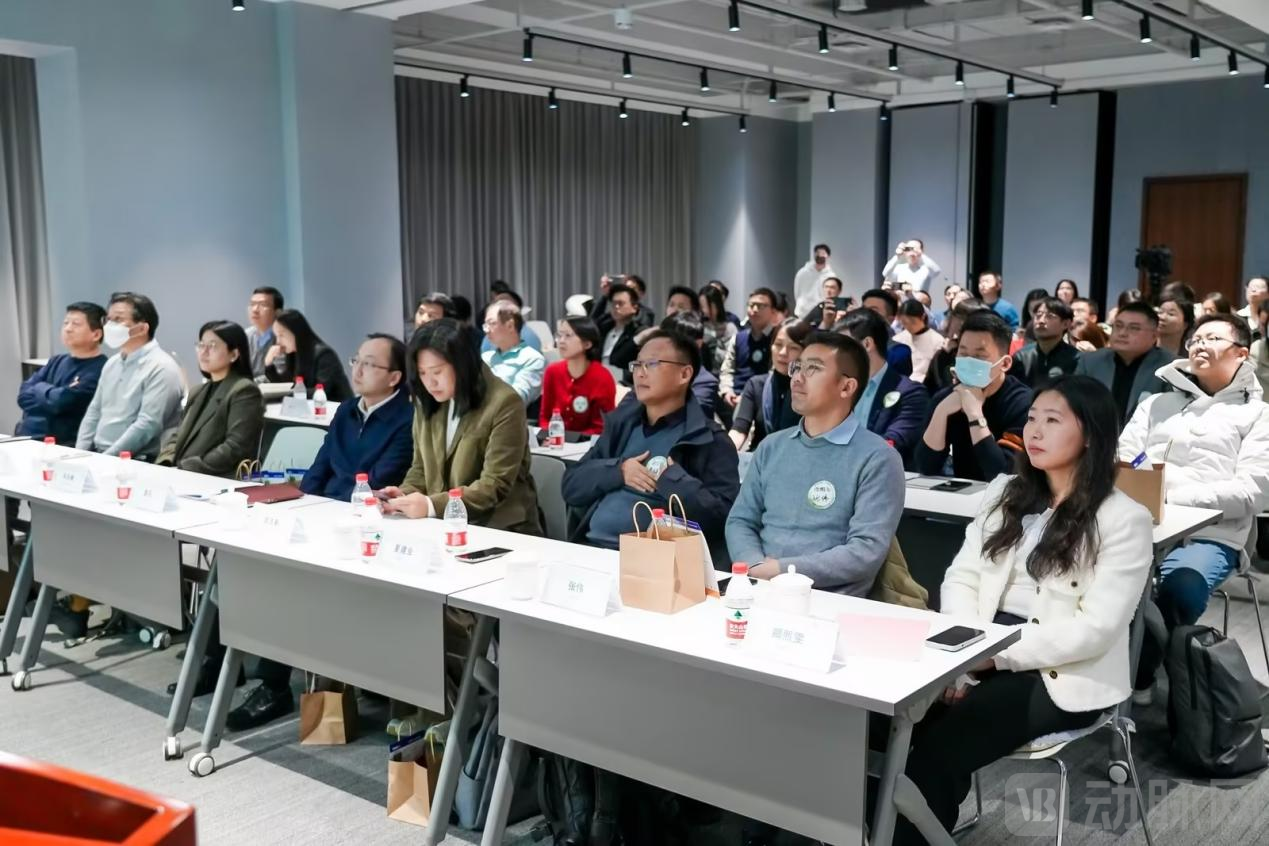 Event Venue
Over 100 Companies Participate, Driving Precise Alignment Between Pipelines and Market Needs
The relentless technological innovations and continuously expanding application domains of synthetic biology are unleashing immense development potential for the bioeconomy. According to McKinsey forecasts, the global economic value of synthetic biology and biomanufacturing will reach $100 billion by 2025, with 60% of global material production potentially achievable through biomanufacturing methods in the future.
As an international hub for scientific and technological innovation, Beijing attaches great importance to the synthetic biology manufacturing industry. Pinggu District, serving as the main front for the development of the Agricultural Zhongguancun, is accelerating the construction of an innovation ecosystem and industrial system for synthetic biology manufacturing, striving to become a globally influential source of synthetic biology innovation and a center for the commercialization of scientific and technological achievements.
Peng Shi, Deputy District Mayor of Pinggu District People's Governmentstates,Pinggu District Boasts Three Major Advantages in Developing the Synthetic Biology IndustryFirst, it has a solid foundation. Pinggu District has gathered a cluster of key universities and research institutions, leading enterprises, and innovative small and medium-sized enterprises in the field of synthetic biology manufacturing. With concentrated resources and significant potential, the district has initially formed a collaborative development pattern integrating industry, academia, research, and application.Second, it offers ample space. As one of the hubs for Beijing’s synthetic biology manufacturing industry, Pinggu District has provided sufficient physical infrastructure to support industrial development and has reserved substantial land reserves for future expansion.Third, it benefits from robust policy support. In addition to Beijing’s municipal industrial policies, Pinggu District will leverage policies related to the construction of the Agricultural Zhongguancun, offering targeted policy incentives and comprehensive, concierge-style services to synthetic biology manufacturing enterprises.Looking ahead, Pinggu District will continue to focus on three key areas: innovation platforms, enterprise clustering, and industrial ecosystem development, aiming to establish itself as a thriving hub for synthetic biology manufacturing.
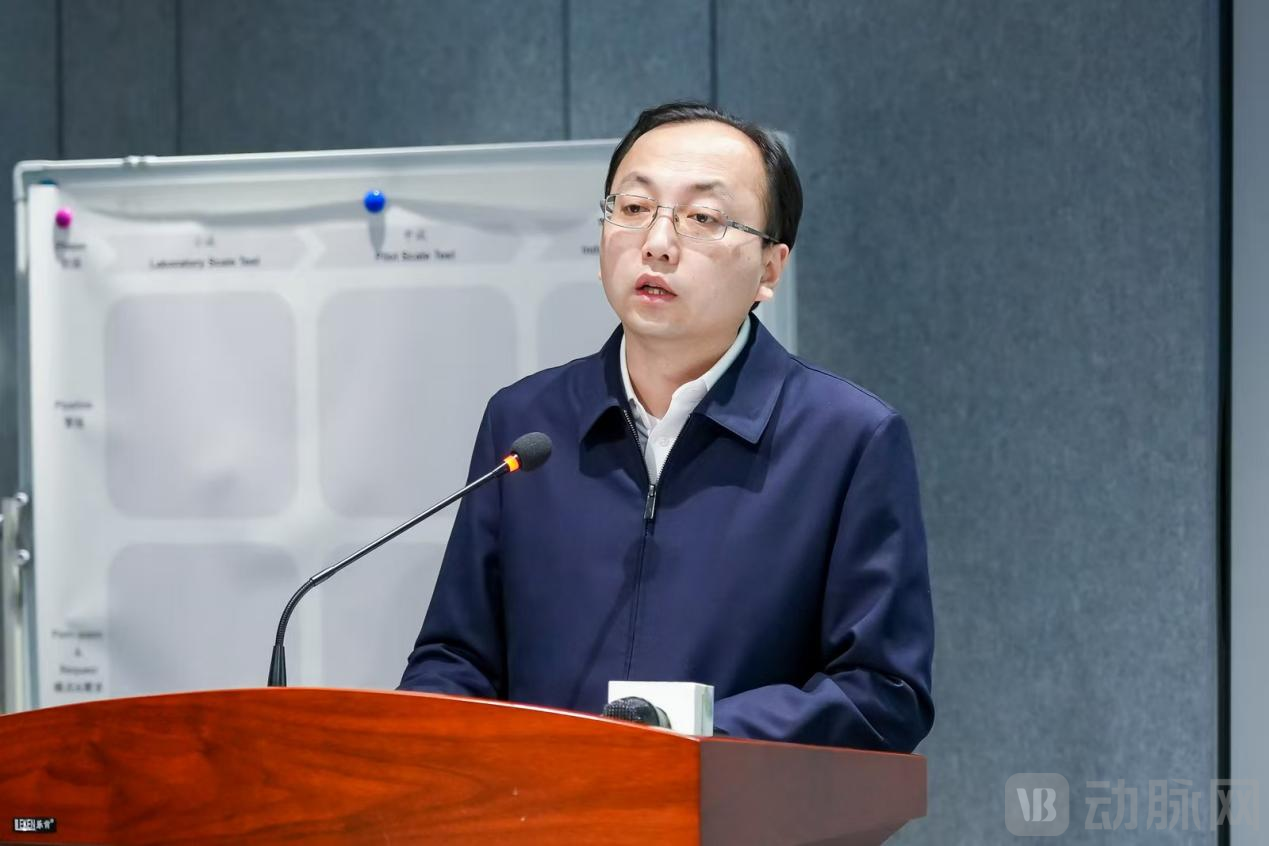 Address by the Leadership of Pinggu
The Beijing Synthetic Biology Proof-of-Concept Accelerator Camp is jointly initiated by Pinggu District and Plug and Play China, a globally renowned accelerator. Centered on Pinggu’s characteristic industries, the program focuses on the scenario-based, investment, and innovation needs of leading enterprises in key sectors such as food, health, and agriculture. It aims to recruit one hundred synthetic biology technology companies worldwide and select outstanding projects for participation, thereby facilitating precise matchmaking and open innovation collaboration between leading demand-side enterprises and tech startups. This initiative supports Pinggu District in aggregating innovative resources for the synthetic biology industry, accelerating innovation in this emerging field while driving the innovative upgrading of its traditional advantageous industries.
According toQing Xiwen, Director of Biotechnology and Food at Plug and Play ChinaIntroduction: The six-month accelerator program successfully completed the screening of long and short lists, held two industrial scenario innovation workshops, and officially onboarded 17 multinational and leading enterprises. A total of 24 scenario innovation needs were released, while seven other large corporations participated in the accelerator’s activities as innovation observers. From a long list of over one hundred synthetic biology companies, 27 high-quality tech innovators in the field were selected to participate in the workshops, bringing together 57 innovative pipelines.
Qing Xiwen noted that the first workshop preliminarily revealed a trend of innovative medical device technologies migrating toward green consumer products. The needs identified in the second workshop were more direct, primarily focusing on matching pipeline projects at the pilot-scale stage and beyond with corporate partners for collaboration. Furthermore, the post-pilot phase imposes higher demands on enterprises’ in-house AI and biotechnology capabilities. In the later stages, there is an aspiration to promote advances in synthetic biology through policy support and to innovate diversified forms of collaboration, such as internal incubation and open innovation by large corporations.
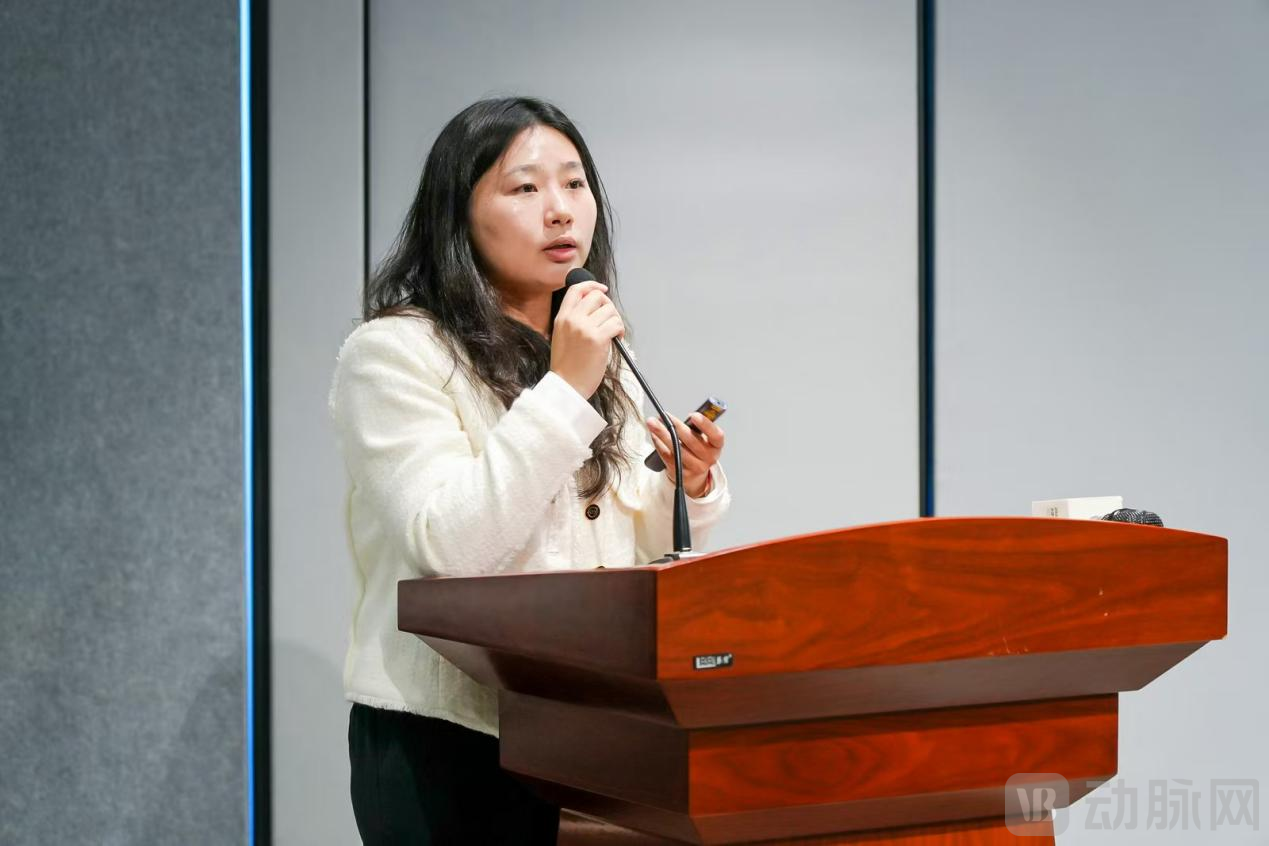 PwC China’s Director of Biotech and Food, Qing Xiwen, Reviews Accelerator Program Outcomes
To encourage industrial giants and tech startups that have achieved innovative results in this acceleration camp, and to continue building an innovation ecosystem for the synthetic biology industry, two lists were released at the event: the “Most Open and Innovative Industrial Partners in Synthetic Biology” and the “Best Concept Validation Innovative Enterprises in Synthetic Biology.”
Among them, the corporate leaderboard was evaluated based on three dimensions: richness of innovation demand releases, participation and engagement in acceleration programs, and interaction with startups. This initiative aims to incentivize large enterprises in the industry to take proactive measures, ultimately selecting ten highly representative leading corporations: CJ Group, PepsiCo Asia R&D Center, Syngenta China, Bühler Group, Procter & Gamble (P&G), Novonesis, Cargill, Ruoyuchen, Unilever, and Roquette.
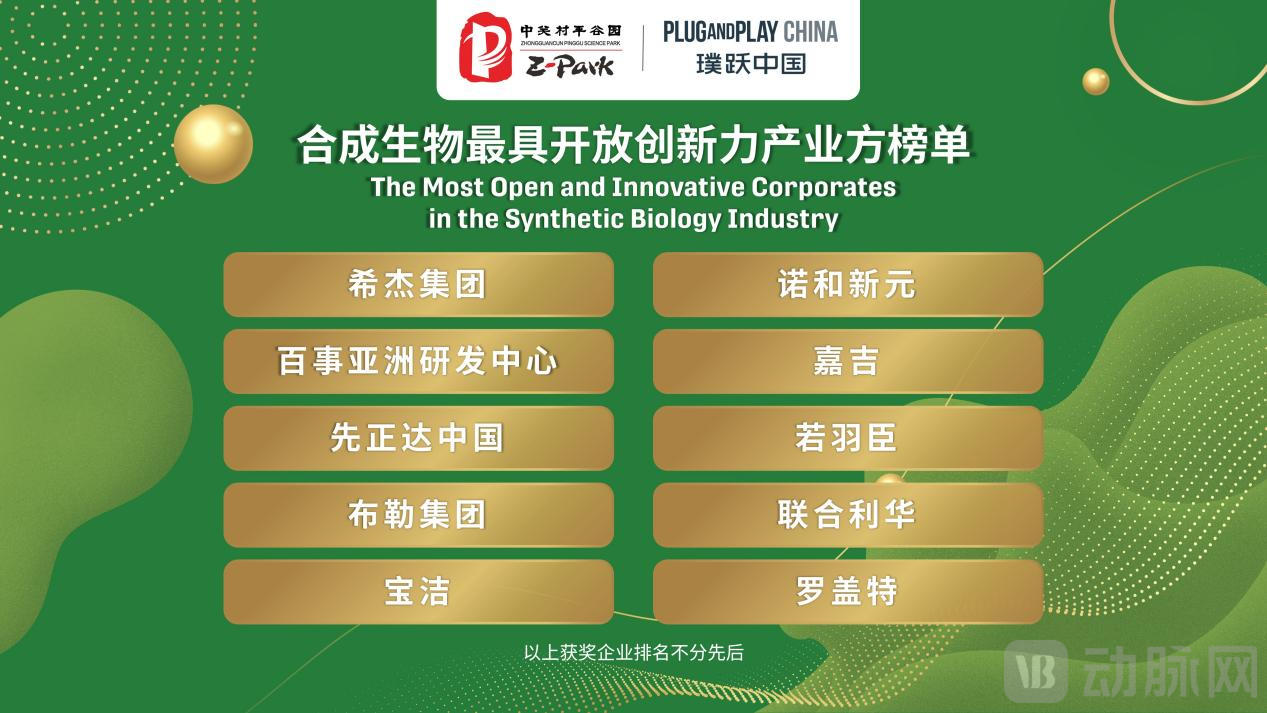 The Most Open and Innovative Industry in Synthetic BiologyRankings
The Innovative Enterprises List adopts three evaluation criteria: market and industrial potential, proof-of-concept maturity, and innovation pipeline advantages, encouraging innovative companies to actively achieve innovation through proof-of-concept initiatives. Ultimately, 20 synthetic biology innovators were selected, including MicroHexagon, AlgaeChen Bio, Engene Bio, Manson Biotech, YuanDong Bio, Zhongke Lingtan, Heyao Bio, Shuyin Zhike, ABIOYI, Yingjia Hesheng, Zhongbang TanNeng, Shanghai Ergothioneine, Waterdrop Farm, Green Nitrogen Bio, ReadiLine, QiCai ZhiXin, Huistle, Alpha Bio, Yuantian Bio, and Zhongke Baiyijin.
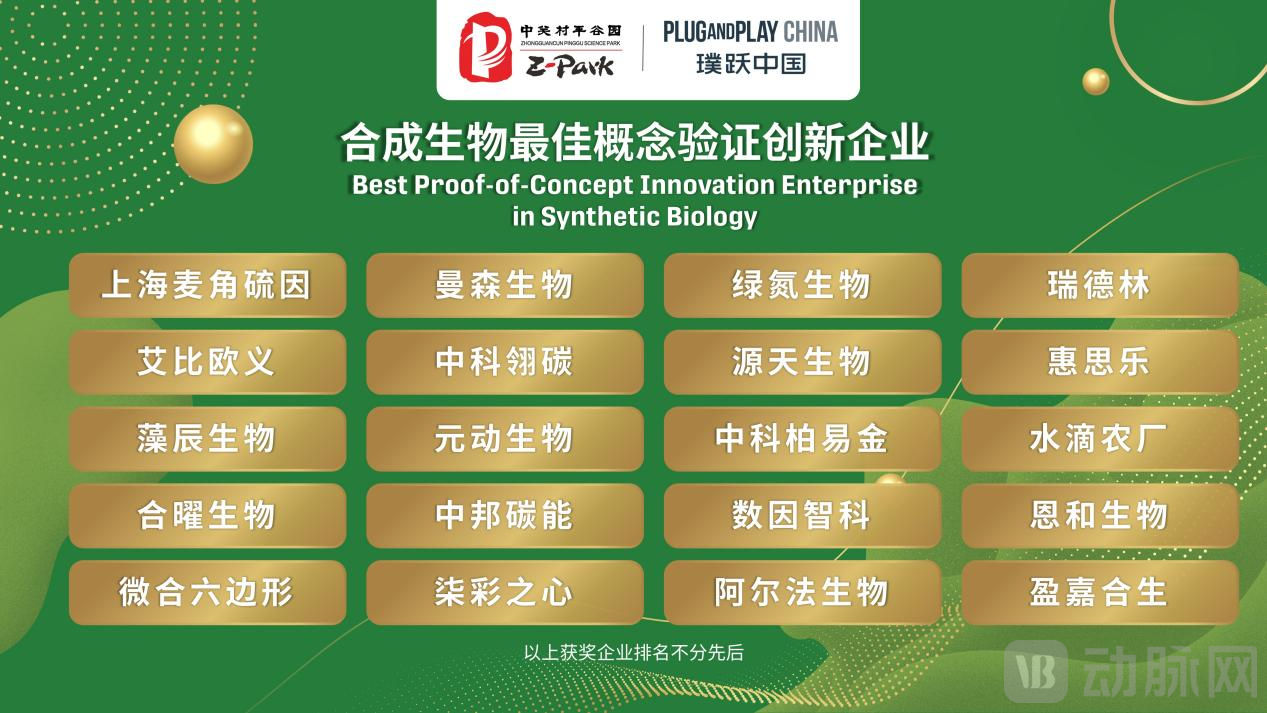 List of the Best Concept-Validation Innovative Enterprises in Synthetic Biology
Furthermore, to further accelerate the industrialization of synthetic biology, Plug and Play China has joined hands with BioValley to jointly launch“Fostering Innovation, Leading the Future” 2025 Synthetic Biology Impact Rankings. The ranking comprises five sub-categories: “Focus on Foundational AI+,” “Unlock Multi-Scenario Applications,” “Proof-of-Concept Capability,” “Linking Industry and Capital,” and “New Collaborative Ecosystems.” Recruitment for the ranking has now officially launched.
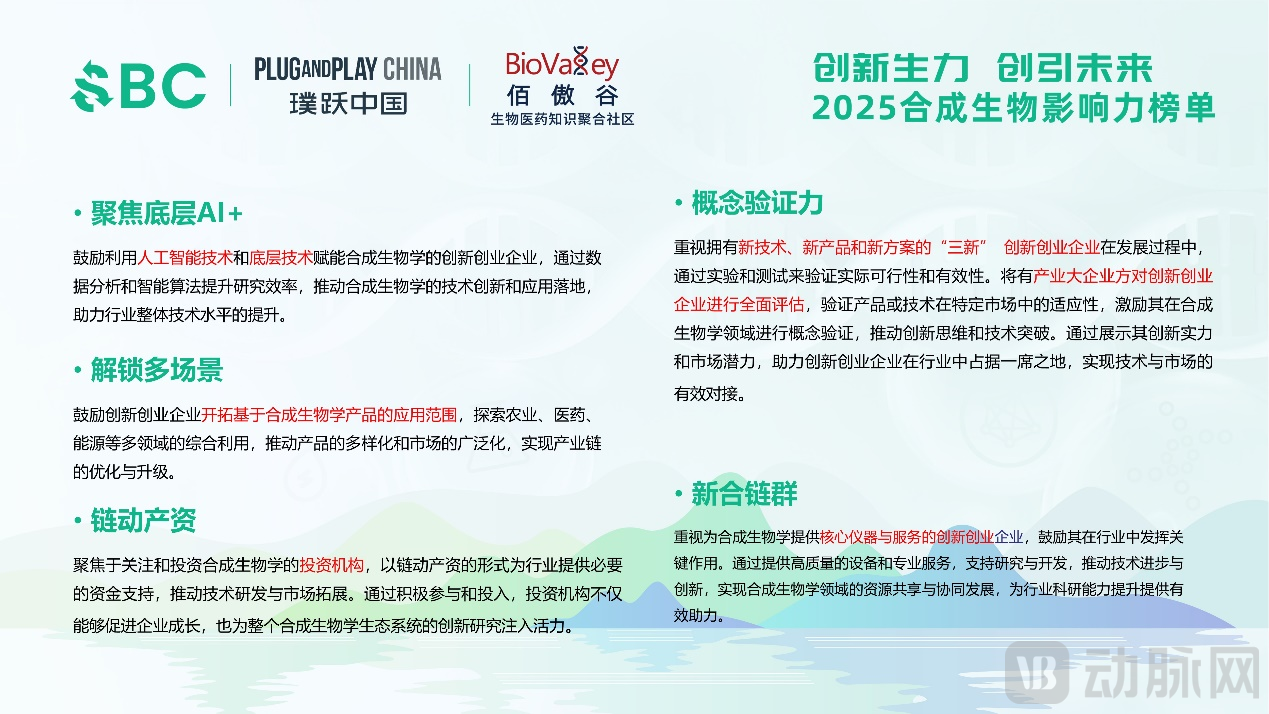 “Innovating Vitality, Leading the Future”2025Synthetic Biology Impact RankingsComposed of Five Sub-Lists
Focusing on Technological Breakthroughs and Building Industrial Ecosystems to Accelerate the Commercialization of the Synthetic Biology Industry
As an increasing number of synthetic biology projects complete early-stage validation, synthetic biologyAlreadyHaving cleared the technical hurdles, the industry has entered a critical phase of commercialization. At this juncture, establishing robust large-scale manufacturing capabilities and mature end-product application markets, and even integrating the upstream and downstream segments of the industrial chain, have become imperative for synthetic biology enterprises.FacingofCommon Challenges。
How to Effectively Address the Defining Question of Our Era? At the event, experts from various sectors of the synthetic biology field engaged in in-depth dialogue. Discussions covered core areas such as synthetic biology technologies and foundational AI technologies, while also actively exploring expansion opportunities in commercial applications and industry collaborations, and analyzing the latest developments and future trends in synthetic biology.
Open innovation is Plug and Play China’s answer. Through open innovation, Plug and Play China aims to collaborate with large enterprises across four dimensions—R&D and technology development, acceleration of product commercialization, sharing of resources and facilities, and multidisciplinary collaboration—to address the challenges of stability and reproducibility in synthetic biology production.
Specifically, how to carry out open innovation; during the session on sharing innovation experiences, the moderatorQing Xiwen engaged in an in-depth discussion with Dr. Liu Yang, CTO of Cabio Biotech (Wuhan) Co., Ltd.Dr. Liu Yang shared case studies of Cabio’s open innovation practices, emphasizing the value of open innovation for corporate innovation. He discussed how companies can select innovative talent and foster an innovative culture, screen and match innovation projects, and develop strategic plans for open innovation. Qing Xiwen engaged in a dialogue with Dr. Liu, drawing on her experience at Plug and Play China in promoting open innovation and facilitating proof-of-concept initiatives for enterprises.
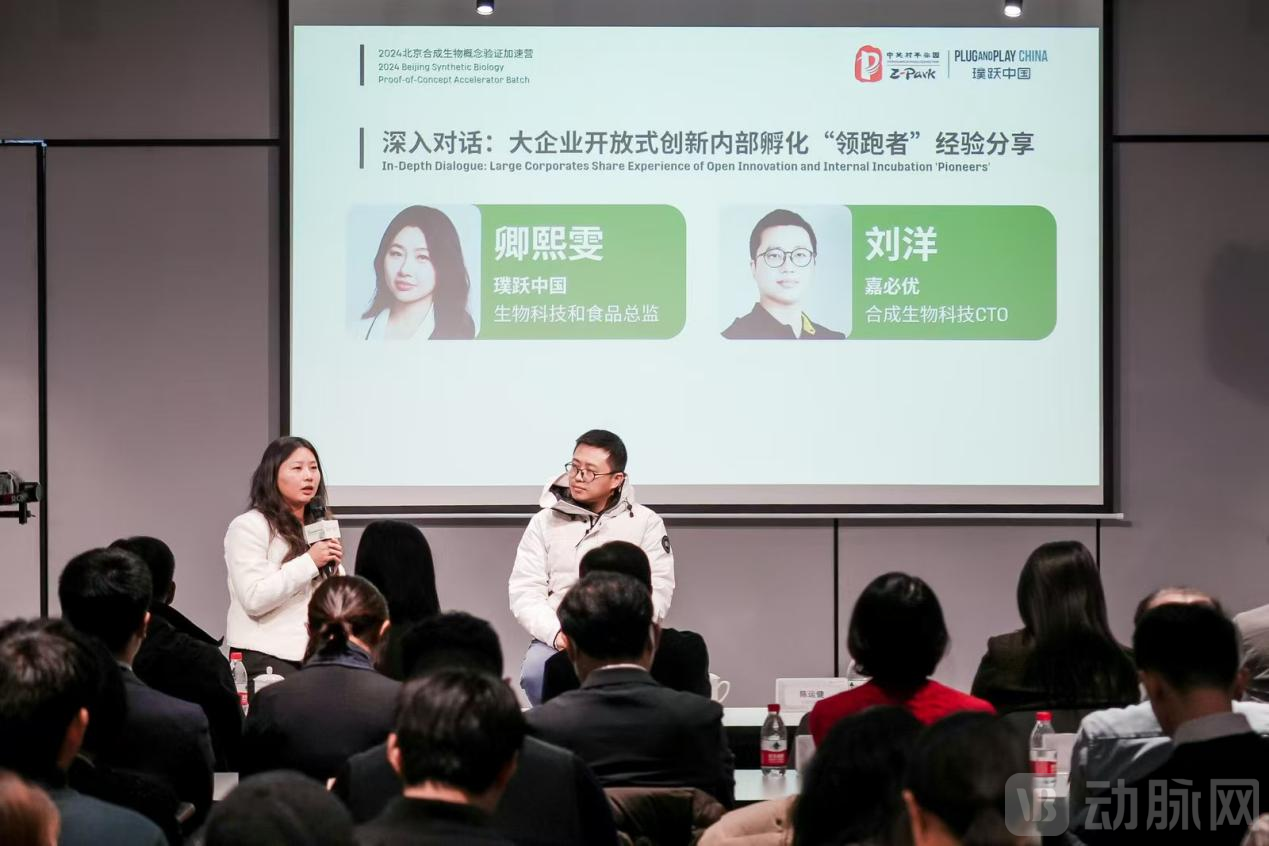 Innovative Dialogue Session
During the roundtable discussion,Zhang Wei, CEO of Jiabei Pharmaceutical and BioValley; Yang Yong, Head of Innovation for Greater China at Bühler Group; Professor Xia Jianye from the Tianjin Institute of Industrial Biotechnology, Chinese Academy of Sciences; Wang Xiaoyan, Brand Director of Green Nitrogen Biology; Gao Huayi, General Manager of Ruihe Biology under Ringpu Group; and Luo Zhaohui, Principal Expert in Biological Manufacturing Solutions at BiotreeGuests discussed “streamlining the value chain, pooling resources to overcome technological barriers, and expanding applications in core scenarios.”
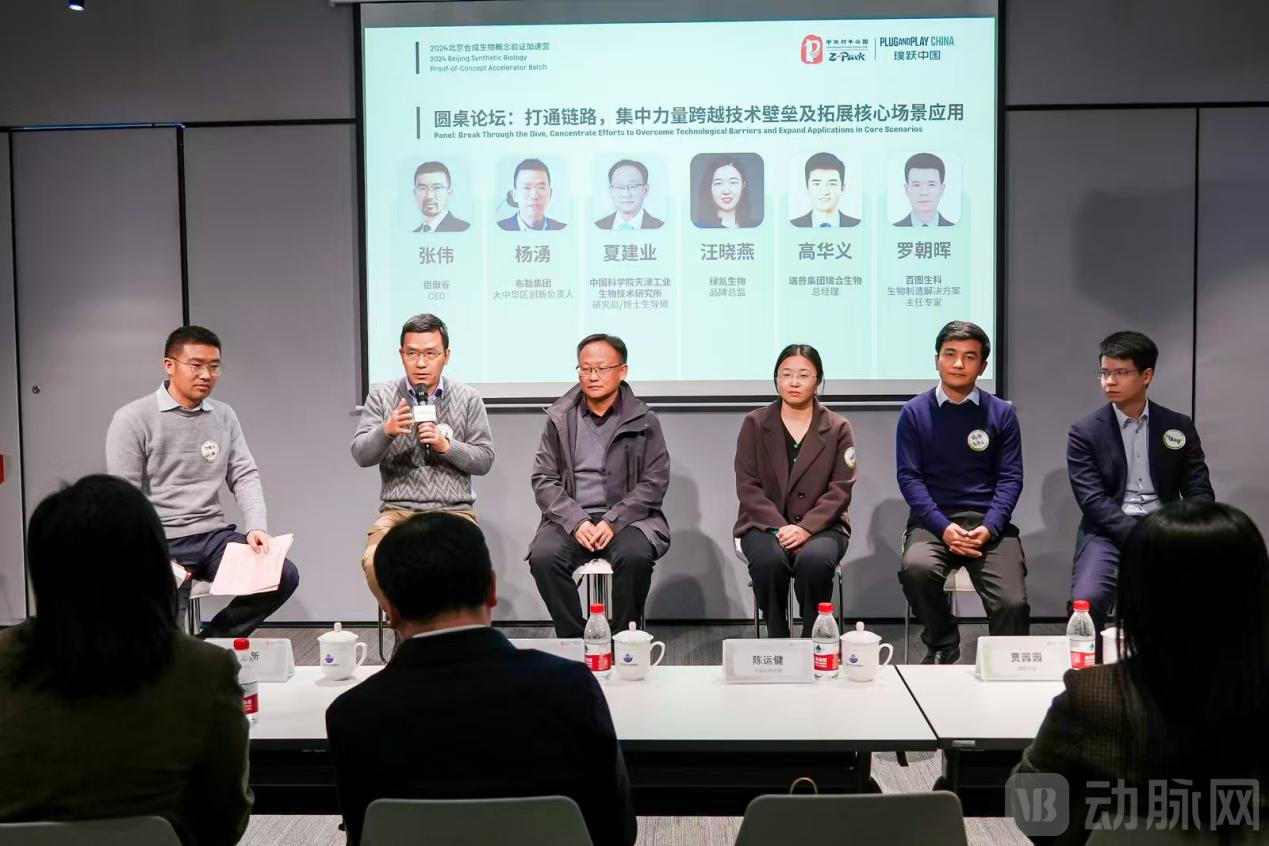 Roundtable Discussion: Streamlining the Value Chain to Overcome Technical Barriers and Expand Core Scenario Applications
The panelists first outlined their respective innovative practices in the field of synthetic biology, emphasizing that sustainable development and innovation are the key genetic drivers for sustaining corporate vitality, and then separately addressed fromIt delves into how to drive scenario-based innovation, cross-industry innovation, digital-intelligent approaches, and sustainable development concepts, thoroughly exploring the application prospects and challenges of synthetic biology technologies across various fields, while emphasizing the importance of technological research, industrial translation, and collaborative partnerships., and proposed recommendations for establishing a collaborative ecosystem.
11 Companies Share Innovation Achievements, Showcasing Greater Application Potential of Synthetic Biology
In addition to cutting-edge insights from industry experts, 11 technology innovation enterprises in the field of synthetic biology also presented exciting shares of innovative technologies and showcased their achievements.
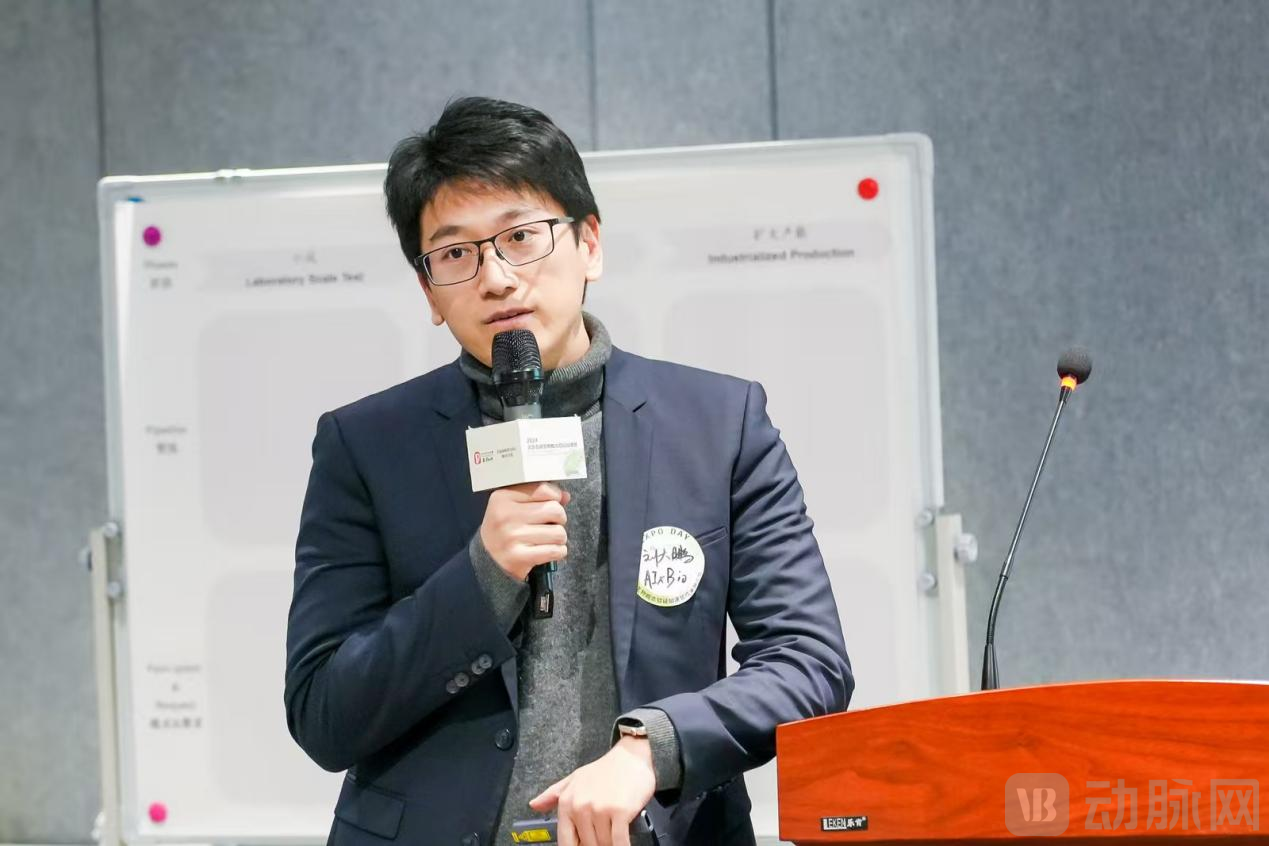 Corporate Innovation Achievements Showcase
Among them, Qin Wei, Sales Director of Yingjia Hesheng, shared the company’s self-developed steviol glycoside natural sweetener. This sweetener offers the advantages of being natural, healthy, sugar-free, and calorie-free, and has been applied in product innovations across beverages, baked goods, confectionery, and other categories.
Zhuang Mansheng, Founder & CEO of Heyao Biotech, shared the advantages of the company’s distinctive chassis organism, Rhodotorula glutinis, such as high lipid yield and high cell density. He also introduced how the company achieved rapid, high-throughput optimization of synthetic pathways through three major technology platforms: an agile non-model organism engineering platform, an intelligent enzyme design and engineering platform, and an intelligent workflow automation platform.
Liu Dapeng, Founder & CEO of AbioYi, demonstrated how the company, as a provider of intelligent fermentation technology platforms, leverages an AI-driven synthetic biology manufacturing platform—integrating mathematical models and artificial intelligence with biological and fluidic data—to rapidly and cost-effectively scale biomanufacturing from laboratory to mass production. The company is committed to addressing inefficiencies in traditional fermentation processes and empowering synthetic biology enterprises to achieve a closed-loop R&D ecosystem spanning the entire industry chain, from cell construction to cell factory development.
Wang Kehan, co-founder of Zhongke Lingtan, shared the company’s advanced low-power carbon dioxide capture platform, electrocatalysis platform, and organic carbon source biofermentation platform. These technological platforms can convert carbon dioxide into bulk chemicals, high-value-added biochemical products, renewable electricity, and recyclable by-products.
AlgaeChen Biotech has developed microalgae-based products that lead market demand, leveraging its low-cost, high-quality protein production technology built on microalgal cell factories and synthetic biology. The company has achieved a 30% reduction in the production cost of DHA-rich microalgal powder compared to competitors. Yang Yang, Founder and CEO of AlgaeChen Biotech, stated that this technology enables the broad and direct application of microalgal DHA in livestock and poultry farming, including cattle, sheep, and laying hens.
Zhang Li, Assistant to the General Manager of Shanghai Ergothioneine, provided a detailed introduction to the company’s anti-aging product portfolio featuring ergothioneine, which has already been adopted by leading cosmetics companies including Estée Lauder. Subsequently, Zhang shared the company’s three-year development plan and product pipeline strategy, highlighting its continued efforts to develop products for applications in the food, health supplement, cosmetics, and pharmaceutical sectors.
Chen Jiongsen, Founder & CEO of Yuandong Biology, shared the company’s product roadmap and its flagship nanocellulose product, drawing on his extensive experience in microbial AI large language models, strain development, and precision fermentation. The nanocellulose product can be widely applied to meet real-world demands in aerospace, semiconductors, lightweighting, and other scenarios.
Wu Jinyong, Founder & CEO of Weihe Hexagon, stated that as a manufacturer of raw materials for the food and cosmetics industries, the company has developed a diversified portfolio of raw material products, including functional cosmetic ingredients, functional food ingredients, pharmaceutical raw materials, and agricultural and livestock feed additives, which can be widely applied across various market sectors.
New Pro, a brand under Xinyicui Technology, leverages technologies such as synthetic biology and precision fermentation to manufacture protein ingredients for functional foods. Liu Fengxin, Strategic Marketing Director, stated that the company’s proprietary technologies for producing bovine lactoferrin and thaumatin via precision fermentation have completed development and pilot-scale production. The company has secured letters of intent from Fortune 500 dairy enterprises and is currently seeking to establish production lines in China.
Huisile is currently focused on the innovative R&D, production, and sales of peptide-based and plant-extract active ingredients, as well as the application of its current products in the cosmetics, food, and pharmaceutical sectors, along with its five-year business roadmap. Shi Shengjie, its Operations and CFO, emphasized that the use of synthetic biology technologies to produce peptide-based cosmetic raw materials has achieved an 80% reduction in costs compared to traditional chemical synthesis methods.
Wang Xiaoyan, Brand Director of Green Nitrogen Biotech, shared the company’s pioneering “Targeted Microecology” theory and application system, which is built on high-throughput screening, synthetic biology, machine learning, and digital modeling technologies. By leveraging its self-developed intelligent hardware products—the DME Cultivator and the 24-Hour Intelligent Microbial Companion Station—Green Nitrogen Biotech has achieved on-site fermentation of microbial agents, enabling immediate production and use.
The successful conclusion of the Plug and Play China Beijing Synthetic Biology Proof-of-Concept Accelerator marks both a perfect ending and a new starting point for innovation. Looking ahead to 2025, Plug and Play China will set sail once again, sincerely inviting all innovation pioneers to stay engaged with upcoming entrepreneurship and innovation activities, jointly fostering an open innovation ecosystem.
Beijing Synthetic Biology Proof-of-Concept Accelerator Camp Concludes SuccessfullyThe Beijing Synthetic Biology Proof-of-Concept Accelerator Camp has concluded successfully. This event not only showcased innovative achievements in the field of synthetic biology but also charted a clear course for future collaborative development among industry, academia, and research institutions. With the joint efforts of all stakeholders across the industry, the synthetic biology sector is poised for a brighter future, making significant contributions to the advancement of the global bioeconomy.