

30 Million Aging Pets Unveil a New Blue Ocean: A Surge in Demand for Geriatric Pet Pharmaceuticals and Health Solutions
As the era of aging pets arrives, the landscape of China’s pet pharmaceutical market is quietly undergoing transformation.
According to data from the "2023–2024 White Paper on China's Pet Industry," it is projected that over 30 million pets in China will enter middle and old age in the next three years.“Against the backdrop of an aging population, the incidence of diseases in pets is rising, and related medical demands are becoming increasingly robust,” Shi Liming, a partner at QinZhi ChongLe Fund, told VCBeat. “This represents a huge market opportunity.”
On the one hand, as pets enter old age, diseases of the digestive system, metabolic disorders, cardiovascular and cerebrovascular diseases, endocrine disorders, and neurological conditions become highly prevalent, making these areas new potential markets for pet pharmaceuticals.
On the other hand, due to the late development of China’s pet pharmaceutical industry, the market was previously dominated by multinational animal health companies, making it difficult for domestic enterprises to secure a significant market share. In this new blue-ocean market, Chinese innovative companies may now have a platform to compete directly with multinational corporations.
How is the industry strategizing in response to the “new storm” sweeping through the pet pharmaceutical sector?
From birth to death, pets generally go through three major stages: juvenile, adult, and senior.
“During the juvenile stage, a pet’s core health needs include vaccination and deworming; in adulthood, the focus shifts primarily to regular check-ups and disease prevention,” said Shi Liming, Partner at Qinzhi Chongle Fund. “For pets approaching or already in their senior years, needs turn toward health supplements, while medical demands become more diverse and urgent as they face increasingly prominent health issues such as cardiovascular disease, tumors, cataracts, arthritis, diabetes, and urinary stones.”
 ▲ Chart by VCBeat
Amid the accelerating aging of the pet population, demand for pet health supplements has risen first.
The "China Beautiful Life Survey 2022–2023," jointly launched by the National Bureau of Statistics and other organizations, found that the top five categories in pet spending were health supplements, toys, pet training, bathing/grooming, and vaccinations/veterinary care/check-ups. This indicates that health supplements have become the leading category in pet consumption.
In terms of detailed product categories, consumers' attitudes toward petHigh attention is paid to gastrointestinal health, coat health, basic nutritional supplementation, and joint/bone health.(Data from the “2024 Taobao and Tmall Pet Pharmaceutical and Healthcare Services Trend Insights Report”), with a high willingness to purchase health supplements to improve and maintain their pets’ health.
Moreover, while addressing traditional pet health concerns, pet owners are increasingly seeking advanced care solutions such as anti-aging treatments for their pets.
In response to diverse needs, the supply side—specifically in terms of product variety—has already offered a wide range of solutions. The market features products targeting various functions, including joint calcium supplementation, gastrointestinal regulation, coat and skin care, vitamin and trace element supplementation, and immune system enhancement. These products contain ingredients such as omega-3, coenzyme Q10, lecithin, and taurine, resulting in intense competition.
It is worth noting that although the entry barrier to the pet health supplement market is relatively low, there is a significant gap between Chinese companies and multinational corporations in terms of market share and brand recognition.For example, among the well-known brands familiar to pet owners, RedDog, Nutri-Plus, and Vetscan are American brands, Megacal is a British brand, and Virbac is a French brand. Currently, no nationwide leading enterprise has emerged in China’s pet health supplement industry, which remains highly fragmented.
Different brand values are ultimately reflected in product pricing, with foreign brands generally priced higher than domestic ones. Taking fish oil as an example, the high-end market (fish oil priced above RMB 180 per 50g) is still dominated by foreign brands, while Chinese brands mainly occupy the mid-to-low-end market.
A New Direction or the Path to Breakthrough for Domestic Brands. VCBeat has learned that,In addition to the aforementioned common supplements, there is significant room for optimizing products tailored to the unique needs of senior pets—specifically those designed to alleviate psychological stress and prevent age-related conditions affecting the eyes, skin, and gastrointestinal tract. Consequently, this segment is regarded as an area with substantial growth potential.
In this sector, multinational corporations have begun to actively establish their presence. For instance, the U.S. brand Zesty Paws has launched a premium feline calming supplement designed to help pets maintain emotional balance and promote relaxation, thereby reducing stress responses. Similarly, IN-Plus has targeted the niche market of joint care for senior pets by introducing products such as its professional-grade chondroitin formulation.
Domestic companies are also entering the market. For instance, Nourse has launched nutritional supplements focused on pet oral health, designed to improve bad breath in pets approaching their senior years, while inhibiting dental plaque and reducing tartar buildup to prevent calculus formation. Hisun Animal Health, meanwhile, has introduced Shuxinbao, a line of calming products for cats and dogs, targeting behavioral issues caused by pet anxiety.
“The growth of pet health supplements is bound to be rapid, presenting significant opportunities,” pointed out Shi Liming, a partner at Qinzhi Chongle Fund. “However, the sector has attracted numerous entrepreneurs who tend to prioritize marketing over product innovation, resulting in severe homogenization. This is not a sustainable model for healthy industry development.”It is hoped that domestic enterprises, while placing greater emphasis on branding and marketing, will pay even more attention to technological innovation and the enhancement of product quality.”
It is also worth noting that within China’s urban pet ownership structure, the population of pet cats has been growing rapidly. The number of pet cats has exceeded that of pet dogs for four consecutive years, reaching 71.53 million in 2024, which indicates an accelerating surge in demand for cats.
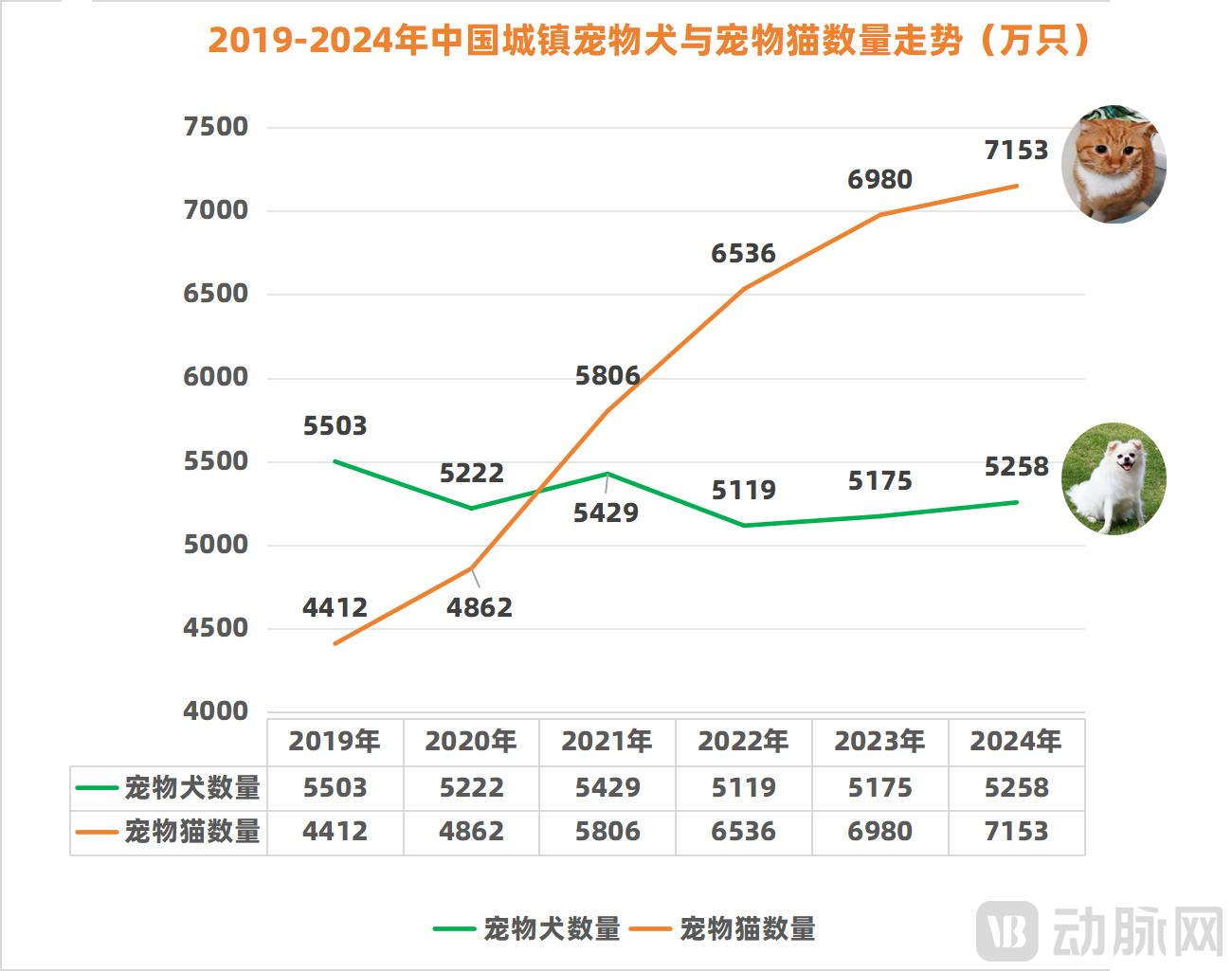 ▲ Data source: "2025 China Pet Industry White Paper (Consumption Report)" | Graphic by VCBeat
Meanwhile, as product quality improves, domestic pet health supplement brands can make global expansion a key objective to access larger markets, rather than merely engaging in fierce competition within China.
Unlike the fierce competition in the pet supplement market, there are currently few companies focused on the research and development of pharmaceuticals for senior pets, and the range of available medications remains relatively limited, which has led toThere is a severe shortage of highly effective drugs for pet tumors, as well as cardiovascular, digestive, metabolic, endocrine, and neurological diseases.
Taking oncology drugs as an example, approximately 150 pharmaceutical agents for the treatment of human tumors have been approved for market launch worldwide, with around 1,500 various anticancer drug formulations prepared from these agents. In contrast, effective oncology drugs for pets are extremely scarce, with only a handful of products currently available on the market. Representative products include Zoetis’ tyrosine kinase inhibitor (TKI) Palladia and Merck & Co.’s PD-1 antibody Gilvetmab.
“As pets age, cardiovascular diseases become inevitable, with high incidence rates of conditions such as arrhythmia and heart failure. The mainstream medications on the market include pimobendan and furosemide. The former is a non-glycoside inotropic agent used to treat mild, moderate, or severe congestive heart failure in pets caused by atrioventricular valvular insufficiency or cardiomyopathy; the latter is a diuretic that promotes the excretion of excess fluid from the pet’s body and helps alleviate symptoms associated with heart failure,” said Shi Liming, Partner at Qinzhi Chongle Fund. “However, there are still few specific drugs targeting cardiovascular diseases in pets, and medications capable of completely curing these conditions are particularly scarce.”
The scarcity of specialty veterinary drugs creates immense market potential. Take Zoetis’ Cytopoint, a monoclonal antibody targeting IL-31 for the treatment of canine atopic dermatitis, as an example. In 2023, the product achieved global sales of $500 million with no direct competitors, delivering substantial returns to the company.
To address the shortage of veterinary care and medications for pets, the entire industry has begun to strategize and deploy resources.
For example, in late 2023, the China Institute of Veterinary Drug Control released the List of Human Drugs Urgently Needed for Clinical Use in Pets (61 Items) as a reference for companies engaged in pet drug research and development, toEncourage the repurposing of urgently needed human drugs for use in pets.For approved human-use chemical drugs intended to be repurposed for veterinary use, product registration materials must be submitted in accordance with the requirements set forth in the Registration Materials for Repurposing Human-Use Chemical Drugs for Veterinary Use.
Specifically, the conversion of human drugs into veterinary drugs requires companies to redesign the compounds and conduct new clinical studies. The clinical trial period typically ranges from 2 to 5 years, and the trials are considerably less complex than those for human drugs.
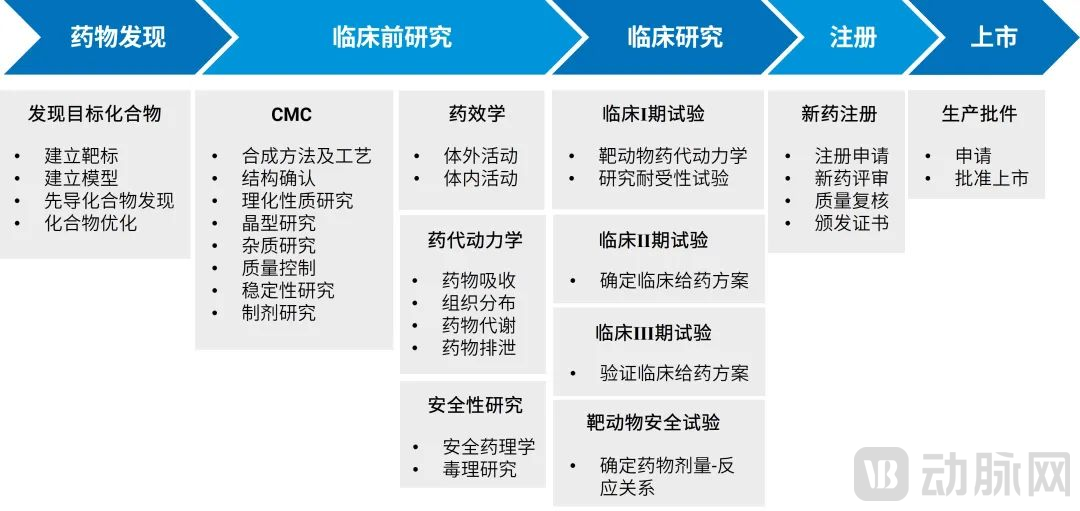 ▲General Process of Veterinary Drug R&D. Image source: WuXi AppTec
“However, directly repurposing human pharmaceuticals for veterinary use is not as straightforward as one might imagine. Due to significant physiological differences between pets and humans, the dosage, metabolic processes, and safety profiles of human drugs cannot be directly applied to animals; certain medications that are safe for humans may cause severe toxicity in pets. In terms of drug safety, pets have lower drug tolerance, and the direct use of human medications may lead to poisoning, allergic reactions, or other adverse effects. From a regulatory perspective, some human drugs are prohibited from being converted for veterinary use. For instance, human chemical drugs under monitoring periods or administrative protection, as well as critically important antimicrobials for human use, must not be repurposed for pets,” said Shi Liming, Partner at Qin Zhi Chong Le Fund. “Therefore, more in-depth research and development efforts are required in the field of pet pharmaceuticals.”
Furthermore, the low barrier to simple conversion requires minimal R&D investment, leading to a lack of robust competition and genuine innovation in the market.Therefore, a long-term strategy should focus on deeply developing innovative product pipelines targeting age-related indications in pets, or building new technologies that address drug development needs, thereby strengthening the pet pharmaceutical industry chain to achieve cost reduction and efficiency improvement.
Among them,Innovative products are the industry’s most critical and urgent need at present.Taking renal failure in pets as an example, this condition is a refractory disease characterized by high mortality and high prevalence. Statistics show that 7 out of every 10 senior dogs suffer from renal failure, making it the leading cause of death in this population. Therefore, inhibiting the progression of renal failure in pets is an urgent challenge to be addressed in the field of veterinary medicine. In this direction, companies such as Japan’s Toray Industries and China-based Ginno Tech are accelerating their research and development efforts.
In addition, domestic companies such as Futeng Bio are currently making strategic moves in fields including pet anti-aging products and medications for improving muscle mass.
From a global perspective, accelerating the research and development of products in niche segments is also an important trend.An examination of drugs approved by the U.S. Food and Drug Administration (FDA) in recent years reveals a significant increase in new veterinary pharmaceuticals targeting age-related diseases in pets.For example, in September 2024, the FDA approved Zenrelia (ilunocitinib tablets), a new once-daily oral JAK inhibitor for pets developed by Elanco Animal Health. It is used to control pruritus associated with allergic dermatitis and atopic dermatitis, demonstrating excellent efficacy in managing itching and skin lesions. In December of the same year, Fuzapladib (fuzapladib for injection), developed by Ceva Santé Animale, received conditional approval for the specific treatment of acute pancreatitis in dogs (ACP).
Since pets cannot “take medication” like humans do, innovation in drug administration methods is also a viable approach.For example, in 2020, Boehringer Ingelheim developed an inhalation device for the treatment of severe equine asthma. Featuring an ergonomic handle, a dosing rod, and a nasal adapter designed for gentle insertion into the horse’s nostrils, the device facilitates easy administration by owners while ensuring effective drug delivery deep into the lungs, thereby enabling horses with severe asthma to benefit from this novel therapy.
“Since its establishment, QinZhi Capital has been dedicated to investments in the healthcare and wellness sector. While prioritizing human health, the firm also places significant emphasis on pet health. In 2021, it began investing in companies developing veterinary vaccines. In 2022, in collaboration with Dongguan municipal and township governments as well as industrial capital partners, it co-founded the QinZhi ChongLe Fund. Guided by the investment philosophy of ‘Space + Industry + Fund,’ the fund actively invests in early-stage veterinary healthcare startups with core technological capabilities,” said Shi Liming, Partner at QinZhi ChongLe Fund.There are also many opportunities in innovative technologies., for instance, we focus on researching advanced vaccine technology teams such as those working on VLPs and mRNA. The Qinzhi Chongle Fund has incubated and invested in Hertz Life, a company built on a novel virus-like particle (VLP) technology platform. Leveraging the unique flexibility of this platform, the company can rapidly develop required protein antigens, thereby accelerating the development of relevant pet vaccines and gaining advantages in industrialization. Some products have completed domestic clinical trials and entered the review stage, while several core products have already applied for overseas clinical trials and commercialization exploration.
In addition, a number of domestic digital enterprises are entering the pet pharmaceutical industry chain to reduce costs and increase efficiency. Taking Nanxing Digital, invested by the Qinzhi Chongle Fund, as an example, the company has launched a GMP management system and a QR code traceability system to address the current situation in China’s animal health industry, where GMP management is lagging and heavily reliant on manual labor. These solutions help industry enterprises cut costs and boost efficiency. Furthermore, the company is leveraging AI technology to develop and build an industry big data platform, thereby empowering the sector.
In addition to the three aforementioned pathways, domestically produced pet pharmaceutical brands can also integrate Traditional Chinese Medicine (TCM) to develop medications better suited for the Chinese market. According to relevant literature, TCM can be used in the clinical treatment of various pet diseases, including gastroenteritis in dogs and cats, acute and chronic eczema in dogs, and canine distemper. However, due to the unclear active ingredients and mechanisms of action of TCM formulations, as well as the lack of relevant policies and regulations clarifying issues related to clinical trials and the application of TCM for pets, there is still a considerable path ahead for innovation in pet TCM formulations.
Of course, R&D is a long-cycle endeavor. For innovative companies entering the market, only by enduring the solitude and continuously building competitive innovative products can they seize the new opportunities in the pet pharmaceutical market under the trend of an aging population.
The future is bright, but the path is often winding. From the current state of the industry, the research and development of veterinary pharmaceuticals for pets still faces enormous challenges.
First,To ensure the efficacy of veterinary drugs, it is essential to account for variations in drug administration across different pet breeds.For instance, there are over 70 breeds of cats, which differ in body weight, organ function, and pathogenesis, thereby necessitating variations in drug dosing.
Secondly, pet medications alsoMust also take cost-effectiveness into account. The underlying reason is that the pet pharmaceutical market is relatively small, and compared with human medicines, pet owners’ overall willingness to pay has an upper limit, making cost-effectiveness critically important.
In light of this, innovative pet pharmaceutical companies must maintain a robust product pipeline covering a broad spectrum of disease areas to sustain sales revenue. For instance, Boehringer Ingelheim, a leader in the animal health industry, has stated that it plans to launch or further develop 20 new veterinary drugs by 2030.
Furthermore, talent shortage is another pain point for the industry. The domestic pet pharmaceutical industry has a relatively short development history, leading to a scarcity of professional R&D personnel, particularly those with extensive experience in pet drug development and registration. Most R&D professionals come from veterinary colleges or majors in chemical engineering and medicine; they tend to join more profitable animal vaccine companies or opt for human pharmaceutical R&D enterprises. Compared with leading international animal health companies, China’s pet pharmaceutical R&D lags behind in the application of emerging technologies. For instance, cutting-edge technologies such as cell and gene therapy are still in their infancy within the pet pharmaceutical sector. In addition, domestic pet pharmaceutical companies have limited investment in innovative drug development, relying heavily on generic drugs and lacking targeted R&D for complex and chronic diseases.
Finally,Companies entering the market must have strong support from industry players.Globally, the successful launch of oncology drugs for pets by Zoetis and Merck is backed by pharmaceutical industry leaders such as Pfizer and Merck. This is because only with solid support in terms of underlying logic, technology, and funding can subsequent processes such as technology transfer, optimization, and iteration of their products proceed without encountering critical bottlenecks.
For instance, Zoetis has consistently ranked among the global leaders in R&D investment within the animal health sector, with an average annual R&D expenditure exceeding RMB 3 billion over the past three years. Meanwhile, Zoetis supplements its internal technological gaps through external acquisitions; for example, its 2017 acquisition of Nexvet filled a void in its biological product R&D capabilities, enabling the successful launch in 2020 of two monoclonal antibody-based anti-arthritis drugs: Solensia (for cats) and Librela (for dogs).
In summary, it is evident that domestic brands still have a long road ahead. Nevertheless, no matter how distant the journey, progress will ultimately lead to success: drawing on the mature development experience of the U.S. pet healthcare market, the pet healthcare sector is bound to produce industry leaders with market capitalizations reaching tens of billions, or even hundreds of billions, in the field of drug research and development.
After all, as pets have become integral members of households and serve as emotional anchors for their owners, pet owners are inevitably willing to spend real money on eldercare costs for the companions that have shared countless moments with them.