

Salus Pro Gene Sequencer by Salus Genomics Receives NMPA Class III Certification for Full Clinical Application Coverage

Salus
Sequencing and Spatial Omics Platform Provider
On January 20, the official website of the National Medical Products Administration (NMPA) released medical device approval documentation. Salus’s Salus Pro gene sequencer has been granted a Class III medical device registration certificate by the NMPA. Its intended use covers the sequencing of DNA and RNA derived from human samples, as well as DNA and RNA from pathogens present in human samples.
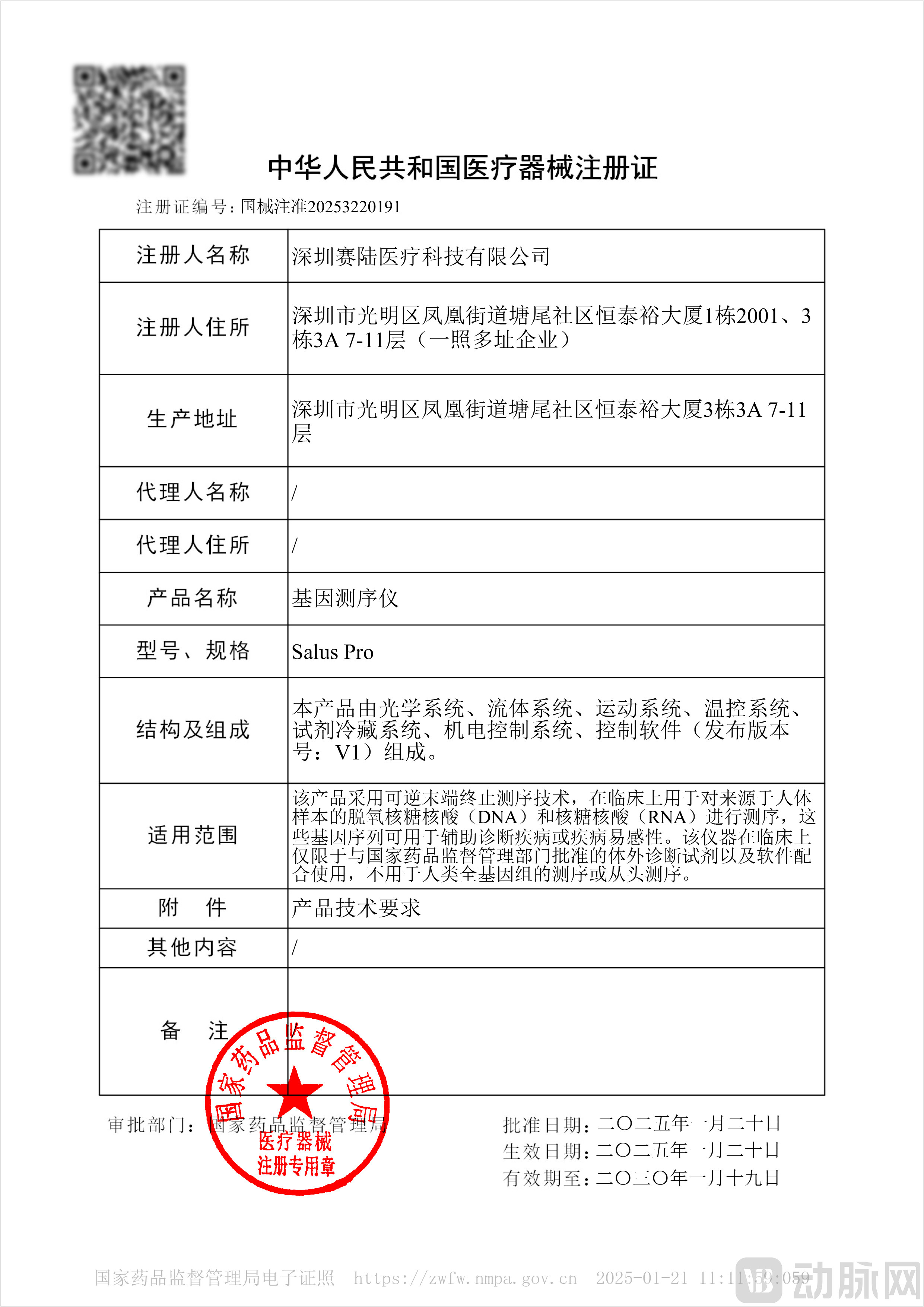
Notably, Salus Pro is the first gene sequencer in China approved for all clinical testing scenarios, based on reversible terminator sequencing technology.
The approval of Salus Pro marks a significant step for Salus in its strategy to commercialize products within China’s clinical sector. It will provide strong momentum for the compliant development of its products in hospitals, enabling the company to continuously expand and deepen its presence in the clinical field.
For the industry, this approval signifies a brand-new option for clinical testing in China in the areas of human sample DNA and RNA detection, as well as human pathogen DNA and RNA detection. It fills the gap left by previously approved products in terms of comprehensive clinical testing capabilities, providing hospital laboratories and third-party testing facilities with a comprehensive, compliant, and reliable gene sequencing solution, thereby holding significant industry value.
Based on Reversible Terminator Sequencing, the First Approved for All Clinical Testing Scenarios
Currently, gene sequencers are primarily applied in two major fields: research services and clinical testing. Although research services account for more than half of the market share, growth has gradually slowed as this segment has reached relative maturity. Clinical testing innovation, as a key incremental market, has become a fiercely contested arena for domestic gene sequencer manufacturers.
In this process, obtaining registration qualifications for reagents and developing gene sequencers that comply with medical device requirements are crucial. Only instruments certified by the National Medical Products Administration (NMPA) can ensure compliance and reliability in clinical applications. Instruments or kits without comprehensive certification pose compliance risks, which may affect the accuracy and reliability of clinical testing.
Gene sequencers are deeply integrated with vertical application sectors during their commercial expansion; therefore, for gene sequencer manufacturers, securing application scenarios is the key to market dominance. Currently, numerous hospital clinical laboratories and third-party testing facilities are focusing on applications in clinical infectious diseases, with testing demands covering DNA and RNA from human samples as well as DNA and RNA from human pathogens.
However, compliant products are relatively scarce in the market, limiting the widespread application of gene sequencers in clinical testing. Although some gene sequencers possess the technical capability for detection, they cannot be legally used in clinical settings due to the lack of National Medical Products Administration (NMPA) certification, which affects the accuracy and reliability of clinical testing. Compliant products must also meet stringent clinical trial standards. Only gene sequencers that have undergone rigorous validation and certification can truly meet the demands of clinical testing and provide reliable services to healthcare institutions.
In summary, there is an urgent clinical need for a gene sequencer that not only complies with medical device regulations but also comprehensively meets the demands of clinical laboratory testing. Seizing this opportunity to capture the incremental market for innovative clinical diagnostics is key for gene sequencing manufacturers to stand out in the competitive landscape.
Currently, manufacturers are actively refining their application portfolios, as time equates to competitive advantage. A comparison of publicly available data indicates that MGI Tech’s approved products, based on Combinatorial Probe-Anchor Synthesis (cPAS) sequencing technology, offer relatively comprehensive coverage across clinical application scenarios. In contrast, previously approved products based on Reversible Terminator Sequencing technology have largely been limited to DNA sequencing of human samples, such as DNA testing in reproductive health, tumor DNA detection, and other specific applications. These products fail to meet the demands for RNA sequencing of human samples and the detection of both DNA and RNA from human pathogens.
Therefore, Salus Pro, the gene sequencer from Salus Medical, has obtained the Class III medical device registration certificate from the National Medical Products Administration (NMPA), becoming the first gene sequencer based on reversible terminator sequencing technology approved for all clinical testing scenarios. This is of great significance in promoting the application of gene sequencing technology in the field of clinical diagnostics. For the company itself, it can quickly fill market gaps and gain a competitive advantage.
Rapid and flexible, multi-purpose in one device, meeting diverse clinical testing needs
Salus Pro is a medium-to-high throughput sequencer launched by Salus in 2022. Based on reversible terminator sequencing, it employs the sequencing-by-synthesis (SBS) technology principle. By performing in situ amplification of DNA fragments and utilizing a high-resolution imaging system coupled with efficient data analysis algorithms to detect fluorescently labeled nucleotides, it delivers highly accurate sequence data.
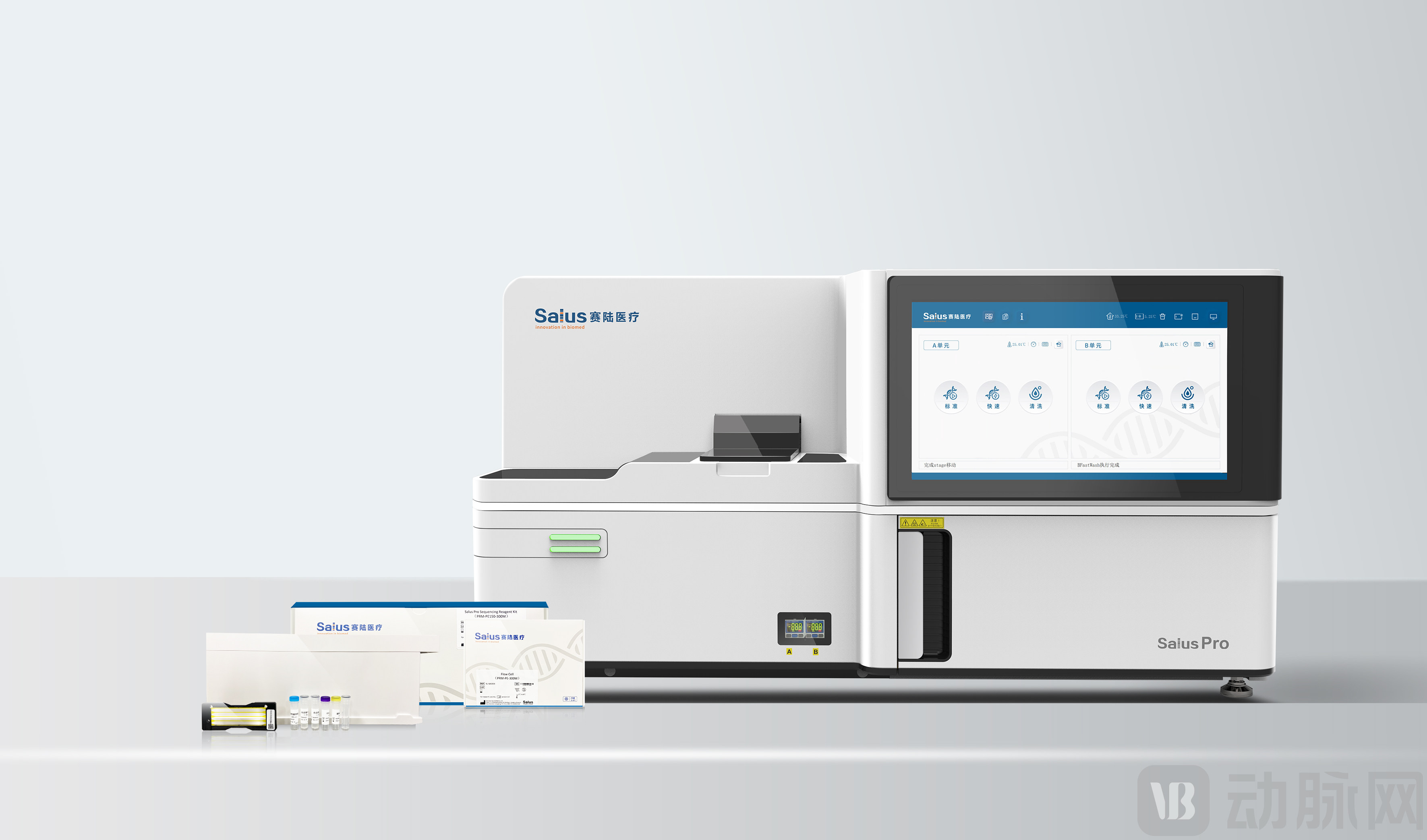
Salus Pro Gene Sequencer
Salus Pro innovatively integrates multiple cutting-edge technologies, including wide-field imaging, high-efficiency sequencing enzymes, and ultra-fast chemistry. This integration not only accelerates sequencing speed but also ensures high-quality data output, meeting the dual demands of diverse users for both speed and data quality. Previously, the product underwent comprehensive testing on various sample types at nearly 100 enterprises, third-party clinical laboratories, and research institutions worldwide. The results demonstrated that its performance parameters and data quality are comparable to those of similar products from leading international companies, with significant advantages in certain specialized areas.
The core features of Salus Pro include multi-scenario applicability, rapid flexibility, and multifunctionality in a single device. Its overall design and positioning closely align with the needs of diverse users, including clinical professionals, meeting various clinical testing requirements and demonstrating broad market applicability.
The product supports multiple read-length modes, ranging from SE50 to PE150, covering low-, medium-, and high-throughput data outputs to meet the needs of diverse application scenarios. Furthermore, Salus Pro achieves a raw Q30 score exceeding 90%, an exceptionally high accuracy standard in the industry, ensuring the reliability and precision of sequencing results.
Leveraging these features, Salus Pro supports versatile, single-device usage with flexible startup capabilities. For instance, in clinical testing, Salus Pro can rapidly detect pathogen DNA and RNA, facilitating swift diagnosis of infectious diseases. In scientific research, it can be employed for genomic studies, helping researchers delve deeper into gene function and regulatory mechanisms. Furthermore, Salus Pro is suitable for a variety of application scenarios, including early cancer screening, genetic disease diagnosis, and reproductive health testing, providing users with comprehensive and efficient gene sequencing solutions.
Achieve comprehensive coverage of low-, medium-, and high-throughput capabilities, and continuously advance the product registration certification plan.
The approval of Salus Pro marks a beginning, as Salus will continue to advance the regulatory submission process for its other products. According to reports, the company’s next key focus will be on securing regulatory clearance for its low-throughput product, Saluseq Nimbo.
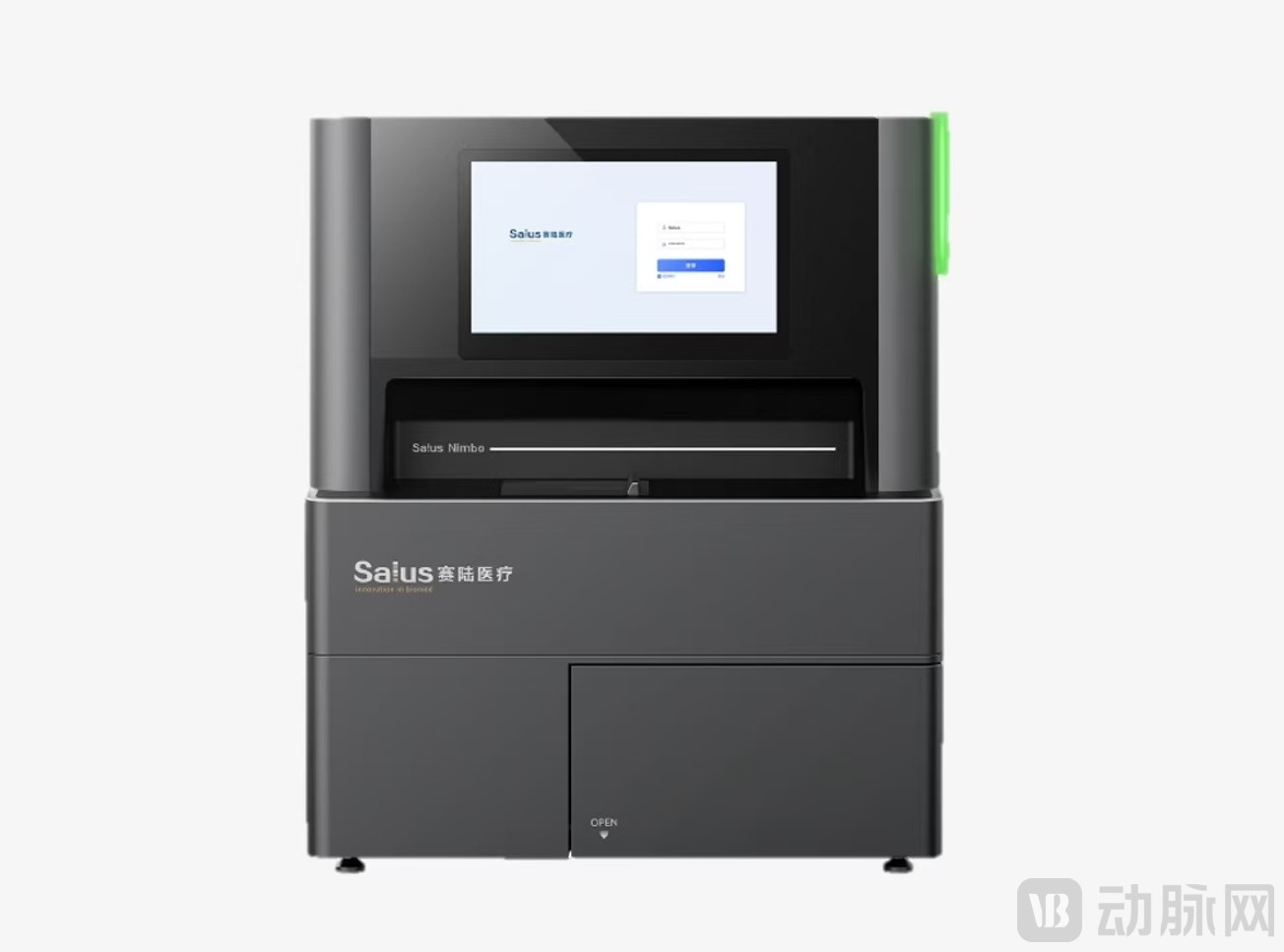
Saluseq Nimbo Gene Sequencer
Saluseq Nimbo is a low-to-mid-throughput gene sequencer officially launched by Salus in September 2024. The product integrates multiple core technological innovations in optics, mechanics, fluidics, biochemistry, and chip technology, with all key components and consumables domestically produced in China.
This product is a sequencer developed by Salus Medical for clinical laboratories in primary healthcare institutions and users with high demands for turnaround time but small sample volumes. Featuring a compact footprint, rapid speed, and low startup costs, it emphasizes “point-of-care testing” and “test-upon-receipt.” Its rapid sequencing mode can complete sequencing on a 25M chip in 3.4 hours, significantly reducing sequencing time.
Saluseq Nimbo is highly favored in clinical applications due to its rapid sequencing, fast data transmission, and user-friendly operation. Saluseq Nimbo supports various sequencing read lengths, including SE50–PE150, and enables long-read sequencing with SE400 and PE300 configurations. Its sequencing quality meets or exceeds mainstream industry standards, making it suitable for precision testing in fields such as infectious diseases, reproductive health, oncology, genetics, and forensics.
Salus has consistently adhered to the product design philosophy of “Racing Against Time, Unlocking a Continent of Sequencing Freedom.” Each of its products features rapid flexibility and multi-functionality in a single instrument. To date, Salus has successfully launched four commercialized products, including sequencing platforms and spatial transcriptomics solutions. This achievement establishes comprehensive coverage across low-, medium-, and high-throughput sequencing pipelines, catering to the needs of diverse customers and application scenarios while providing all-around sequencing solutions.
It is worth noting that Salus has reduced production costs by optimizing raw materials and supply chain management, thereby breaking the “impossible triangle” of throughput, sequencing speed, and cost to a certain extent, making its products more competitive in terms of price and performance.
With Salus Pro obtaining Class III medical device certification, enabling its use across all clinical testing scenarios, Salus will unlock a broader clinical diagnostics market by providing rapid, flexible, and easy-to-launch gene sequencing solutions for hospitals and third-party testing laboratories with diverse needs.