

Copner Biotech Files IPO Prospectus Highlighting Animal-Free, High-Consistency 3D Cell Culture Scaffolds
As research into disease pathogenesis deepens, scenarios such as basic research and drug development require more precise cell models to study intercellular interactions and signal transduction.
In contrast, traditional 2D cell culture fails to adequately recapitulate the authentic in vivo cellular microenvironment. When cells are grown on flat culture dishes, their morphology, physiological functions, and gene expression profiles undergo significant alterations. In basic research, these changes compromise studies on cell–cell interactions, physiological processes, and differentiation mechanisms. In drug development, they reduce the accuracy and efficiency of drug screening, increase the rates of false-positive and false-negative results, and thereby elevate R&D costs.
This has driven the iteration of cell culture technology toward 3D systems. 3D cell culture enables cells to grow within three-dimensional scaffold materials or matrices, forming cell aggregates that mimic in vivo tissue structures, thereby effectively addressing the limitations of 2D cell culture. Against the backdrop of surging potential in tissue and organ regeneration, along with the continuous advancement of biomaterials and 3D scaffold technologies, 3D cell culture is poised for broad development prospects.
Copner Biotech is an emerging player in this field. Founded in 2020 and headquartered in Ebbw Vale, Wales, UK, the company specializes in 3D cell culture and related technologies, having established a robust portfolio of technologies, products, and services to serve the 3D cell culture and bioprinting markets.
1Development of inert, animal-free 3D scaffolds to more accurately simulate the in vivo physiological environment
Jordan Copner, Founder and CEO of Copner BiotechHe completed his studies in Biochemistry at Cardiff University in 2018 and embarked on his professional career. His career began at several small biotechnology companies, after which he assumed more senior roles at GE Healthcare and Cytiva. Throughout his academic and professional journey, Jordan has maintained a strong interest in 3D cell culture and related technologies, such as bioprinting. Regarding his original motivation for founding Copner Biotech, he stated that he aimed to address the current pain points in the 3D cell culture market and provide innovative solutions for the industry.
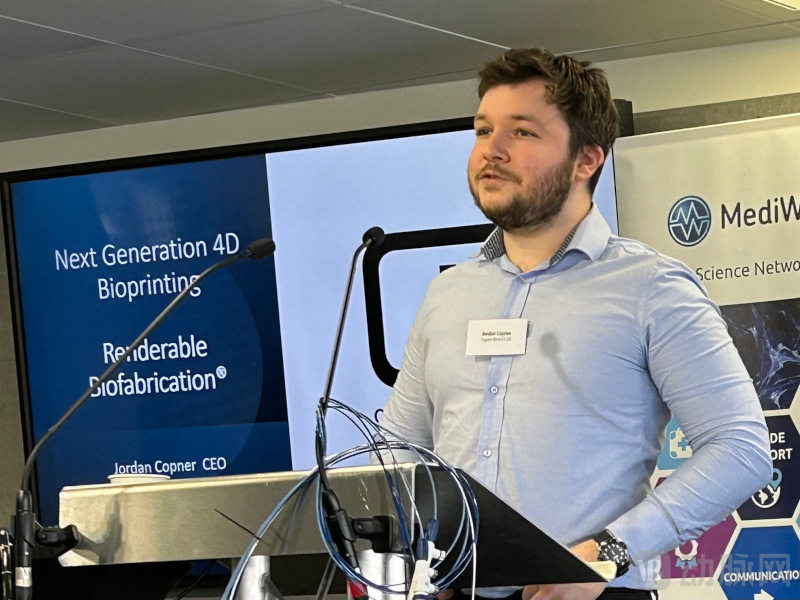
Jordan Copner, Founder and CEO of Copner Biotech
For many years, 3D cell culture has primarily relied on animal-derived hydrogels as scaffold materials, introducing several unavoidable adverse effects, including:
● Immunogenicity issues. Hydrogels derived from animals may contain animal-derived antigenic components. When used in 3D cell culture, these antigens may trigger immune responses, leading to cell death or functional abnormalities.
● Risk of disease transmission. Animal-derived materials may carry pathogens such as animal viruses and prions, which could infect cells during 3D cell culture.
● Difficulty in precisely controlling physicochemical properties. The physicochemical properties of animal-derived hydrogels (such as pore size, porosity, and elastic modulus) are constrained by their natural origins, making it difficult to precisely tailor these properties. This may fail to provide the optimal microenvironment for cell growth, thereby restricting three-dimensional cell expansion and leading to improper tissue organization or compromised cellular function expression.
● Complex composition and batch-to-batch variability. Animal-derived hydrogels have a complex composition and are influenced by numerous factors, including the physiological status, age, and housing conditions of the source animals. Consequently, variations in composition and content exist among extracts from different individual animals and across different batches. In 3D cell culture, such variability may compromise experimental reproducibility.
In response to the aforementioned challenges, the 3D cell culture market requires an innovative solution. Against this backdrop, Copner Biotech has emerged.Copner Biotech has developed inert, animal-free 3D scaffolds that promote confluent cell growth at the interface, thereby forming a balanced cellular system that more accurately mimics the in vivo physiological environment.。
2Innovative scaffold structure and surface roughness design can significantly promote cell adhesion and proliferation, eliminating the need for biopolymer coatings.
Copner Biotech’s flagship product is a 3D PETG scaffold that enhances cell capture and attachment, and promotes the growth of evenly confluent cell systems. According to the company’s disclosure,Mammalian cells grown on Copner Biotech’s 3D PETG scaffolds have exhibited more physiologically relevant morphology and healthy biomarkers compared to two-dimensional cultures.。
Relevant studies indicate that discrete oxygen gradients play a crucial role in cell migration across scaffold interfaces. Cells growing on scaffold structures typically exhibit a heterogeneous distribution, with aggregation being a common phenomenon.
Copner Biotech, by leveraging the 3D PETG scaffold interfaceIntroduction of Discrete Oxygen Gradients, promoting cell proliferation from the center to the periphery, thereby creating a more balanced cellular system on the scaffold, with a fusion pattern resembling that of in vivo tissue. This is primarily attributed to the unique scaffold structural design and surface roughness design of the 3D PETG scaffold system.
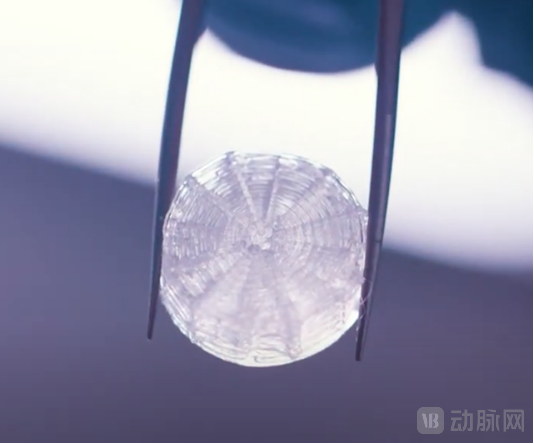
3D PETG scaffolds provide oxygen and nutrient gradients to maximize cell growth
The 3D PETG scaffold itself features an interconnected pore system, with pore size gradually increasing from the center to the periphery. This design creates a pronounced gradient of oxygen and nutrients across the scaffold interface, promoting cell migration and proliferation toward the periphery. Furthermore, these pores facilitate natural capillary action within the scaffold, making it highly suitable for forming 3D cellular structures such as spheroids and organoids.
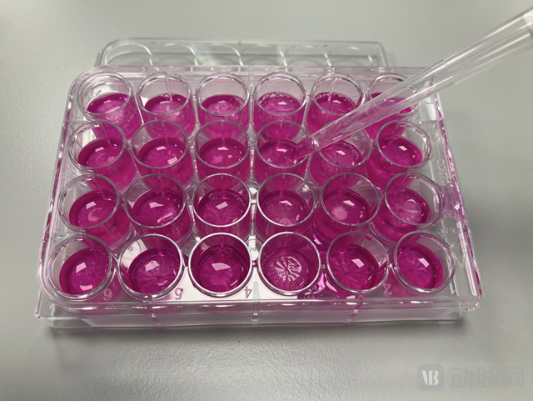
3D PETG Scaffolds Deployed in 24-Well Plates
Furthermore, the company’s customized 3D printing operating system, combined with high-precision printing technology,Capable of creating specific scaffold regions with optimal surface roughness. These regions support successful cell attachment as early as Day 1 of seeding., serving as the starting point for cell proliferation and outward migration. “With this approach, we do not need to use biopolymer coatings, and we can seed fewer cells than other scaffolds on the market,” Jordan told VCBeat.
In addition, Copner Biotech’s 3D PETG scaffolds offer the following advantages:
First, inFineCell AdhesionIn this regard, Copner Biotech’s 3D PETG scaffolds efficiently promote the attachment of mammalian cells even at low cell seeding densities. Cell types used to date include, but are not limited to, L929 fibroblasts, keratinocytes, HeLa cells, MCF-7 cells, A549 cells, and induced pluripotent stem cells (iPSCs).
Second, inCell ViabilityIn this regard, the company’s PETG material has been improved to optimize surface roughness, thereby enhancing cell adhesion and proliferation. This inert, non-cytotoxic material has been confirmed safe for use in cell culture, with no adverse effects on cell growth or function, facilitating the transition from 2D to 3D cell culture. Furthermore, 3D PETG scaffolds exhibit rigidity and do not degrade, making them highly suitable for long-term cell culture;
Third, inCell ProliferationIn this regard, Copner Biotech’s PETG material is capable of mediating cell division events while minimizing cell loss, thereby significantly promoting cell proliferation within a short period. This is particularly important for researchers studying the exponential growth phase of cells or observing cell division events in real time.
Fourth, inSpheroid FormationIn terms of promoting spheroid culture, 3D PETG scaffolds are effective when using high cell seeding densities and extended culture periods (exceeding 7 days). The spheroid culture system provides a physicochemical environment similar to that in vivo by enhancing cell-cell and cell-matrix interactions, thereby overcoming the limitations of traditional two-dimensional cultures.
The 3D PETG scaffold system features interconnected pores throughout its structure, designed for the convenient culture and harvesting of spheroids. By utilizing the central pore of the scaffold, users can easily aspirate and harvest spheroid cultures. This innovative method for spheroid culture and harvesting enables users to generate reliable three-dimensional spheroid models without requiring multi-step procedures, thereby minimizing human error during spheroid handling. Meanwhile, building upon spheroid formation,When combined with appropriate growth factors, 3D PETG scaffolds can be used to generate early embryoid bodies, which subsequently form organoids. Due to their robust structure and high strength, these scaffolds are suitable for long-term culture of organoids.。
3Develop a patent modeling format and 3D printing method based on rectangular construction to achieve high batch consistency in stent production.
In the development of 3D PETG cell culture scaffolds, Jordan admitted that the biggest challenge the company faced was manufacturing these scaffolds via 3D printing. Through experiments, the company found that scaffolds designed using standard CAD/STL/G-code methods resulted in issues such as printing inaccuracies.
This is because, traditionally, models designed for 3D printing are realized through a prototyping technology that has been in use for 30 years: exporting CAD models to STL format, slicing them into G-code instructions, and then printing them via a 3D printer. STL uses triangular facets to define the surface of the model to be printed; furthermore, when these STL files are sliced into G-code, they can generate unintended printing commands, which may lead to inaccurate print results.
Furthermore, while using triangular meshes to construct the surface of 3D printing models offers certain flexibility and convenience, their drawbacks are evident. Triangular meshes can only approximate the model’s surface; particularly for complex curved surfaces, they exhibit poor detail representation, causing edges and surfaces to become blurred. Meanwhile, triangular meshes may lead to discontinuous surfaces during slicing, resulting in unevenness or rippling on the printed surface in areas with significant curvature changes. Additionally, complex triangular meshes generate a large volume of G-code commands, thereby increasing printing time and processing complexity.
To produce precision stents with high batch-to-batch consistency, Copner Biotech has developed aPatent Modeling Format and 3D Printing Method Based on Rectangular Construction, enabling a more precise definition of the various components of the model, thereby ensuring greater accuracy in the details of the printed model. Furthermore, Copner Biotech has also developed high-precision 3D and 4D extrusion-based bioprinters. Currently, the company'sAdditive manufacturing processes demonstrate high batch-to-batch consistency., minimizing variables in 3D cell models.
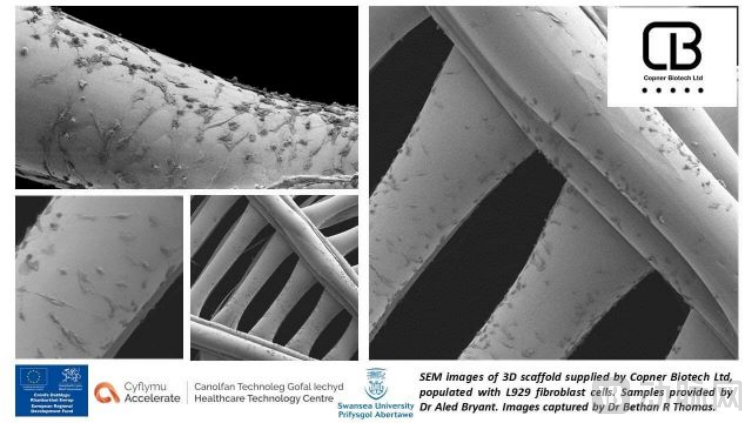
3D PETG scaffolds offer high manufacturing precision and strong batch-to-batch consistency.
Copner Biotech’s next-generation bioprinter uses graphic rectangles to encode GRAPE® files in physical locations, addressing critical issues inherent in the STL and G-code programs currently used in the market, including difficulties with data approximation, modeling anomalies, and low precision in bioprinted constructs.
The company’s novel proprietary GRAPE® 3D modeling format enables users to model and print highly precise 3D constructs, achieving high batch-to-batch consistency. Through Copner Biotech’s next-generation 3D modeling software, users can directly design and create complex microstructures suitable for 3D cell culture and tissue engineering applications.
Models with a rectangular structure are directly read by Copner Biotech’s series of bioprinters and printed layer by layer in a raster pattern. This methodIt not only defines the surface of the model but also more accurately describes its internal structure, thereby enhancing model precision. This is particularly beneficial when using bioprinters for layer-by-layer fabrication, as it allows for better control over the details of each layer.。
Furthermore, Copner Biotech’s modeling software can export models in STL format, and these STL models can be sliced more accurately by STL-to-G-code slicers, thereby achieving superior print quality when using conventional third-party 3D printers.
Regarding the development prospects of the cell culture industry, Jordan stated, “We believe that in the future, the global 3D cell culture market will inevitably phase out the use of animal-derived products. Our animal-free, performance-stable 3D PETG cell culture scaffolds can provide researchers with the tools needed to conduct studies in a reproducible testing environment.” Jordan expressed strong confidence in the innovative cell culture scaffolds developed by the company. Currently, Copner Biotech is improving its bioprinting technology while developing auxiliary human bioinks (BioInks) to achieve tissue regeneration.
To date, Copner Biotech’s 3D PETG cell culture scaffolds have been sold in Europe, the United States, and Australia. The company’s 3D and 4D extrusion bioprinters are currently being sold to universities in the UK, with plans to launch in Europe in 2025.Regarding its plans for the Chinese market, Jordan stated that Copner Biotech is eager to find distributor partners in China to initially sell its 3D PETG cell culture scaffolds, with plans to offer bioprinters in the future.。
Regarding future plans, Jordan stated that Copner Biotech will integrate its core patented GRAPE technology into all of its products, thereby establishing the company’s market leadership in 3D cell culture scaffolds and biofabrication. Meanwhile, the company’s 4D extrusion and 4D inkjet bioprinters are unique in their precision and reproducibility in biofabrication, positioning them as potential industry game-changers. “Copner Biotech will continue to innovate, striving to push technological boundaries and refusing to settle for conventional norms.”
Currently, Copner Biotech is planning to enter the Chinese market and is seeking distributor partners in China. If you are interested in Copner Biotech’s products and solutions, please contact Copner Biotech via email at: jordan@copnerbiotech.com