

CeQur Announces FDA-Cleared Simplicity Wearable Insulin Patch Demonstrated to Significantly Improve Glycemic Control
CeQur is an innovative medical device company founded in Switzerland in 2008, specializing in mealtime insulin solutions for patients with diabetes.
On January 7, 2025, CeQur announced the completion of a $120 million financing round (approximately RMB 878 million). The funds will be used to drive the company’s growth and accelerate commercial expansion, while continuing to enhance and improve pharmacy channel promotion of its devices.
CeQur secured approximately $115 million in a major funding round in April 2021, with investors including Endeavour Vision, VI Partners, and Schroders Investment Group. To date, CeQur has raised a cumulative total of approximately $390 million.
The financing further accelerated the FDA clearance process for its core product, CeQur Simplicity. In early 2021, CeQur initiated a commercial pilot for this product, which had already received FDA and CE marking. After three years of development and market preparation, CeQur Simplicity obtained FDA 510(k) clearance in June 2024, marking a significant step toward its full-scale launch in the U.S. market.
In terms of product commercialization strategy, CeQur has chosen to start by adjusting prices to help improve patients’ affordability. As disposable patch insulin pumps are generally expensive, CeQur has reached agreements with numerous Medicare Part D plans and state Medicaid programs to enhance product accessibility. Medicare Part D is a prescription drug insurance program provided by the U.S. federal government, primarily covering individuals aged 65 and older as well as certain people with disabilities. State Medicaid programs are public health insurance plans administered by individual U.S. states, providing healthcare coverage for low-income families, children, pregnant women, the elderly, and people with disabilities.
For patients not covered by commercial insurance or facing high out-of-pocket costs, CeQur also offers the Simplicity “Copay Savings Program” to help them access the product at a lower price.
In recent years, the global diabetic population has surged. According to data from a research report published in The Lancet in 2024 on “Global Trends in Diabetes Prevalence and Treatment,” the global prevalence of diabetes has risen significantly over the past three decades. Between 1990 and 2022, the number of adults aged ≥18 years with diabetes worldwide increased sharply from approximately 200 million in 1990 to 828 million.
The immense patient demand has spurred the development of related therapeutic products. In addition to adhering to dietary control and exercise, patients with diabetes may choose oral hypoglycemic agents or insulin injections based on their individual conditions. When pharmacological therapy yields insufficient efficacy, patients require insulin injections to achieve more effective disease control.
Common insulin pumps fall into three categories: conventional insulin pumps, sensor-augmented insulin pumps, and tubeless insulin pumps.
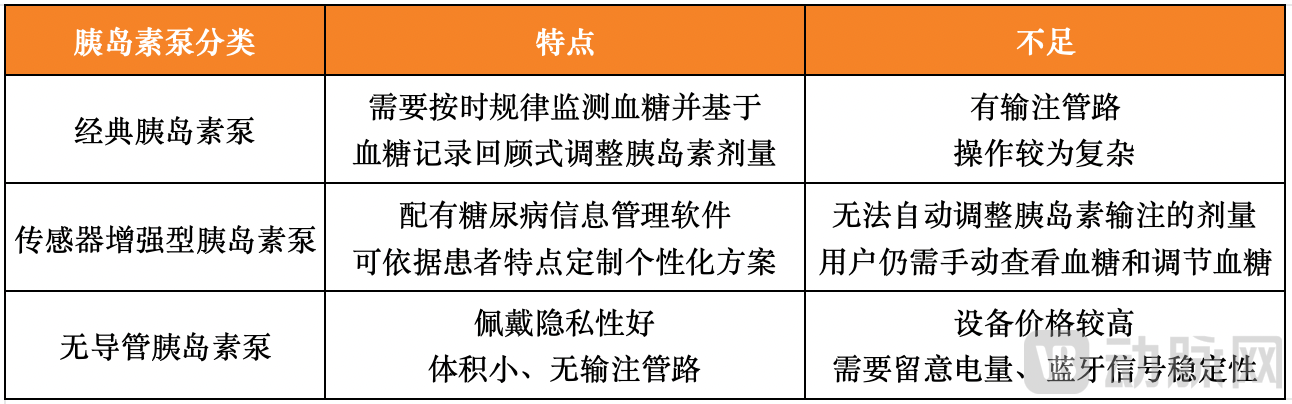
(Public data, graphic by VCBeat)
Disposable patch insulin pumps are a type of tubeless insulin pump, offering advantages such as ease of wear, enhanced privacy, precise insulin delivery, and a tube-free design. These features help patients with diabetes achieve better glycemic control and improve their quality of life.
However, disposable patch insulin pumps also face some challenges:
First, the time cost for learning to operate the equipment is relatively high.The production of disposable patch insulin pumps requires high technical standards, which also means that patients need to undergo a certain learning and adaptation process when using such products.
Secondly, mechanical failures may occur, leading to complications such as catheter obstruction.When installing an insulin pump, a subcutaneous catheter is required. If the catheter is excessively long or improperly managed, it may become kinked, thereby compromising insulin delivery. Failure to promptly monitor blood glucose levels and implement corrective measures may result in diabetic ketoacidosis.
To address the aforementioned shortcomings, CeQur developed the Simplicity device, optimizing it over similar products in terms of ease of use, safety, and wearing comfort, thereby enhancing the patient experience.
The disposable patch insulin pump, Simplicity, offers the following advantages:
More convenient to use.According to the CeQur website, 84% of patients reported that the design is easy to use and learn, with proficiency in operation achieved after applying the patch 1–3 times. The product features a one-button injection function, allowing patients to rapidly deliver 2 units of insulin with a single click.
Dual-button drug delivery mechanism enhances medication safety.With each delivery of a 2-unit dose, the device emits a “click” sound to alert the patient that dosing is complete. Additionally, the device features a dual-button safety mechanism: when the CeQur Simplicity reservoir is empty or the cannula is blocked, both buttons automatically lock in the “pressed” position. This dual-button dosing mechanism prevents accidental dosing during activity and sleep, ensuring medication safety.
Patients experience greater comfort, reducing additional burden.The CeQur Simplicity features a rounded-corner design with a compact form factor measuring 63 mm in length, 35 mm in width, and 8 mm in height. Comparable in size to the chest piece of a stethoscope and weighing only 10 grams, it imposes no additional burden on patients.
It is worth mentioning that, compared to similar products,Simplicity supports longer wear time.Simplicity patches can be worn continuously for up to four days, offering the longest “standby” duration among similar products currently on the market.
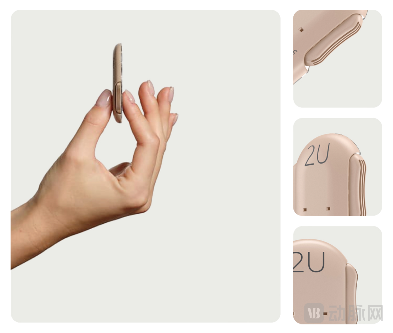
(Simplicity product, image source: CeQur official website)
CeQur’s official website disclosed clinical data for Simplicity: After 24 weeks of using Simplicity, patients experienced an average reduction of 1.7% in A1C (glycated hemoglobin) and a 50% increase in TIR (time in range), indicating that the product can improve glycemic control, thereby reducing the risk of long-term complications.
HbA1c is a key indicator for monitoring glycemic control, reflecting the patient’s average blood glucose levels over the past 2–3 months. According to a report from the UK Prospective Diabetes Study (UKPDS), each 1% reduction in glycated hemoglobin is associated with a significant 21% decrease in diabetes-related mortality, a 14% reduction in myocardial infarction, and a 37% reduction in microvascular complications. Therefore, an average HbA1c reduction of 1.7% indicates a significant improvement in the patient’s glycemic control.
TIR refers to the proportion of time during a day that a patient’s blood glucose levels remain within the target range (typically 3.9–10.0 mmol/L). It is understood that every 5% increase in TIR yields significant clinical benefits for patients with either type 1 diabetes mellitus (T1DM) or type 2 diabetes mellitus (T2DM). In this trial, a 50% increase in TIR indicates a substantial prolongation of the time patients’ blood glucose levels stayed within the target range, thereby helping to reduce the risk of diabetic complications.
Focusing on China, according to a research report released by Zhiyan Consulting, the number of diabetic patients in China reached approximately 141 million in 2023, accounting for about one-quarter of the global total and ranking first worldwide. Among them, the number of patients with type 2 diabetes reached 125 million, representing a year-on-year increase of 1.79%. This upward trend is not expected to plateau or decline in the short term; the number of diabetic patients in China is projected to rise to 164 million by 2030.
From the supply side, with the continuous advancement of insulin pump production technology in China, a number of manufacturers have emerged, including MicroTech Medical, Shanghai MicroPort, Wuxi Apex, Medtrum, Ruiyu Medical, Foryou Medical, and Kailian Medical. In 2017, MicroTech Medical’s Equil patch insulin pump was approved for market launch, becoming the first domestic product of its kind.
Currently, the insulin pump market in China is predominantly occupied by foreign manufacturers such as Medtronic and SOOIL, with the vast majority being tubed insulin pumps. Patch-style insulin pumps account for only a minimal share of the market. However, patch-style insulin pumps offer a more comfortable, flexible, and convenient mode of insulin delivery. Nevertheless, their high cost and current exclusion from national medical insurance coverage have, to some extent, hindered product penetration. With continuous breakthroughs in key technologies, it is expected that an increasing number of patch-style insulin pump products will emerge in the market.