

China's Brain-Computer Interface Industry Surges Ahead with Breakthroughs and Policy Support
In less than a month into 2025, China’s brain-computer interface (BCI) sector has seen a series of encouraging developments.
On January 3, the collaborative project involving NeuroXess, the Department of Neurosurgery at Huashan Hospital Affiliated to Fudan University, and the Tianqiao and Chrissy Chen Institute achieved significant progress. The project conducted clinical trials on high-precision real-time motor and language decoding using a domestically developed, original invasive flexible brain-computer interface (BCI) technology. A patient with brain injury mentally conceived the phrase “Happy New Year 2025,” which was decoded by a computer; subsequently, a command was sent to a robotic arm to form a heart-shaped gesture, marking the first time globally that New Year greetings were conveyed through thought.
One week later, Beijing released the Action Plan for Accelerating the Innovative Development of Brain-Computer Interfaces in Beijing (2025–2030). Just two days afterward, Shanghai also issued the Action Plan for Cultivating Future Industries in Brain-Computer Interfaces in Shanghai (2025–2030). With one in the north and one in the south, China’s two major brain science centers nearly simultaneously formulated their new round of “Five-Year Plans.”
On January 13, the National Medical Products Administration (NMPA) announced and opened for public comment its plan to formulate the recommended medical device industry standard titled “Quality Requirements and Evaluation Methods for Electroencephalogram Datasets Used in Artificial Intelligence Algorithms for Medical Devices Employing Brain-Computer Interface Technology.” China is also rapidly advancing in terms of standards and regulation for brain-computer interfaces.
In this cutting-edge field of intense global interest, China is making significant strides and emerging as a leader.
As a forward-looking frontier technology, brain-computer interfaces (BCIs) have extremely broad application scenarios, spanning multiple fields such as healthcare, entertainment, military, and education. Among these, healthcare is currently the area receiving the most attention for BCIs, with applications including enabling paralyzed individuals to stand, restoring speech to those with aphasia, returning vision to the blind, and alleviating depression in patients with depressive disorders.
The successful large-scale implementation of any one of the above would go down in human history!
Its potential market size is also breathtaking. In a report released last October, Morgan Stanley predicted thatIn the United States alone, the total potential market size for brain-computer interfaces is valued at approximately $400 billion.。
It is precisely for this reason that global enthusiasm for brain-computer interface (BCI) technology has surged. However, the considerable challenges in BCI research and development are evident to all, constrained by technological and ethical limitations.
On January 28, 2024, Neuralink, the star brain-computer interface company under Elon Musk, successfully performed the world’s first human brain chip implantation surgery.. Although the trial was not without its challenges, it still marks the transition of brain-computer interface technology from theoretical research to practical application.
In addition to performing the world’s first human brain-chip implantation surgery, it received approval in November 2024 to initiate a new feasibility study using the N1 implant and an investigational assistive robotic arm. The study aims to evaluate the safety of the N1 implant and surgical robot, as well as the initial efficacy of the implant in enabling patients with quadriplegia to control external devices via thought.
At the recently concluded CES 2025, Elon Musk announced once againNeuralink Has Implanted Brain-Computer Interface Devices in Its Third Patient, and All Three Subjects Are Currently in Good Condition. In 2025, Neuralink plans to conduct an additional 20–30 device implantation trials.
As Neuralink’s primary competitor, Synchron achieved progress at a time that was, to some extent, even earlier than Neuralink’s.As early as 2021, its brain-computer interface became the first to receive FDA Investigational Device Exemption (IDE) approval for conducting trials of permanently implanted brain-computer interfaces, and it completed its first brain-computer interface implantation surgery in the United States in 2022.Including the four prior implant surgeries in Australia, this marks its fifth brain-computer interface implant procedure.
In September 2023, Synchron completed another early feasibility study to assess the number of subjects experiencing adverse events following implantation of its brain-computer interface. The results were published in October 2024, revealing that none of the six participants experienced any device-related serious adverse events during the one-year study period. This marks a significant milestone in the clinical safety profile of implantable brain-computer interfaces.
In July 2024, Synchron announced the world’s first successful integration of brain-computer interface technology with the Apple Vision Pro., enabling patients to control the Apple Vision Pro through thought alone. This innovation not only enhances the patient interaction experience but also opens new avenues for integrating brain-computer interface technology with consumer electronics.
As 2025 began, Synchron partnered with NVIDIA to integrate the NVIDIA Holoscan platform into its brain-computer interface (BCI) technology. This integration enhances real-time edge AI capabilities for on-device neural processing, enabling faster and more intuitive BCI responsiveness, and transforming BCI applications through the development of foundational models for brain reasoning.
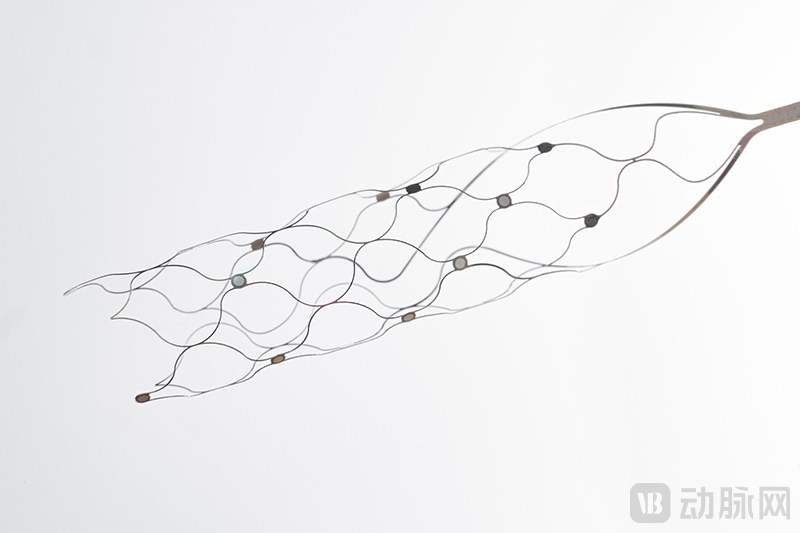
Synchron’s implantable brain-computer interface electrodes are highly similar to vascular stents (image from Synchron’s official website)
However, Synchron’s brain-computer interface utilizes an endovascular electrode array, whose appearance and implantation method are highly similar to those of existing vascular stents, representing a fundamentally different technological approach from Neuralink. Consequently, their risk profiles and performance levels are not entirely equivalent.
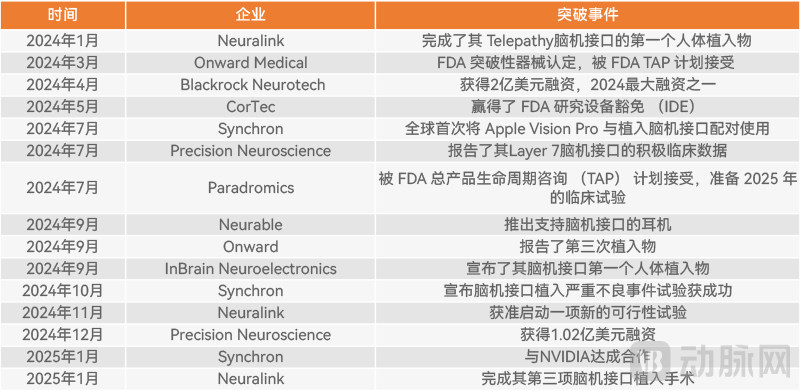
Major Developments in the Overseas Brain-Computer Interface Sector Over the Past Year (Chart by VCBeat)
In addition to Neuralink and Synchron, other prominent players in the brain-computer interface (BCI) sector also made significant strides in 2024: Germany-based Cortec received FDA approval for its Investigational Device Exemption (IDE) application in May 2024; Paradromics’ BCI system obtained two FDA Breakthrough Device designations; and Blackrock Neurotech and Precision Neuroscience each secured over $100 million in high-value financing in 2024, with Blackrock Neurotech’s $200 million round ranking among the largest financings in the healthcare sector that year.
China’s recent progress in brain-computer interfaces is also worth noting.
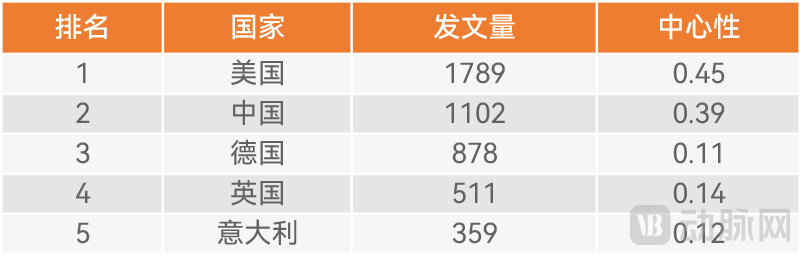
Countries with the Most Research Papers in the Medical Application of Brain-Computer Interfaces, 2013–2022 (Source: National Library of Medicine, Zheshang Securities Research Institute)
In academic research on brain-computer interfaces, China is rapidly catching up as emphasis on and investment in brain science research continue to surge.According to incomplete statistics, China ranks second globally in the number of academic papers on medical applications of brain-computer interfaces, trailing only the United States. Its research centrality also ranks second worldwide, again behind the United States.。
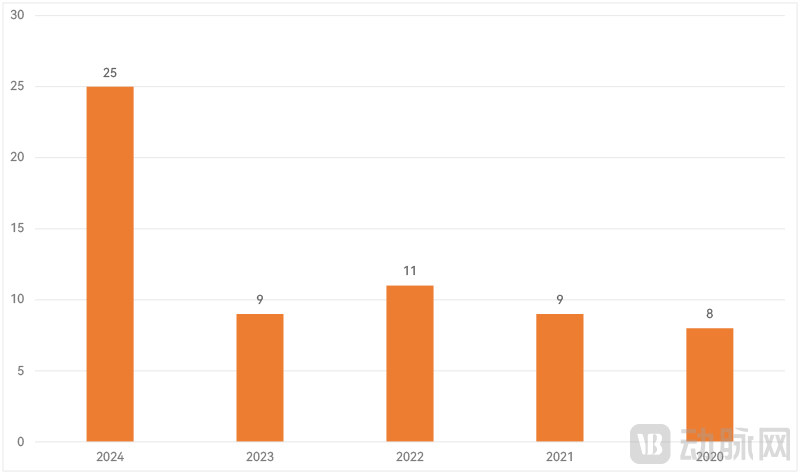
Incomplete Annual Statistics on the Number of Clinical Trials for Brain-Computer Interfaces in China in Recent Years (Chart by VCBeat)
Clinical trials have also seen encouraging progress. VCBeat conducted a preliminary statistical analysis of publicly available data using “brain-computer interface” as the keyword,According to incomplete statistics, there were 25 clinical trials of brain-computer interfaces in China in 2024, doubling the number from the previous year.。
Previously, among the brain-computer interface (BCI) clinical trials registered in China, many belonged to early exploratory research and pilot study phases, while fewer had advanced to higher-stage studies (such as Phase I and Phase II clinical trials), indicating a considerable gap before true clinical application can be realized.
As time has progressed, the number of Phase I and Phase II clinical trials in China has now largely reached parity with international levels; however, there remains a significant lag in Phase III trials. This is primarily because Phase III clinical trials entail high financial costs, typically requiring the recruitment of large patient cohorts, the assembly of multicenter trial teams, and the deployment of advanced diagnostic equipment.
In 2024, in addition to a surge in quantity, the quality and significance of brain-computer interface (BCI) clinical trials in China have also been rapidly improving.
In addition to the progress of the collaborative project among BrainCo, the Neurosurgery Team of Huashan Hospital Affiliated to Fudan University, and the Tianqiao and Chrissy Chen Institute mentioned at the beginning of this article, Tsinghua University School of Medicine also announced in December 2024 that its brain-computer interface (BCI) device, developed in partnership with NeuroXess, would commence large-scale clinical trials in 2025. The trial plans to enroll 30–50 patients with spinal cord injury for BCI implantation. Upon completion of the trial, the team intends to seek regulatory approval for market access.
In 2024, this device was used in three human implantation surgeries, one of which was also performed by Huashan Hospital Affiliated to Fudan University. After the surgery, the patient was able to control their arm via a brain-computer interface to perform simple actions such as picking up a cup and drinking water.
Through these procedures, research institutions have progressively advanced the standardization of brain-computer interface (BCI) surgeries, reducing operative time to approximately one hour—half the duration previously required. This development has also laid the foundation for large-scale, multicenter clinical trials.
Prior to this, it was widely believed that China’s brain-computer interface technology lagged behind the advanced level by 7–8 years, butFollowing the successive launch of clinical trials in China in 2024, this gap is now considered to have been significantly narrowed to less than three years.。
Regulatory authorities are also continuously promoting the development of standards to prepare in advance for the imminent practical implementation of brain-computer interfaces.
In January 2024, the Ministry of Science and Technology released the Ethical Guidelines for Brain-Computer Interface Research, aiming to guide the compliant conduct of brain-computer interface research and prevent technological ethical risks during the research and application of this technology. This marks China’s first dedicated ethical guideline document specifically compiled for brain-computer interface research.
In October 2024, to address urgent regulatory needs and promote the high-quality development of medical devices utilizing brain-computer interface (BCI) technology, the National Medical Products Administration approved the initiation of two projects for the formulation and revision of medical device industry standards: “Medical Devices Utilizing Brain-Computer Interface Technology—Terminology and Definitions” and “Medical Devices Utilizing Brain-Computer Interface Technology—Test Methods for Sensing and Response Performance of Implantable Neurostimulators with Closed-Loop Functionality.”
On January 13 this year, the National Medical Products Administration (NMPA) finalized and publicly announced the plan for formulating a recommended medical device industry standard titled “Quality Requirements and Evaluation Methods for Electroencephalogram Datasets Used in Artificial Intelligence Algorithms for Medical Devices Employing Brain-Computer Interface Technology.”
The core of brain-computer interfaces (BCIs) lies in acquiring high-quality electroencephalogram (EEG) signals from the brain, which are then processed and decoded to control external devices. The most critical step is the acquisition of high-quality EEG signals; without this, subsequent processes are impossible. This explains why semi-invasive and invasive BCIs, despite their high risks and technical challenges, are still regarded as the future trend: these approaches provide the closest access to the brain, enabling the highest quality of EEG signal acquisition.
The key to advancing semi-invasive and invasive brain-computer interfaces lies in implantable electrodes that directly interface with the brain. These electrodes must possess the capability for high-quality neural signal recording (a fundamental requirement for implantable electrodes), maintain stability during long-term recording (a prerequisite for chronic implantation), enable high-throughput, high-density recording (critical for decoding brain signals), and support multimodal recording/stimulation as well as multi-region application (an expanded requirement for broader applications).
Currently, implantable electrodes are categorized into rigid electrodes, vascular stent electrodes, and flexible electrodes. Flexible electrodes are regarded as the future trend due to their superior performance.
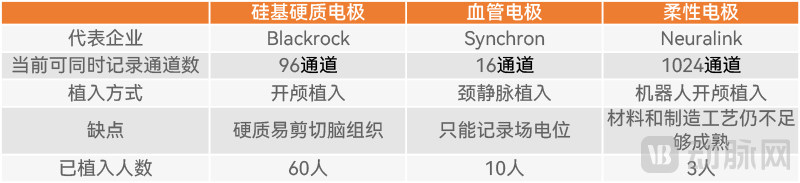
Comparison of Major Implantable Electrode Technologies (Graphic by VCBeat)
Previously, China’s efforts were primarily concentrated in the field of non-implantable electrodes, with a later start in implantable electrodes. In 2024, however, the domestic industry made significant progress in implantable electrodes as well.
In December 2024, Weiling Medical disclosed the status of its brain-computer interface (BCI) clinical studies conducted at more than ten renowned Grade A tertiary hospitals. All these projects utilized its self-developed flexible electrode—the CORTEX-0 high-density mesh ultra-compliant neural electrode array.
According to the introduction, the flexible electrode array employs highly biocompatible flexible materials, a micron-scale ultra-thin structure, and millimeter-scale electrode contact density. This design not only enables the electrodes to conform closely to the cerebral cortex, minimizing damage to brain tissue, but also ensures stable capture of high-precision neuroelectrophysiological signals with high spatiotemporal resolution.
Moreover, Microsoul Medical has independently developed a dedicated brain-computer interface (BCI) chip optimized for fully implantable systems to achieve optimal compatibility with this type of electrode. The company has completed the development of two versions: one featuring integrated 32-channel acquisition and stimulation, and another offering ultra-low-power 128-channel signal acquisition. Reportedly, these chips exhibit lower power consumption and noise levels compared to Neuralink’s BCI chips.
Also in November 2024, the Second Affiliated Hospital of Zhejiang University School of Medicine performed the world’s first implantation surgery of an ultra-thin flexible deep brain electrode and, for the first time, captured multiple types of neuronal signals from deep brain regions in humans. The flexible electrode used in the trial, developed by Zhiran Medical, is the only flexible electrode worldwide that simultaneously supports both signal acquisition and stimulation functions, thereby providing richer evidence for clinical diagnosis and treatment of patients.
Furthermore, this clinical trial utilized Zhiran Medical’s self-developed 1024-channel brain-computer interface (BCI) system to achieve continuous, real-time acquisition of spike signals and local field potential (LFP) signals, marking another significant milestone in the development of flexible BCI technology.
Although there is still a certain gap compared to the global advanced level, with increased investment in related industries, we are confident that the gap between China and the global forefront in the field of flexible electrodes will gradually narrow.
To date, the development of brain-computer interfaces (BCIs) has spanned a mere 50 years. Before breakthroughs emerge in neuroscience, this epic marathon will require sustained, long-term efforts, with many uncertainties and possibilities still lying ahead. Globally, no team can yet claim to have crossed the finish line in this race.
It is precisely for this reason that China’s brain-computer interface (BCI) industry has immense room for growth. We will continue to closely monitor developments in this sector, confident and hopeful that we will ultimately make significant strides in this field.
References:
Sean Whooley,Massdevice.com:Analysts see $400B BCI opportunity
Sean Whooley,Massdevice.com:Synchron collabs with Nvidia on AI in BCI tech
Jing Yu, GeekPark: “Brain-Computer Interfaces and AI: Two Sides of the Same Coin”
Jessica Hagen,mobihealthnews.com:Precision Neuroscience scores $102M for AI-enabled brain implant
Wang, Y., Yang, X., Zhang, X. et al. Intracortical microelectrodes: reviewing the present and looking to the future. Microsyst Nanoeng 9, 7 (2023). https://doi.org/10.1038/s41378-022-00451-6
Liu Wenshu, Tong Fei, Zhang Zhiyuan, Zheshang Securities: "Brain-Computer Interface: Human-Machine Interaction in Robotics—Brain-Computer Interface Report"