

Wang Yongjun, Recipient of the William M. Feinberg Award and NEJM-Published Pioneer, Files IPO Prospectus
February 5, this year, Los Angeles, USA. The 2025 International Stroke Conference was grandly held. At this conference, Professor Wang Yongjun was awarded the “William M. Feinberg Award for Excellence in Clinical Stroke” in recognition of his global contributions to scientific research and clinical practice in the field of stroke. Established by the American Heart Association/American Stroke Association, this award is regarded as the highest honor in clinical medicine within the international stroke community.
This marks the first time an Asian scientist has won the award in its 34-year history!
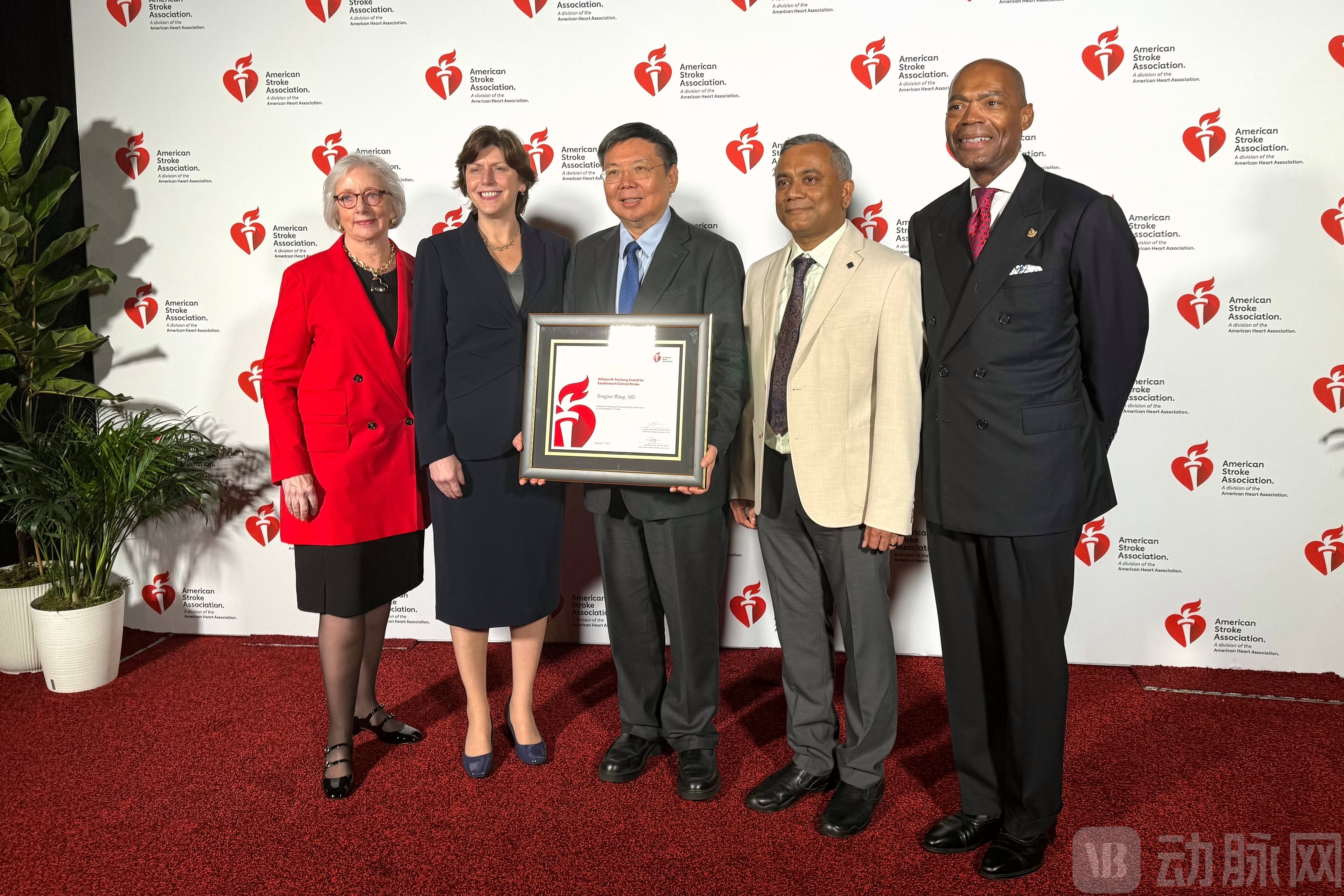
2025 International Stroke Conference On-Site
“Wang Yongjun’s unparalleled contributions to stroke research, his leadership in advancing stroke treatment in China and internationally, and his dedication to education and patient care lead me to affirm that Wang Yongjun’s impact on global stroke treatment is profound and beyond words,” said Tudor Jovin, former President of the International Stroke Conference and Director of the UPMC Stroke Institute at the University of Pittsburgh Medical Center.
Public information indicates that Wang Yongjun is a neurology expert and physician-scientist, as well as a leading figure in the field of international clinical stroke research. He currently serves as President of Beijing Tiantan Hospital, Capital Medical University; Director of the National Quality Control Center for Neurological Diseases; and Deputy Director of the National Clinical Research Center for Neurological Diseases. He concurrently holds the positions of Chairman of the Chinese Society of Neurology under the Chinese Medical Association and President of the Chinese Stroke Association.
His research achievements have rewritten the history of international stroke treatment three times. He led the clinical development of five major new drugs for stroke, all of which have been successfully implemented in clinical practice. Five of his research findings have influenced international stroke guidelines and clinical practice, and eleven original research articles have been published in top-tier international medical journals. His work has been recognized twice as one of the Top Ten Advances in Life Sciences in China. The CHANCE study, which he led, was hailed by the President of the World Stroke Organization as one of the three breakthrough advances globally in this field from 2010 to 2020.
The publication record of Professor Wang Yongjun, a leading figure in his field, underscores his exceptional academic prowess: he has served as the corresponding author for 11 articles in top-tier international clinical medicine journals, including five in the New England Journal of Medicine (NEJM), one in The Lancet, three in JAMA, and two in The BMJ. He has received two Second Prizes of the National Science and Technology Progress Award and three First Prizes at the provincial and ministerial levels. Additionally, he was among the inaugural recipients of the National Innovation Excellence Medal, and has been honored with the Wu Jieping Medical Innovation Award, the Tan Jiazhen Life Science Clinical Medicine Award, and the Ho Leung Ho Lee Foundation Prize for Progress in Science and Technology. The World Stroke Organization has bestowed upon him its highest honor in the field, the President’s Award.
Walter J. Koroshetz, Director of the National Institute of Neurological Disorders and Stroke (NINDS) at the National Institutes of Health (NIH), commented, “His achievements in the field of stroke clinical research are comparable to those of any leading figure in the field today.”
“Wang Yongjun is the central figure who has elevated stroke research in China to a world-leading position. Through the work of him and his team, the speed and scope of clinical trials have been greatly accelerated, even surpassing those in the United States and other countries. They have demonstrated how to fund, initiate, and execute clinical trials on a large scale, while progress in other countries remains slow and cumbersome. Yongjun led this transformation, benefiting stroke patients worldwide,” said Claiborne Johnston, former Dean of the Dell Medical School at the University of Texas at Austin.
Stroke is characterized by high rates of recurrence, disability, and mortality, representing a major global challenge in stroke prevention and treatment. As one of the countries bearing the heaviest burden of stroke worldwide, China stands to gain significantly from breakthroughs in addressing this issue. The core difficulties lie in optimizing treatment protocols, the scarcity of effective medications, and the critical importance of timely intervention.
First, the limitations of treatment regimens: In stroke management, the traditional approach involves monotherapy with aspirin alone, which has yielded suboptimal outcomes. However, combining two antiplatelet agents increases the risk of hemorrhage—a challenging dilemma that has perplexed the global medical community for decades.
Secondly, there is the dilemma of drug shortages: For patients with acute ischemic stroke, intravenous thrombolysis is the first-line treatment. The traditional intravenous thrombolytic agent, alteplase, is originally manufactured in Germany. Due to its complex production process and limited manufacturing capacity, global shortage of this drug has become a worldwide challenge, and China remains highly dependent on imports.
Finally, the therapeutic time window: For patients with acute ischemic stroke, “time is brain.” For many years, the traditional time window for intravenous thrombolysis has been fixed at 4.5 hours. However, in a vast country like China with unevenly distributed medical resources, approximately 67% to 75% of patients are unable to reach hospitals within this time window to receive thrombolytic therapy.
How did Wang Yongjun, recipient of the field’s highest international honor, lead his team to systematically overcome each challenge?
From the Perspective of Treatment Regimens,He has rewritten global clinical practice guidelines in China, the United States, the United Kingdom, and Europe. Through the CHANCE series of studies, Wang Yongjun proposed the CHANCE protocol and identified what the international community calls the “21-day rule” for dual antiplatelet therapy—the “sweet spot” for combining two antiplatelet agents, aspirin and clopidogrel. This approach involves early, short-term (21 days) use in patients with minor stroke, effectively reducing the risk of cerebrovascular recurrence without increasing the risk of major bleeding, thereby officially ushering in the “dual antiplatelet era” for the treatment of ischemic stroke worldwide.
The CHANCE regimen was rated by World Stroke Organization President Marc Fisher as one of the three major breakthroughs in global stroke research during the 2010–2020 decade.
Subsequently, Wang Yongjun identified the genetic causes underlying the suboptimal response to clopidogrel in certain populations and proposed a “gene-bypassing” alternative strategy. This research reduced the recurrence rate of ischemic stroke from 11% to 6%.
Addressing the Challenge of Drug Shortages,He and his team thoroughly resolved the drug shortage in thrombolytic therapy for cerebrovascular diseases, addressing the critical bottleneck issue of thrombolytic agents: they conducted clinical research and development on novel thrombolytic drugs—tenecteplase, reteplase, and pro-urokinase—demonstrating the efficacy and safety of these three agents in stroke treatment.
Currently, these three drugs, which offer greater convenience and lower costs, have successively received approval from drug regulatory authorities in China, Europe, and the United States, and are being gradually introduced into clinical practice. This breakthrough also enables China to contribute more than 50% of the global production capacity for thrombolytic drugs, thereby breaking the international monopoly on thrombolytic agents in the field of stroke.
Treatment Duration Perspective,Wang Yongjun and his team developed an artificial intelligence technology to identify salvageable brain tissue, designing and validating for the first time internationally a new thrombolytic regimen that extends the time window for intravenous thrombolysis to 24 hours. This means that 90% of patients with acute ischemic stroke now have the opportunity to receive thrombolytic therapy, which can relatively reduce the disability rate by 37% without significantly increasing the risk of intracranial hemorrhage. This breakthrough was hailed by the authoritative journal The New England Journal of Medicine as having “profound implications for global clinical practice.”
In the traditional model of acute stroke diagnosis and treatment, the average time from patient arrival at the hospital to the administration of thrombolytic therapy was approximately 60 minutes. Wang Yongjun and his team overcame two major scientific challenges associated with the use of low-field magnetic resonance imaging (MRI) in stroke treatment: its inability to sensitively exclude and diagnose intracerebral hemorrhage, and its insufficient image clarity to meet clinical requirements. Building on these breakthroughs, they established a new organized stroke care model based on low-field MRI—the Emergency Stroke Unit. This treatment model has significantly reduced in-hospital treatment delays and increased the rate of reperfusion therapy, shortening the time to initiation of targeted in-hospital treatment from the previous 60 minutes to under 20 minutes, thereby reducing patient disability and mortality.
This series of studies has propelled intravenous thrombolysis for ischemic stroke into a “new era of reperfusion therapy.”
These are the words of Wang Yongjun in his keynote address, “30 Years of Treatment for Acute Ischemic Cerebrovascular Events: The Power of Evidence,” at the 2025 International Stroke Conference. He stated, “Over the past 30 years, there have been tremendous changes in the treatment of cerebrovascular diseases, particularly acute ischemic cerebrovascular events. My team and I have been very fortunate to witness and participate in this significant historical transformation.”
Amid the rapidly evolving landscape of stroke treatment in China and worldwide, Wang Yongjun has devoted more than 40 years to this field. Over the past three decades, clinical scientists globally have generated 12 landmark pieces of evidence in the area of stroke reperfusion therapy, five of which were contributed by Wang Yongjun and his team.
But as he noted, this is not enough. To thoroughly address the challenge of high recurrence, high disability, and high mortality rates in stroke, it is imperative to establish platforms and research ecosystems and overcome the critical bottlenecks in the development of new drugs for cerebrovascular diseases.
Wang Yongjun has led his team in establishing a robust clinical research network and an increasingly comprehensive stroke research ecosystem. To accelerate the rapid development of clinical stroke research in China, the team leveraged the National Clinical Research Center for Neurological Diseases—the only one of its kind nationwide—to establish a National Stroke Clinical Research Network covering all provinces, autonomous regions, and municipalities across China. By adopting a project team operation model integrating “academic principal investigators (PIs), methodology, and management,” and combining this with continuously innovative mechanisms for clinical research management, they have gradually formed an architectural system characterized by “one core, two networks, and three tiers.” Based on this model, Professor Wang Yongjun’s team completed more than 50 national multicenter clinical studies over the past decade. Among these, 14 studies provided “Chinese solutions” for stroke prevention and treatment on an international scale, effectively addressing the most significant bottlenecks in translating basic research into clinical practice. This effort has created a replicable “Tiantan Model” for clinical research, promoted the construction and continuous improvement of a scientific system for stroke clinical research, and achieved a major transition in China’s stroke clinical research from following to keeping pace with, and ultimately leading, global advancements.
Leveraging these platforms, Professor Wang Yongjun and his team pioneered a new paradigm of reverse translational research in drug development for cerebrovascular diseases. By establishing STROMICS, a high-quality multi-omics and multimodal database specific to stroke in the Chinese population, they identified multiple targets associated with ischemic cerebrovascular disease and secured 13 related invention patents. This approach has shifted new drug development from the traditional “knowledge-driven” model to a “data-driven” one, reducing the timeline from target discovery to market approval from nearly 20 years to just 3–7 years. These breakthroughs have made significant contributions to overcoming critical bottlenecks in the development of novel therapies for cerebrovascular diseases.
“Few individual researchers have driven changes in global vascular neurology practice as profoundly as Wang Yongjun. Notably, his highly influential work is not confined to a single aspect of stroke treatment but encompasses multiple domains, including acute-phase therapies (intravenous and endovascular reperfusion) and neuroimaging,” commented Tudor Jovin, former Chair of the International Stroke Conference and Director of the UPMC Stroke Institute at the University of Pittsburgh Medical Center.