

Meerecompany Launches Korea's First Laparoscopic Surgical Robot Revo-i, Cutting Costs by Half After Nearly Two Decades of R&D

meerecompany
Surgical Robot Developer
According to a report by Markets & Markets, the global surgical robot market was valued at approximately USD 11.1 billion in 2024 and is projected to reach USD 23.7 billion by 2029, representing a compound annual growth rate (CAGR) of 16.5%. Among all segments, the laparoscopic surgical robot market constitutes the largest share of the surgical robot industry and has garnered significant attention from corporations, investors, and other stakeholders.
Since the da Vinci surgical robot was approved for clinical application in 2000, the clinical value and market potential of laparoscopic surgical robots have been fully validated. Market education has been largely dominated by Intuitive Surgical. The advantages of robot-assisted surgery—including high operational precision, clear visualization, minimal invasiveness, safety and efficiency, and a short learning curve—have become widely recognized, attracting a large number of companies to enter the field of research and development.
meerecompany is one such example. Established in 1984, the company is headquartered in Osan, Gyeonggi Province, South Korea. Since its inception, meerecompany has made substantial investments in research and development to pioneer cutting-edge innovative technologies. In 1997, the company began establishing corporate-affiliated research institutes organized by business sectors, securing numerous intellectual property rights and achieving a series of R&D accomplishments in both the Korean and international markets.
In 2008, the company successfully developed a prototype of a laparoscopic surgical robot, and in 2017, it developedRevo-i, the world’s second and South Korea’s first surgical robot, is also the first medical robot technology in South Korea designated as an “Innovative Medical Device” by the Ministry of Food and Drug Safety.。
1South Korea’s First Surgical Robot System, at Half the Cost of U.S. Giants
meerecompany places significant emphasis on the research, development, and innovation of surgical robots. Professionals dedicated to surgical robot R&D account for 53% of its workforce, and the company has secured over 194 surgical robot patents both domestically and internationally. Furthermore, by adopting an open R&D strategy and extensively incorporating feedback from medical professionals, meerecompany enhances the quality of its surgical robots and develops new instruments that meet clinical needs.
“We do not merely sell surgical robotic medical devices; rather, we provide comprehensive laparoscopic robotic surgery solutions by addressing the specific needs of hospitals, surgeons, and patients,” states meerecompany on its official website. The company focuses on making advanced surgical robotic technology accessible to more patients at reasonable prices by manufacturing affordable surgical robotic systems for hospitals and patients, delivering safe and reliable products, and providing high-quality services through professional care teams.
Song Kyo-young, Director of the Center for Robotic Surgery at Seoul St. Mary’s Hospital, pointed out, “A leading U.S. medical device giant has deployed more than 150 laparoscopic surgical robotic systems in South Korea, with five of them installed at Seoul St. Mary’s Hospital. While existing U.S. surgical robotic systems have established a strong reputation and achieved widespread adoption, the Korean surgical robot Revo-i has the potential to bring new changes to this market.” He noted that the Revo-i system can be used for highly complex procedures, such as cancer surgeries. Given its cost-effectiveness, it is worth considering for introduction by both secondary hospitals and university hospitals.
He also pointed out that Revo-i has significant advantages in terms of consumables and maintenance costs, making it very stable in the operations of general hospitals.The implementation cost of existing U.S. surgical robot systems is KRW 2–3 billion, whereas Revo-i is significantly more affordable, with an acquisition cost approximately half that amount and consumables and maintenance costs also around half.
The Revo-i laparoscopic surgical robot system comprises three main components: the master console, the robotic arm system, and the imaging system.
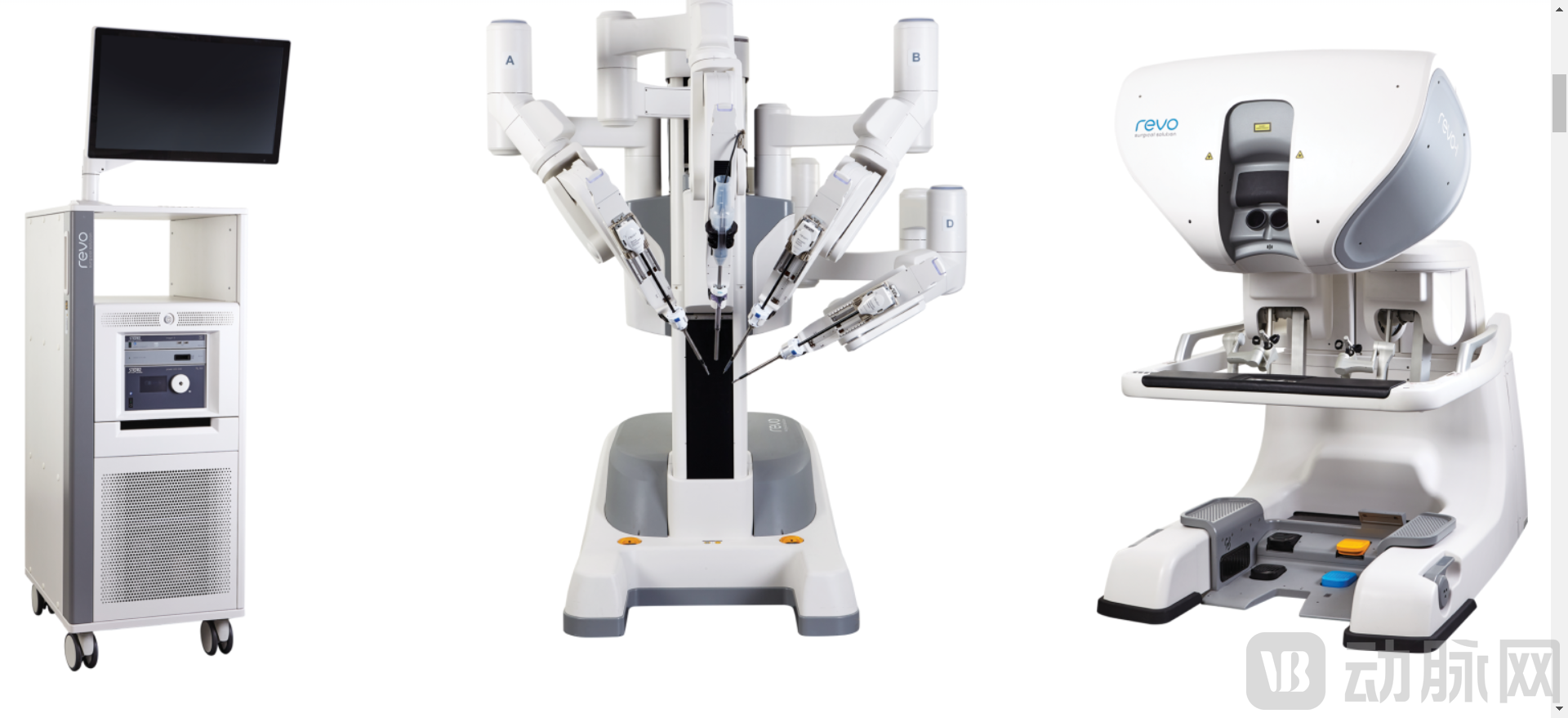
Revo-i Endoscopic Surgical Robot System
The master console of the Revo-i surgical robot system serves as its control center. Outside the sterile field, surgeons can manipulate instruments and issue commands during procedures via the master console using high-definition visualization. Ergonomically designed with a comfortable seat and adjustable headrest, armrests, and foot pedals, the master console accommodates various surgeon postures. It provides 3D visualization, allowing for on-demand 3D magnification of tissues, nerves, and blood vessels during surgery. Its master manipulators enable multi-joint movements, granting surgeons precise and flexible control over the end-effectors of the robotic arms and the endoscopic camera.
Furthermore, the master console features seven independent foot pedals that allow the surgeon to control instrument positioning and deliver electrosurgical energy to the end effectors. Its functions include controlling the endoscopic camera, repositioning the control arms, switching between activated instruments, and managing electrosurgical energy. The master console is also equipped with a touchpad, enabling the surgeon to monitor the status of their instruments and the endoscopic camera angle, while adjusting settings to modify the console’s display, audio, and other parameters.
The Revo-i instruments feature a multi-joint structure with seven degrees of freedom, enabling them to move like the human wrist. Furthermore, all the most useful and commonly used instrument types in minimally invasive surgery can be adapted to this robotic system, including forceps, needle holders, graspers, and monopolar or bipolar energy devices. Currently,meerecompany has launched the Revo SONIC ultrasonic scalpel, which uses ultrasonic vibrations to cut tissue while achieving hemostasis. This ultrasonic scalpel can be integrated with the Revo-i surgical robot to minimize tissue damage.
On September 25, 2024, the Korea Cancer Center Hospital successfully performed its first robotic parathyroidectomy using the Revo-i surgical robot and the unilateral axillary breast approach (UABA) technique.
On September 30, meerecompany successfully performed its first ureteral reconstruction surgery using the Revo-i robotic system. During the procedure, the surgical field was magnified more than tenfold via a high-definition 3D HD camera, providing a visual field far superior to that of conventional laparoscopic surgery. This enhanced visualization is particularly advantageous for precise suturing of narrowed ureters in urological procedures, thereby accelerating recovery and reducing the risk of complications.
According to the company’s disclosure, this marks the first attempt worldwide to perform ureteral reconstruction surgery using the Revo-i system. The patient experienced no postoperative complications and was discharged in good health. Dr. Jeong Hwan Son, a urologist at Bundang Jesaeng Hospital, stated, “Ureteral reconstruction requires highly precise surgical maneuvers; therefore, we opted for the Revo-i robotic system rather than laparoscopic surgery. With robotic assistance, operative time was reduced, and both complication rates and length of hospital stay decreased. As a result, the patient recovered rapidly, and I am satisfied with the surgical outcome.”
2From Basic to Advanced: User-Centric Customized Plans
meerecompany’s experienced training team offers user-centered, customized programs to help clinicians quickly master and adapt to using the Revo-i surgical robot. The company works closely with hospitals and clinical teams to provide learning curricula tailored to each user’s needs, conducting both one-on-one and group training sessions.
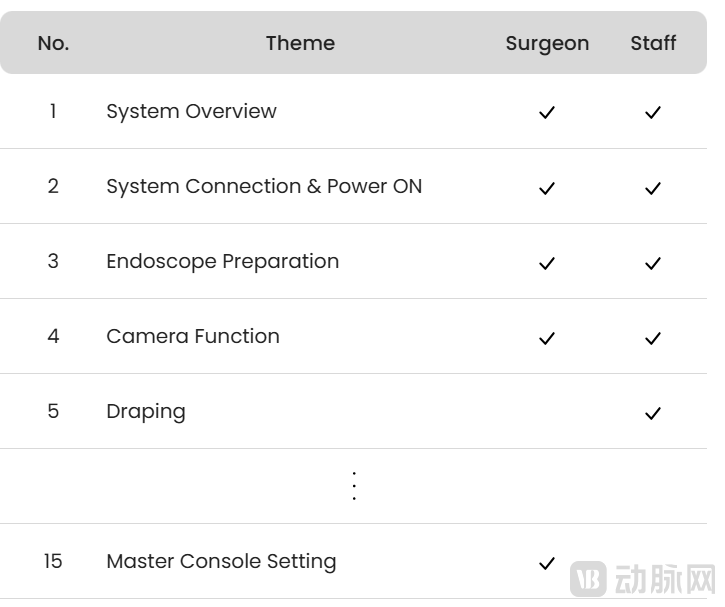
Example of Meere’s Customized Training Program
Specifically, the training is divided into two levels: basic and advanced, targeting new users and those already familiar with the Revo-i surgical robot, respectively. The former focuses on imparting core robotic skills for using the Revo-i to physicians, helping them become acquainted with the entire system through introductions to the Revo-i, hands-on exercises, and training models. The latter aims to expand physicians’ surgical robotics skills through specific clinical techniques and peer mentoring.
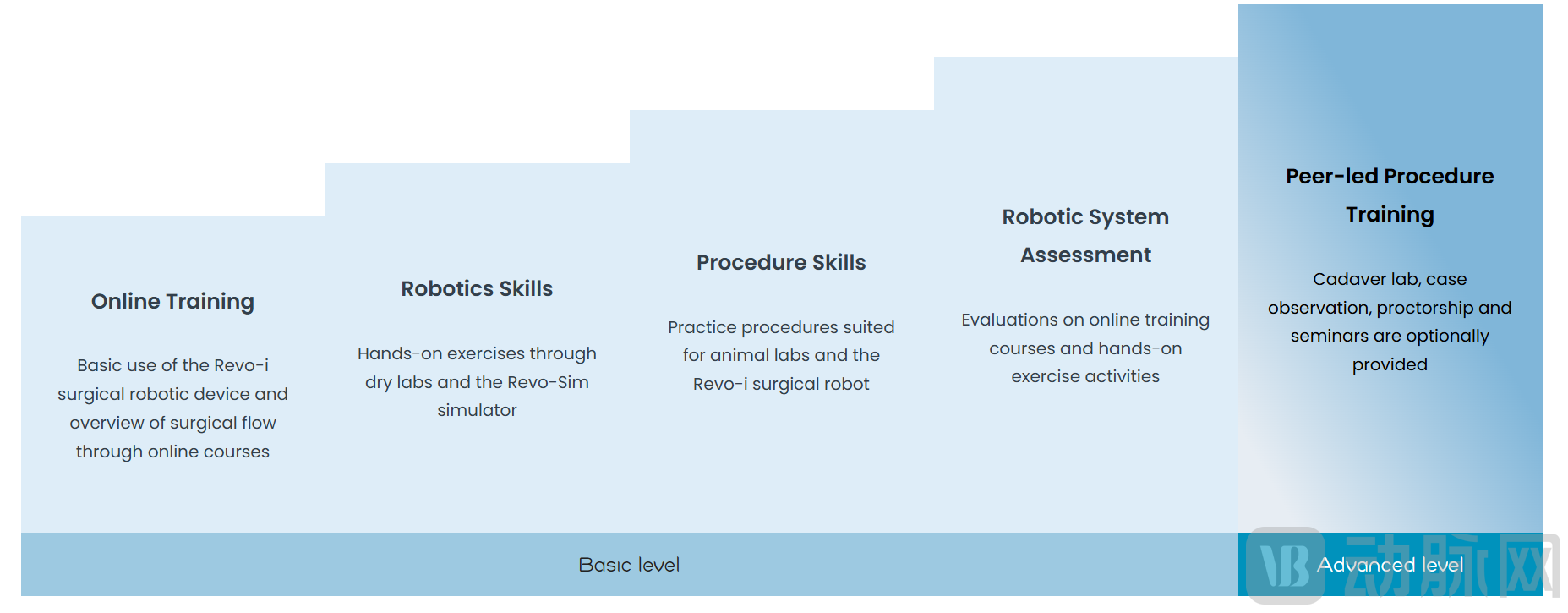
Comprehensive Training for Surgeons and Operating Room Staff, from Beginner to Advanced Levels
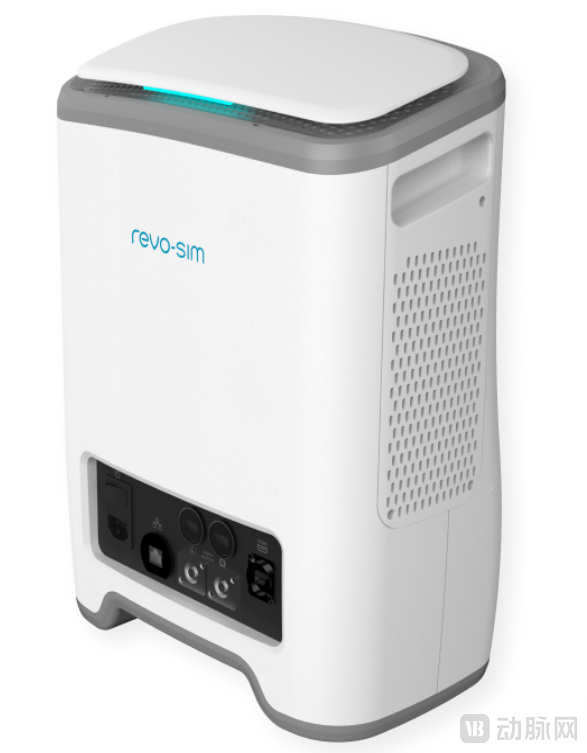
The Revo-Sim VR training simulator enables surgeons to practice operating surgical robots in a virtual environment, allowing them to enhance their robotic surgical skills through virtual training before performing actual procedures. Furthermore, through hands-on practice and guided programs, surgeons can engage in additional learning and training using simulated anatomical models, thereby improving their overall proficiency. The simulator offers various training modes:
● Basic Mode: Train each skill required for manipulation, including instruments, cameras, etc.;
● Suturing and Anastomosis Modes: Gain in-depth mastery of suturing and anastomosis techniques through diverse laparoscopic suturing exercises.
● Advanced Surgical Mode: Enhance proficiency in specific procedures through clinical VR training, including hysterectomy, nephrectomy, and cholecystectomy.
Furthermore, during the training process, meerecompany’s Revo-i professional trainers will work closely with the medical team to provide physicians with any guidance necessary for operating the system, ensuring they fully understand how to manage the Revo-i system before performing robotic surgeries. Moreover, the trainer team will maintain continuous communication with the physicians throughout the entire process, from initial training to their first surgical procedure.
In terms of maintenance services, meerecompany’s professional technical support team responds promptly to hospital needs and delivers high-quality services to ensure the safety and reliability of the Revo-i surgical system. The technical support team is available around the clock, providing assistance to hospitals and physicians even in the event of unforeseen emergencies. When needed, the meerecompany team provides an initial response within 24 hours, offers a root cause analysis and solution within 72 hours, and can provide on-site support as required. Additionally, meerecompany conducts quarterly regular inspections four times a year. Its maintenance policy includes rapid resolution of system issues to ensure that surgeons can successfully complete surgical procedures.
3"One Superpower, Multiple Strong Players: The First Year of Commercialization for Domestic Endoscopic Surgical Robots"
As domestic innovative enterprises accelerate their entry into the market, the landscape of China’s laparoscopic surgical robot industry is shifting. The former monopoly held by the da Vinci system is rapidly eroding, giving rise to a new competitive structure characterized by one dominant player and several strong contenders.
According to incomplete statistics based on public bidding data from the China Government Procurement Network and other publicly available information, the Da Vinci Surgical System won bids for 36 units in China in 2023, while MicroPort won bids for 11 units, and Jingfeng Medical and Kangduo Robotics each won bids for 5 units. In the first three quarters of 2024, the Da Vinci system secured 28 bids, whereas domestic brands collectively won 31 bids, already accounting for half of the Chinese laparoscopic surgical robot market. It is projected that by 2025, domestically produced laparoscopic surgical robots will capture more than 50% of the market share.
November 2024, Toumai®A four-arm laparoscopic surgical robot successfully performed a combined adrenalectomy and cholecystectomy through a single incision at Italy’s largest public hospital. Reportedly, this marks the first commercial clinical procedure conducted by a Chinese-made laparoscopic surgical robot in developed countries in Europe and America, signifying that Toumai®The robotic system has achieved a "milestone" breakthrough in expanding into the high-end markets of Europe and America. In the international market, Toumai®In just one year, the robot has expanded into emerging markets in Asia, Africa, and Latin America, while also achieving breakthroughs in European and American markets, securing over 20 commercial orders.
2024 Toumai®Global orders for the robot reached 39 units, with commercial installations exceeding 30 units, bringing the cumulative global commercial orders to nearly 60 units. According to available public data, Toumai®Annual orders, installations, and cumulative orders of robots continue to rank first among domestic brands.
Edge Medical®The impressive performance of surgical robots in the Chinese market is also noteworthy. In 2024, Edge Medical®The surgical robot secured 21 orders throughout the year, covering 16 cities across 10 provinces. According to public data, it holds a leading position among domestic laparoscopic robotic brands. Furthermore, Edge Medical®By providing high-performance, cost-effective, and easy-to-operate domestically produced laparoscopic surgical robots to primary healthcare institutions, we facilitate the decentralization of high-quality medical resources. Notably, the First People's Hospital of Xiushui County in Jiangxi Province became the first county-level hospital in China to host a laparoscopic surgical robot, successfully introducing Jingfeng®Since the introduction of the surgical robot, 200 robotic surgeries have been performed across departments including urology, general surgery, gynecology, and hepatobiliary surgery, encompassing exploratory and pilot remote surgeries.
In addition, in 2024, Shurui®The robotic system has successfully won bids at the National Children’s Medical Center—Shanghai Children’s Medical Center affiliated with Shanghai Jiao Tong University School of Medicine, and Nanjing Children’s Hospital affiliated with Nanjing Medical University. This marks the official launch of its commercial application in pediatrics, empowering pediatric surgeons to accelerate their entry into the era of single-port ultra-minimally invasive robotic surgery.
In terms of business model, Intuitive Surgical primarily adopts the “razor-and-blades” model of “equipment + consumables + services,” deploying equipment to hospitals in the early stage, with subsequent revenue mainly derived from the sale of consumables and service fees. Currently, the business model for surgical robots in China is not yet mature; however, as the installed base grows, the revenue model and structure will gradually align with international markets, with consumables and services becoming the primary revenue sources, while greater emphasis is placed on cost-effectiveness.