

China's Emerging Ceramic Joint Innovators Challenge CeramTec's 90% Global Dominance

CERAMTEC GMBH
--
CeramTec GmbH, a hidden champion, once reached the peak of its presence in China as volume-based procurement deepened and the domestic orthopedic industry underwent a major reshuffle.
“Hidden Champions” is a concept proposed by German management expert Hermann Simon. It is defined as “companies with annual sales not exceeding €5 billion, whose brands rank among the top three globally in a specific niche market.” These companies are typically low-profile, often serving highly specialized markets and remaining largely unknown to the general public.
In orthopedics, there are still no qualified domestic suppliers for materials such as medical-grade ceramics, PEEK, cobalt-chromium-molybdenum alloys, and ultra-high-molecular-weight polyethylene. The market is dominated by a few overseas companies, which has also given rise to multiple hidden champions in these niche segments.
In the book Hidden Champions: Pioneers of Globalization, CERAMTEC GMBH, a German company supplying ceramic artificial joints, is featured and recognized as a true hidden champion. As a provider of ceramic components for artificial hip joints, CERAMTEC is the sole supplier of ceramic joint components to major global artificial joint manufacturers, including Johnson & Johnson, Zimmer Biomet, Stryker, Weigao, and Chunli. Driven by its ceramic artificial hip joint business, CERAMTEC generates annual revenues exceeding hundreds of millions of euros.
Why Ceramics?
First, material selection is a critical component in the development of high-value medical consumables.
In the field of artificial joints, traditional metal femoral heads can lead to osteolysis, often necessitating revision surgery approximately 7–10 years after implantation. In contrast, ceramic, as an inorganic non-metallic material, exhibits superior biological inertness, does not trigger complex electrochemical reactions with the human body, and offers a higher safety profile. Furthermore, ceramics are extremely hard, and when specially polished, they achieve a lower coefficient of friction, thereby extending product lifespan. These advantages have made the replacement of metal with ceramics a global technological trend.
Artificial joint replacement is a highly mature and effective surgical intervention for treating end-stage severe osteoarthritis and advanced knee diseases. Procedures include total hip arthroplasty (THA), total knee arthroplasty (TKA), unicompartmental knee arthroplasty (UKA), and patellofemoral joint arthroplasty (PFJ), with the specific approach determined by the location of the lesion, the severity of lower limb alignment deformity, and the surgeon’s experience.
Artificial joint replacement surgery specifically targets the growing population of elderly patients with degenerative osteoarthropathy, a trend driven by the accelerating aging of the global population. When structural changes occur in the joints due to various causes, pharmacological therapy alone can only partially alleviate pain and fails to significantly improve joint function. In contrast, artificial joint replacement achieves goals such as pain relief, joint stabilization, deformity correction, and functional improvement, thereby gradually becoming a critical clinical necessity.
Therefore, CERAMTEC GMBH is the absolute dominant player in this critical market driven by essential demand.
From the Factory to the Birth of Fourth-Generation Ceramic Materials
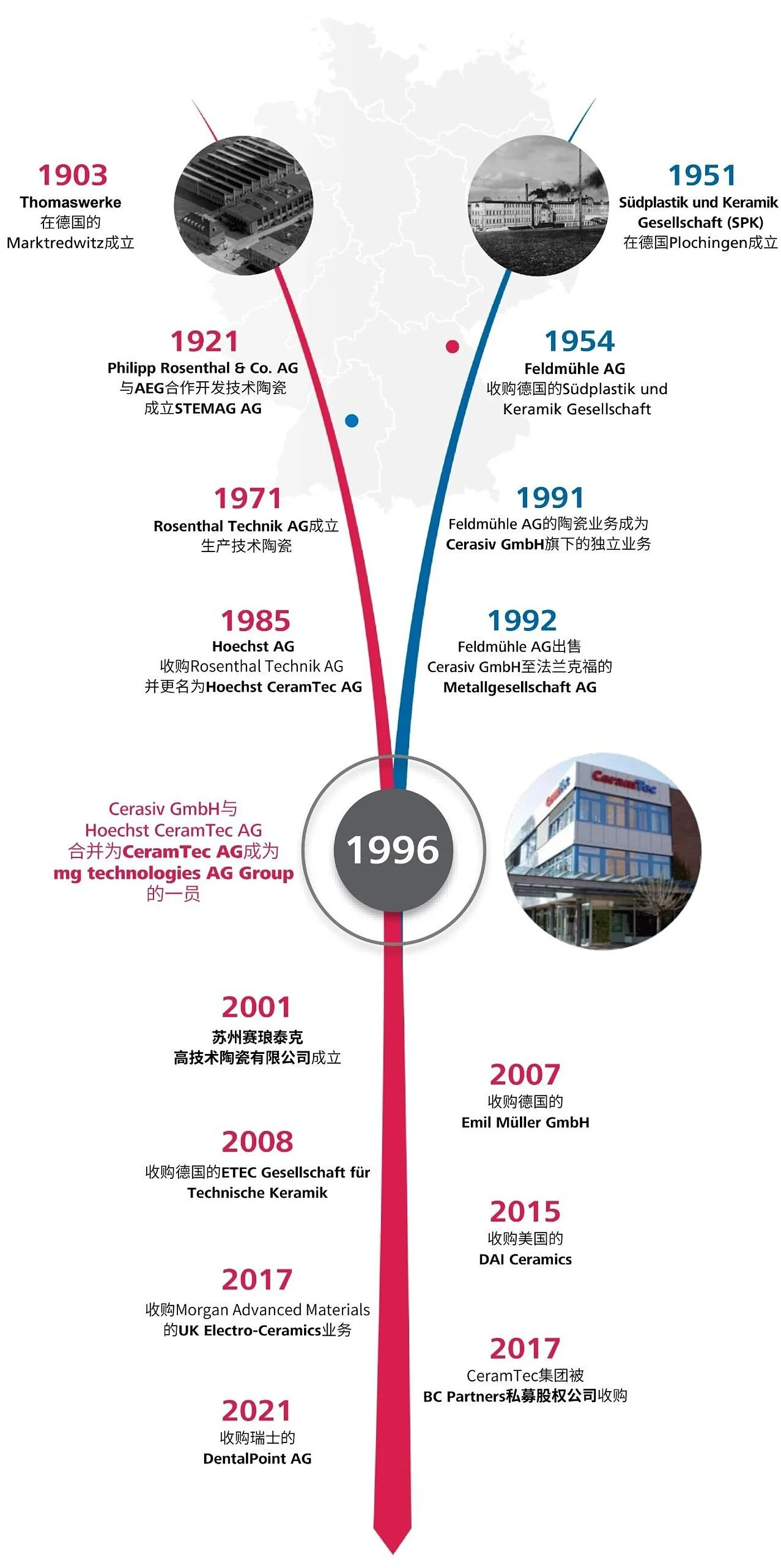
The story of CERAMTEC GMBH dates back to 1903.
In Marktredwitz, Germany, the Thomas Werke (Thomas Factory) was established, marking the origin of CERAMTEC. In 1908, it was acquired by Philipp Rosenthal & Co. AG, gaining new momentum for growth. In 1921, its collaboration with AEG officially launched the factory’s journey into the development of technical ceramics for industrial applications.
Since then, through continuous collaboration and restructuring, the factory and company have undergone several changes in name and structure, yet they have consistently strived to reach the pinnacle of technical ceramics. From Rosenthal Isolatoren GmbH to Rosenthal Technik AG, and later to Hoechst CeramTec AG, each restructuring has driven the company’s repeated innovation and development.
Throughout its business expansion and restructuring, CeramTec has continuously integrated new capabilities. The addition of Südplastik Gummi- und Kunststoffverarbeitung GmbH, followed by a series of acquisitions and integrations, has steadily expanded its business footprint. In 1996, Ceras IV GmbH acquired Hoechst CeramTec AG, officially establishing CeramTec AG. This marked the formal debut of CeramTec, as it is widely known today, signaling the beginning of a new phase of development.
Meanwhile, CERAMTEC GMBH was not content with its domestic growth and set its sights on the global market. Throughout various acquisitions and integrations by different enterprises, it continuously expanded its global footprint by acquiring businesses such as Ideal Standard’s filter cartridge division, Emil Müller GmbH, and ETEC Gesellschaft für Technische Keramik mbh. For CERAMTEC GMBH, each acquisition resembled weaving a larger global network, enabling its products and technologies to reach every corner of the world.
CERAMTEC GMBH’s exploration in the field of artificial joints began in the 1970s. In 1970, French surgeon Pierre Boutin performed the first implantation of a ceramic hip joint, marking the initial application of ceramic materials in artificial joints. Subsequently, CERAMTEC GMBH began to focus on the research, development, and production of alumina ceramics. In 1972, Boutin reported the clinical application of alumina ceramic hip joints, and this material gained preliminary recognition for its excellent biocompatibility and wear resistance.
CERAMTEC’s technological breakthroughs and market expansion began at this point, quickly gaining unstoppable momentum. In 1974, the launch of the first Biolox® alumina articulating surface heralded the dawn of a new era for the application of bioceramics in the human body.
In the 1980s, Ceramtec made significant advances in enhancing the performance of ceramic materials. In 1982, the FDA approved for clinical use a total hip arthroplasty prosthesis composed of an alumina ceramic femoral head and acetabular cup, paired with a cobalt-chromium-molybdenum alloy stem. During this period, Ceramtec further improved the toughness and fracture resistance of alumina ceramics by optimizing sintering processes and incorporating toughening agents.
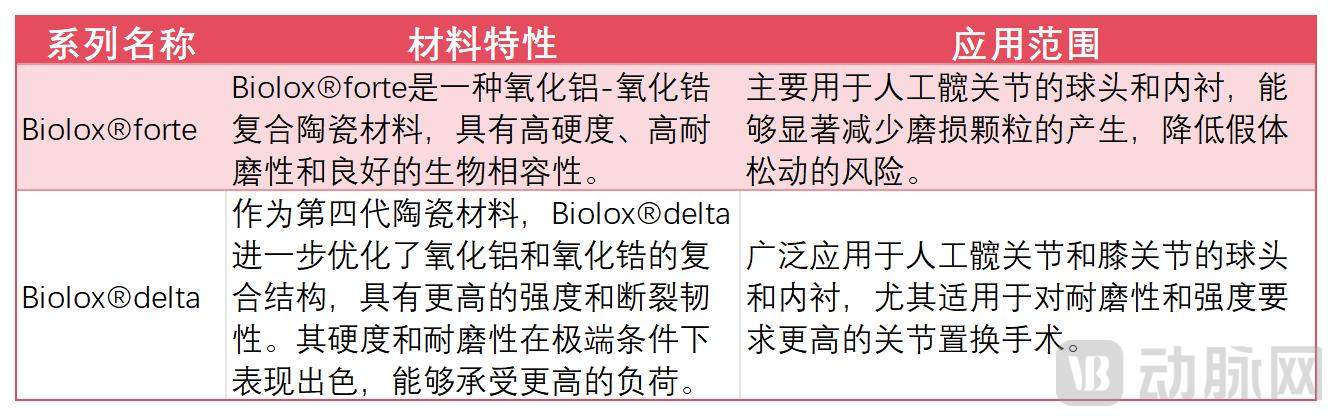
In the 1990s, composite ceramic materials rose to prominence. CERAMTEC GMBH introduced zirconia-toughened alumina (ZTA), a composite ceramic material that combines the low degradation sensitivity of alumina with the toughening capability of zirconia, significantly enhancing the strength and fracture resistance of ceramic joints. In 1994, CERAMTEC GMBH launched Biolox® forte, a ceramic material that demonstrated excellent wear resistance and biocompatibility in clinical applications.
In 2004, CERAMTEC GMBH launched the fourth-generation ceramic material, Biolox® delta. This material further optimizes the composite structure of alumina and zirconia, offering higher strength and fracture toughness. The introduction of Biolox® delta marked a new height for CERAMTEC GMBH in the field of ceramic materials for artificial joints. Currently, CERAMTEC GMBH holds over 90% of the global market share for ceramic hip joint heads, with its products widely used in orthopedic surgeries worldwide.
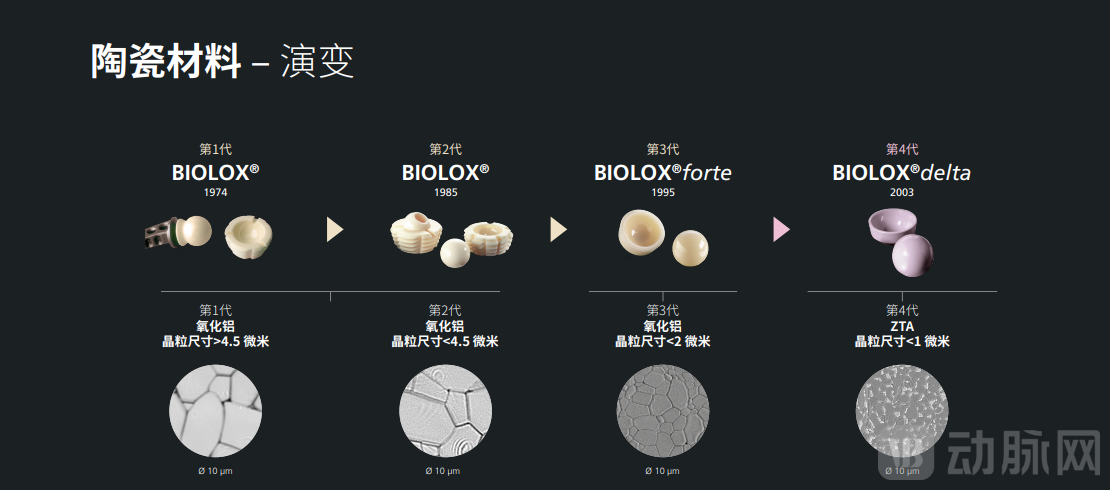
Since then, Biolox® ceramic femoral heads and acetabular liners have been supplied as hip joint components to more than 100 orthopedic companies worldwide. In 2003, the fourth-generation Biolox® delta (alumina matrix composite with zirconia) was introduced, further enhancing product performance and delivering superior solutions for the healthcare sector. In 2006, CERAMTEC developed the Biolox® delta ceramic knee component; in 2015, it developed, manufactured, and tested ceramic humeral heads for patients with allergies; and in 2021, artificial disc replacements featuring ceramic components received FDA approval. Today, CERAMTEC’s medical business encompasses three product brand lines—Biolox®, Densilox®, and Verilox®—covering hip, knee, and shoulder implants, spinal implants, dental implants, and veterinary implants.
Industry Gold Standard Setter
The application of ceramic materials in artificial joints requires exceptional biocompatibility, wear resistance, fatigue resistance, and fracture resistance. CERAMTEC GMBH’s Biolox® series of ceramic materials, particularly the fourth-generation Biolox® delta, achieves a perfect combination of high strength, high toughness, and low wear through a zirconia-toughened alumina composite structure. The manufacturing process for this material is complex, demanding high-precision sintering and machining technologies. Leveraging a century of technological expertise, CERAMTEC GMBH has established significant technical barriers in material formulation and process control.
CERAMTEC GMBH’s core products are the Biolox® series of ceramic materials, including Biolox® forte and Biolox® delta. These materials are widely used in the femoral heads and liner components of artificial hip and knee joints.
The inherent brittleness of ceramic materials makes them extremely difficult to machine. CERAMTEC GMBH ensures high precision and high reliability of its products by optimizing manufacturing processes. This technical complexity makes it difficult for other companies to replicate its products in the short term, thereby solidifying CERAMTEC GMBH’s market position.
Among these, the wear resistance of Biolox® delta material is several times higher than that of traditional metallic materials, significantly reducing the generation of wear debris and thereby lowering the risk of periprosthetic osteolysis and loosening. This material exhibits excellent biocompatibility and rarely triggers an immune response in the human body.
Overall, the core products of CERAMTEC’s Biolox® series exhibit the following highly prominent features:
Wear Resistance
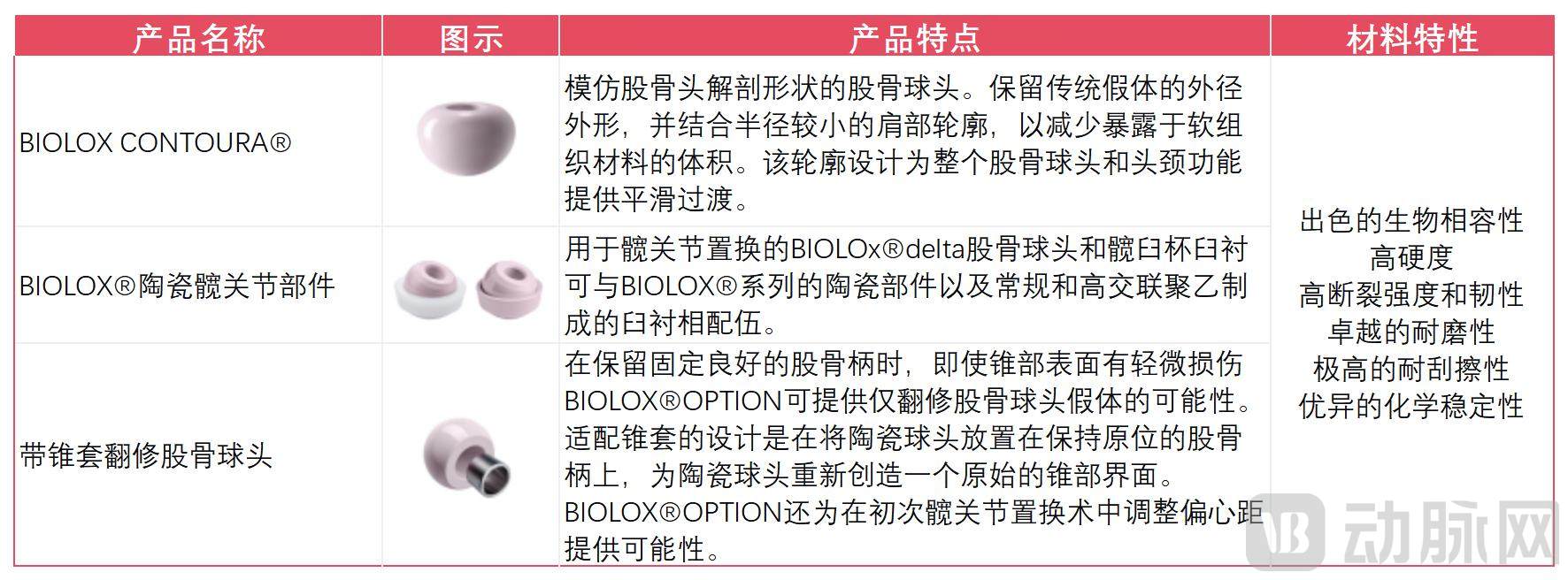
The Biolox® series of ceramic materials exhibits extremely high hardness, significantly reducing the generation of wear particles. For instance, the hardness and wear resistance of Biolox® delta enable it to maintain superior performance even under extreme conditions. This characteristic ensures that CERAMTEC products deliver outstanding long-term performance, mitigating the risks of prosthetic loosening and osteolysis caused by wear.
High-Precision Machining
CERAMTEC’s ceramic femoral heads and liner components are manufactured with extremely high precision, with maximum deviations of only 5 micrometers for the femoral head and 7 micrometers for the liner. This high-precision manufacturing ensures that the joint’s kinematic design minimizes wear to the greatest extent possible, thereby extending the service life of the prosthesis.
Biocompatibility
Biolox® series ceramic materials exhibit excellent biocompatibility and chemical stability, do not release metal ions, and thereby avoid issues such as metal allergies. This characteristic makes CERAMTEC’s products particularly suitable for patients with metal sensitivities.
Innovative Composite Materials
Biolox®delta achieves a perfect combination of high strength and high toughness by optimizing the composite structure of alumina and zirconia. This composite material not only inherits the low degradation sensitivity of alumina but also significantly enhances the material's strength and fracture toughness through the toughening effect of zirconia.
Clinical Validation and Market Trust
CERAMTEC’s products have undergone over 45 years of clinical validation, accumulating a substantial number of successful cases. The widespread global use and high recognition of its Biolox® series of ceramic materials have further solidified its market position.
It is worth noting that since its launch in 2004, the fourth-generation Biolox® delta material has been widely used in total hip arthroplasty worldwide, accumulating extensive clinical data that demonstrate its safety and efficacy. This proven performance has led major global joint replacement manufacturers, such as Johnson & Johnson, Smith & Nephew, and Stryker, to select CERAMTEC as their sole supplier of ceramic materials.
Furthermore, CERAMTEC GMBH consistently maintains substantial investment in research and development, continuously exploring new technologies and materials. The company not only continually improves its traditional alumina and zirconia composite ceramics but also actively explores the application of 3D printing technology in the field of artificial joints. This spirit of innovation enables CERAMTEC GMBH to consistently launch more advanced products that meet market demand for high-performance artificial joints, while providing customized solutions tailored to customer requirements. Such flexibility allows its products to better address the personalized needs of diverse patients, thereby further enhancing its market competitiveness.
This monopoly position enables CERAMTEC GMBH to control the supply and pricing of raw materials, thereby gaining advantages in cost and profitability. In the global artificial joint market, CERAMTEC’s ceramic femoral heads and liners have gradually become the virtually exclusive choice for nearly all major manufacturers. This dependency allows CERAMTEC to exert effective control over the market, further solidifying its monopolistic position.
Domestic Substitution Takes a Major Step Forward
For a long time, entering the field of ceramic artificial joints has required overcoming numerous industry barriers. First, the research and development and production of high-performance ceramic materials demand substantial capital investment and extensive technological accumulation over time. Second, products must undergo rigorous clinical trials and regulatory approval, a process that is not only time-consuming but also costly.
CERAMTEC GMBH not only possesses technological advantages accumulated over the long term, but also serves as an industry standard-setter, requiring downstream giants such as Johnson & Johnson, Zimmer Biomet, and Smith & Nephew to comply with its established standards. New products must obtain its “release” approval—undergoing multiple rounds of benchmarking and scrutiny, along with extensive market education—before they can be launched. In short, CERAMTEC GMBH’s long-accumulated moat is so deep that other companies find it difficult to overcome the industry barriers of “high costs + long market access cycles” to challenge its gold standard.
On the other hand, there is robust domestic demand and an increasingly loud call for substitution with domestically produced alternatives.
Following the introduction of China’s national volume-based procurement (VBP) policy in 2022, ceramic hip joints have become dominant in the market. Statistical data from the national VBP for artificial joints show that the usage rate of ceramic joints has reached 89%. However, in China, regardless of the manufacturer type, core components such as ceramic femoral heads and liners remain dependent on imports. Chinese ceramic hip prostheses are still subject to critical supply chain bottlenecks.
The national volume-based procurement policy has significantly reduced terminal prices in the joint replacement market, prompting substantial price cuts from all manufacturers. For Chinese joint implant manufacturers, the cost of procuring imported ceramic femoral heads and liners accounts for 50–70% of total production costs, imposing immense cost pressure.
Developing and manufacturing ceramic consumables requires the collaborative efforts of at least three specialized teams: product structure design, materials science, and machining. For domestic companies to advance import substitution, they must now extend their operations upstream, even starting with material development, which presents significant challenges.
Meanwhile, industry leaders continue to exert their influence.
In mid-September 2024, the medical technology ceramics production facility of CERAMTEC GMBH in Marktredwitz was topped out, one year after its groundbreaking ceremony. The facility is expected to be fully completed and operational in 2026. Bioceramics are characterized by their excellent biocompatibility and aesthetic appearance in oral applications. Due to their strong bonding capability and high material purity, bioceramics used for joint and dental replacements exhibit chemical stability in physiological environments, such as the human body.
In response to this situation, the Ministry of Industry and Information Technology and the National Medical Products Administration jointly launched the “Open Competition” initiative for innovation in biomedical materials in 2023, providing multidimensional support for the research, development, and application of biomedical materials across policy, financing, and commercialization.
Recently, Ansong announced that its developed zirconia ceramic femoral head product received certification from the National Medical Products Administration (NMPA) on January 8, 2025, with registration certificate number Guo Xie Zhu Zhun 20243132300. This marks the formal recognition of Ansong Technology’s innovative achievements in the field of high-end medical ceramic materials within the domestic market, filling the gap in China’s production of high-performance ceramic femoral heads and surpassing international competitors in multiple performance indicators.
Prior to this, as of August 2024, Chentai New Materials had completed the filing of its powder ceramic materials in the Master File with the National Medical Products Administration (NMPA), thereby meeting the requirements for downstream manufacturers to complete their registration filings. Chentai New Materials is among the first batch of material manufacturers in China to complete such Master File filings. In terms of pricing, thanks to a fully localized production process, its products are priced at less than 50% of those of similar offerings from foreign companies, representing a significant price advantage. Chentai New Materials is able to provide downstream manufacturers with more cost-effective material products.
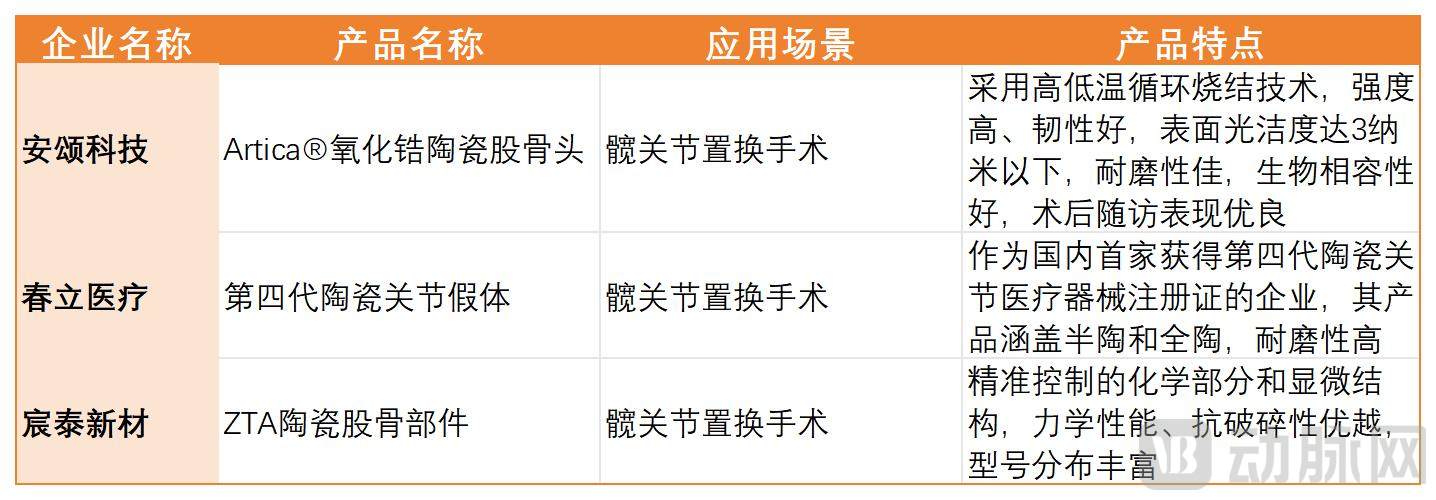
Pioneers have pressed forward in succession and have already achieved preliminary results.