

Silevimig (GR1801): The World’s First Bispecific Antibody for Rabies Post-Exposure Passive Immunization

GENRIX BIO
Developer of Novel Monoclonal Antibody Drugs
On December 19, 2024, the Chinese Center for Disease Control and Prevention announced the onset of the seasonal influenza epidemic, nearly a month later than in 2023. In the following week, the positive rate for influenza virus tests continued to rise, with a significant increase in influenza cases admitted across various provinces, the vast majority of which were Influenza A (also known as Type A influenza). On social media platforms, posts related to topics such as “an increase in flu cases among people around us,” “easily getting infected,” and “what to do about persistent high fever” trended prominently.
As the smallest unit of life discovered to date, viruses are coexisting with humans in an increasingly prominent manner. This is not only because viruses must rely on host cells to carry out their own life activities, but also due to the growth in popular science education and public awareness of infectious diseases in the era of information explosion.
Meanwhile,In the field of infectious diseases, innovative biologics worldwide are gradually tackling viral infections for which no drugs currently exist, becoming a key lever for prevention and treatment.: In 2023, the RSV field welcomed the world’s first two vaccines, GSK’s Arexvy and Pfizer’s Abrysvo, as well as Beyfortus, a preventive antibody product developed through a collaboration between AstraZeneca and Sanofi. Within just six months of their launch, these three biologics achieved sales exceeding $3 billion, with approved indications continuously expanding from infants to a broader range of susceptible populations.
On January 14, the National Medical Products Administration (NMPA) Center for Drug Evaluation (CDE) accepted the New Drug Application (NDA) for GENRIX BIO’s independently developed slirivimab injection (GR1801 Injection) for the indication of passive immunization in adults following suspected rabies virus exposure, positioning it to potentially becomeThe World’s First Approved Bispecific Antibody for Passive Immunization Against Rabies。
Rabies virus, with a mortality rate nearing 100%, is about to welcome an innovative biologic agent that is urgently needed in clinical practice and demonstrates outstanding efficacy.
1Passive Immunity Antibodies: Targeting the Brief Post-Exposure Prophylaxis Window for Rabies
# RabiesRabies is an acute zoonotic infectious disease caused by the Rabies virus. When a person is bitten by a rabid animal, or when scratches, wounds, or mucous membranes are contaminated with the virus, the virus begins to replicate in the muscle tissue at the site of injury. It then invades the peripheral and eventually the entire central nervous system via the motor neuron endplates and axons. In the late stages of infection, extra-neural tissues such as the heart, pancreas, adrenal glands, and gastrointestinal tract are also affected, leading to the patient's death.
Official guidelines indicate that there is currently no satisfactory treatment for rabies, and the case fatality rate is nearly 100% once symptoms appear. Post-exposure prophylaxis (PEP) is the mainstream strategy for human rabies prevention in China, which involves inducing active immunity through vaccination. However, after the first dose of the vaccine, it takes 7–14 days for the immune system of individuals with no prior history of rabies vaccination to respond and produce antibodies, posing a risk of ineffective protection.
For populations at high risk of exposure, with short incubation periods, and facing the risk of vaccine failure, passive immunization is required to supplement active immunity. This approach blocks viral invasion of the nervous system before the rabies vaccine-induced active immunity fully takes effect, thereby providing immediate immune protection. Active immunization (vaccine) and passive immunization are not interchangeable; therefore, the combination of “vaccine + passive immunization agents” represents the most effective post-exposure prophylaxis for rabies.Traditional passive immunization agents include equine rabies antiserum (ERA) and human rabies immunoglobulin (HRIG). However, in clinical practice, ERA is rarely used due to its high incidence of adverse reactions. As a blood-derived product, HRIG has limited sources and supply, requires dosing based on body weight and exposure severity, carries a relatively high cost, and poses potential risks of blood-borne disease transmission.
At this juncture, recombinant human anti-rabies virus monoclonal antibody (rhRIG) was developed.Due to minimal batch-to-batch potency variation, increasingly mature manufacturing and quality control processes, and scalability for large-scale production, recombinant human rabies immunoglobulin (rhRIG) demonstrates superior safety and availability compared to traditional biological products.To date, three anti-rabies monoclonal antibodies have been approved for marketing worldwide. In China, these include North China Pharmaceutical’s Omotivimab (approved in February 2022) and Xingmeng Biotherapeutics’ Zemelovimab-Mazorivimab (approved in June 2024).

Market Landscape of Domestically Produced Rabies Virus Passive Immunization Products: Approved and In-Development Pipeline, Chart by VCBeat
From the perspective of therapeutic targets, domestically developed innovative antibodies for rabies passive immunization all focus on the rabies virus glycoprotein (G protein). As one of the major antigenic proteins of the rabies virus, it plays a critical role in viral infection by mediating endocytosis, envelope fusion, nucleocapsid release, and budding.
2How Does the World’s First Bispecific Antibody Upgrade Rabies Passive Immunization?
From the perspective of mechanism of action, the development and approval of domestic recombinant human rabies immunoglobulin (rhRIG) have evolved from monoclonal antibodies to combination formulations of monoclonal antibodies.
In 2018, the WHO position paper on rabies vaccines explicitly listed the development of monoclonal antibody (mAb) products containing two or more mAbs with non-overlapping epitopes as a priority area, namely “cocktail therapy” combination formulations. As of 2014, up to 14 distinct rabies virus strains had been identified worldwide. Combination mAb formulations can target different antigenic sites of the virus, thereby enhancing efficacy against diverse viral strains or genotypes.
However, in actual production, combination formulations require the separate preparation of two monoclonal antibodies followed by mixing, posing certain challenges in terms of process, manufacturing, and mass production. In contrast, bispecific antibodies, which require only a single production run, not only incorporate the complementary advantages of targeting different antigenic epitopes but also better ensure product quality control and facilitate rapid scale-up for mass production. Taking Sleverimab, independently developed by GENRIX BIO, as an example, as the world’s first bispecific antibody for passive immunization against rabies, it has achieved innovative breakthroughs in both antibody design and clinical efficacy:
Innovative Bispecific Molecular Structure for Specific Binding to Dual Epitopes of G Protein
Based on the scFv+Fab structure, Sileweimi monoclonal antibody can simultaneously and specifically bind to epitope I and epitope III on the rabies virus G protein. This molecular design meets the WHO recommendations for the development of anti-rabies virus antibodies—adopting a "cocktail" combination formulation composed of multiple monoclonal antibodies targeting different antigenic sites—to ensure efficacy against different viral strains or genotypes.
Preclinical primary pharmacodynamic studies have demonstrated that slirvimab exhibits neutralizing activity against all strains used in both in vitro and in vivo experiments, which are distributed across three rabies virus phylogroups. In vivo studies have shown that a certain dose of slirvimab provides 100% protection in mice challenged with various distantly related rabies virus strains before the vaccine fully exerts its active protective effect. In beagle dog challenge studies, the combination of slirvimab at 0.02 mg/kg with rabies vaccine conferred 100% protection against challenge, comparable to the group receiving human rabies immune globulin (HRIG) plus vaccine.
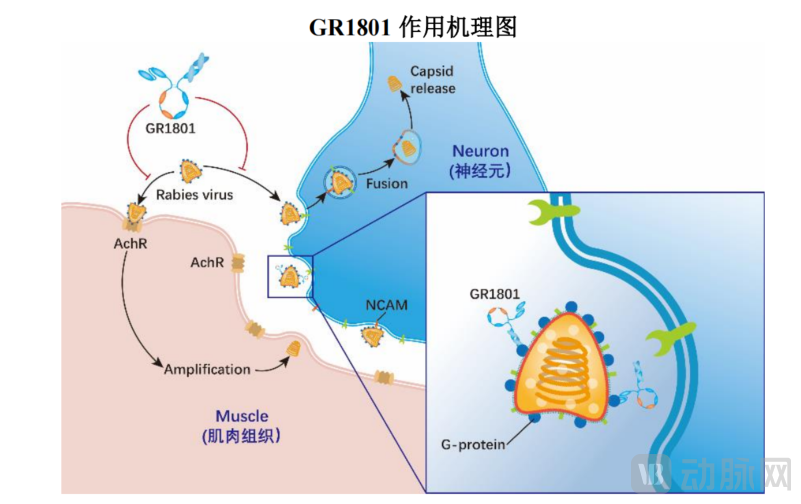
100% Fully Human Antibody with Good Safety and Tolerability
Slelumab is a fully human antibody, composed of 100% human-derived components and containing no murine elements. With maintained affinity, fully human antibodies exhibit low immunogenicity, thereby minimizing the risk of adverse reactions such as anti-drug antibodies and allergic responses. Furthermore, as a recombinant protein product with a single active ingredient, Slelumab enables effective control over product impurities and exogenous factors, avoiding the potential risks associated with blood-derived products in clinical practice, as well as ethical concerns, blood-borne infections, and immunogenicity issues related to their use.
Prophylactic efficacy surpasses the standard therapy of HRIG combined with vaccine, offering rapid onset and a 100% seropositivity rate by day 7.
According to the publicly available preliminary clinical data, sleverimab monotherapy at a dose of 0.05 mg/kg was comparable to the positive control drug, human rabies immunoglobulin (HRIG), in terms of onset time, antibody titer levels, seropositivity rate, and time to peak concentration. The antibody titer levels within 7 days when combined with the vaccine at different doses (0.05 mg/kg and 0.1 mg/kg) were significantly superior to those of the standard therapy involving HRIG combined with the vaccine. The safety profile in the treatment group was favorable, with an incidence of adverse events comparable to that of the control group.The results of the GR1801-002 clinical trial showed that the positivity rates for the high- and low-dose groups of slerolimab reached 97.37% and 100%, respectively, on Day 1, and were sustained at 100% over the subsequent 7 days.
Controllable Manufacturing Process, Stable and Uniform Product Quality
Regarding subsequent commercialization, the manufacturing process of Sileweimab is similar to that of monoclonal antibodies, which avoids the procedural complexities associated with combination product manufacturing and ensures better quality control. Expression and production are carried out using CHO cells in serum-free media. Through analysis of the product’s critical quality attributes, key process parameters for cell culture, harvest, purification, and viral inactivation at the pilot scale have been established. The product expression titer has reached ≥4.0 g/L, yielding multiple batches with stable and consistent quality and yield.
3Rise of Domestic Innovative Biologics: GENRIX BIO Expands the Potential in the Anti-Infective Field
Behind the world’s first bispecific antibody for rabies, Chinese biopharmaceutical innovators represented by GENRIX BIO are continuously expanding the possibilities in the field of infectious diseases.
Starting with its bispecific antibody against the rabies virus, GENRIX BIO is gradually entering a harvest phase in its anti-infective product development: The recombinant humanized monoclonal antibody GR2001 injection, targeting tetanus toxin, has entered Phase III clinical trials and has been officially included in the Breakthrough Therapy Designation program by the Center for Drug Evaluation (CDE). As no monoclonal antibody drugs for tetanus prevention have yet been approved for marketing in China, GR2001 injection is poised to be the first to capture this market. The recombinant fully human monoclonal antibody GR2002 injection, targeting respiratory syncytial virus (RSV), has received an Investigational New Drug (IND) approval from the National Medical Products Administration (NMPA). Meanwhile, GR2201 injection, for the treatment of varicella-zoster virus (VZV) infection, is currently in the preclinical trial stage.
GENRIX BIO has been able to quickly seize the lead in areas not yet explored by domestic innovative biological preparations, relying on its profound technical accumulation and precise demand positioning.
In terms of source innovation, GENRIX BIO has established a monoclonal antibody drug discovery technology platform and a bispecific antibody drug discovery technology platform based on novel phage display systems. Through optimization of the novel phage display system, the discovery cycle for new monoclonal antibody candidate molecules can be shortened to 6–9 months. Regarding the bispecific antibody drug discovery technology platform, the company has currently established a dual-track layout comprising scFv+Fab-type bispecific antibody technology and common light chain bispecific antibody technology.
The pioneering scFv+Fab bispecific antibody structure enables the convenient construction of bispecific antibodies from any two selected monoclonal antibodies, making it suitable for developing single-dose bispecific antibody therapeutics. Silevemimab Injection (GR1801) is a representative product developed using this technology.The second bispecific antibody technology is based on a common light chain Fab+Fab structure. Its architecture is highly similar to that of monoclonal antibodies, resulting in low immunogenicity and allowing the adaptation of established monoclonal antibody manufacturing processes. This makes it particularly suitable for the development of bispecific antibody drugs requiring repeated clinical dosing. Due to its minimal structural deviation from natural antibodies, the development of common light chain bispecific antibodies presents a high technical barrier.
To date, leveraging its proprietary dual-vector phage display antibody library technology and building upon its established large-capacity human antibody light chain library resources, GENRIX BIO can rapidly identify common light chains for two selected monoclonal antibodies within as little as three months, facilitating the construction of common light chain bispecific antibodies. This capability positions GENRIX BIO to launch more innovative bispecific antibody products in the fields of autoimmune and infectious diseases, thereby accelerating both R&D and clinical development.
In August 2024, secukinumab, the first domestically developed fully human monoclonal antibody targeting IL-17A independently researched and developed by GENRIX BIO, was approved for market launch in China for the treatment of moderate-to-severe plaque psoriasis. In 2025, secukinumab received approval for the indication of ankylosing spondylitis, becoming the first domestically produced IL-17A inhibitor approved for this indication.From autoimmune diseases to infectious diseases, GENRIX BIO’s innovative biologics are entering a harvest period, thanks to its precise cultivation of gaps in the domestic market—uncovering “iceberg” markets characterized by low penetration rates and unmet clinical needs.
Taking SLV001 (Sileweimidan) as an example, the application of rabies vaccines and passive immunization agents is particularly indispensable due to the high mortality rate associated with rabies. Based on the usage volume of human rabies vaccines in China, it is estimated that the annual number of people exposed to rabies nationwide exceeds 40 million. According to data from the National Institutes for Food and Drug Control (NIFDC), the batch release volume of rabies vaccines in China reached 78.5529 million doses in 2020, a year-on-year increase of 33.5%, making it the vaccine product with the highest batch release volume in the country. Monitoring in certain provinces with high incidence of rabies indicates that over 90% of individuals seeking medical attention after exposure are classified as Category II or Category III exposures, with Category III exposures accounting for approximately 40%. However, only about 15% of these patients receive injections of passive immunization agents.
With enhanced market education and the gradual launch of innovative products, China’s rabies passive immunization agent market still holds considerable room for expansion.
Globally, rabies is endemic in over 100 countries and regions, causing approximately 59,000 deaths annually. As innovation in domestically produced therapies continues to gain momentum, the hidden “iceberg” beneath the surface will transform into a vast blue-ocean market.